

The core difference between a Dutch marquise and an oval diamond is geometric. A Dutch marquise has straight or angled sides with two pointed ends, producing an elongated shape that reads more angular and directional than the flowing oval silhouette. an oval diamond has completely smooth, curved edges and rounded ends. Both can offer strong face-up coverage for their carat weight, and both create an elongated look on the hand, but the visual character of that elongated appearance is different enough that choosing between them is a meaningful design decision rather than a minor preference.
Dutch Marquise vs Oval Diamond: Difference
Dutch marquise has straight or angled sides with two pointed ends, creating a defined geometric outline. Oval has a continuous curved outline with rounded ends, giving it a softer, elongated appearance. Both shapes can create an elongated look on the hand, but their different outlines give the diamond a noticeably different visual character.
The comparison table above reflects shape geometry only. Light performance and visual size depend heavily on the individual stone rather than the shape alone.
You can compare these differences across actual Dutch marquise engagement rings and Oval diamond engagement rings at Carat Diamonds. Explore each collection to see how different proportions and ring designs change the look of these two diamond shapes.
How Do Dutch Marquise and Oval Diamonds Look Different?
Dutch Marquise Shape and Appearance
The Dutch marquise outline is defined by its straight or angled sides and two pointed ends. Viewed face-up, the stone presents as an elongated geometric shape closer to a hexagonal elongated form than the curved outlines of most other popular diamond shapes. The pointed ends extend the length of the stone and create a strong directional quality. The straight sides mean that any slight asymmetry, whether in the side angles or the alignment of the tips, is visually apparent. Symmetry is a particularly important factor when evaluating a Dutch marquise the balanced geometry is part of what makes the shape visually distinctive.
The angular outline gives it a more architectural quality than most elongated shapes. This can read as bold and graphic in a ring setting, especially in solitaire or bezel configurations that emphasize the stone’s perimeter.
For a deeper look at the cut’s characteristics, the Dutch Marquise Cut Diamond Guide at Carat Diamonds covers what to evaluate when selecting a specific stone.
Oval Diamond Shape and Appearance
Oval diamond has a continuous curved outline that rounds at both ends without any point or flat section. The silhouette is smooth and flows in all directions, which gives it a softer and more organic visual quality than geometric shapes. The shoulders, the areas where the sides transition into the ends, determine a significant part of the oval’s overall appearance. Very flat or very rounded shoulders change how the stone reads from different angles.
Because the curve is continuous, small asymmetries in the outline can be harder to spot than they would be in a more angular stone. Still, looking at the Oval’s outline symmetry in photographs is worth doing, particularly along the central axis where the two halves should mirror each other.
Which Looks Bigger: Dutch Marquise or Oval?
Neither shape universally looks larger than the other. Carat weight measures mass, not visible surface area. What actually determines how large a diamond appears on the hand is its millimeter length, millimeter width, and how much of its weight sits close to the face-up surface rather than in depth below the girdle.
Both Dutch marquise and Oval diamonds can offer strong face-up coverage relative to their weight because elongated shapes typically spread their mass across a larger visible area than more compact shapes like rounds or squares. But comparing two specific stones requires actual millimeter measurements rather than assuming one shape is always larger.
Length-to-width ratio affects how the stone reads visually. A wider, more compact Dutch marquise or Oval appears fuller and broader. A longer, narrower ratio creates a more elongated visual line. Neither extreme is inherently better; it depends on the proportion the buyer wants and how it relates to their hand.
Do Dutch Marquise and Oval Diamonds Sparkle Differently?
Faceting style has a significant effect on how a diamond handles light, and the two shapes can produce different visual results. However, because Dutch marquise faceting can vary between individual stones and cutters, the shape name alone does not predict exactly how a specific diamond will perform. The actual cut quality, symmetry, proportions, and faceting of the individual stone are the reliable indicators.
Bow-Tie Effect in Oval Diamonds
A bow-tie is a dark shadow area that can appear across the center of an elongated diamond, roughly parallel to the width of the stone. It occurs in elongated brilliant cuts including Ovals when light entering from the sides does not return to the viewer’s eye efficiently through the center of the stone. Some degree of darkening in the center is common in elongated shapes and is not necessarily visible in finished ring settings or in motion.
Oval diamonds are generally brilliant-cut, meaning their facets are arranged to maximize light return. A well-proportioned oval with a strong cut can minimize the bow-tie effect considerably. The practical approach is to evaluate any specific oval diamond in photographs and video rather than assuming the bow-tie will or will not be visible based on the shape name.
Light Performance in Dutch Marquise Diamonds
Dutch marquise diamonds can have different faceting patterns depending on the cutter, and this affects how light moves through the stone. Some Dutch marquise stones are cut with brilliant-style faceting, while others may differ. Because of this variability, evaluating the actual diamond in images or in person is particularly important. A stone that performs well visually will show even light return across its outline rather than dull zones or uneven reflections.
As with oval diamonds, bow-tie or central darkening can appear in some Dutch Marquise stones depending on proportions and faceting. This is not inevitable, but it is worth checking for in any elongated diamond being seriously considered.
Which Shape Is Easier to Protect?
Oval diamond has a continuous curved outline with no pointed ends, so the setting does not need to address the specific vulnerability that pointed tips create. Standard prong configurations work straightforwardly around the outline.
Dutch marquise has two pointed ends, and those tips are the most structurally exposed areas of the stone. Setting design needs to account for them. V-prongs, a V-shaped metal contact at each tip, are a common approach because they provide coverage at the point while leaving the sides of the stone relatively open. A bezel setting wraps the full girdle in a metal rim and provides comprehensive protection along the entire edge, including the tips. Other prong arrangements can also provide adequate protection depending on their placement.
V prongs are not mandatory the right choice depends on the setting design and the level of exposure the tips will have in daily wear. The key point is that the setting needs to address the tips in a way that balances protection with the desired look of the finished ring.
Neither shape has a significant inherent durability disadvantage in a properly designed setting. The consideration with Dutch marquise is specifically about the pointed ends, which is a design question rather than a materials question.
Best Engagement Ring Settings for Dutch Marquise and Oval Diamond
Solitaire Settings
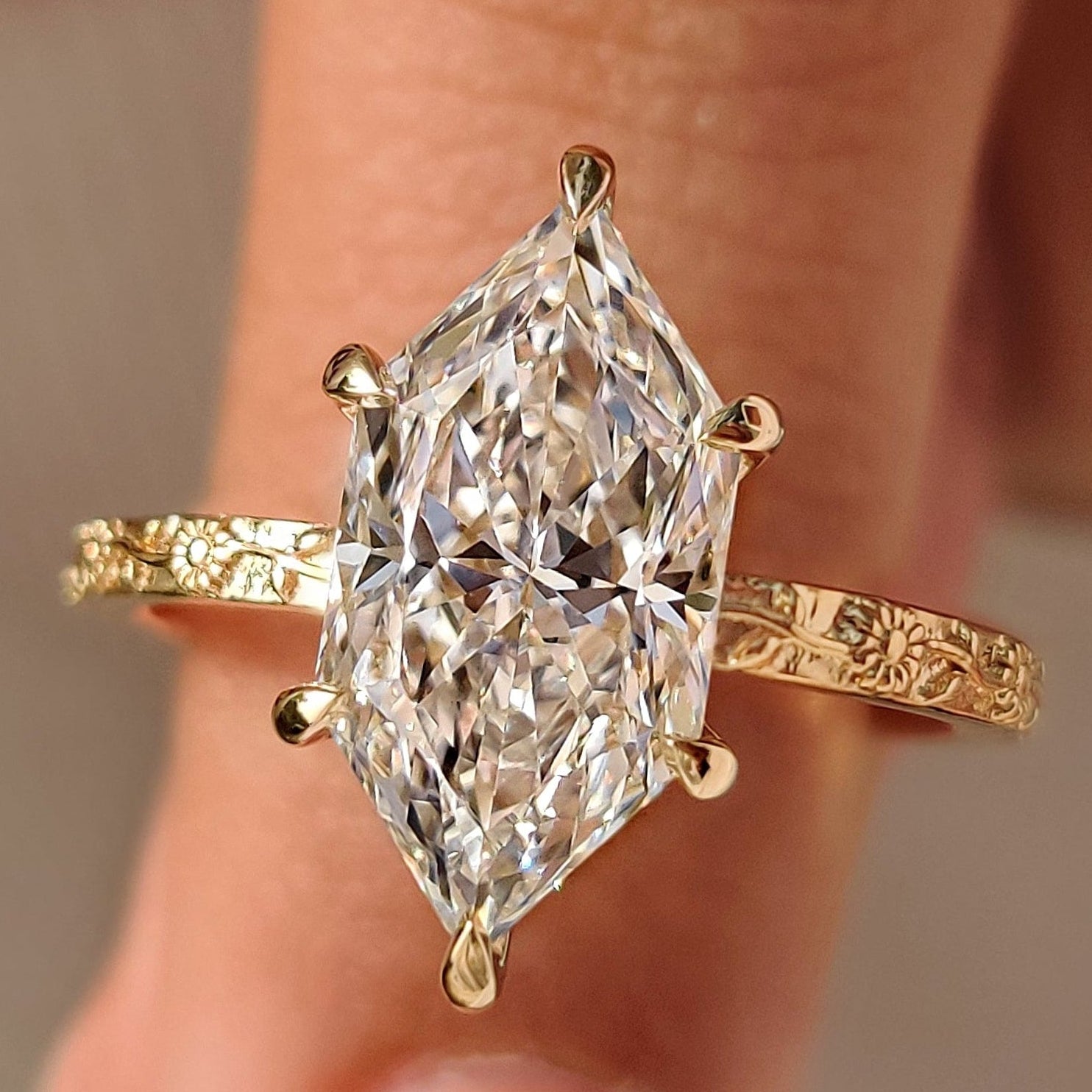
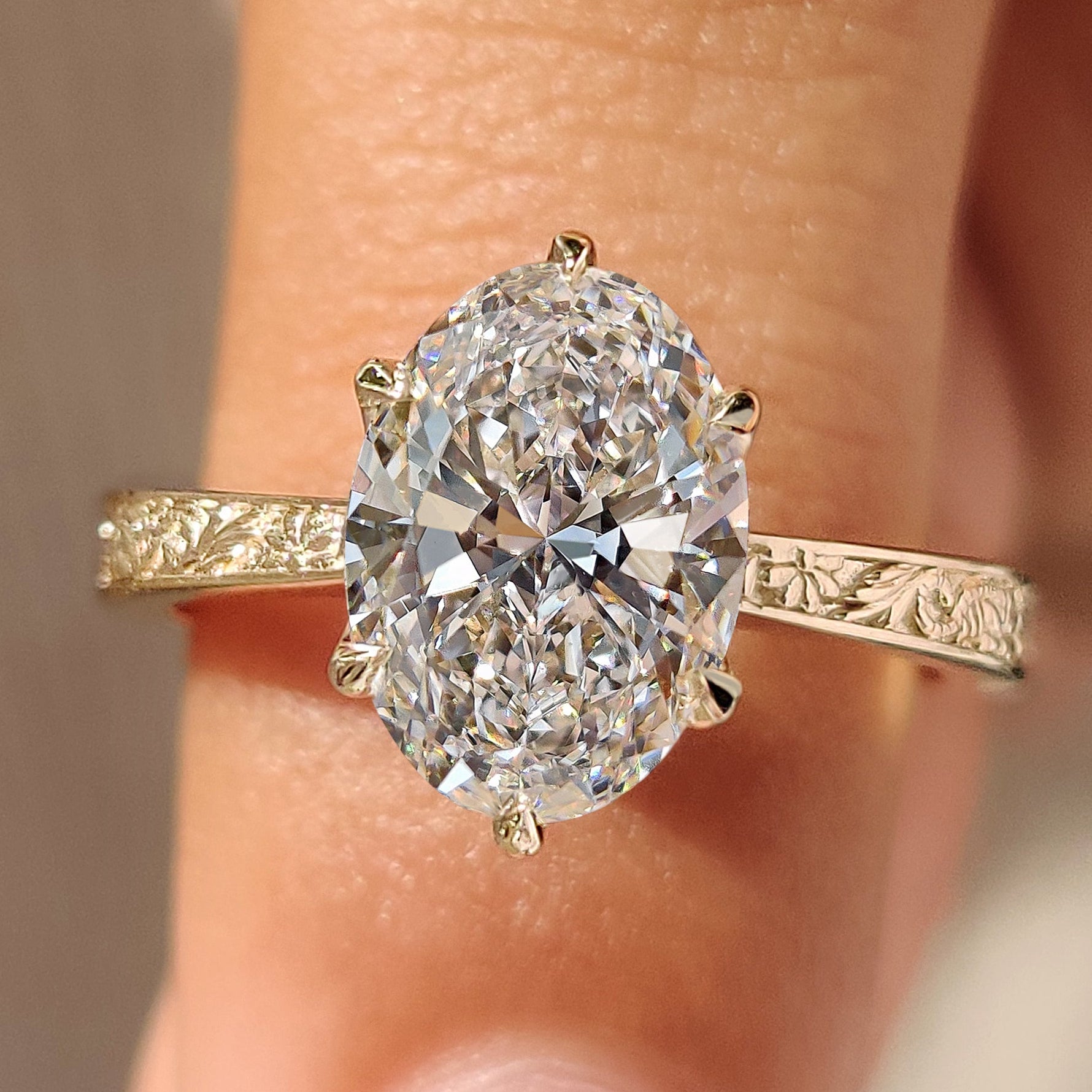
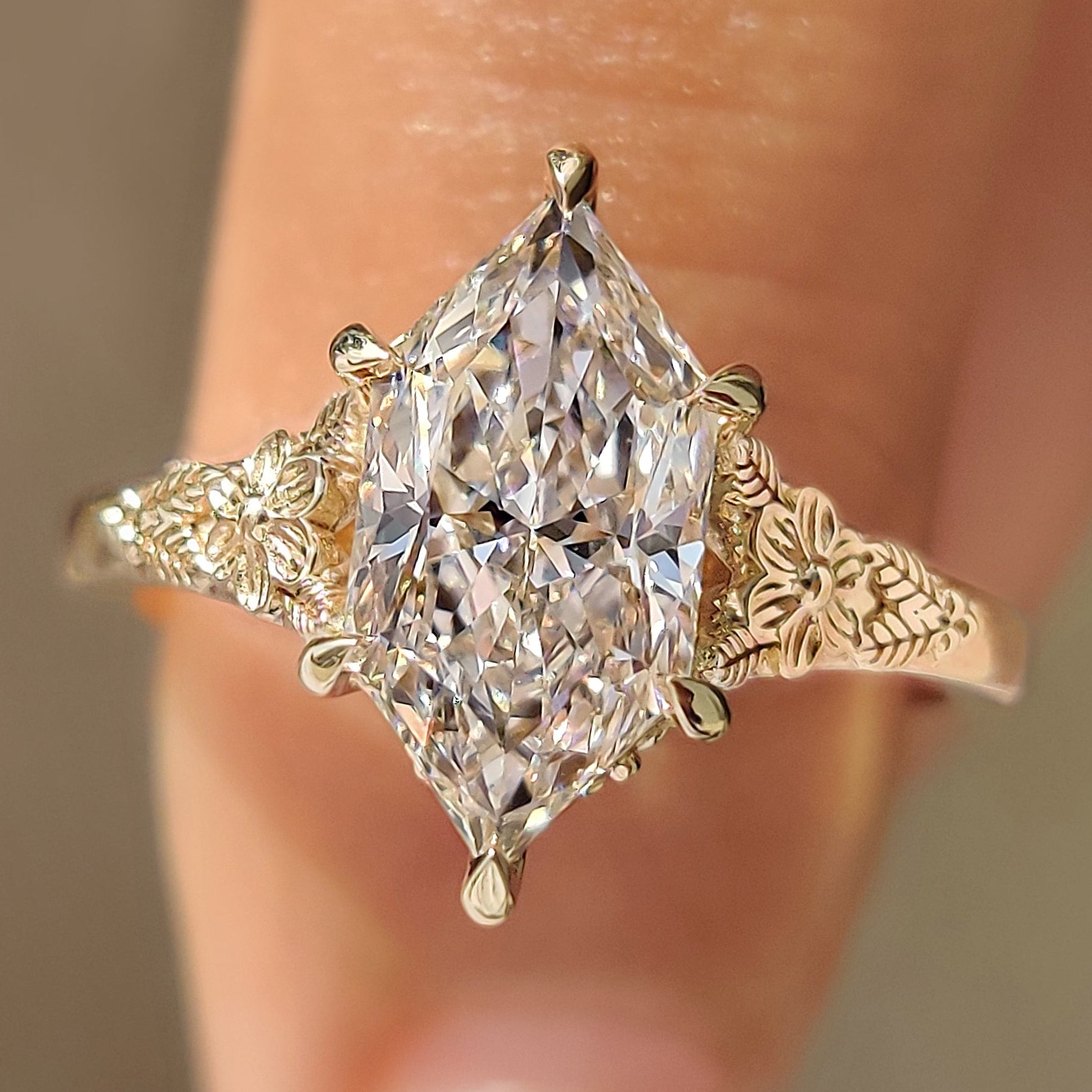
Both shapes work well in solitaire settings, though the visual result is quite different. A Dutch marquise solitaire places the angular geometric outline front and center with nothing else in the design. The shape reads clearly, and the pointed ends extend the visual length of the ring. An oval solitaire creates a softer, more continuous oval shape that sits naturally and works with almost any band design.
Halo and Hidden Halo Settings
Oval halo is one of the most commonly used setting combinations for this shape because the circular or oval halo frames the stone and increases the overall visual presence. Hidden halos accent stones beneath the center diamond add brilliance from below without changing the face-up silhouette.
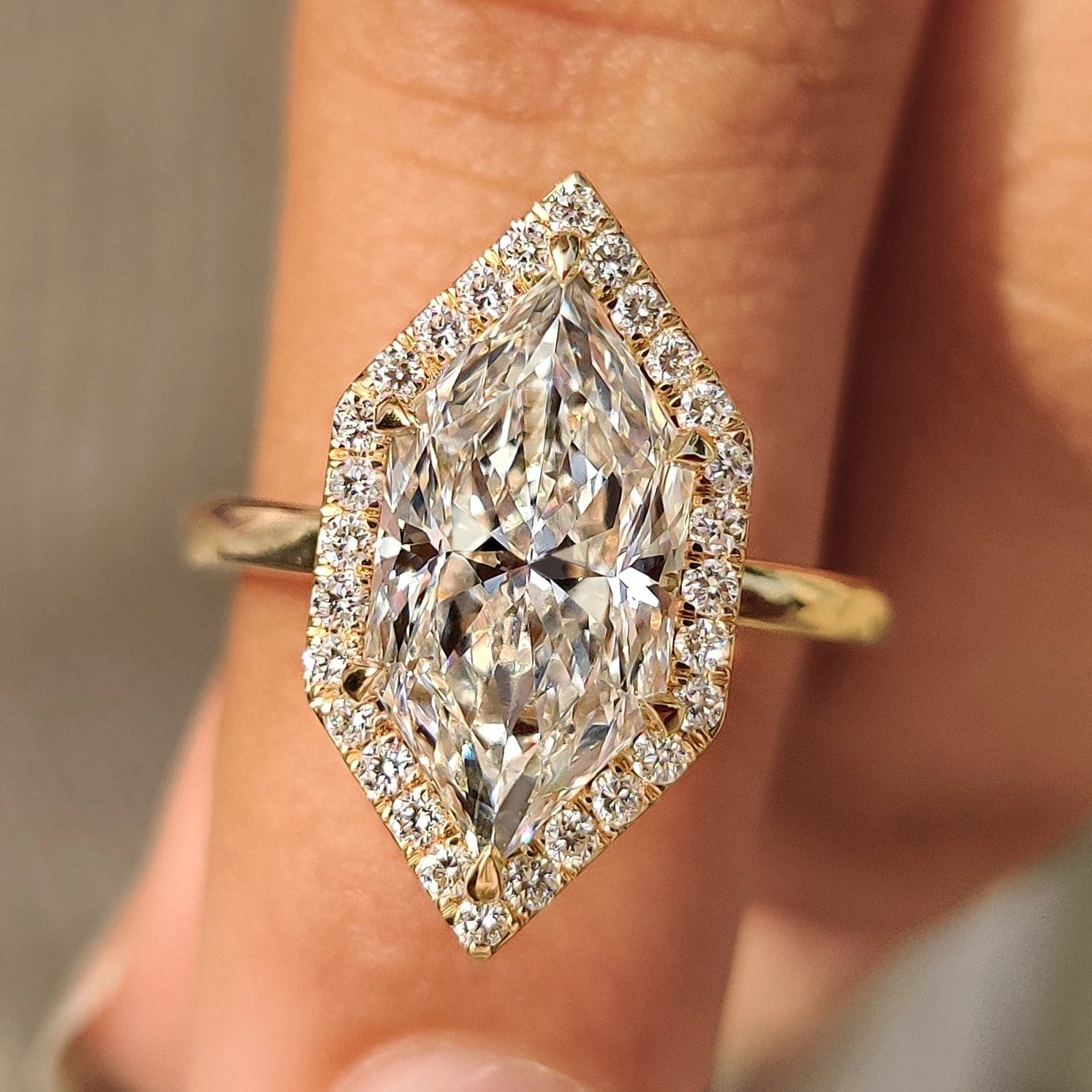
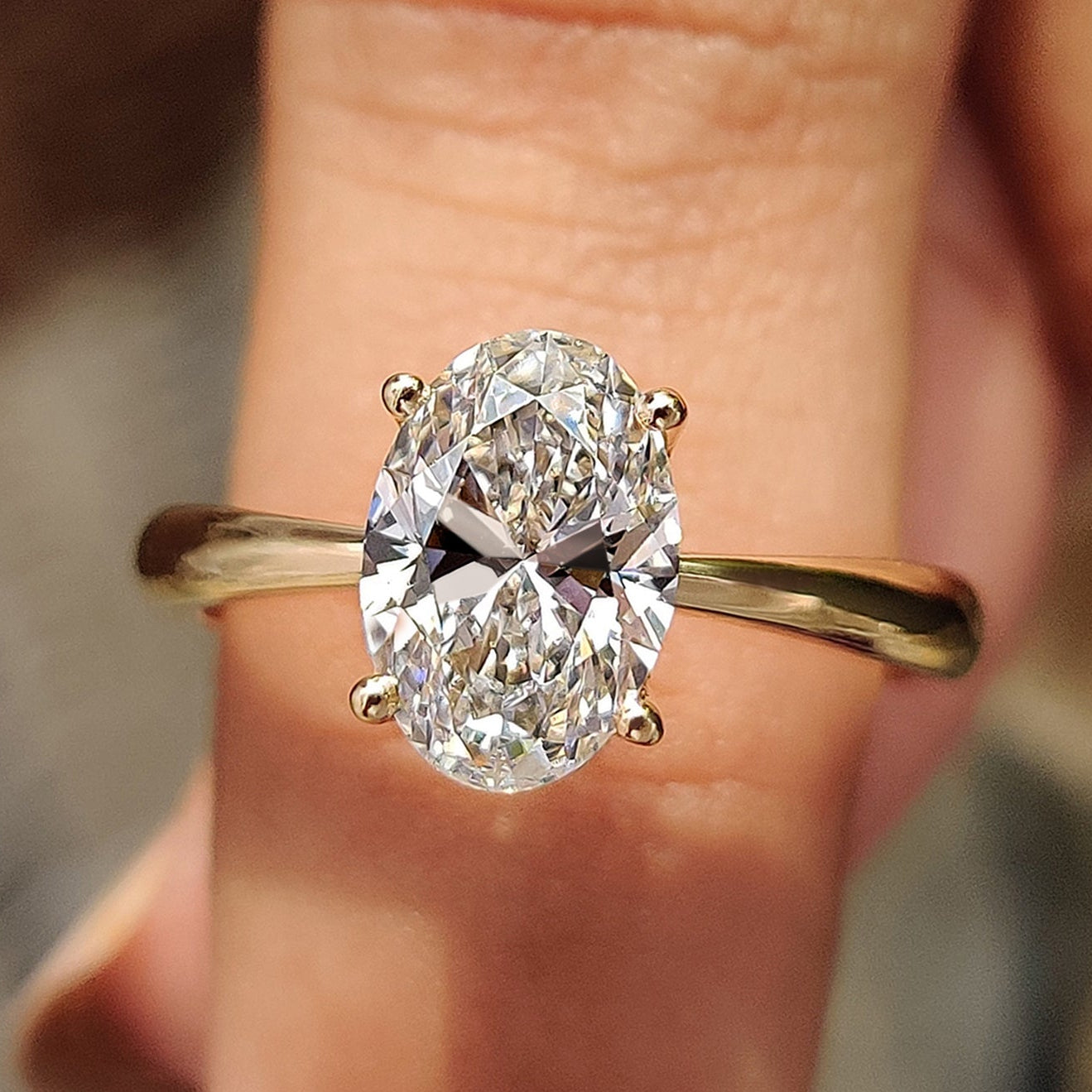
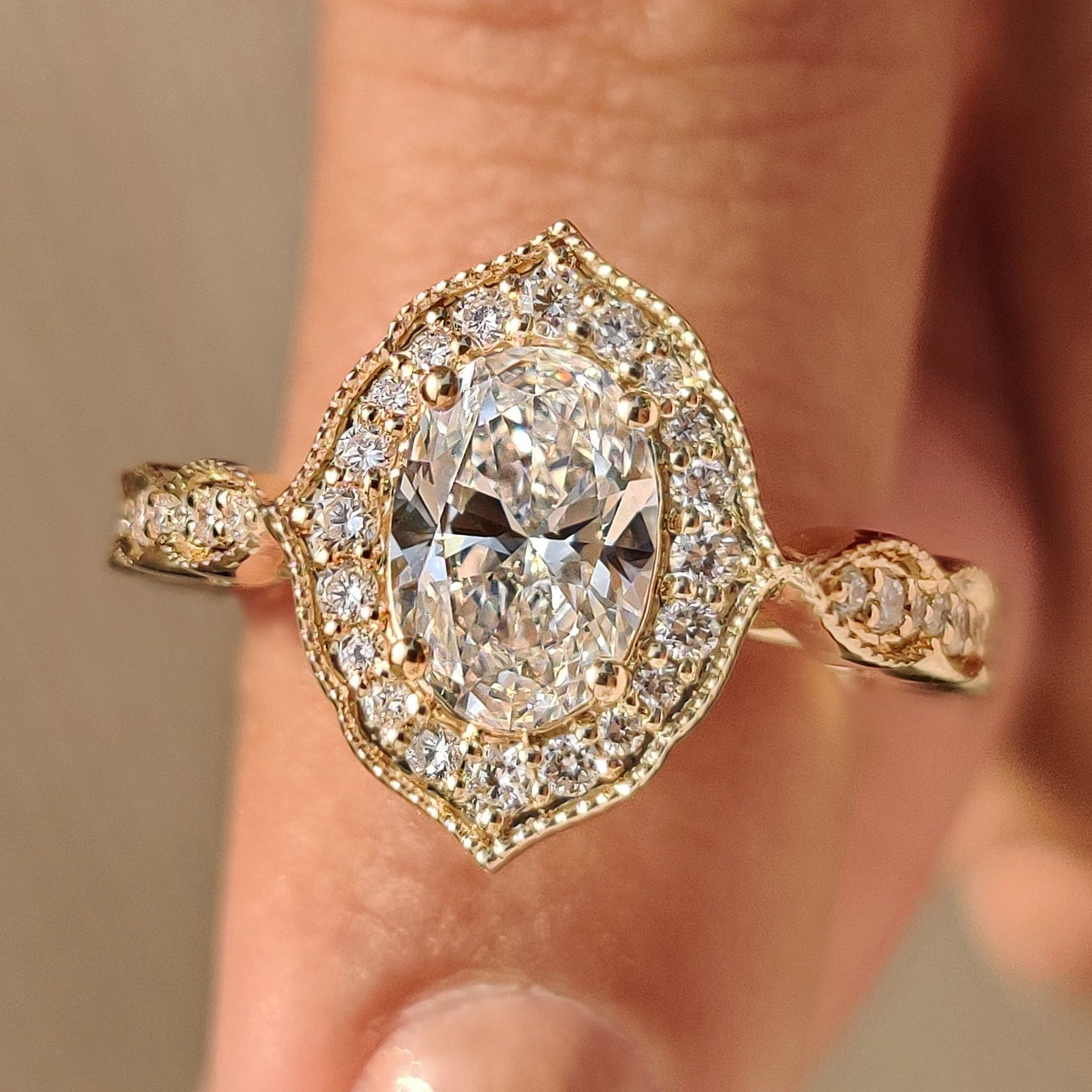
For Dutch marquise, a halo follows the hexagonal or angular outline rather than a round frame, which creates a setting with a more structured look. A geometric halo that respects the shape’s straight sides reads differently from a rounded halo, and both are valid design directions.
Three Stone Settings
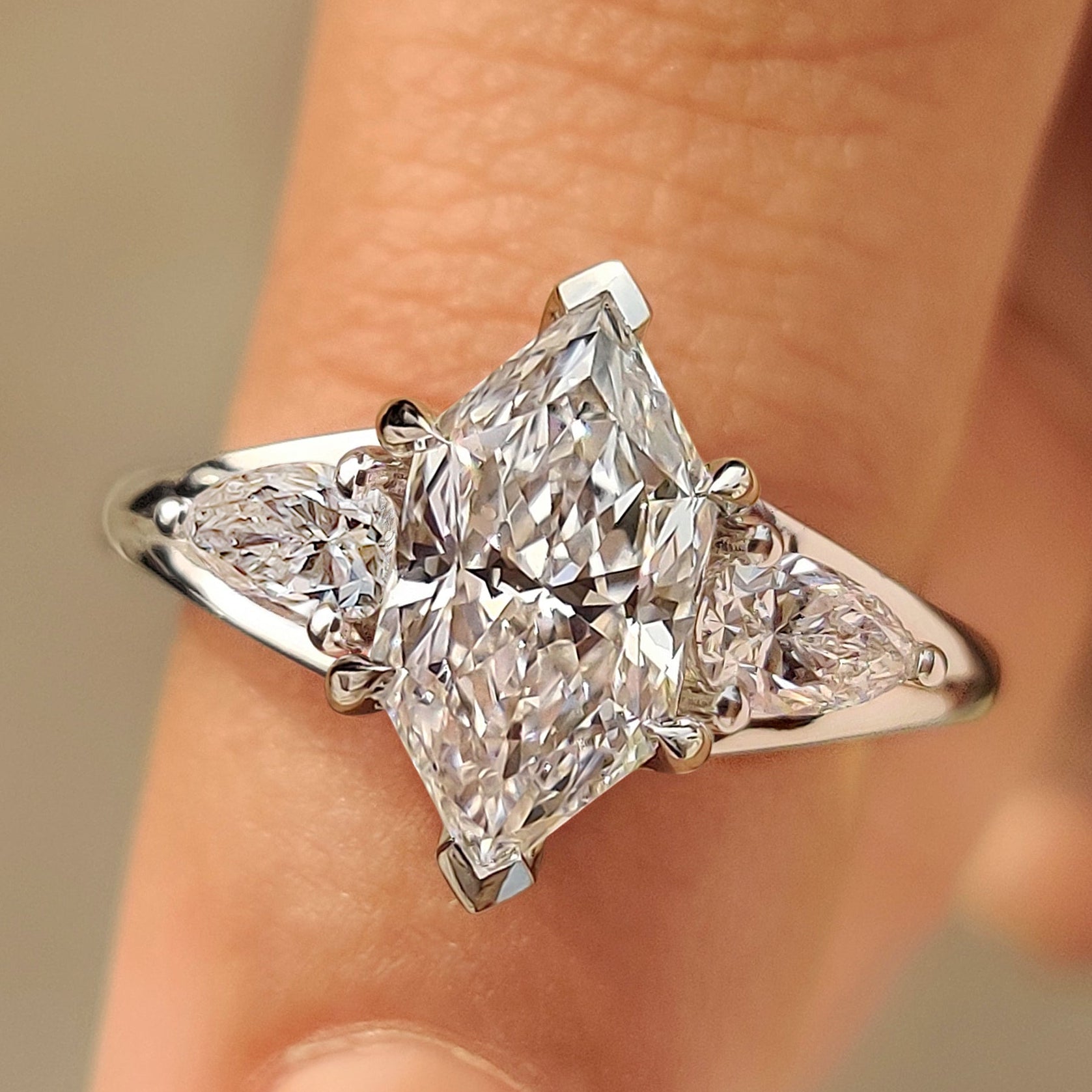
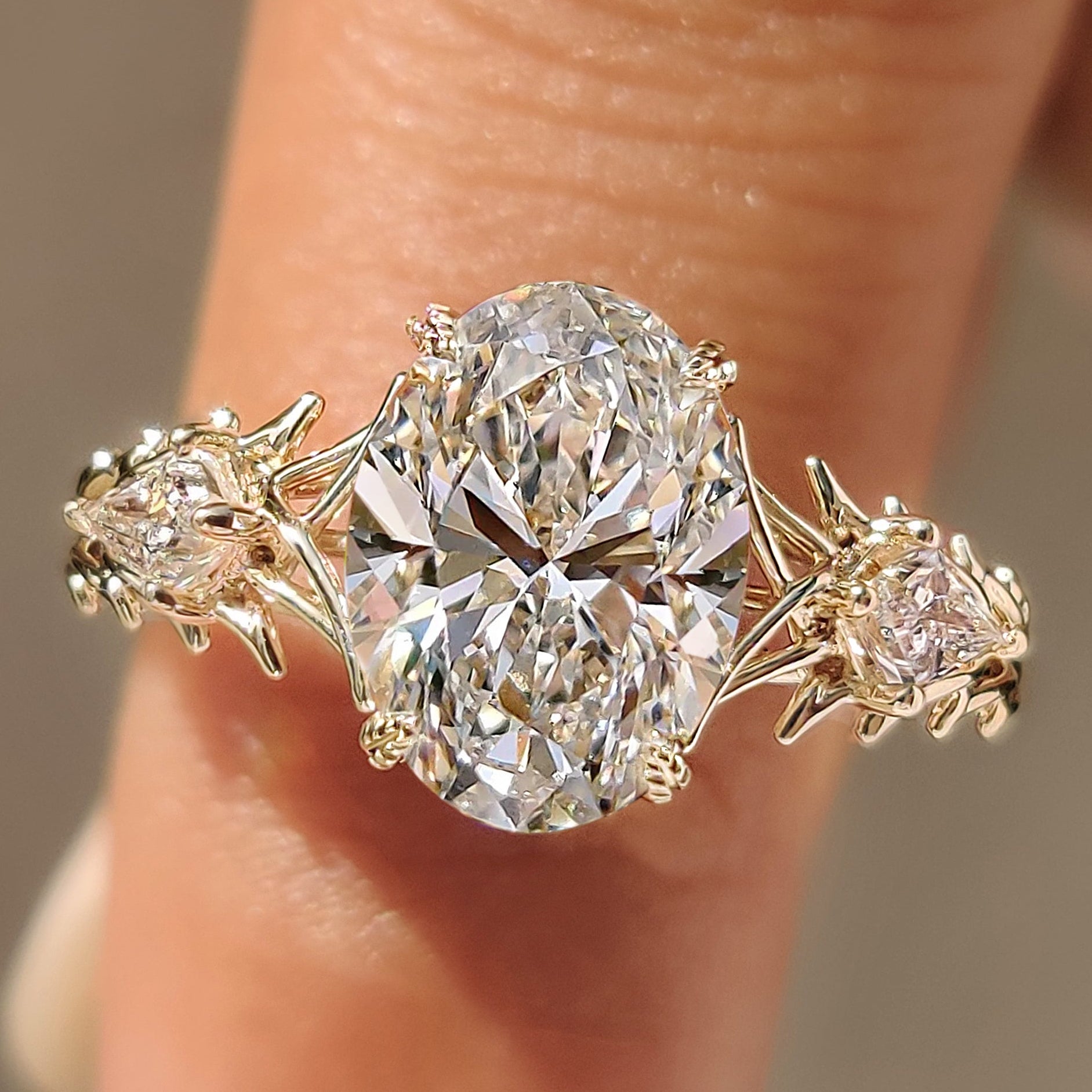
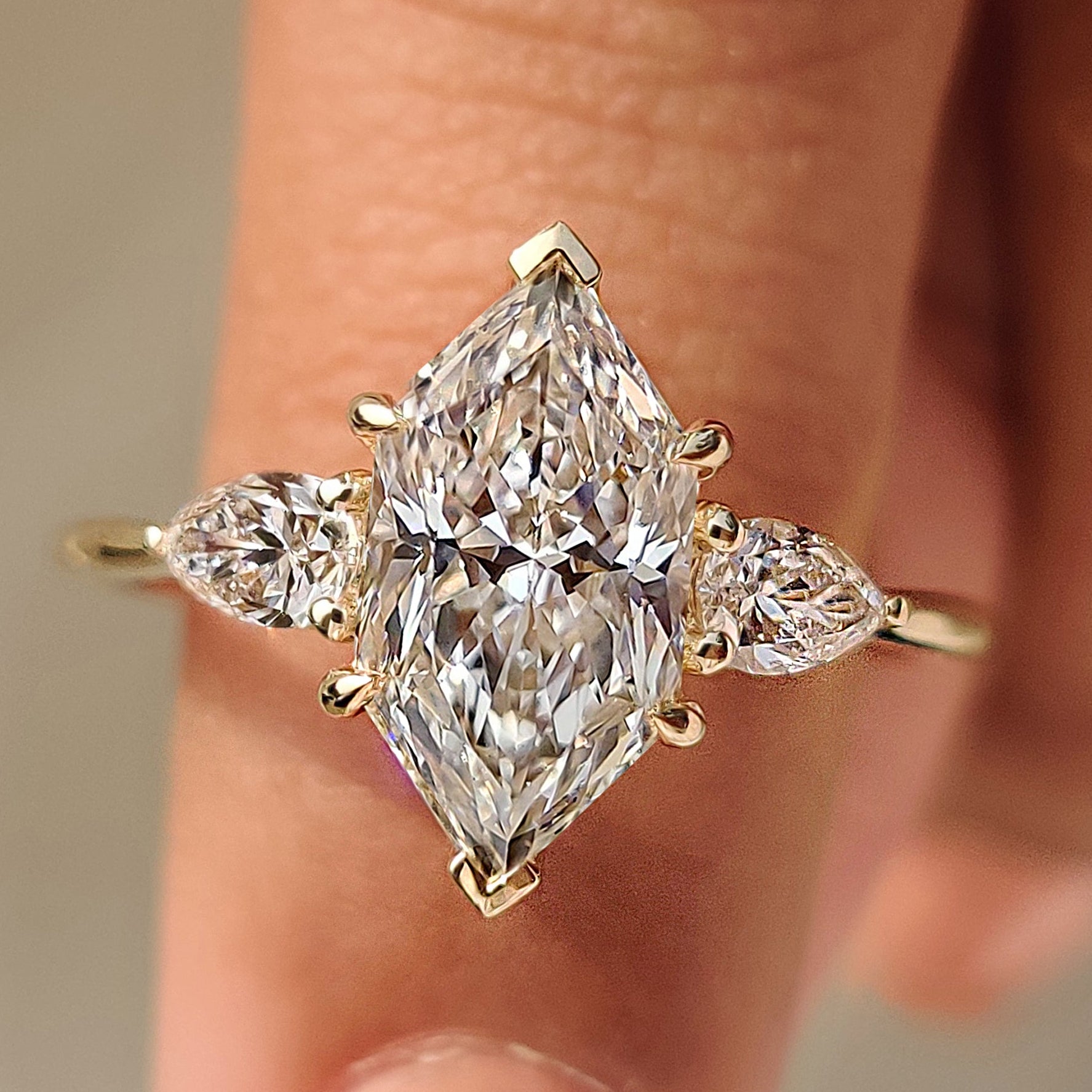
Three stone designs work for both shapes, with the side stone choice affecting the overall balance. Tapered baguettes and smaller elongated side stones work well alongside Dutch Marquise because they follow the stone’s directional quality. For oval, rounded side stones and tapered shapes can both complement the softer outline. Proportion matters; side stones that are too large in either combination can draw attention away from the center stone.
Bezel and East West Settings
Bezel settings follow the perimeter of the stone, and for a Dutch Marquise the bezel creates a strong architectural outline by defining the angular edge in metal. For an Oval, the bezel produces a smooth, continuous frame that complements the curved outline.
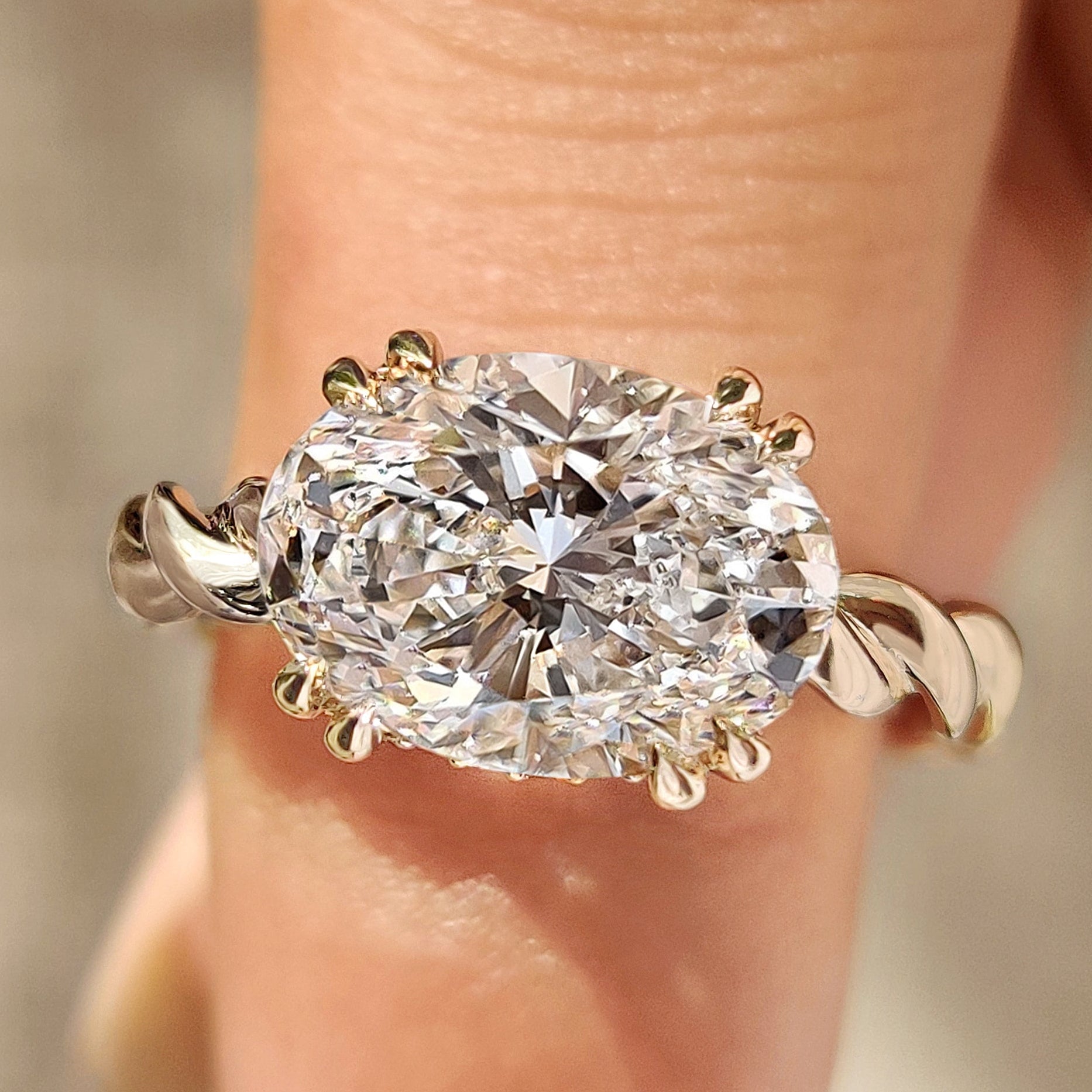
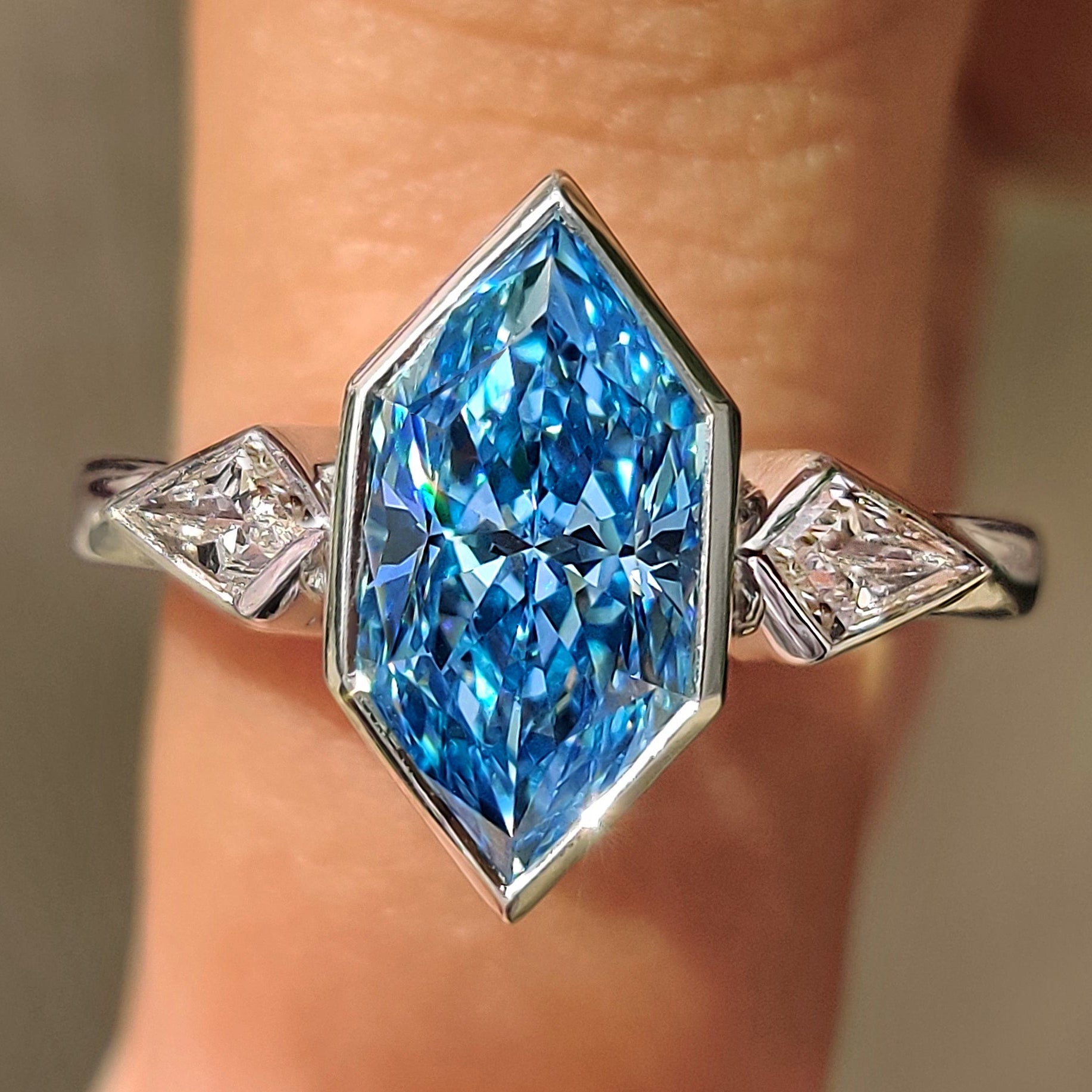
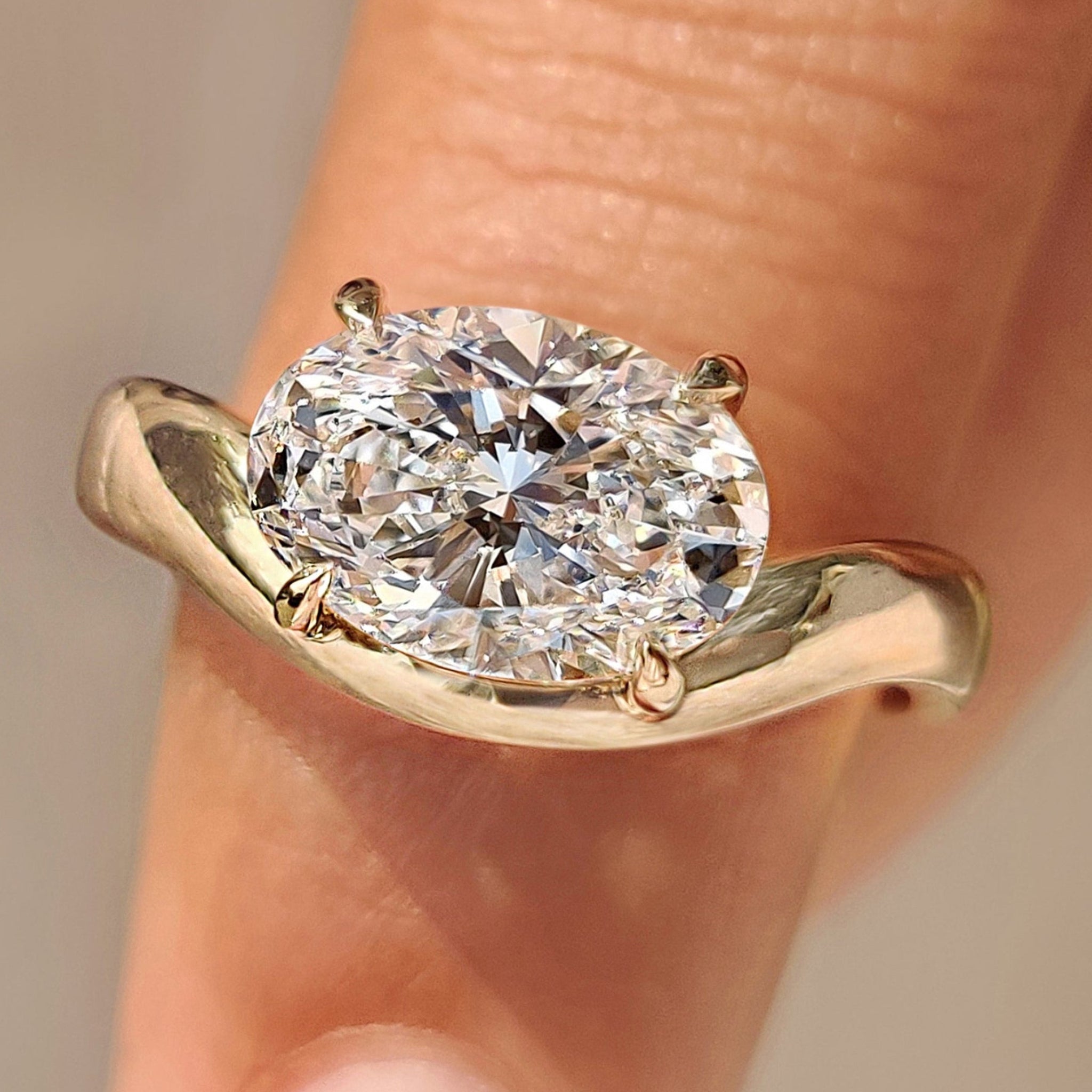
East west orientation rotates the diamond 90 degrees so the long axis runs horizontally across the finger. Both Dutch marquise and Oval can be set east-west, producing a wide horizontal look instead of the traditional vertical elongated silhouette. East west Dutch marquise creates a strong horizontal geometric bar. East west oval produces a softer horizontal line. In both cases, setting height and wedding-band compatibility should be evaluated for the specific ring design.
Dutch Marquise vs Oval for Different Styles
The style directions that suit each shape differ based on the geometric character of the outline.
Dutch marquise pairs naturally with angular, geometric, and architectural design directions. The straight sides and pointed ends are consistent with Art Deco and vintage-inspired settings, especially designs that use milgrain, geometric metalwork, or structured gallery shapes. The shape also works in contemporary minimalist settings where the outline stands as the main visual feature. For buyers drawn to jewelry that reads as less conventional, the Dutch marquise is a less common choice in US engagement ring shopping, which contributes to its visual distinctiveness. More on this is covered in Is Dutch Marquise Rare?
Oval diamonds are among the most versatile shapes in engagement ring design. The rounded outline is compatible with solitaire, halo, pave and three stone designs across a broad range of aesthetic directions, from classic to contemporary. The softness of the Oval outline suits nature-inspired settings and relaxed, organic designs as well as more polished and structured ones.
For vintage inspired settings, both shapes can work. Dutch marquise in an Art Deco setting with milgrain and geometric details creates a strongly architectural ring. Oval in a vintage inspired setting reads softer and more romantic. Explore Vintage style engagement rings for examples of how vintage detailing translates across different center-stone shapes.
Choose Between Dutch Marquise and Oval Diamond
The decision comes down to a combination of geometric preference and practical considerations. Going through the key factors in order makes the choice clearer.
Outline preference: This is the starting point. Dutch marquise has a defined angular geometry with straight sides and pointed ends. Oval has a continuous soft curve. Looking at both shapes face-up in photographs, not just in isolation but in ring settings, gives the most honest impression of how each outline reads.
Length-to-width ratio: Decide how long and narrow, or how wide and full, you want the stone to appear. Both shapes are available in a range of proportions. Comparing actual stones with their millimeter measurements alongside carat weight is more useful than comparing carat weights alone.
Symmetry: Both shapes require balanced outlines, but the angular geometry of the Dutch marquise makes asymmetry more immediately visible. Inspecting specific stone images carefully is important before purchasing.
Sparkle and light performance: Evaluate the actual stone rather than generalizing from the shape name. Video of a diamond in motion is particularly useful for assessing how it handles light in real conditions.
Setting design: Consider which settings appeal to you for each shape and how those settings affect the ring’s overall profile and the practical question of tip protection for Dutch marquise.
Wedding band fit: Setting architecture affects whether a straight band will sit cleanly alongside the engagement ring. A contoured or curved band may be necessary for certain settings regardless of whether the center stone is Dutch marquise or Oval.
For setting inspiration across Dutch marquise designs, the Dutch Marquise Engagement Ring Ideas article at Carat Diamonds covers a range of design directions in detail.
Dutch marquise and Oval diamonds offer two distinct ways to achieve an elongated look. Dutch marquise emphasizes angular geometry, while Oval offers a continuous curved outline. Compare the individual diamond's proportions, light performance and setting options before deciding which suits your preferences. Explore our Dutch marquise engagement rings and Oval cut engagement rings to compare both shapes in actual designs.


