

Choosing an engagement ring is one of the most exciting decisions you’ll make-but it can also feel overwhelming, especially when two styles look almost identical at first glance.
If you’re weighing a Dutch Marquise vs. a Regular Marquise, you’re not alone. Many shoppers get confused by how similar these two shapes appear in photos, only to realize the differences are actually quite meaningful once they understand what to look for.
The shape of your diamond affects everything: how big it looks on your finger, how much it sparkles, what settings work best, and how comfortable it feels daily. The wrong choice can leave you second-guessing yourself for years.
This guide breaks it all down. By the end, you’ll know exactly which marquise shape fits your style, lifestyle, and budget-so you can shop with real confidence.
Dutch Marquise vs Regular Marquise – Quick Comparison Table
| Feature | Dutch Marquise | Regular Marquise |
|---|---|---|
| Shape | elongated, six-sided geometric | Curved sides with two pointed ends |
| Length-to-Width Ratio ( 1 CT ) | 2.06:1 | 1.96:1 |
| Sparkle | Strong brilliance | Excellent brilliance |
| Finger Coverage | Moderate | High |
| Visual Size | Slightly smaller appearance | Larger appearance |
| Bow-Tie Effect | Less noticeable | More noticeable |
| Vintage Appeal | Moderate | Very high |
| Modern Appeal | High | Moderate |
| Price Range | Slightly lower | Slightly higher |
| Durability | Pointed tips require protective setting | Higher chipping risk at tips |
| Best For | Geometric styles | Classic marquise styles |
| Popularity | Growing | Established classic |
| Dutch Marquise Rings | Marquise Rings |
What Is a Dutch Marquise Diamond?
Origin and Design
A Dutch Marquise has a six-sided geometric outline with six distinct edge points. Its angular structure creates a more architectural silhouette than the curved outline of a classic marquise. The result is an elongated geometric outline defined by angular edges and distinct points rather than the continuous curves of a classic marquise.
Think of it as a geometric interpretation of the marquise. Its angular edges create a structured silhouette while the pointed ends retain the recognizable marquise character.
Key Characteristics
- Six distinct edge points creating a geometric outline
- Proportions vary by individual stone and should be evaluated from its actual measurements and outline
- Pointed tips that benefit from protective V-prongs or bezel settings
- An elongated geometric appearance with angular sides and pointed ends

Why Buyers Choose Dutch Marquise
Buyers who love the marquise shape but want something that feels more contemporary often gravitate toward the Dutch version. It works beautifully in east-west settings and pairs well with modern solitaire styles. Bow-tie visibility depends on the individual stone and its faceting, so buyers should evaluate the actual diamond rather than assume performance from the shape name alone.
Pros and Cons
Pros:
- Distinctive geometric outline
- Pointed tips can be protected with appropriate settings
- Modern, versatile aesthetic
- Limited availability makes direct price comparisons difficult
- Works well in east-west and horizontal settings
Cons:
- Individual proportions can change its face-up appearance
- Its geometric proportions create a different finger coverage effect than a classic marquise
- Less traditionally recognized
What Is a Regular Marquise Diamond?
Traditional Design
The regular (or classic) marquise diamond is one of the oldest fancy diamond shapes in existence. Legend has it that King Louis XV of France commissioned a diamond shaped like the lips of his mistress, the Marquise de Pompadour-and that’s where the name comes from.
Today, the traditional marquise features a long, slim body with two sharp, pointed ends and an elliptical outline. It’s dramatic, romantic, and unmistakably elegant.
Key Features
- Elongated shape with a high length-to-width ratio (1.85:1 to 2.1: 1)
- Two symmetrical pointed tips
- Maximum finger coverage and elongation effect
- Often shows a visible bow-tie effect depending on cut quality
Why It’s Popular
The regular marquise has stayed popular for decades because it delivers dramatic visual impact at a lower price per carat than round brilliants. For the same carat weight, it looks larger on the finger than almost any other shape-which makes it a favorite for buyers who want maximum presence without maximum spend.
Pros and Cons
Pros:
- Exceptional finger elongation
- Large visual appearance
- Rich romantic history and vintage appeal
- Looks stunning in halo and solitaire settings
- Strong resale recognition
Cons:
- Tips are prone to chipping if not protected
- Bow-tie effect can be pronounced in poorly cut stones
- Requires careful setting to protect the points
Dutch Marquise vs Regular Marquise – Key Differences

Appearance and Shape
The most obvious difference is proportion. The regular marquise is longer and narrower, giving it a blade-like elegance. The Dutch Marquise has a six-sided geometric outline with six distinct edge points, while the classic marquise has smooth curved sides and pointed ends. Both are beautiful-but they create distinctly different visual statements.
Regular marquise: dramatic, elongated, fashion-forward.
Dutch marquise: balanced, modern, gently refined.
Sparkle and Light Reflection
Both cuts deliver excellent brilliance because they both use a modified brilliant facet pattern. However, Light performance depends on the individual stone's faceting, proportions, and symmetry. A Dutch Marquise should be evaluated through photographs or video rather than assumed to have a specific light pattern.
The regular marquise can sparkle brilliantly when cut to ideal proportions-but a poorly proportioned stone will show a dark, shadow-like bow-tie across the center that dulls the overall effect. Always view a regular marquise in person or in video before purchasing.
Finger Coverage
Regular marquise wins here, and it’s not even close. The elongated shape runs nearly the full length of the finger, creating an illusion that the hand is slender and long. It’s a genuine beauty trick, and many buyers specifically choose it for this reason.
The Dutch marquise still covers more of the finger than a round or oval, but the effect is less dramatic.
Size Illusion
Per carat, the regular marquise appears larger than almost any other diamond shape-including the Dutch marquise. Its elongated surface area maximizes what’s visible from above, which is how we judge diamond size in real life.
If looking as large as possible matters to you, the regular marquise is the stronger choice.
Durability and Chipping Risk
Both shapes have pointed ends that require protection from impact. V-prongs or bezel settings can help shield the tips during everyday wear. Pointed tips concentrate stress, making them vulnerable to impact.
If you’re hard on your hands-frequent gym-goer, outdoor hobbyist, or hands-on professional-the Dutch marquise’s sturdier tips are worth considering.
Price Comparison
Generally speaking, regular marquise diamonds are priced slightly higher because they’re more widely recognized and in greater demand. However, the difference isn’t dramatic. Within the same quality grades (cut, color, clarity, carat), Price varies by availability, carat weight, quality, and individual cutting. Because Dutch Marquise diamonds are less standardized and less widely available, direct price comparisons can be difficult.
Both shapes are significantly more affordable than round brilliant diamonds of the same carat weight-one of the biggest advantages of the marquise family overall.
Ring Settings Compatibility
The regular marquise pairs best with:
- Solitaire (classic and timeless)
- Halo (maximum glamour)
- Vintage milgrain settings (romantic and intricate)
- East-west (contemporary twist on a classic shape)
The Dutch marquise pairs best with:
- East-west solitaire (its proportions shine here)
- Bezel settings (protects the tips beautifully)
- Minimalist solitaire (clean, modern look)
- Pavé band (adds sparkle without overwhelming the center stone)
Daily Wear Comfort
Daily wear depends largely on the stone's setting and tip protection. V-prongs or bezel settings can help protect either marquise shape from impact and snagging.
The regular marquise, especially in a high solitaire setting, can catch on clothing or be bumped more easily due to its longer profile. This doesn’t mean it’s impractical-millions of people wear regular marquise engagement rings every day without issue. Just be aware that setting choice matters a lot.
Resale Value
Resale value depends on factors such as diamond quality, documentation, market demand, and the individual stone. The shape alone does not guarantee a specific resale advantage. If resale is a serious concern, the traditional cut offers a slight advantage.
Popularity Trends
Classic marquise diamonds peaked in popularity during the 1970s–80s and have enjoyed a strong vintage revival in recent years, driven by celebrity choices and the broader engagement ring market’s shift toward unique shapes.
The Dutch marquise is newer to the mainstream market and is growing in popularity among buyers who want a distinctive alternative to the classic shape. It’s becoming a quiet favorite for those who like the marquise look but want something with a fresher feel.
Which Marquise Shape Looks Bigger?
Direct answer: The regular marquise looks larger per carat than the Dutch marquise.

Because of its elongated shape and high surface area, a regular marquise visually occupies more space on the finger. A 1.00 ct regular marquise can appear as large as a 1.20 ct round brilliant. The Dutch marquise, while still appearing larger than many shapes, doesn’t stretch as dramatically across the finger.
If visual size is your primary concern, the regular marquise is the better choice.
Which One Sparkles More?
Both shapes sparkle beautifully when cut well-but there are real differences in how they handle light.
The Dutch marquise distributes light more evenly across its wider face, producing consistent sparkle without dark zones. The regular marquise has the potential for showstopping brilliance, but it’s more sensitive to cut quality. A poorly cut regular marquise can show a distracting bow-tie shadow across the center.
Bottom line: A well-cut regular marquise can outsparkle a Dutch marquise. But an average regular marquise may sparkle less than a well-cut Dutch marquise. Cut quality matters more than shape choice when it comes to light performance.
Best Settings for Dutch Marquise and Regular Marquise Rings
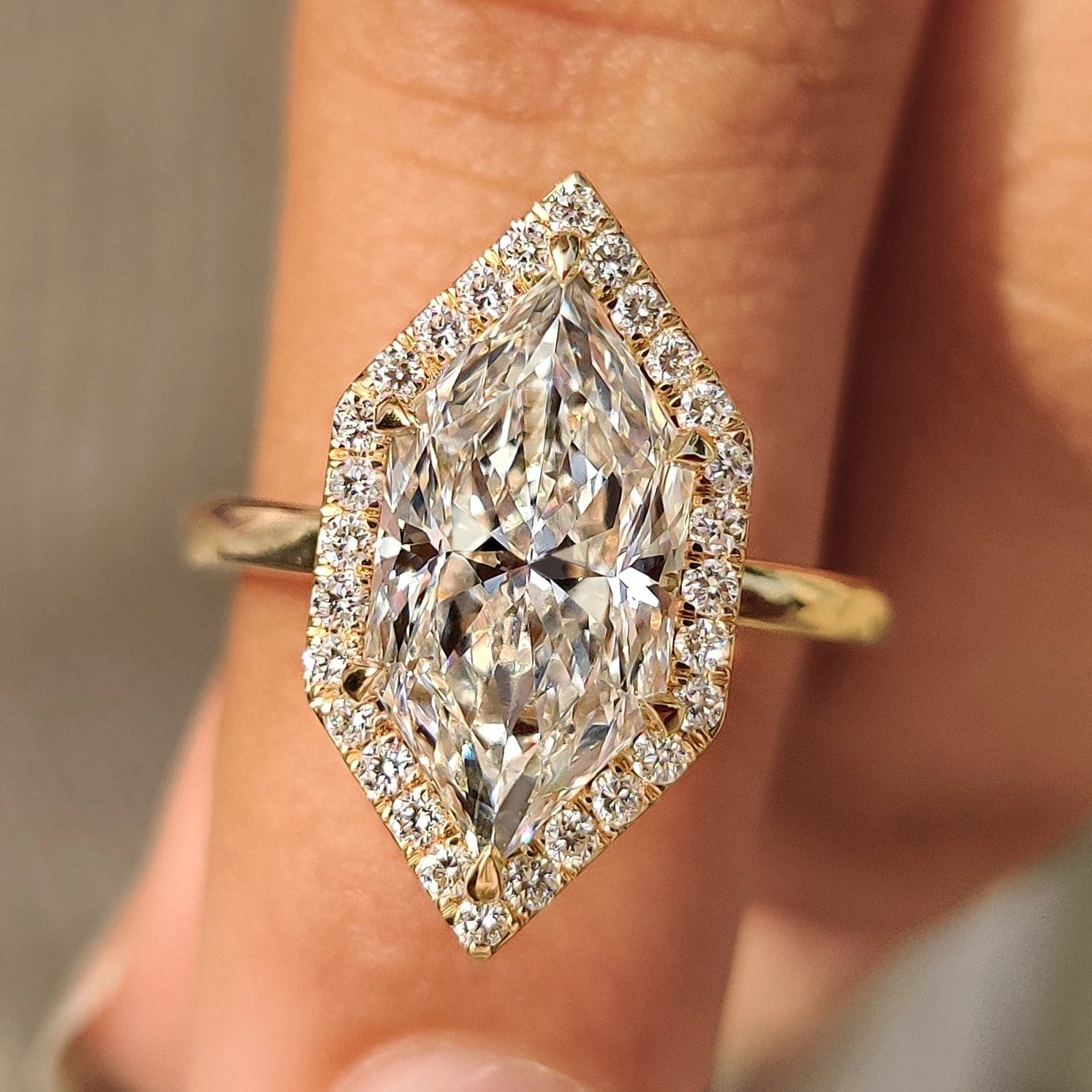
Dutch Marquise Diamond Ring In Halo Setting
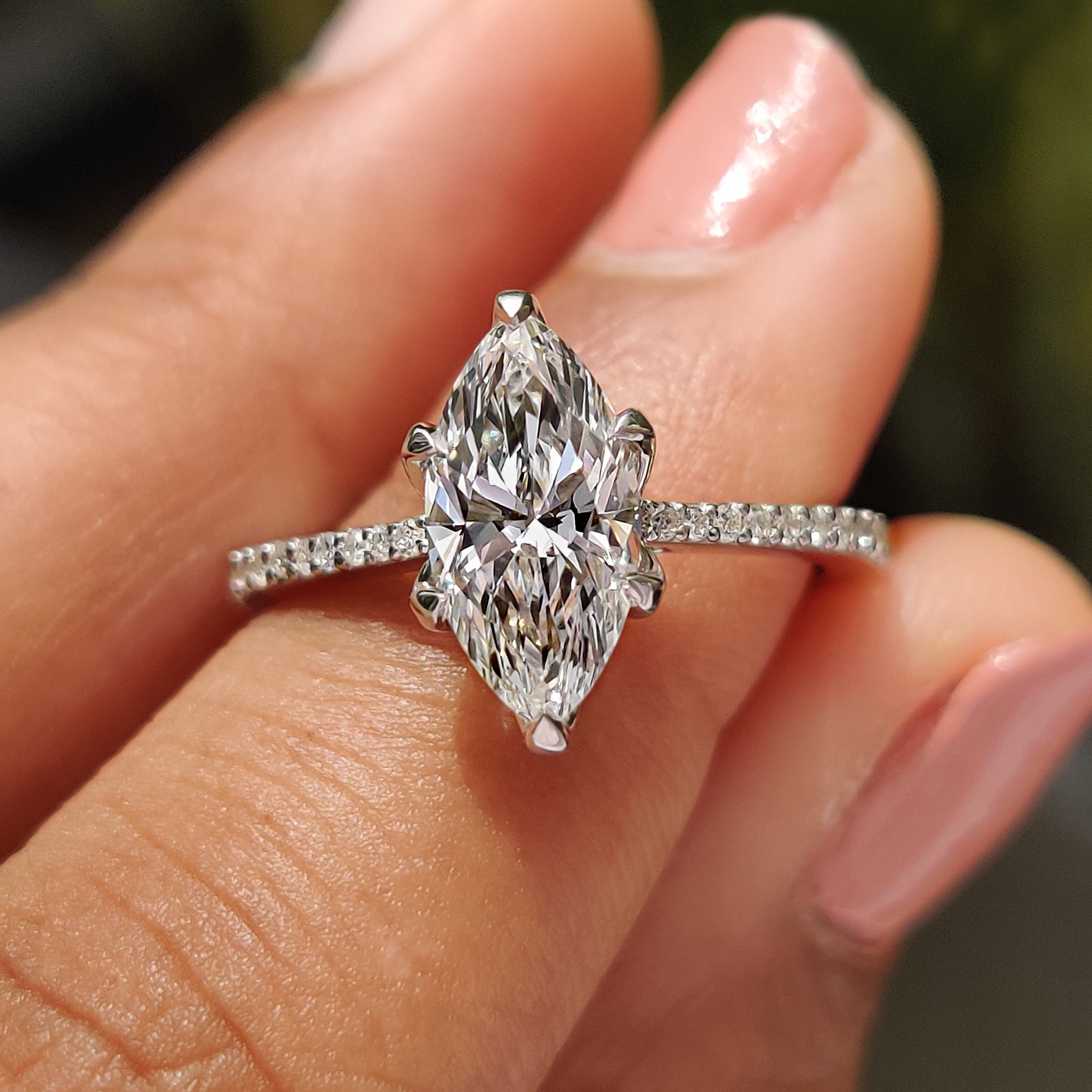
Marquise Engagement Ring With Cathedral Setting
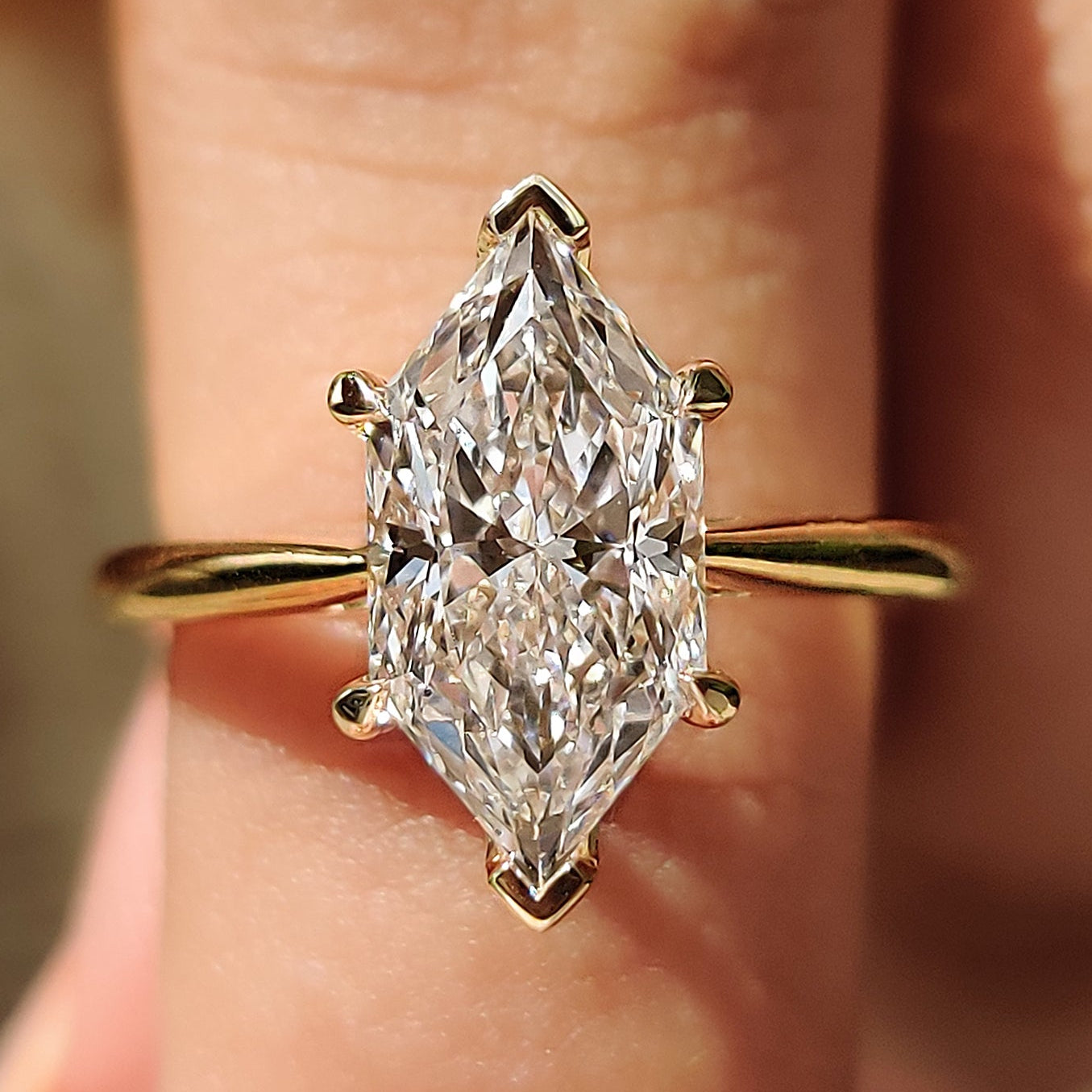
Dutch Marquise Hidden Halo Diamond Ring
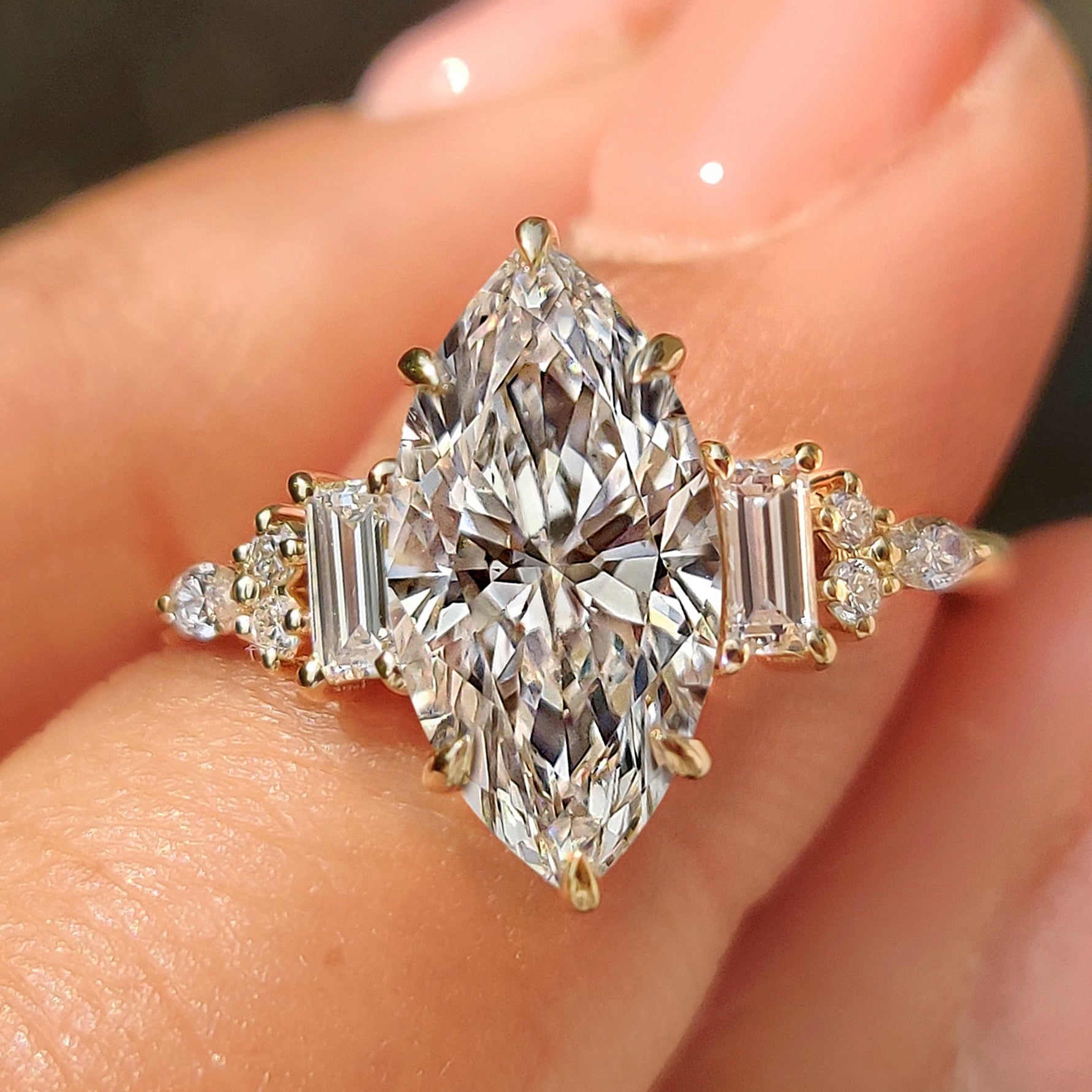
Marquise Cut Engagement Ring in Muse Setting
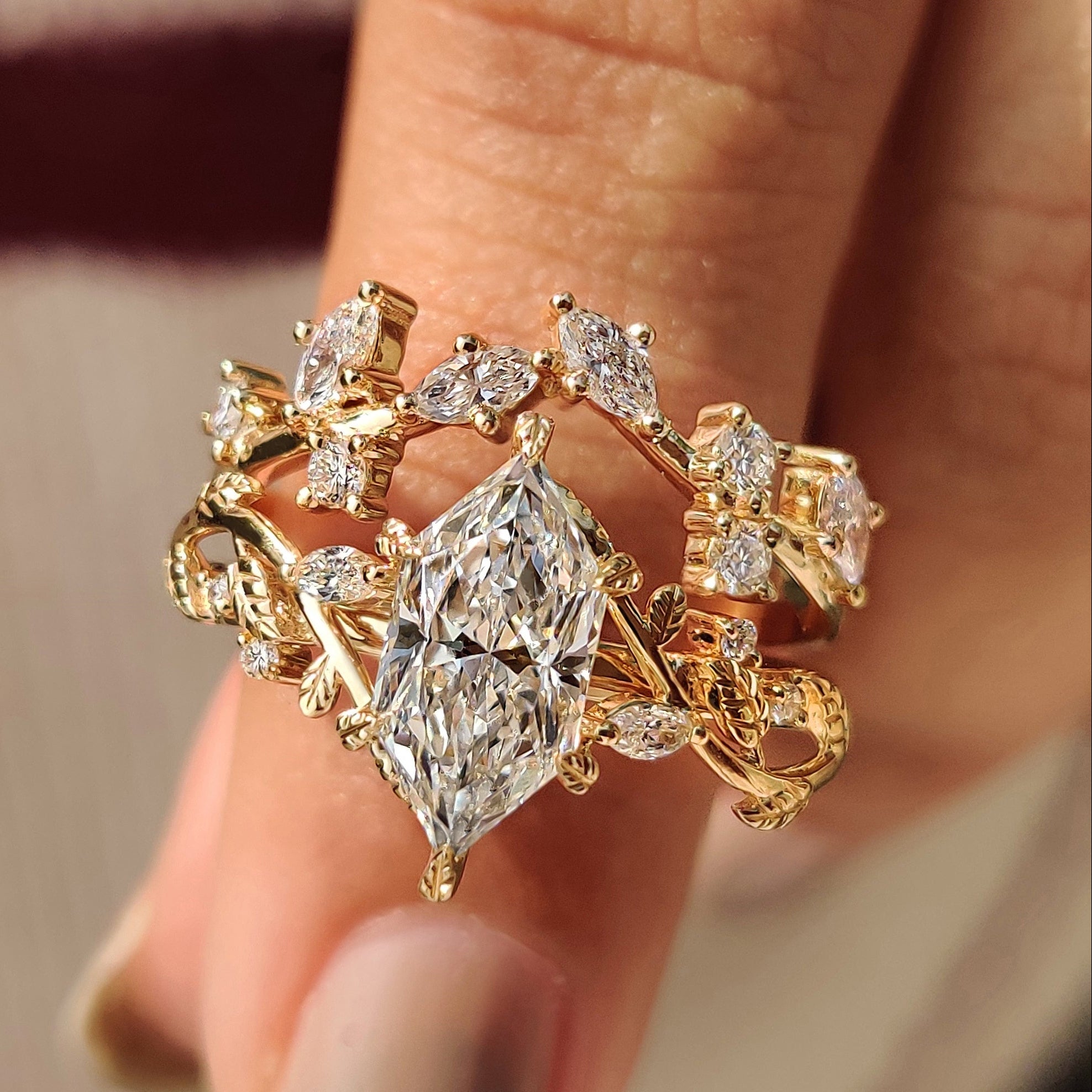
Dutch Marquise Ring in Nature Inspired style
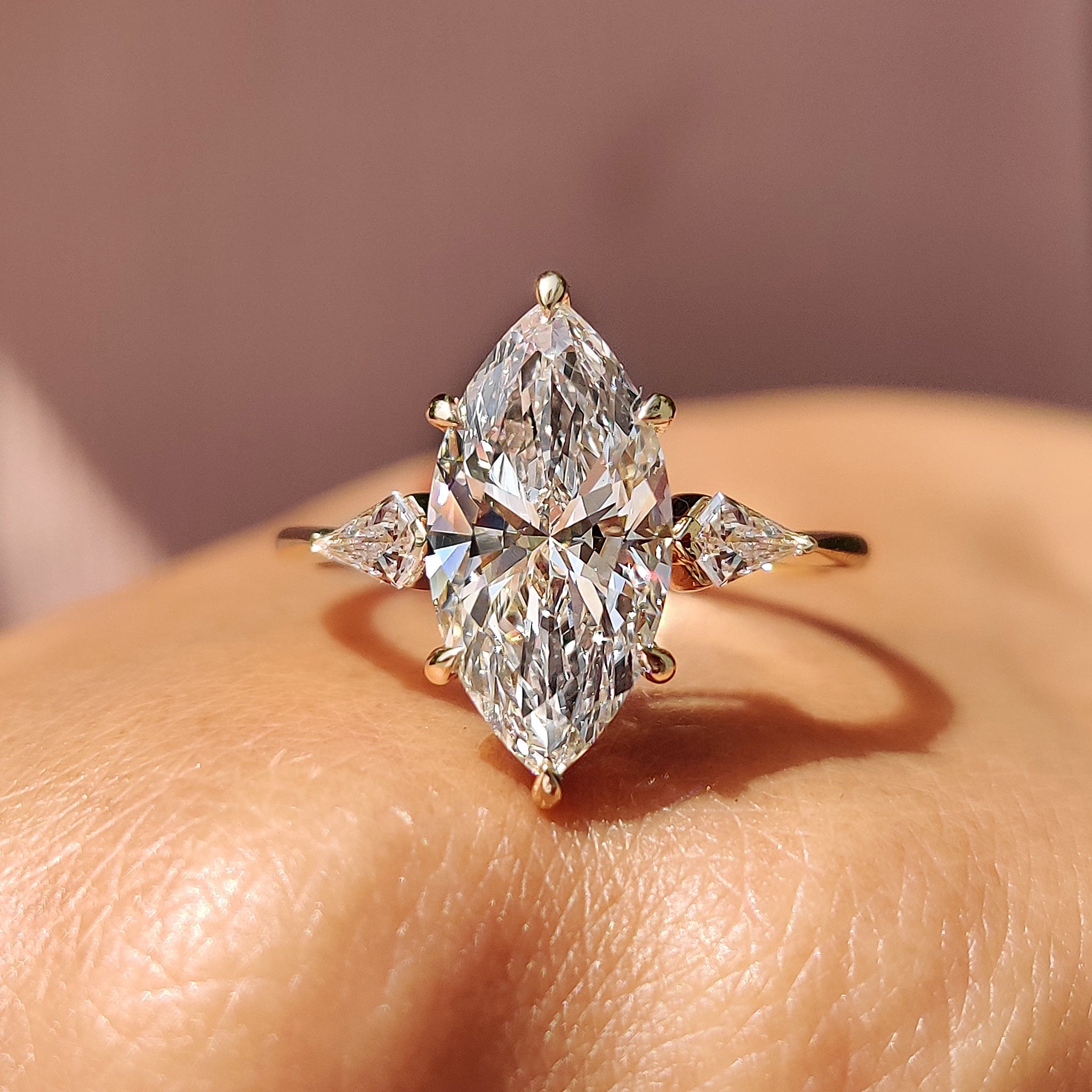
Marquise Diamond Ring With Kite Side Stone
- Solitaire Setting: Both shapes work beautifully in a classic solitaire. The regular marquise looks especially dramatic set vertically on a plain band. The Dutch marquise looks balanced and modern in the same setting.
- Halo Setting: The regular marquise absolutely shines in a halo-the surrounding diamonds amplify its elongated shape and add serious glamour. The Dutch marquise in a halo looks elegant but slightly rounder.
- East-West Setting: This is where the Dutch marquise stands out. Set horizontally across the finger, its fuller body creates a bold, modern statement. Both shapes work east-west, but the Dutch marquise’s proportions feel made for it.
- Vintage Setting: The regular marquise has a natural affinity for vintage and antique-inspired settings-milgrain edges, filigree details, and floral motifs. Its history is steeped in old European glamour.
- Pavé Setting: Both shapes pair beautifully with a diamond pavé band. The added sparkle complements rather than competes with the center stone.
- Bezel Setting: A bezel setting fully encases the stone’s edge in metal, offering maximum protection for the tips-especially useful for the regular marquise’s vulnerable pointed ends. Both shapes suit bezel settings, but the protective benefit is particularly valuable for the traditional cut.
Dutch Marquise vs Regular Marquise – Which One Is Better?
Best for Vintage Lovers
Regular Marquise. Its curved sides and pointed ends create the classic marquise look feel perfectly at home in antique-inspired and milgrain settings. It has an old-world glamour that the Dutch version simply can’t replicate.
Best for Luxury Feel
Regular Marquise. Its curved outline creates strong finger coverage and the familiar marquise silhouette. especially in a halo or three-stone setting with a platinum band.
Best for Maximum Sparkle
Well-cut Regular Marquise-but only if you choose carefully. A high-quality, properly proportioned, regular marquise will out-sparkle most alternatives. If you’re not confident selecting cut quality, a Dutch marquise offers more consistent light performance.
Best for Budget Buyers
Dutch Marquise. Its six edge points create a distinctive geometric look. You can often get a larger Dutch marquise for the same budget as a smaller regular marquise.
Best for Everyday Wear
Both. Either shape can work for everyday wear when the pointed ends have adequate protection.
Best for Unique Engagement Rings
Dutch Marquise. It’s still rare enough that many people won’t immediately recognize it, giving you a conversation-starting ring with an interesting backstory.
Best for Minimalist Style
Dutch Marquise in an east-west bezel setting. Clean, architectural, and quietly striking-it’s a minimalist’s dream without sacrificing personality.
Expert Tips Before Buying a Marquise Engagement Ring
- Prioritize the length-to-width ratio. For a regular marquise, look for ratios between 1.85:1 and 2.10:1. Go too short and it looks stubby; too long and it looks narrow. There is no universally accepted ideal ratio for a Dutch Marquise. Compare the actual outline, measurements, symmetry, and face-up appearance of each stone.
- Always check for the bow-tie effect. View your stone in video or person-never buy a marquise solely from a still photo. Some bow-tie is normal; a severe one that dominates the stone is a quality issue.
- Protect those tips. Whether you choose Dutch or regular, ensure your setting has tip prongs or a bezel that shields the pointed ends from impact.
- Consider your finger shape. Finger coverage varies with the stone's proportions, orientation, and setting. Compare both shapes on a hand when possible to see how each outline appears.
- Choose your metal thoughtfully. Both shapes look stunning in platinum or white gold, which lets the diamond’s color shine. Yellow or rose gold works beautifully for vintage-inspired regular marquise settings.
- Don’t obsess over carat weight. A 0.90 ct marquise with excellent cut can look larger and more brilliant than a 1.10 ct with poor proportions. Cut quality is the single biggest driver of beauty.
Common Mistakes Buyers Make
Ignoring proportions. Many buyers focus on carat weight and miss the fact that poorly proportioned marquise stones look flat or distorted. Always evaluate the shape itself, not just the number.
Choosing the wrong setting. Choosing a setting without adequate protection for the pointed ends can increase the risk of impact damage. V-prongs or bezel protection can help shield the tips. Match your setting to your stone’s vulnerabilities.
Buying from photos alone. The bow-tie effect is invisible in most still images. Always request video before purchasing online.
Focusing only on carat. A bigger stone isn’t always better. A smaller, better-cut marquise will outshine a larger, mediocre one every time.
Consider your daily activities when choosing a setting. Active wearers should prioritize secure settings and adequate protection for the pointed ends.
Not comparing shapes in person. If you’re choosing between Dutch Marquise and Regular Marquise, try to see both side by side. The difference on a real hand is far more informative than any guide.
Final Verdict
After exploring every angle of the Dutch Marquise vs Regular Marquise debate, here’s the truth: there’s no universally superior choice. Both shapes are genuinely beautiful, and both can make an extraordinary engagement ring in the right hands.
Choose the Regular Marquise if you want maximum visual impact, strong vintage romance, the best finger-elongating effect, and you’re willing to be thoughtful about setting and daily care.
Choose the Dutch Marquise if you want a distinctive geometric silhouette with six distinct edge points and pointed ends.
The most important thing? See both shapes in person whenever possible. Photos are useful, but there’s no substitute for watching light dance through a marquise diamond on your own hand.
Looking for a Custom Dutch Marquise or Marquise Engagement Ring?
Every love story deserves a unique ring. Work with our designers to customize a Dutch Marquise or Regular Marquise engagement ring tailored to your style, preferences, and budget.


