

Nature-inspired engagement rings keep growing in popularity. They turn a classic symbol into something personal. Two of the most requested styles right now are the tulip setting and the leaf setting, both built around a marquise cut diamond.
They look related at first glance. But they behave very differently on the hand and suit different personalities. This guide breaks down what separates them so you can pick the one that fits your style, your lifestyle, and your budget.
What Makes the Marquise Cut Perfect for Nature Themes
The marquise cut has two pointed ends and a long, boat-shaped body. That elongated silhouette is exactly why designers reach for it when building floral or botanical rings.
A tulip needs a bud shape. A leaf needs a tapered blade shape. The marquise gives both without much alteration to the stone itself.
This cut also does something practical. It makes fingers look longer and slimmer, since the diamond runs lengthwise across the finger instead of sitting in a round block.
Marquise diamonds also tend to carry more visible surface area per carat than round cuts. A one-carat marquise looks larger than a one-carat round because the length draws the eye. For anyone comparing lab-grown diamonds or moissanite by size and price, that visual bonus adds real value.
The Tulip Setting: Structured and Symbolic
A tulip setting wraps the marquise diamond in petal-shaped prongs that curve upward around the stone, mimicking a flower just before it opens. The petals usually meet at the base in a rounded cup, then flare outward near the top.

Design character: Tulip settings feel deliberate and architectural. The petals are usually symmetrical, which gives the ring a polished, sculptural quality. Some bands carry a soft curve that echoes the flower above, with fine engraving along the shank that reads as stems or leaves.
Symbolism: Tulips have carried meaning across centuries of art and personal writing. They are most often tied to devoted love and fresh starts. That resonates with couples who want their ring to say something beyond "diamond ring."
Everyday wear: The petals curve up and around the stone, so they double as protection. The diamond sits slightly recessed compared to a plain prong setting. That lowers the odds of catching it on clothing, hair, or bags.
Best suited for: Someone who wants a floral ring without it looking overly delicate. Tulip settings hold their shape well over decades of wear.
The Leaf Setting: Organic and Flowing

A leaf setting takes a different approach. Instead of cupping the stone in a flower shape, thin metal leaves extend outward from the diamond. Some designs climb partway up the band like a small vine.
A common build uses six leaf-style prongs positioned around the marquise stone. Each one is shaped and angled to look like it grew there. Some versions add small marquise or round accent stones near the base of the leaves for extra shine.
Design character: Leaf settings feel loose and natural. The lines curve instead of sitting in fixed geometric points. If a tulip setting looks like a garden, a leaf setting looks like a forest path.
Symbolism: Leaves generally represent growth, renewal, and connection to nature. A leaf never stays static, it opens and changes with the seasons, which is part of why the motif appeals to couples marking a turning point. Vine and leaf motifs also have deep roots in art deco and Victorian jewelry.
Everyday wear: Leaf settings usually expose more of the diamond than a tulip setting does. The prongs are thinner and spaced further apart to mimic natural veins. That means more sparkle, but slightly less physical protection.
A lower or flush-set stone is the more practical choice for anyone who works with their hands constantly, since a high-set leaf design can catch on fabric more easily.
Best suited for: Someone who wants a softer, more romantic look, or who already gravitates toward vintage and hand-engraved jewelry.
Side-by-Side Comparison:
| Feature | Tulip Setting | Leaf Setting |
|---|---|---|
| Overall shape | Rounded, symmetrical petals | Elongated, asymmetrical leaves |
| Diamond exposure | Slightly more covered | Slightly more open |
| Stone protection | Higher | Moderate |
| Style category | Structured floral | Organic vintage |
| Best for | Everyday durability, formal symbolism | Romantic detail, artistic flair |
| Band pairing | Plain or milgrain bands | Vine or twist bands |
How the Setting Affects Sparkle
Light performance depends on how much of the diamond pavilion is exposed to open air. A tulip setting, with its curved petal walls, blocks a small amount of side light from entering the stone.
This does not dull the diamond. It can produce a slightly more contained sparkle pattern, since less ambient light hits the pavilion from the sides.
A leaf setting, with thinner and more widely spaced prongs, opens the stone up to light from more directions. This usually results in a livelier, more scattered sparkle, especially under moving light.
Neither pattern is better on its own. It comes down to whether you prefer a controlled glow or a brighter, more active flash.
Tulip Setting vs Leaf Setting for Different Ring Styles
Choosing between these two comes down to how much floral structure you want versus how much natural movement.
Choose a Tulip Setting If You Want:
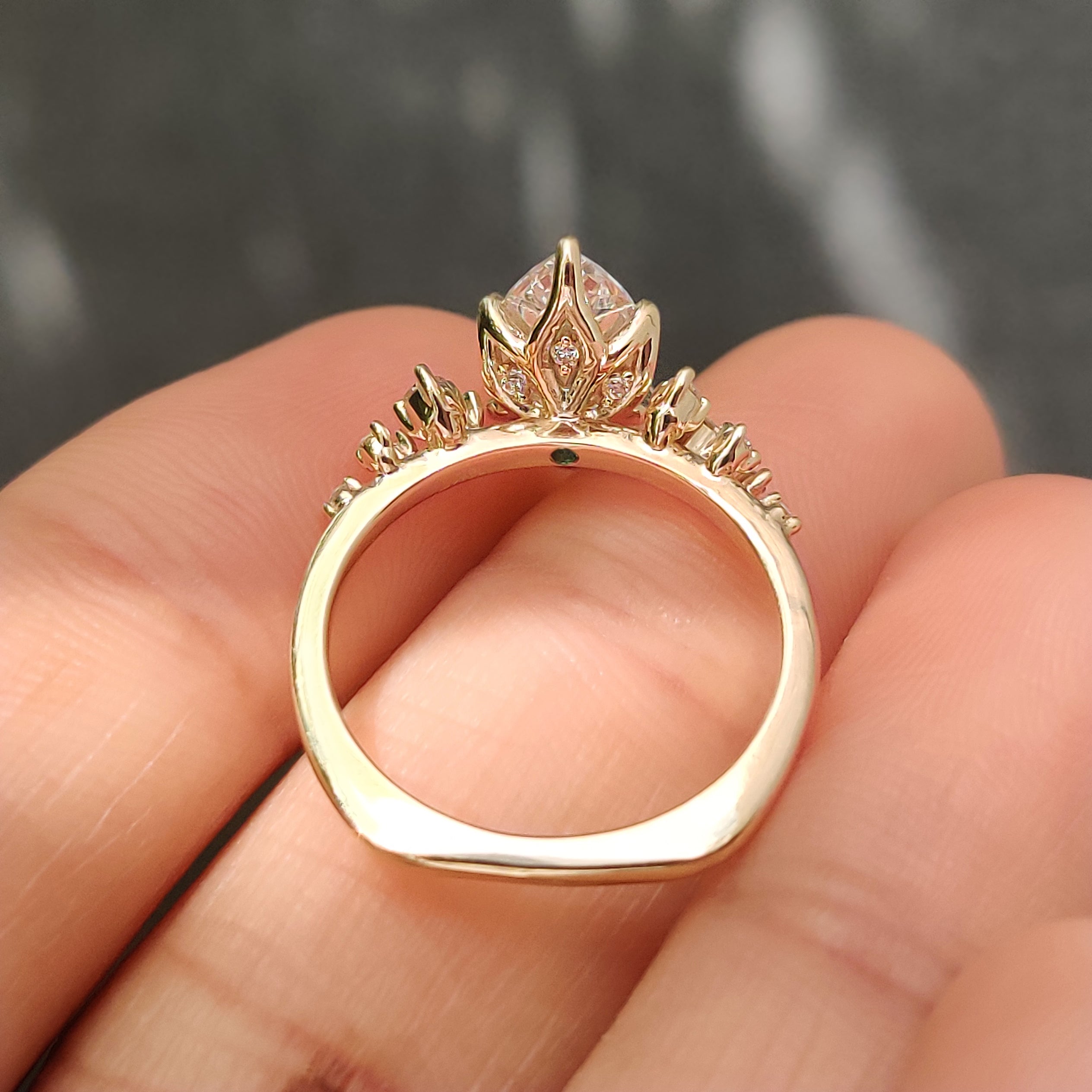
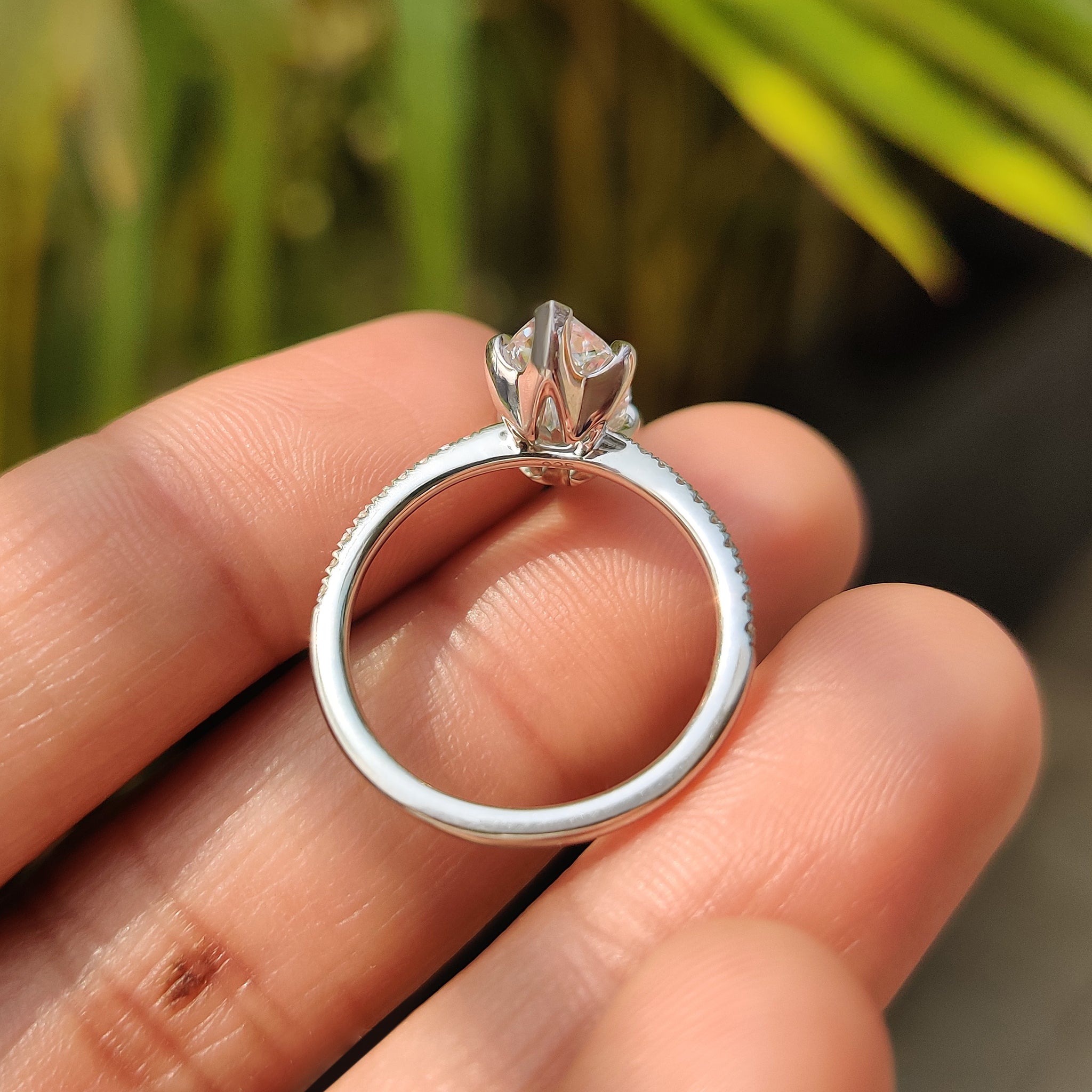
- A floral-inspired center setting
- More focus on the marquise diamond
- Petal-like metalwork around the stone
- A cleaner band with a decorative setting
The tulip setting keeps the spotlight on the diamond itself. The petals frame the stone without pulling attention away from it, so the ring reads as polished and intentional rather than busy.
Choose a Leaf Setting If You Want:
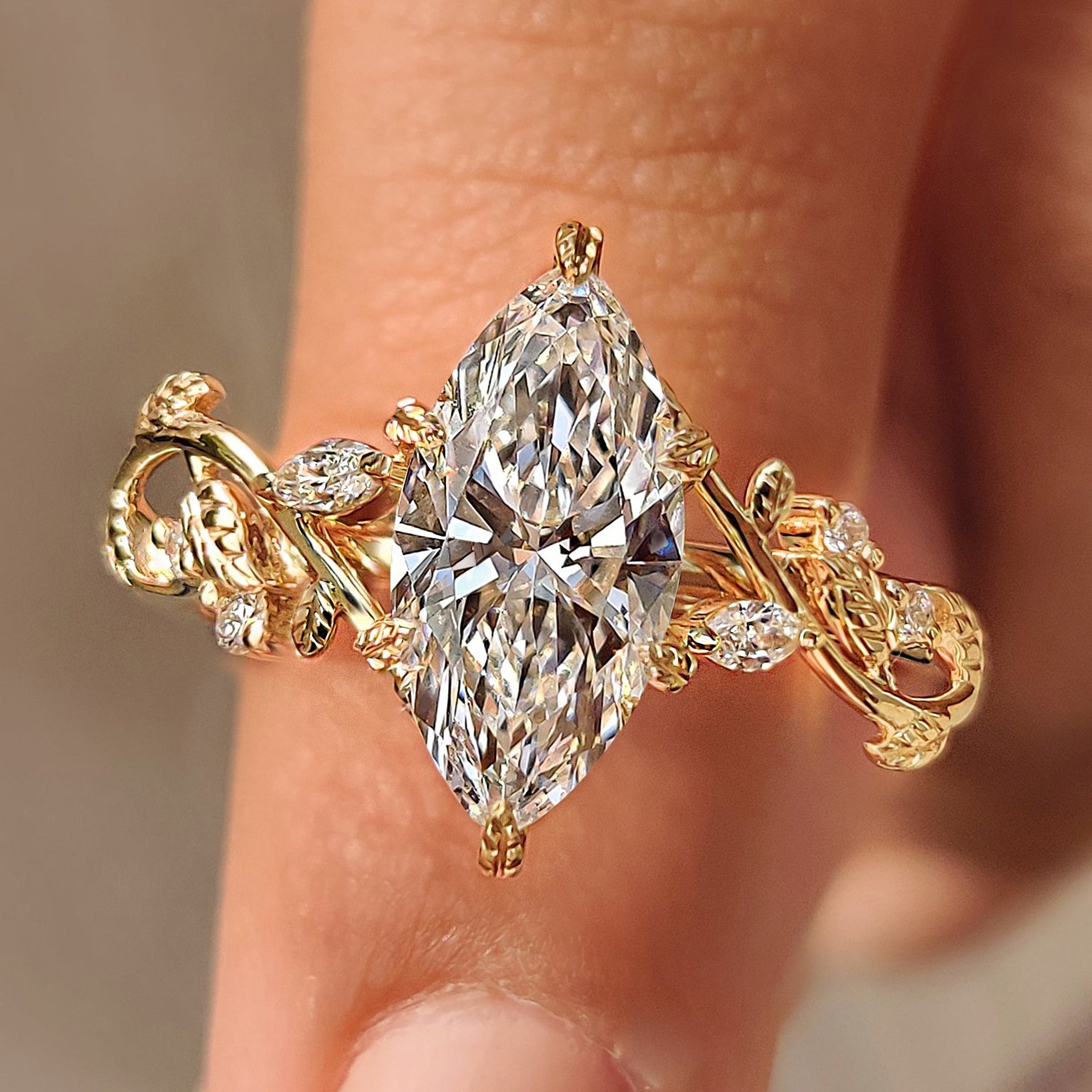
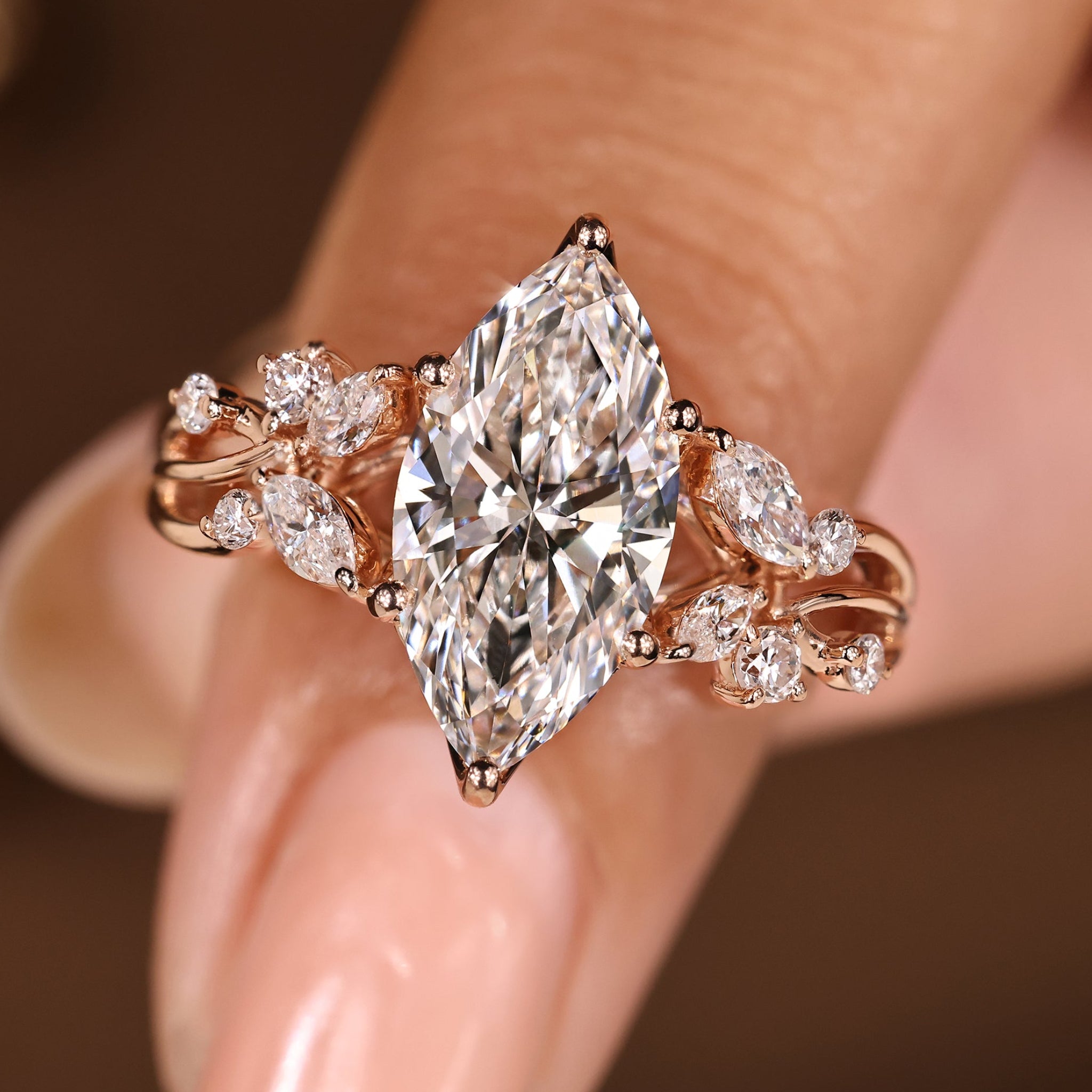
- A stronger botanical theme
- Leaf and vine details across the ring
- Side stones arranged in nature-inspired patterns
- A ring with more decorative metalwork
The leaf setting spreads the nature theme across the whole ring, not just the center. Vine details and accent stones give it more texture and a fuller, more organic look.
Which One Fits Your Lifestyle
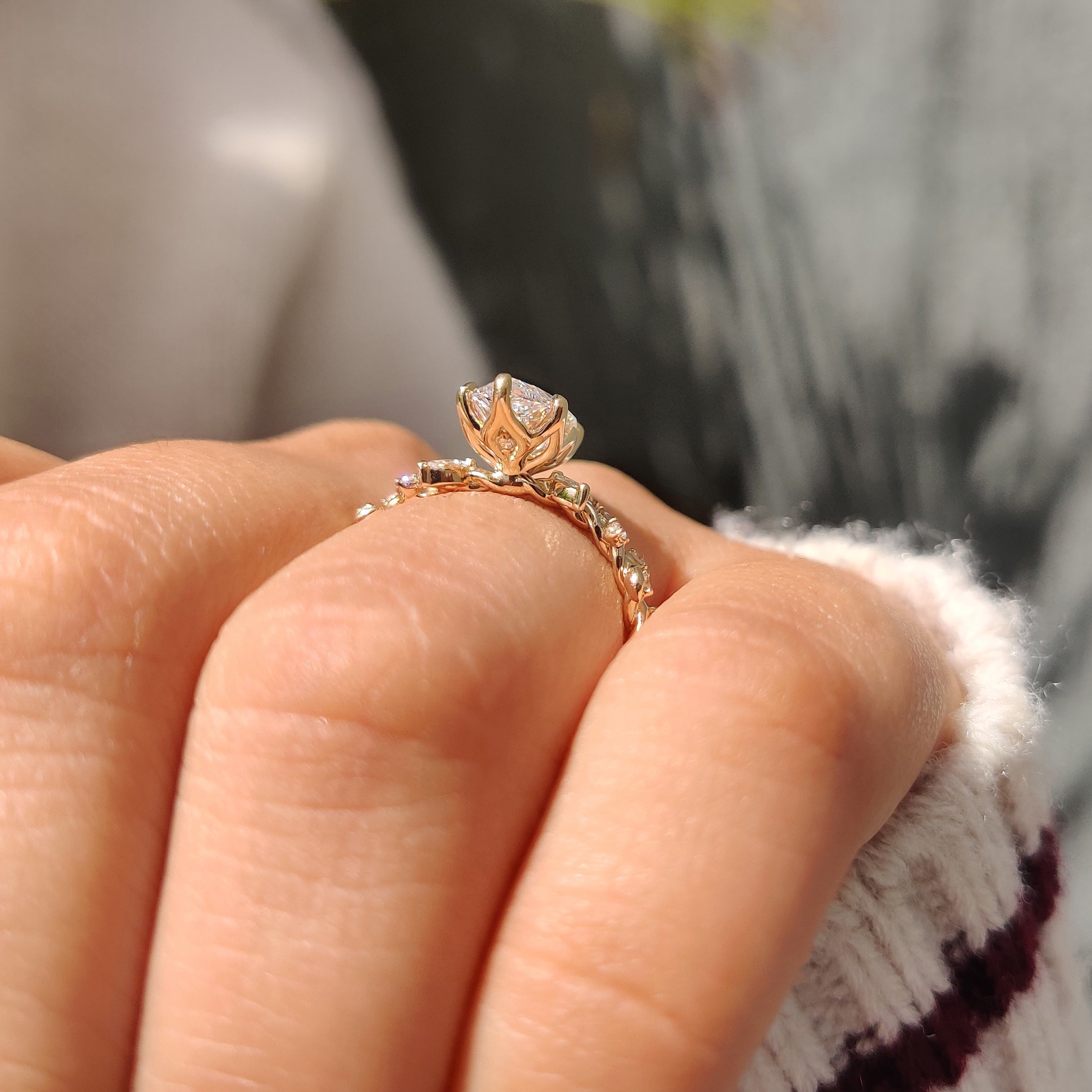
Nature Inspired Marquise Diamond Ring in Tulip Setting
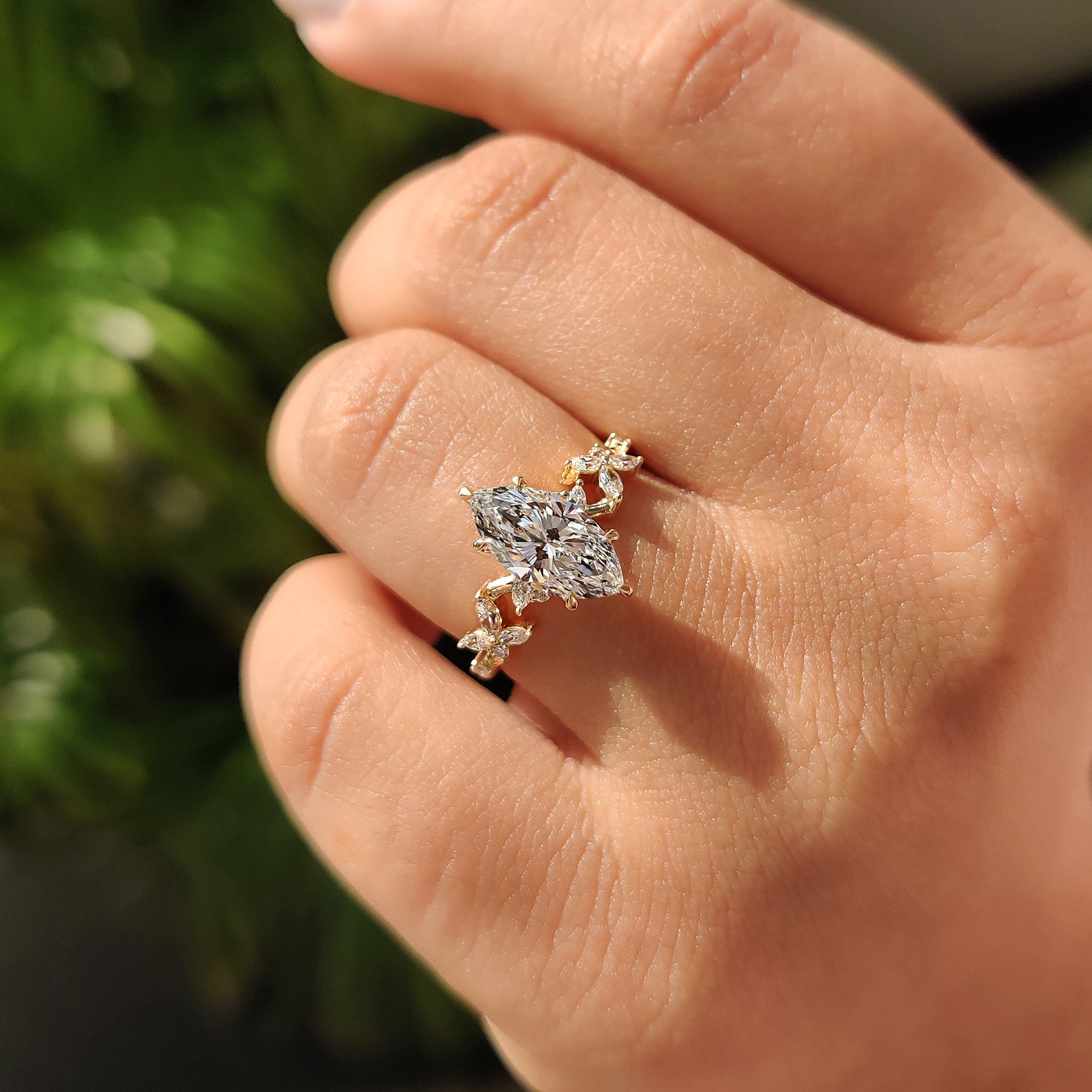
Nature Inspired Marquise Cut Diamond Engagement Ring

Marquise Diamond Ring in Tulip Setting
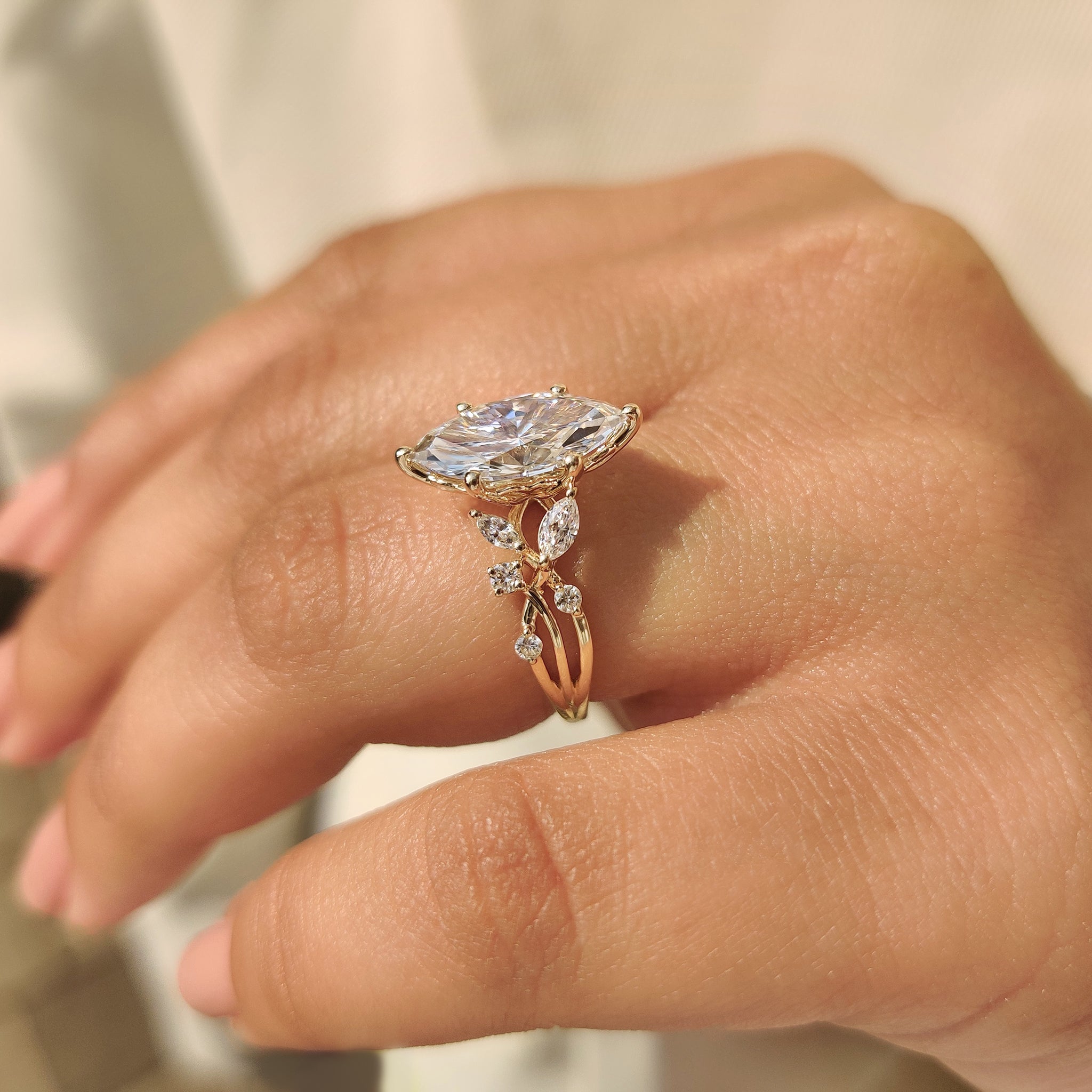
Marquise Diamond Nature Inspired Engagement Ring
Think through a few practical questions before deciding.
Do you use your hands constantly during the day? A tulip setting offers more coverage. A leaf setting works too, especially with a lower, flush-set stone.
Do you want the ring to be instantly recognizable? Tulip shapes are easier to identify at a glance, which matters for engagement photos and social posts.
Are you drawn to vintage jewelry already? A leaf setting will likely feel more like an extension of your taste.
Do you want maximum sparkle over maximum protection? Choose a leaf. Do you want durability with a still-clear floral statement? Choose tulips.
How much presence do you want the ring to have? A single vine-style band with a smaller stone reads as quiet and everyday. A fuller petal or leaf cluster with side stones is more of a statement piece.
Is the ring symbolic of a specific meaning? Match the flower or leaf symbolism to what resonates with your relationship story.
Metal Choices for Nature-Inspired Marquise Rings
- Yellow Gold : warms up leaf and vine details, giving the botanical theme an earthy feel; strong pick for leaf settings
- Rose Gold : softens petal and leaf metalwork alike; romantic without losing the tulip setting's structure
- Platinum : most durable option, holds fine petal detailing without wearing down over decades; natural match for tulip settings
- Silver : lighter-cost way to try either style before committing to gold or platinum
Marquise Diamond Tulip vs Leaf Setting: Pros and Cons
Tulip Setting: Pros and Cons
| Pros | Cons |
|---|---|
| Classic, romantic petal look | Band can look plainer by comparison |
| Strong focus on the diamond | Taller profile in some designs |
| Holds its shape well over time | Less light exposure on the sides |
| Suits floral themes without feeling delicate | Fewer options for side stones or vine detail |
Leaf Setting: Pros and Cons
| Pros | Cons |
|---|---|
| Strong nature-inspired identity throughout the ring | Detailing may compete with the center diamond |
| Leaves and vine work carried along the band | Intricate grooves need more frequent cleaning |
| Pairs well with side stones and vine details | Thinner prongs offer slightly less protection |
| More decorative, handcrafted feel | Less practical for constant hands-on work |
Making the Final Decision
There is no wrong choice between these two styles. Both take the same marquise cut and shape it into something with intention behind every curve.
A tulip setting suits someone who wants nature-inspired design with the durability and symmetry of a structured build. A leaf setting suits someone who wants that same theme expressed more freely, with extra sparkle and a vintage character.
If you are still deciding, picture your daily routine and your existing style before picturing the ring alone. The setting that fits both will be the one you reach for every day without thinking twice.
Design a Marquise Ring Made for You
If you want a marquise ring with your own combination of tulip or leaf detailing, Carat Diamonds hand engraves each setting to order, creating a piece made around your story.


