

Diamonds come in many shapes, but the Dutch Marquise cut diamond stands out with sharp elegance and a long, dramatic silhouette. If you love stones that look bigger, slimmer, and a little royal without shouting about it, this shape deserves your attention.
Let’s break it down in a clear, no-fluff way.
What Is a Dutch Marquise Cut Diamond?
The Dutch Marquise cut diamond is a refined variation of the traditional marquise shape, known for its elegant symmetry and balanced brilliance. Like the classic marquise, it features an elongated hexagon body with pointed ends, but the Dutch version is typically crafted with 6 pointed ends and in brilliant cut.

This cut belongs to the family of fancy cut diamonds and stands out among unique diamond shapes thanks to its geometrically inspired character. While round and oval diamonds dominate Traditional engagement rings, the Dutch Marquise appeals to buyers who want something rare, distinctive, and rich in modern-world charm.
Its elongated hexagon diamond shape creates a graceful, slimming effect on the finger and often appears larger than other diamonds of the same carat weight. For those drawn to Antique diamond cuts with a touch of European sophistication, the Dutch Marquise offers a perfect blend of romance and refinement.
Love the Dutch Marquise look? Explore it
Dutch Marquise Engagement Rings →
The History Behind the Dutch Marquise Cut
The story of the Dutch Marquise begins with the classic marquise cut, a shape believed to date back to 18th-century European diamond cutting traditions. Over time, diamond cutters across Europe experimented with facet arrangements and proportions, leading to subtle regional variations in shape and brilliance.
Dutch diamond cutters, known historically for their precision and artistry, refined the marquise into a version that emphasized balance and light performance. This evolution gave rise to what many gem experts now describe as a more symmetrical and softly contoured marquise, often referred to as the Dutch Marquise.
Rooted in antique diamond styles and old-world diamond cutting craftsmanship, this variation reflects an era when diamonds were shaped by hand with an emphasis on character rather than mass-market uniformity.
Today, the Dutch Marquise remains rare, making it especially appealing to lovers of historical diamond shapes and vintage-inspired jewelry.
Why People Love the Dutch Marquise Shape
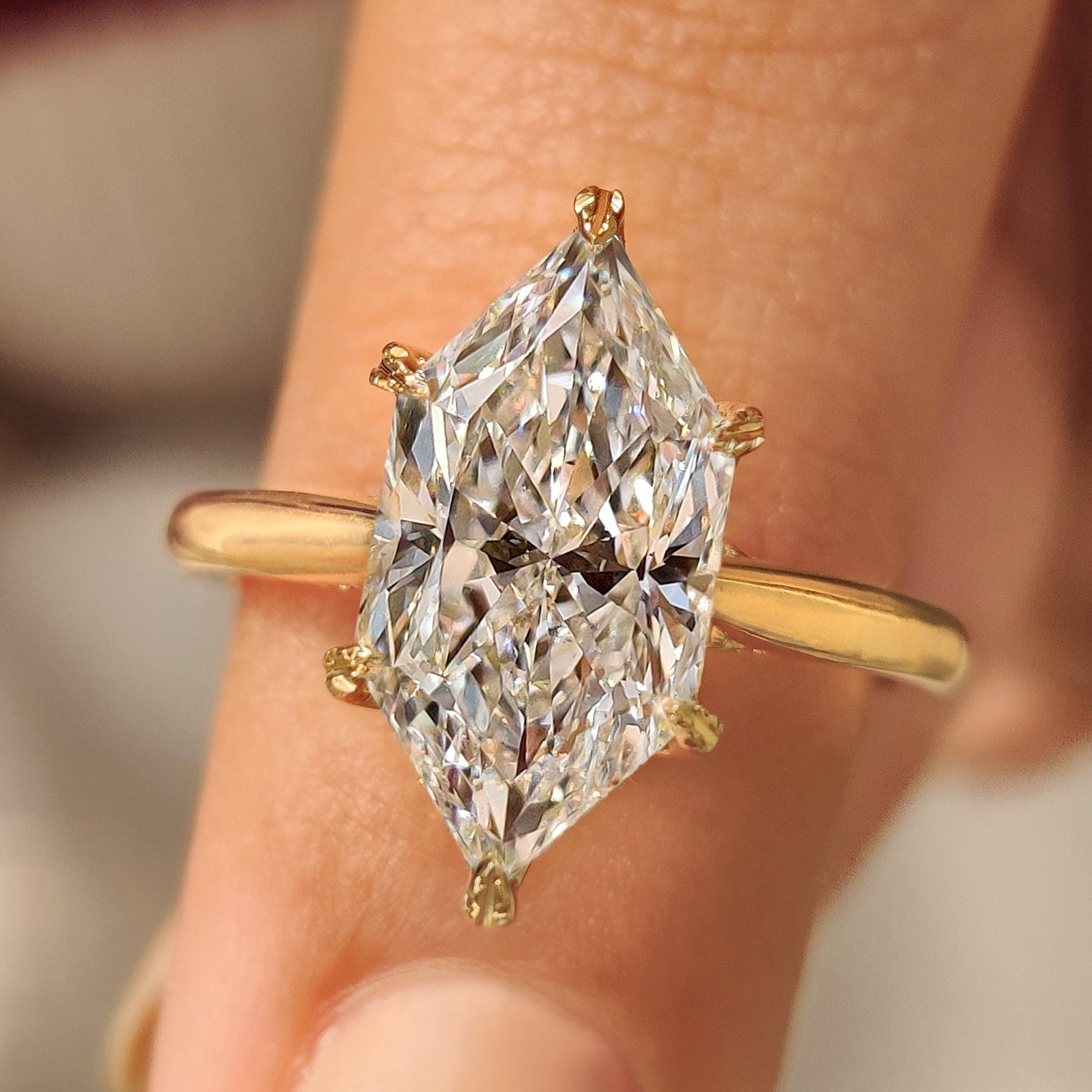
Dutch Marquise Engagement Ring with Filigree Detailing
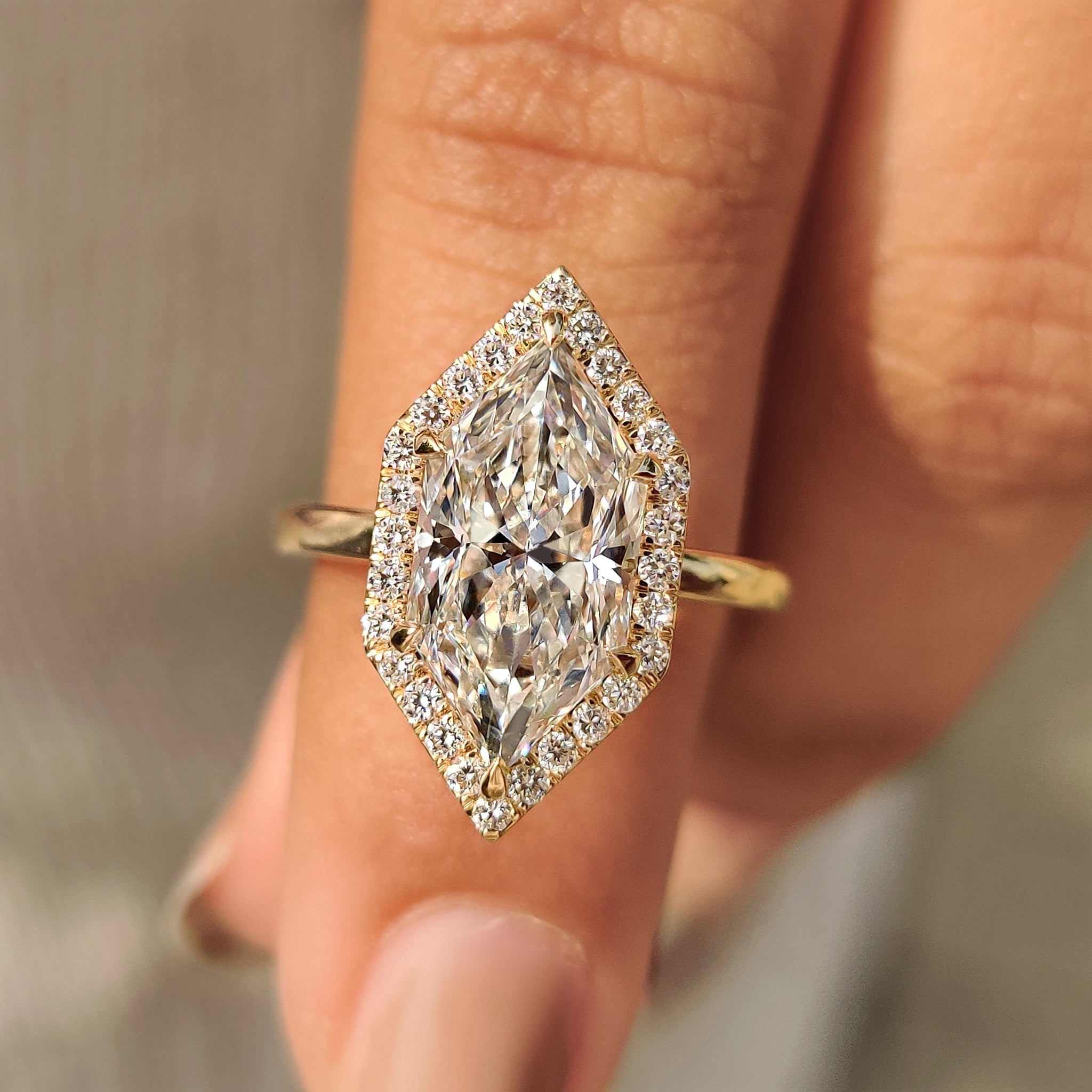
Dutch Marquise Diamond Ring In Halo Setting
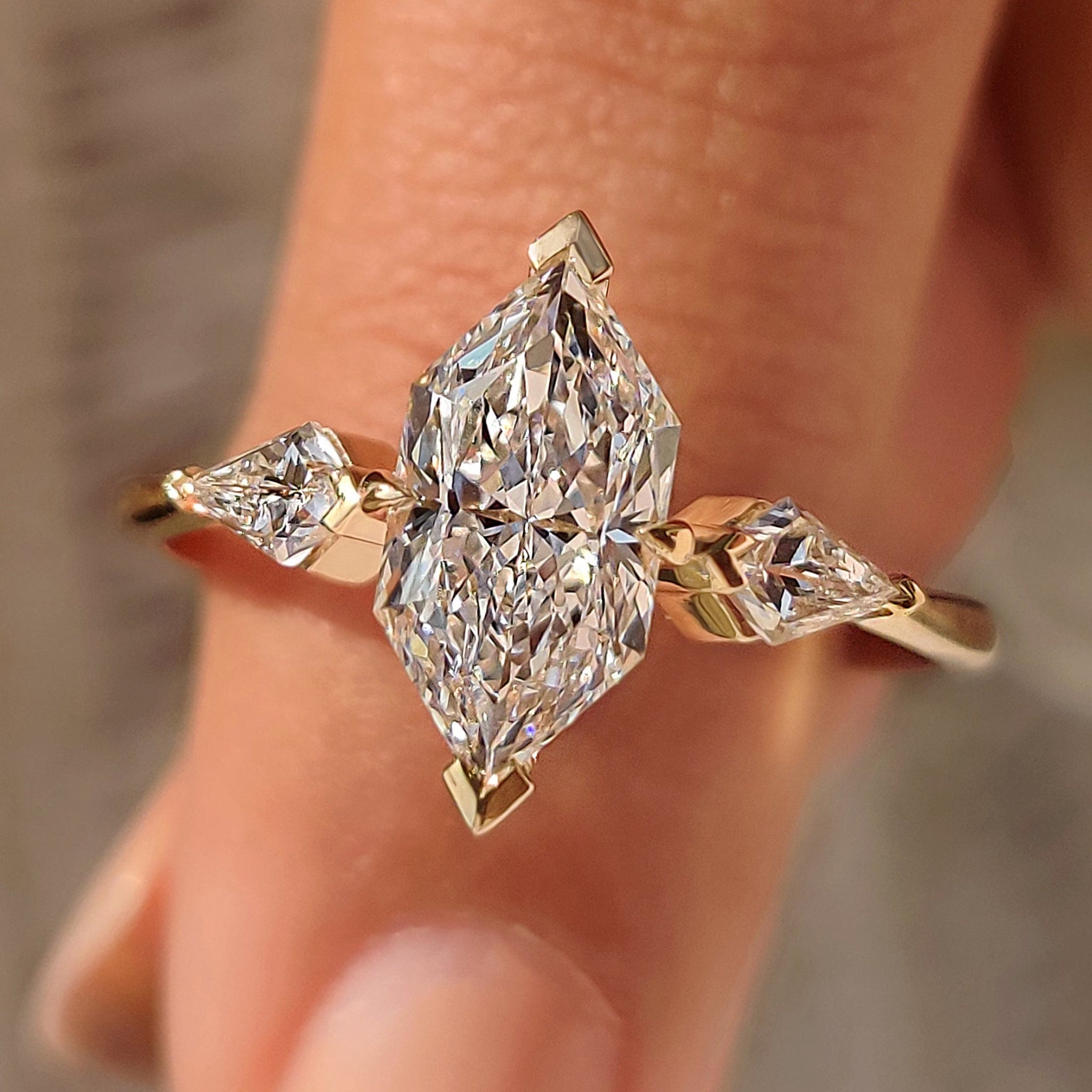
Dutch Marquise and Kite Cut Three Diamond Ring
1. It Looks Bigger Than It Is
The elongated surface area spreads the weight across more visible space, so the diamond faces up larger than many other cuts of the same carat weight. This visual advantage makes it a smart choice if you want maximum presence without jumping to a higher budget bracket. In simple terms, you get more look for your money - no magic, just geometry working in your favor.
2. It Makes Fingers Look Longer
The lengthwise design draws the eye up and down rather than side to side. That vertical flow creates a natural slimming effect on the finger. Jewelry designers often use elongated shapes for this reason - they add elegance and proportion without extra metal or side stones. Yes, it’s basically contouring… but for your hand.
3. It Stands Out
Round diamonds will always feel timeless, and oval cuts have become a modern favorite. But the Dutch Marquise shape sits in a different lane. Its sharp points and stretched outline give it a bold, confident personality. It feels refined without blending in, which makes it perfect for someone who wants a ring that looks elegant yet unmistakably unique.
Diamond Sparkle: What to Expect
A Dutch Marquise cut uses brilliant-style faceting, which means it focuses on light return and sparkle, not step-cut flashes.
Here’s what your eyes will notice:
Bright white sparkle (brilliance)
Light enters the diamond and reflects back to your eye as crisp white flashes. A well-cut stone looks bright across the entire surface, not just near the edges.
Flickers of rainbow light (fire)
As the diamond moves, it breaks light into subtle rainbow colors. These flashes add personality and make the stone feel lively rather than flat.
Fast flashes when the stone moves (scintillation)
Scintillation describes the tiny light-and-dark patterns you see when the diamond shifts. In a well-cut Dutch Marquise, these flashes look sharp and energetic, not sleepy or dull.
Because of the elongated shape, some stones may show a bow-tie effect - a slight shadow across the center. This happens when light doesn’t reflect evenly. A high-quality cut keeps the bow-tie light and blended, not dark or distracting. Always view the diamond in motion, not just in still photos.
Best Ring Settings for Dutch Marquise Cut Diamond
Because the shape has pointed ends, the setting must protect them.
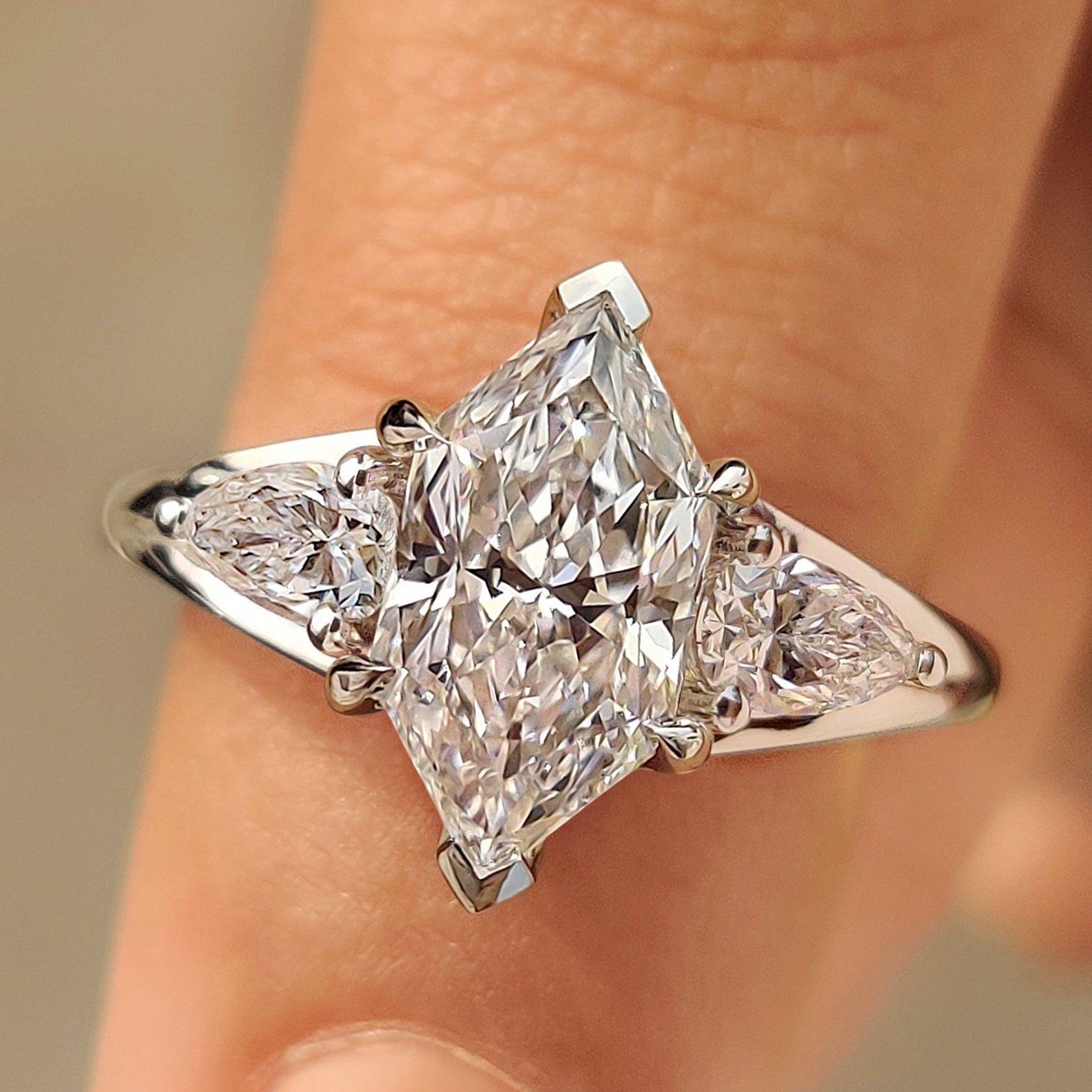
Dutch Marquise Diamond Ring With Pear Side Stone
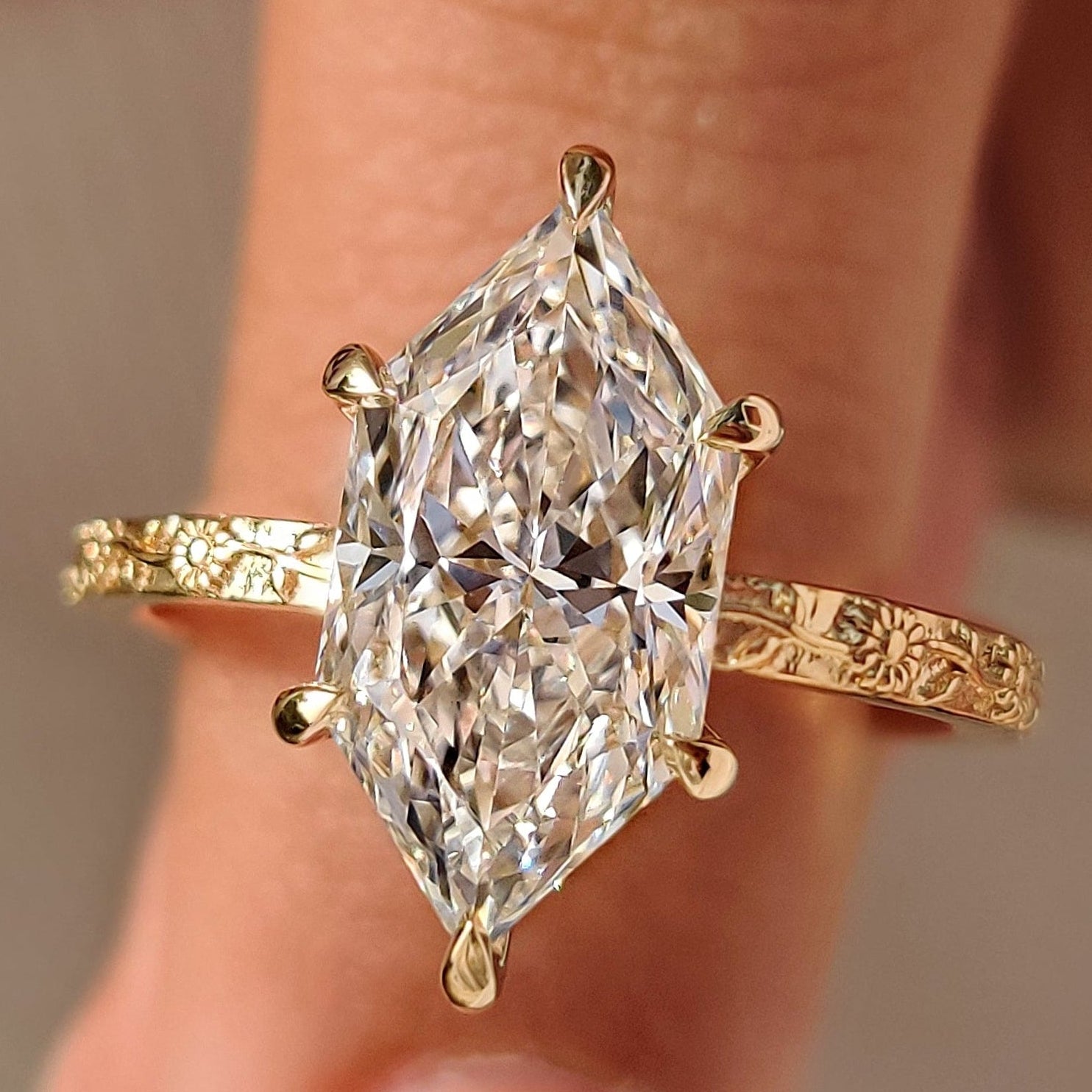
Dutch Marquise Engagement Ring in Sunflower Design
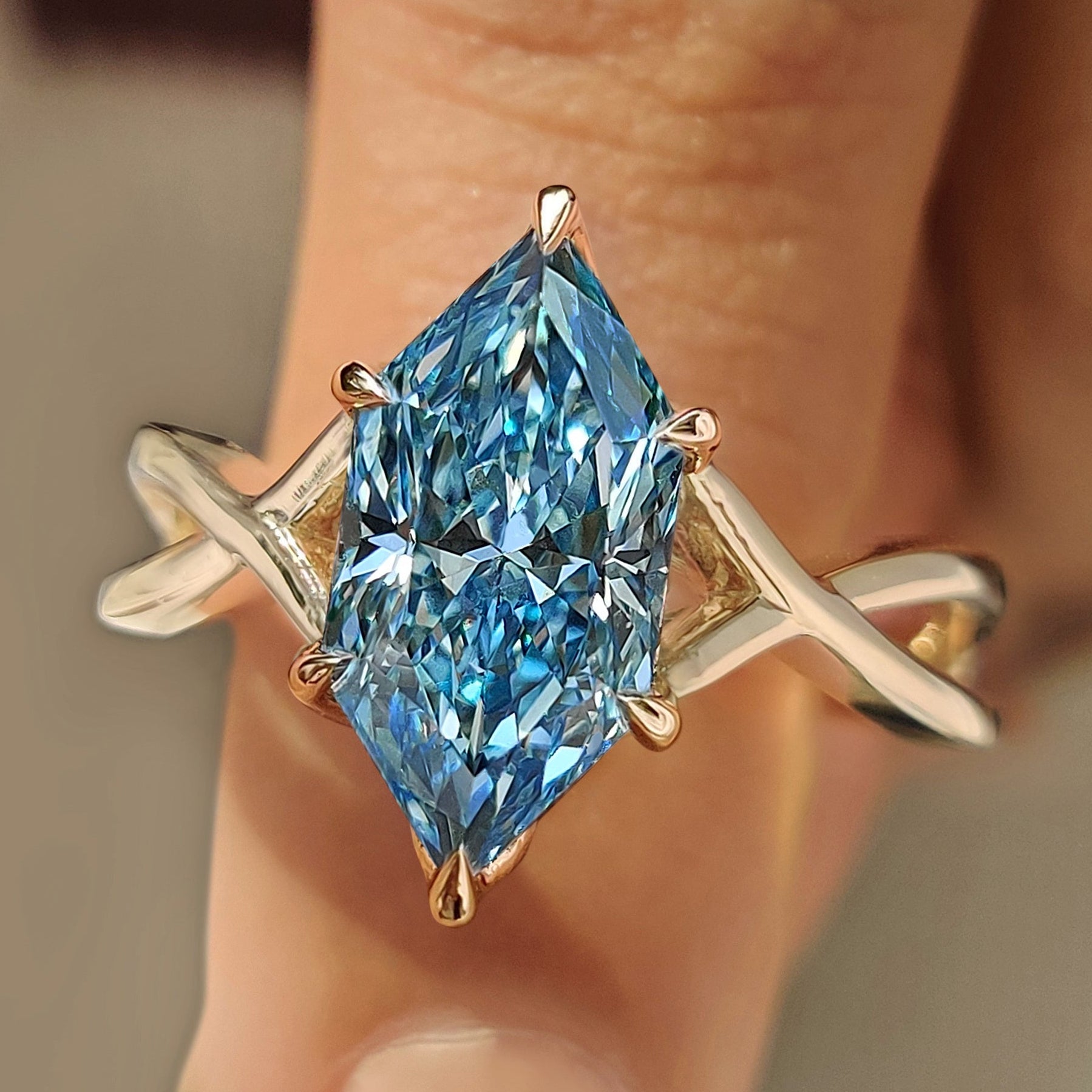
Blue Dutch Marquise Engagement Ring

Dutch Marquise Diamond Engagement Ring in Vintage Style
V-Prong Setting
This setting is almost non-negotiable for marquise shapes. V-prongs wrap around the pointed ends and protect them from accidental knocks. They act like tiny armor shields while still allowing light to enter the diamond. Without V-prongs, the tips remain the most vulnerable part of the stone.
East-West Setting
In this modern style, the marquise sits horizontally instead of vertically. The look feels fresh, stylish, and slightly unexpected. It also spreads the diamond across the finger for a bold visual presence. Many people choose this orientation for a contemporary engagement ring that still feels elegant.
Halo Setting
A halo surrounds the center stone with smaller diamonds, adding extra sparkle and presence. For a Dutch Marquise cut, a halo can also soften the sharp outline slightly while making the center stone appear larger. It’s a great choice if you love glamour and want maximum brilliance from every angle.
Solitaire Setting
A solitaire keeps things simple and refined. With no side stones to compete for attention, the elongated shape becomes the clear focal point. This setting highlights the clean lines and graceful length of the Dutch Marquise, making it ideal for someone who prefers timeless elegance with a unique twist.
Dutch Marquise Cut vs Other Diamond Cuts
| Feature | Dutch Marquise | Round | Oval | Pear | Emerald |
|---|---|---|---|---|---|
| Shape | Long, pointed ends | Round | Elongated oval | Teardrop | Rectangular |
| Face-Up Size Look | Appears larger | True to size | Slightly larger | Larger | Slightly smaller |
| Finger Effect | Strong slimming | Balanced | Slimming | Slimming | Structured |
| Sparkle Style | Bright brilliance | Maximum sparkle | Soft brilliance | Brilliant sparkle | Mirror flashes |
| Style Feel | Bold, elegant | Classic | Modern | Graceful | Sophisticated |
| Rarity | Less common | Very common | Popular | Unique | Classic niche |
| Bow-Tie Risk | Sometimes | None | Sometimes | Sometimes | None |
| Durability Watch | Protect tips | Very durable | Durable | Protect tip | Protect corners |
Who Should Choose This Cut?
A Dutch Marquise cut diamond suits someone who wants elegance with personality. It carries a refined shape but never blends into the background.
This cut is perfect if you:
Want a unique engagement ring
You won’t see this shape on every hand. It feels distinctive without looking unconventional in a risky way.
Love vintage elegance with a modern twist
The marquise shape has royal roots, yet the slimmer Dutch-style silhouette feels clean and contemporary.
Prefer a diamond that looks larger per carat
Its elongated surface gives you strong visual size, which means better presence without automatically moving up in weight.
Like bold shapes instead of traditional round stones
If round feels too common and oval feels too trendy, this cut strikes a confident middle ground.
It’s not loud, but it definitely gets noticed. Think graceful entrance, not dramatic spotlight.
Pros and Cons of Dutch Marquise Cut
Every diamond shape comes with strengths and trade-offs. The Dutch Marquise cut is no exception.
Pros
- Looks bigger per carat: The long shape gives more visible surface area, so the diamond appears larger than many other cuts of the same weight.
- Slim, elegant look on the finger: Its vertical length creates a flattering, elongating effect on the hand.
- Unique but still classy: It stands out from round and oval diamonds while still feeling timeless and refined.
- Bright, lively sparkle: Brilliant-style facets deliver strong light return and eye-catching flashes.
Cons
- Pointed tips need protection: The ends can chip if the setting doesn’t protect them properly.
- Bow-tie shadow can appear: Poorly cut stones may show a dark shadow across the center.
- Symmetry is very important: If the sides don’t match, the diamond can look uneven and less attractive.
Even small differences between the two sides become easy to spot.
Final Thoughts
The Dutch Marquise cut diamond blends dramatic length, refined symmetry, and brilliant sparkle into one unforgettable shape. It flatters the hand, looks larger than its weight, and offers a refreshing alternative to mainstream diamond cuts.
If you want a diamond that feels elegant, distinctive, and a little daring, this cut checks every box – sharply and stylishly.
Celebrate Bold Vintage Glamour
Let the Dutch Marquise cut take center stage in a handcrafted ring designed around your story: distinctive sparkle, timeless appeal.


