

Dutch marquise diamond is one of the rarest and most distinctive shapes available today. A Dutch Marquise has six edge points that give it a distinctive geometric outline. Its structured shape sets it apart from the curved outline of a regular marquise.
This guide explains exactly what a Dutch marquise is, how it differs from a regular marquise, its historical roots as the Rupee Cut and how to choose one with confidence.
What Is Dutch Marquise Diamond?
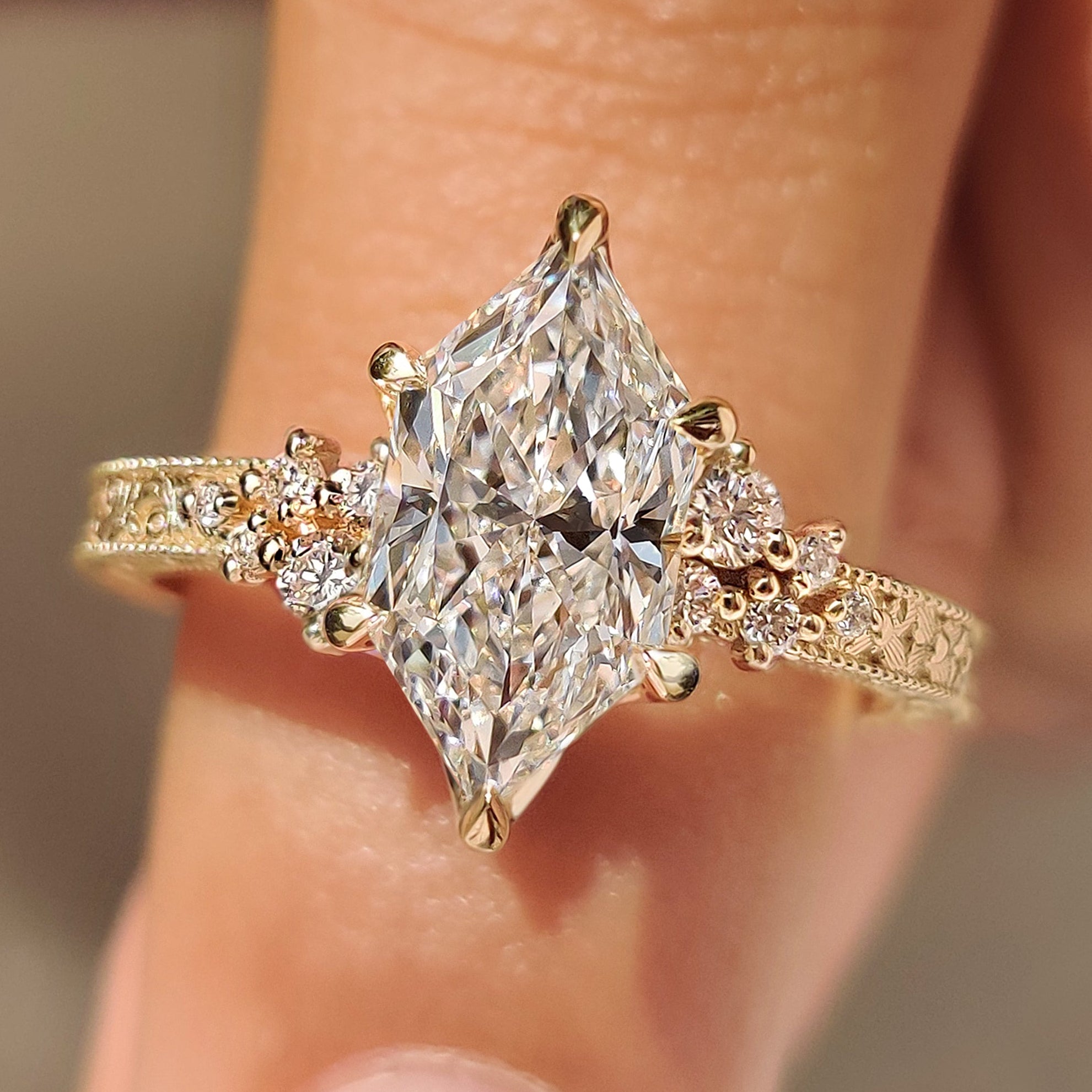
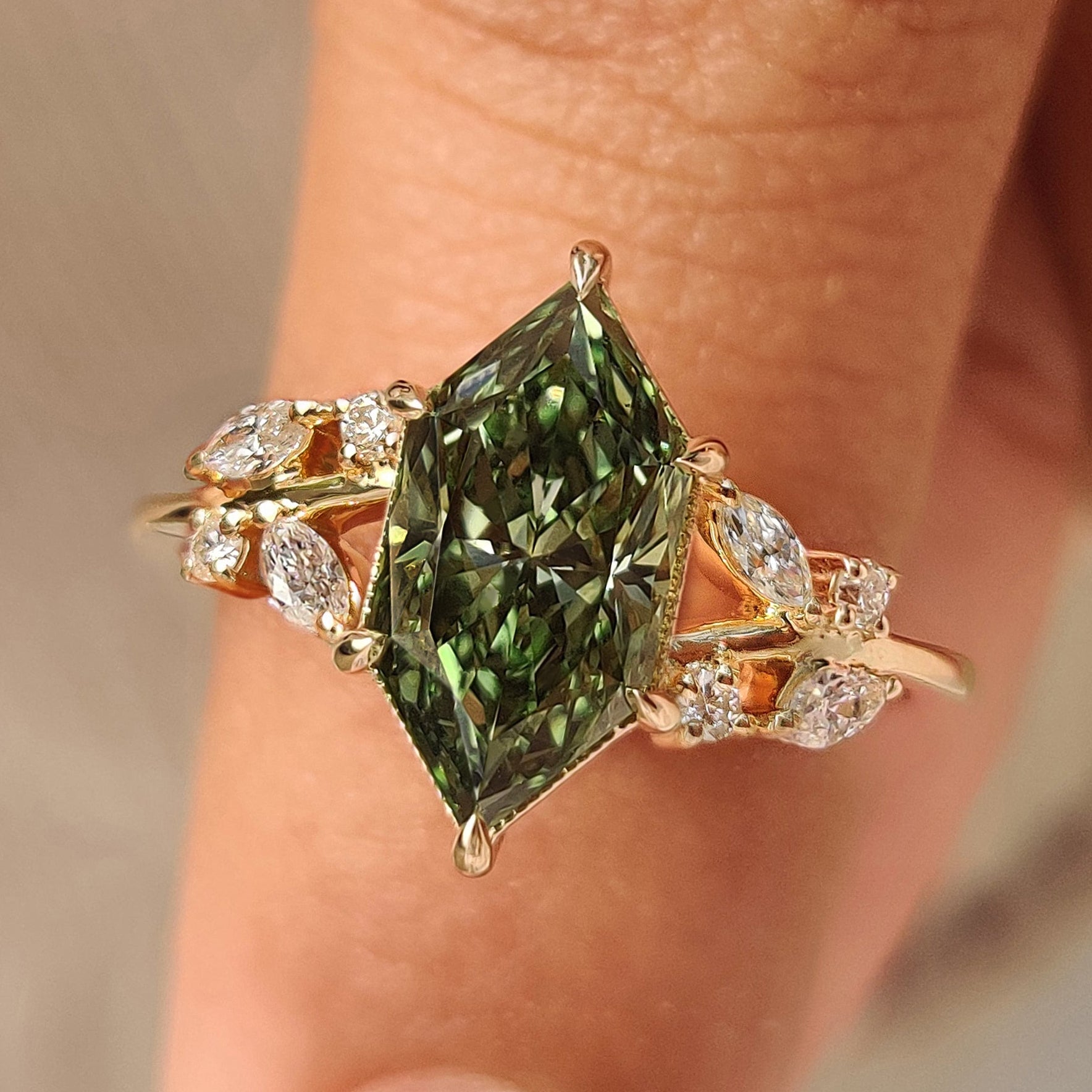
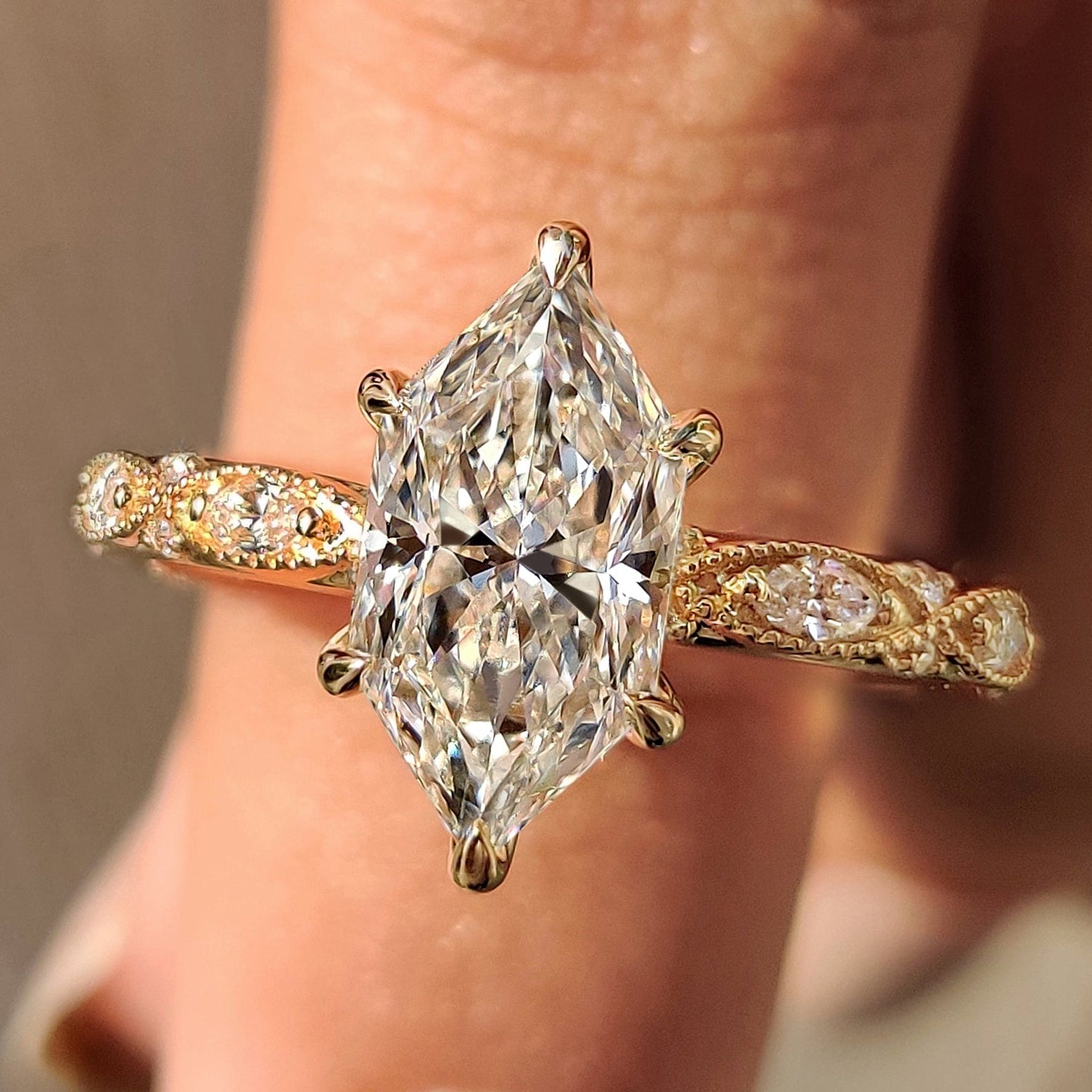
A Dutch Marquise has six edge points that create its distinctive geometric outline. When viewed from above, the outline reads as a long, slim hexagon rather than the soft boat shape of a traditional marquise.
Key features:
- Six edge points
- Distinctive geometric outline
- Pointed ends
- Strong architectural presence with excellent finger coverage
A Dutch marquise can generally be described as an elongated hexagonal-style shape, but not every elongated hexagon qualifies as a Dutch marquise. The critical distinction is the treatment of the ends. A true Dutch marquise tapers to pointed tips. A generic elongated hexagon may have flatter or clipped ends instead of true points.
Watch how we create a Dutch Marquise ring:
Dutch Marquise vs Classic Marquise
| Feature | Dutch Marquise | Classic Marquise |
|---|---|---|
| Sides | Straight and angular | Smooth, continuous curves |
| Outline | Six edge points | Boat / navette shape |
| Length-to-Width Ratio ( 1 CT ) | 2.06:1 | 1.96:1 |
| Look | Geometric and structured | Soft and curved |
| Finger Effect | Strong presence | Strong elongating effect |
| Bow-Tie Risk | Can show bow-tie | Can show bow-tie |
| Rarity | Extremely rare | Uncommon but more available |
For a detailed side-by-side breakdown, see our full comparison: Dutch Marquise vs Regular Marquise.
Rich History of Dutch Marquise and Rupee Cut
The Dutch marquisette is not a modern invention. It carries a layered history that stretches across India, Netherlands and Great European cutting centers of the 17th and 18th centuries.

Indian Roots and the Rupee Connection
During the height of the Golconda diamond trade, India was the world’s primary source of diamonds. Rough stones traveled from the mines of the Deccan Plateau to European markets through Portuguese, Dutch and other merchants. The Dutch East India Company (VOC) played a particularly active role in this trade.
At the same time, the silver rupee was the dominant currency across much of India and the broader trade networks. Many of these coins, along with related decorative arts and seals, featured elongated diamond or lozenge shapes. European cutters who handled both Indian diamonds and trade goods appear to have drawn visual inspiration from these familiar geometric forms. The elongated hexagonal outline of what we now call the Dutch Marquise closely echoed those motifs, which is why the shape later became known as the Rupee Cut.
European Reinterpretation
The classic marquise (or navette) shape had already emerged in mid-18th-century France, famously linked to King Louis XV and Madame de Pompadour. Dutch and Belgian cutters in Amsterdam and Antwerp took that elegant pointed form and reinterpreted it through their own cutting philosophy.
Instead of emphasizing maximum length and soft curves, they favored the following:
- Straighter, more angular sides
- A fuller, more balanced center
- Greater attention to structure and proportion
- A geometric clarity that felt architectural rather than purely romantic
This approach produced a shape that retained the pointed ends of the marquise while creating a distinctly hexagonal outline. The result was rarer, more deliberate, and less commercial than the standard marquise that would later become popular.
A Trade Name with Cultural Depth
“Rupee Cut” appears more often in older antique references and early trade descriptions. “Dutch Marquise” is the name that has become more common in modern jewelry marketing. Both names point to the same underlying geometry and the same historical journey: Indian design influence meeting Dutch precision cutting.
Unlike many modern commercial cuts, the Dutch Marquise was never standardized by laboratories. It remained a specialized, relatively uncommon shape, which helps explain its rarity today. Most examples currently available are carefully cut lab-grown diamonds that revive this historic silhouette for contemporary engagement rings.
Historical origin claims vary across sources, and a single definitive documented origin is difficult to establish with certainty. The association with Dutch and Belgian cutting traditions and the Rupee Cut name is widely noted in jewelry literature, but it should be understood as a trade and visual connection rather than a fully standardized historical record.
Why the Dutch Marquise Is So Rare?
- It requires specialized cutting skill and specific rough selection.
- It is not a standardized commercial shape.
- Natural examples are extremely limited.
- Most available stones today are high-quality lab grown diamonds.
This rarity makes it especially appealing for couples who want a distinctive, conversation-starting engagement ring.
Dutch Marquise diamonds remain uncommon in mainstream retail because the shape is specialized, terminology is inconsistent across sellers, supply is limited, and it is not one of the widely standardized diamond shape categories. Buyers often need specialty sellers or custom sourcing.
Pros and Cons
Pros
- Unique geometric look that stands out from common shapes
- Excellent face-up size for the carat weight
- Slimming effect on the finger
- Strong modern-vintage character
- Lower bow-tie risk than many classic marquise stones
Cons
- Pointed tips need protective settings
- Limited availability (especially in natural diamonds)
- Color can show more at the tips
- Fewer ready-made options compared to oval or round
Choosing Dutch Marquise Diamond
Length-to-Width Ratio
Aim for 1.55 to 1.85 for balanced proportions. Lower ratios look fuller; higher ratios look longer and narrower.
There is no universally accepted “ideal” length-to-width ratio or proportion chart for Dutch Marquise diamonds comparable to the more standardized expectations that exist for some conventional shapes. Buyers should evaluate the actual outline, symmetry, and face-up appearance of the individual stone rather than relying on a single target percentage.
Color
Prefer D - G. Elongated shapes show color more easily at the points.
Clarity
VS1 - VS2 or better is recommended so the tips stay clean.
Cut Quality
Look for even faceting and minimal dark areas in the center. Request videos that show the stone in motion.
The outline defines the Dutch Marquise shape, while the individual stone’s faceting arrangement is separate and affects light performance. Faceting can vary; do not assume every Dutch marquise uses one specific pattern such as crushed ice or a particular brilliant style. Evaluate the actual sparkle and light return of the stone in hand or on video.
Symmetry is especially important. Inspect whether both sides mirror each other, whether both points align with the central axis, whether the angular sides appear balanced, and whether one end looks wider or distorted when the stone is viewed straight-on.
Best Settings
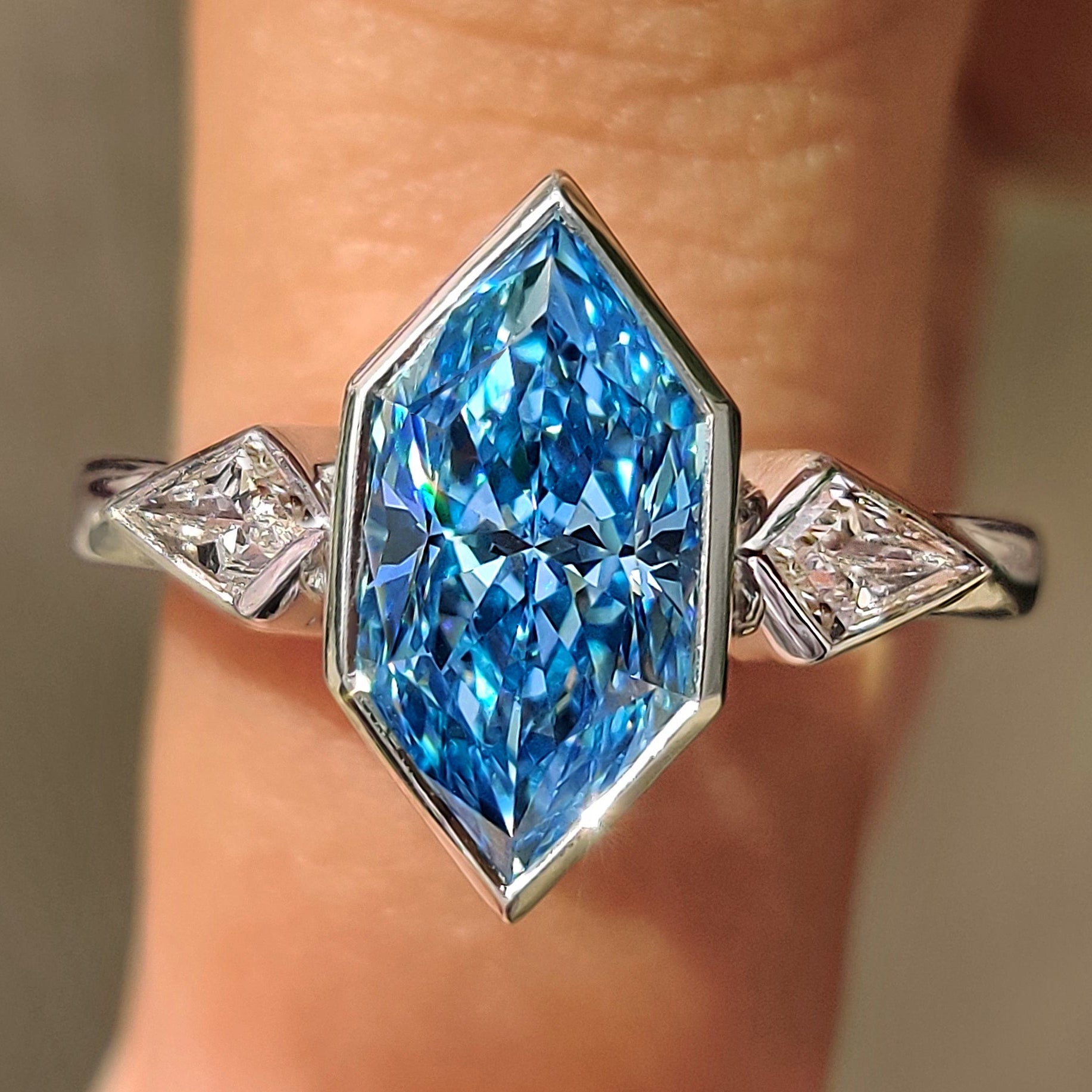
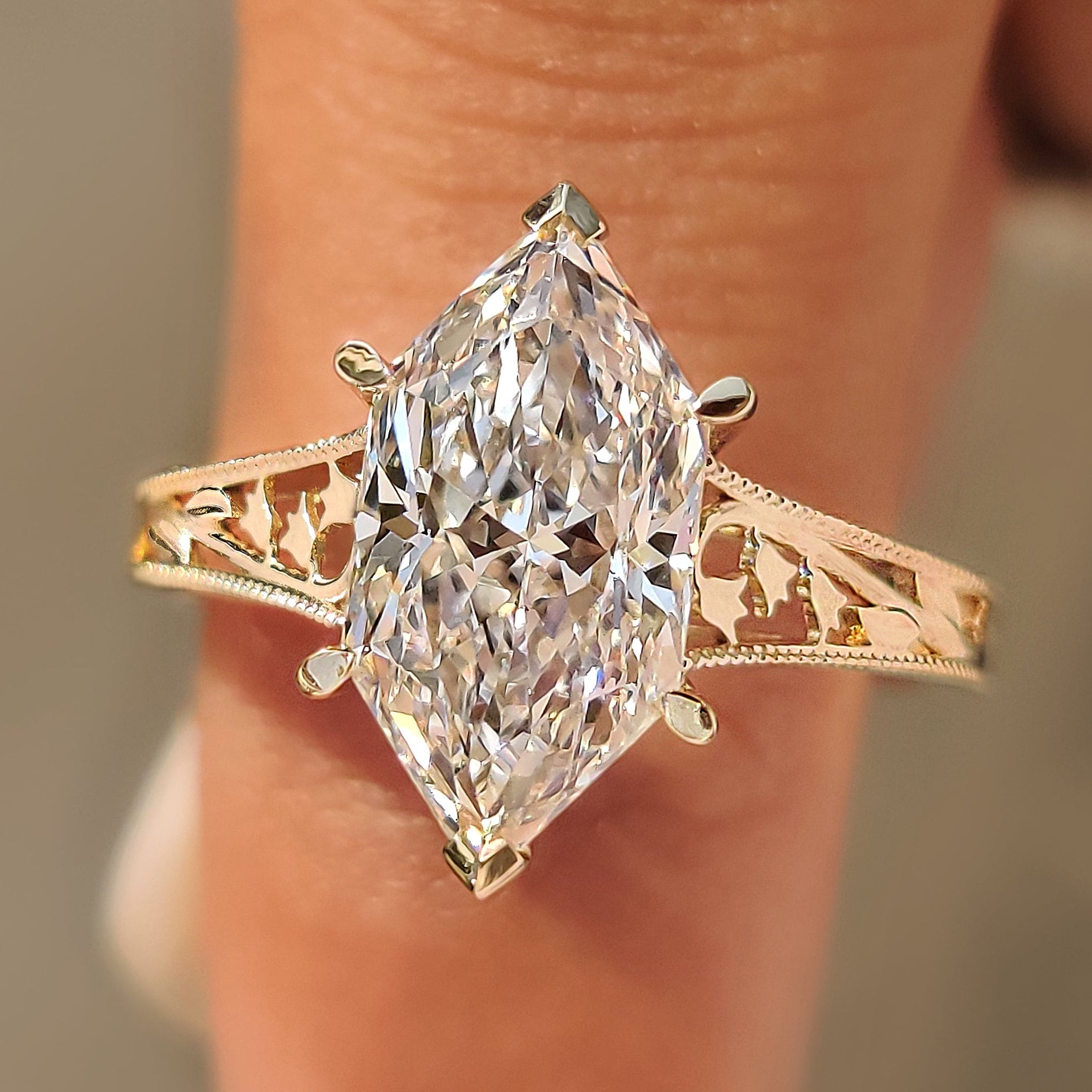
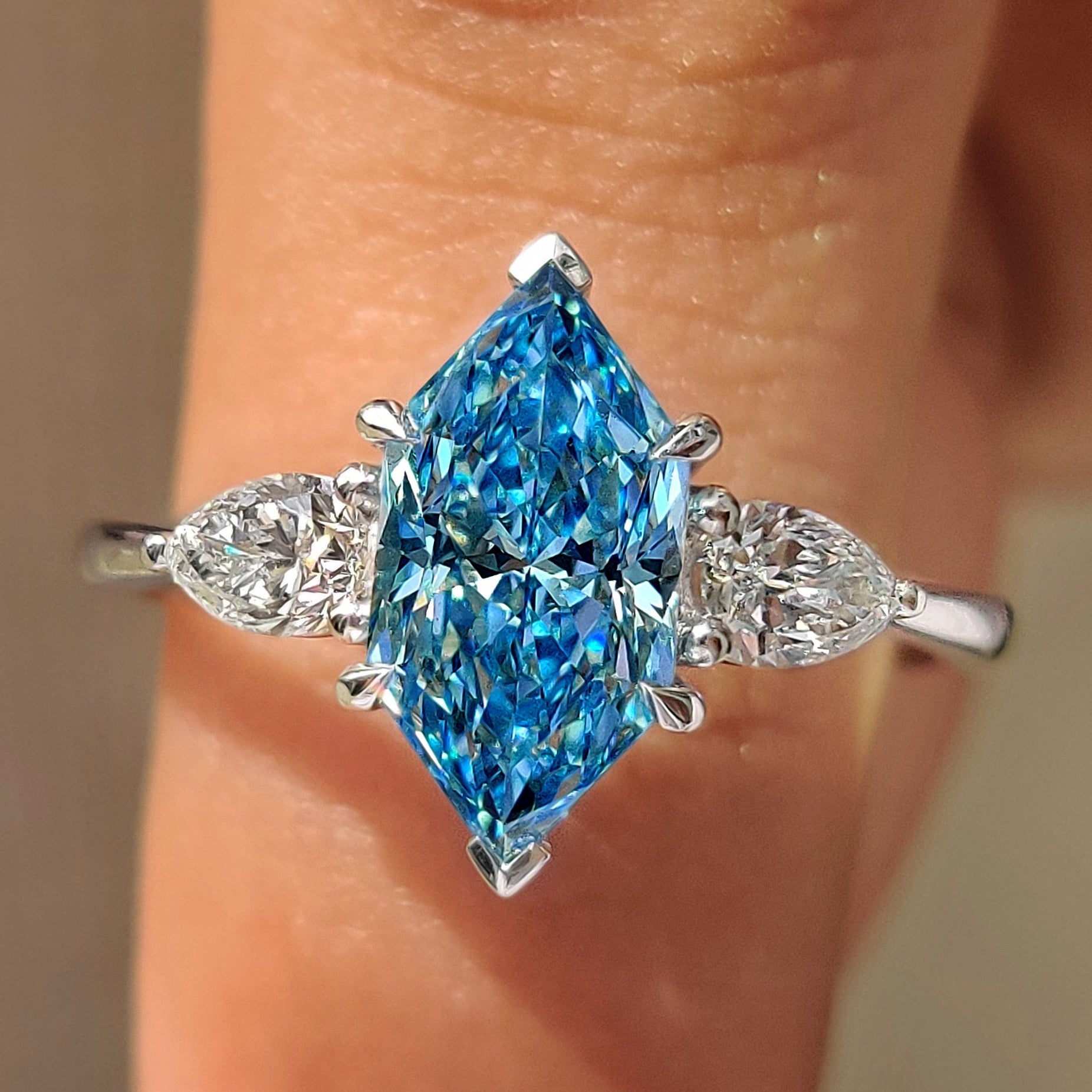
- Protective V prongs or bezel settings for the tips
- Solitaire for maximum impact
- Three-stone designs with tapered baguettes
- East-west orientation for a contemporary look
Lab grown Dutch Marquise diamonds offer excellent value and make this rare shape more accessible without compromising quality. You can also design a completely custom piece through our Custom Jewelry service.
“Dutch Marquise” describes the shape and cutting style. It does not determine whether the diamond is natural or lab-grown. Both options exist and should be evaluated using the same criteria of outline, proportions, symmetry, faceting, and grading documentation.
When reviewing a grading report, note that the laboratory may not literally list “Dutch Marquise.” Check the reported shape, cutting style, measurements, 4Cs, polish, and symmetry. Always combine the report with high-quality photographs and videos of the actual stone.
Is Dutch Marquise Right for You?
Choose a Dutch marquise if you want:
- Something rarer than oval, round, or classic marquise
- A geometric yet elegant silhouette
- Strong presence on the finger
- A shape with historical depth and modern appeal
Conclusion
The Dutch Marquise diamond combines the romance of the marquise with a clean hexagonal geometry. Its rarity, distinctive outline, and connection to the historic Rupee Cut make it one of the most interesting fancy shapes available today.
Whether you prefer a lab-grown or natural stone, a well-cut Dutch marquise delivers both visual impact and lasting individuality.
For more detailed technical guidance, you can also read our earlier education article: Dutch Marquise Cut Diamond Guide.
Explore Dutch Marquise Diamonds
Find a distinctive shape with historic character.


