

Put a solitaire and a pave ring side by side and the difference is immediate. One reads as clean and entirely focused on the diamond. The other catches light from the band as well as the stone, and the ring as a whole looks more elaborate, more brilliant and more active. Both can hold the same center diamond. Both can sit in the same metal. The choice between them is not obvious from a single glance, and it becomes less obvious the more closely you examine it. The sparkle question is just the beginning.
Solitaire Engagement Ring Setting?
A solitaire engagement ring is built on a single principle: one center diamond, one band, nothing else competing for attention. The band is plain metal yellow gold, white gold, rose gold or platinum and the center stone is held by four or six prongs, a bezel or occasionally a tension setting. Every design choice in a solitaire directs the eye to the diamond. The setting exists to support the stone, not to contribute sparkle of its own.
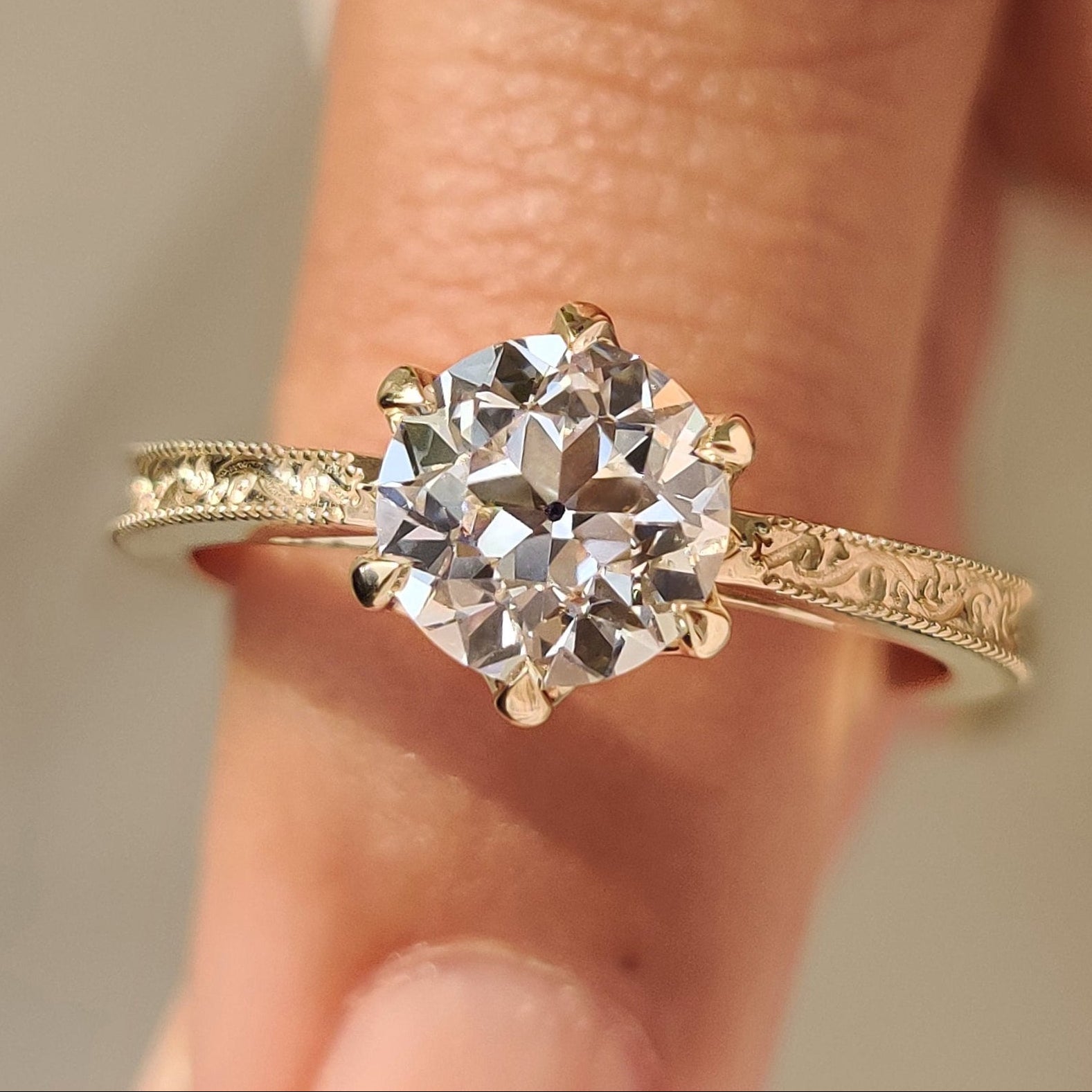
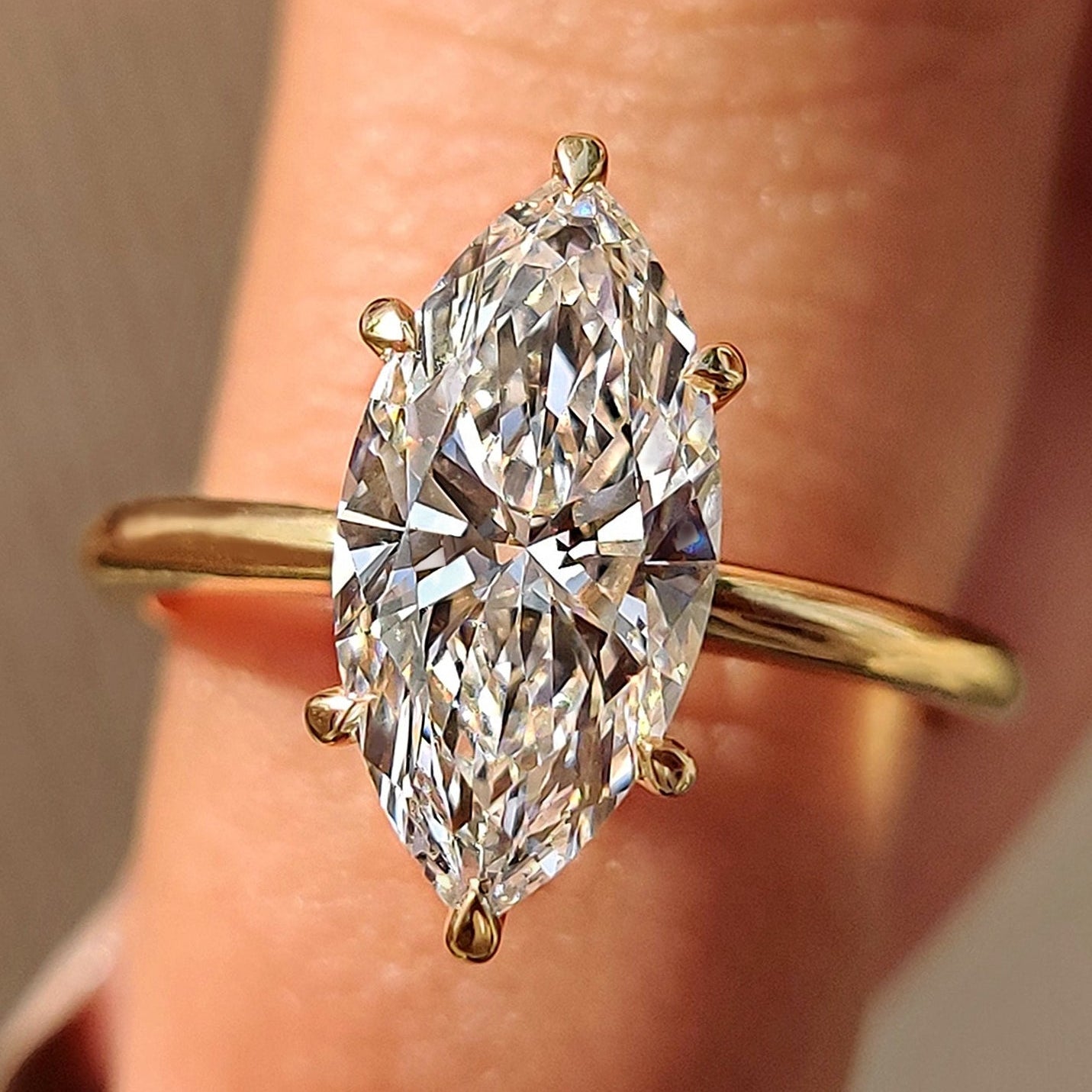
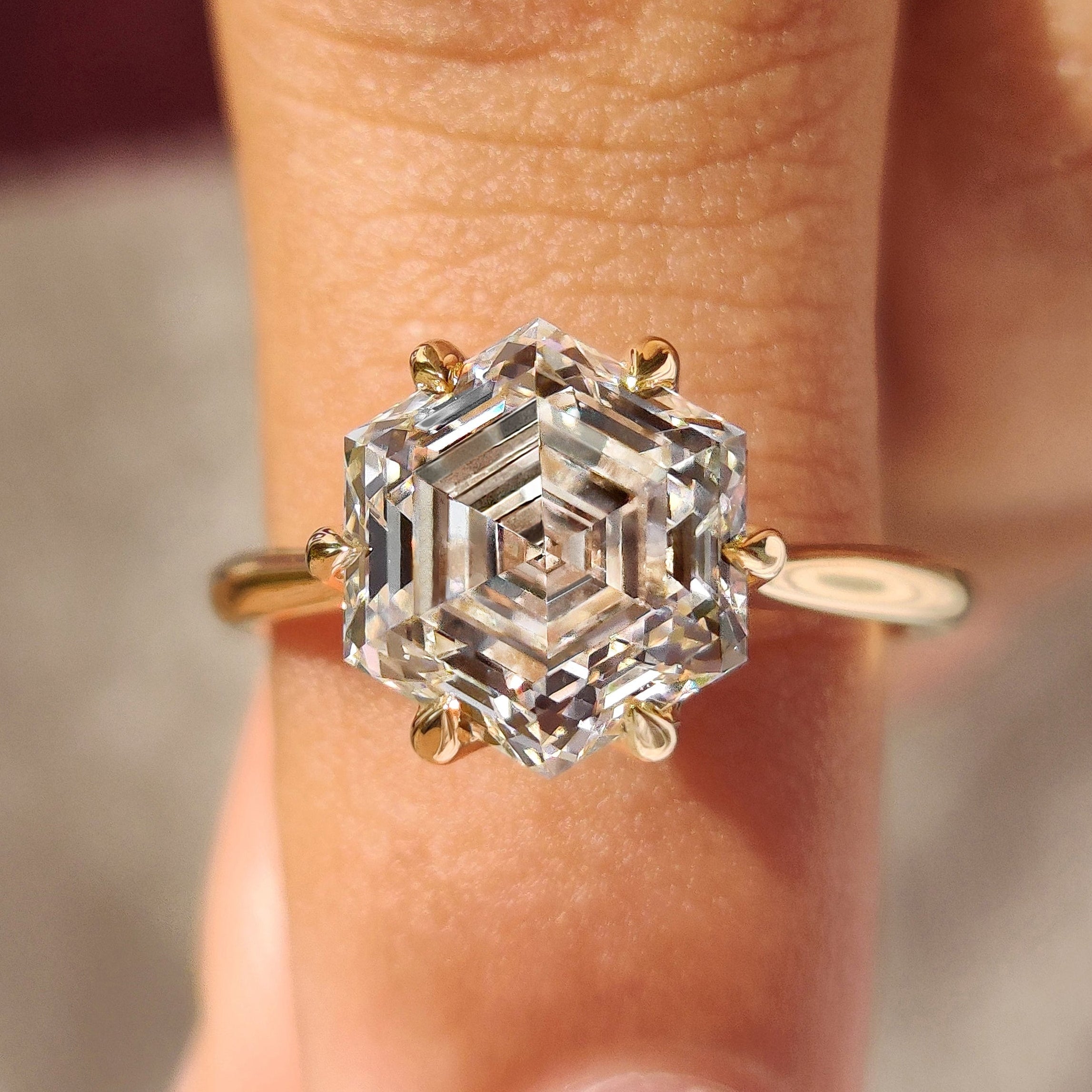
This directness is the source of the solitaire’s appeal and also its discipline. Because there are no accent stones to add visual interest, the center diamond carries the full visual weight of the ring. Cut quality, proportions, and face-up appearance matter more in a solitaire than in any other setting, since there is nothing else to look at. A well-cut diamond in a simple solitaire can be breathtaking. A poorly cut diamond in the same setting has nowhere to hide.
The solitaire has been the most popular engagement ring setting in the United States for several decades, and its dominance reflects practical as much as aesthetic reasons. Plain bands are easier to maintain, easier to resize, easier to stack with a wedding band, and generally less expensive to produce than detailed settings. For buyers who want their budget directed almost entirely toward the center stone, the solitaire is the logical framework.
Pave Engagement Ring Setting?
A pave setting covers some or all of the ring’s band with small diamonds set closely together, secured by tiny beads or prongs that remain nearly invisible within the metal surface. The result is a continuous shimmer along the shank, adding light return beyond the center stone. “Pave” comes from the French word for paved, referring to stones covering the band’s surface like a paved road.
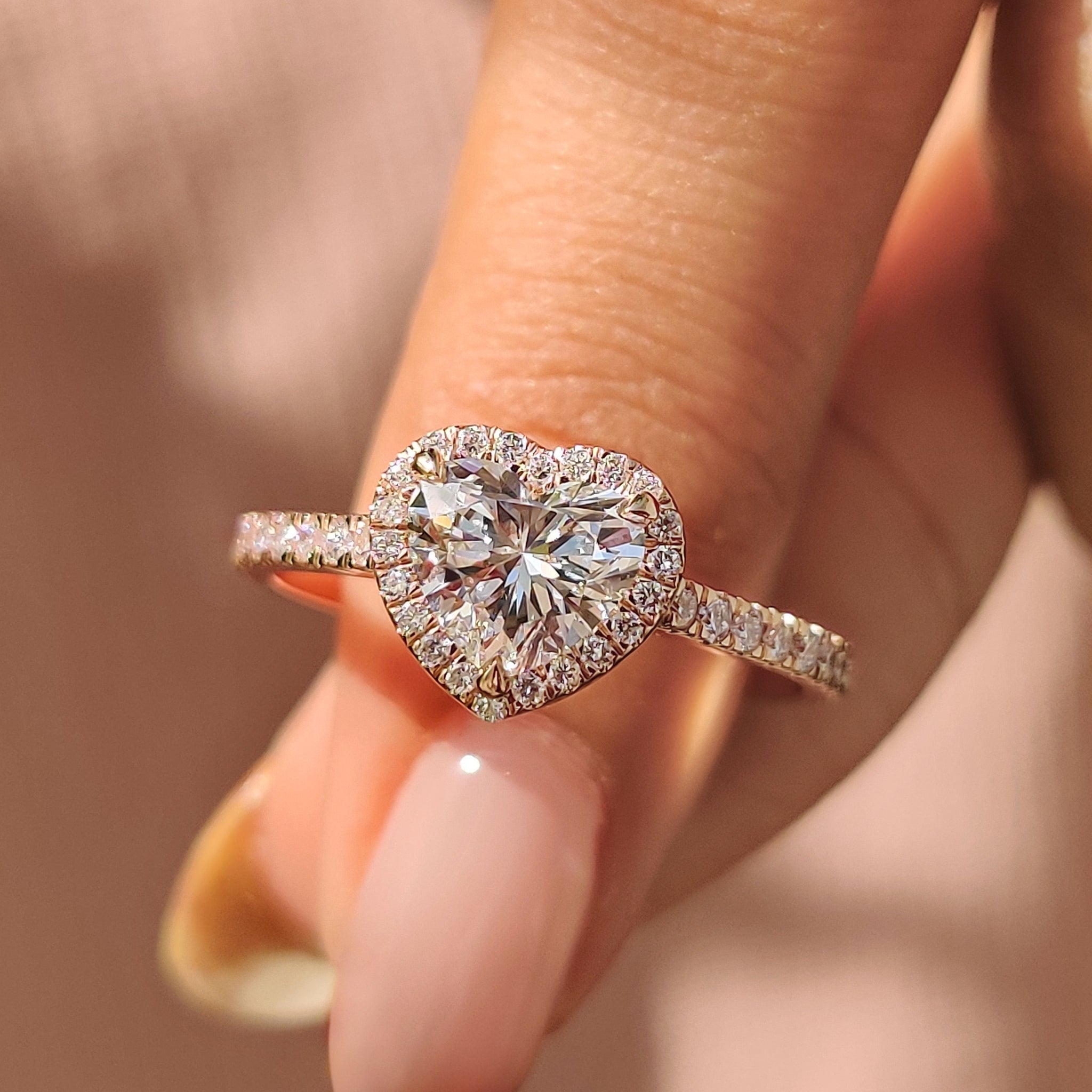
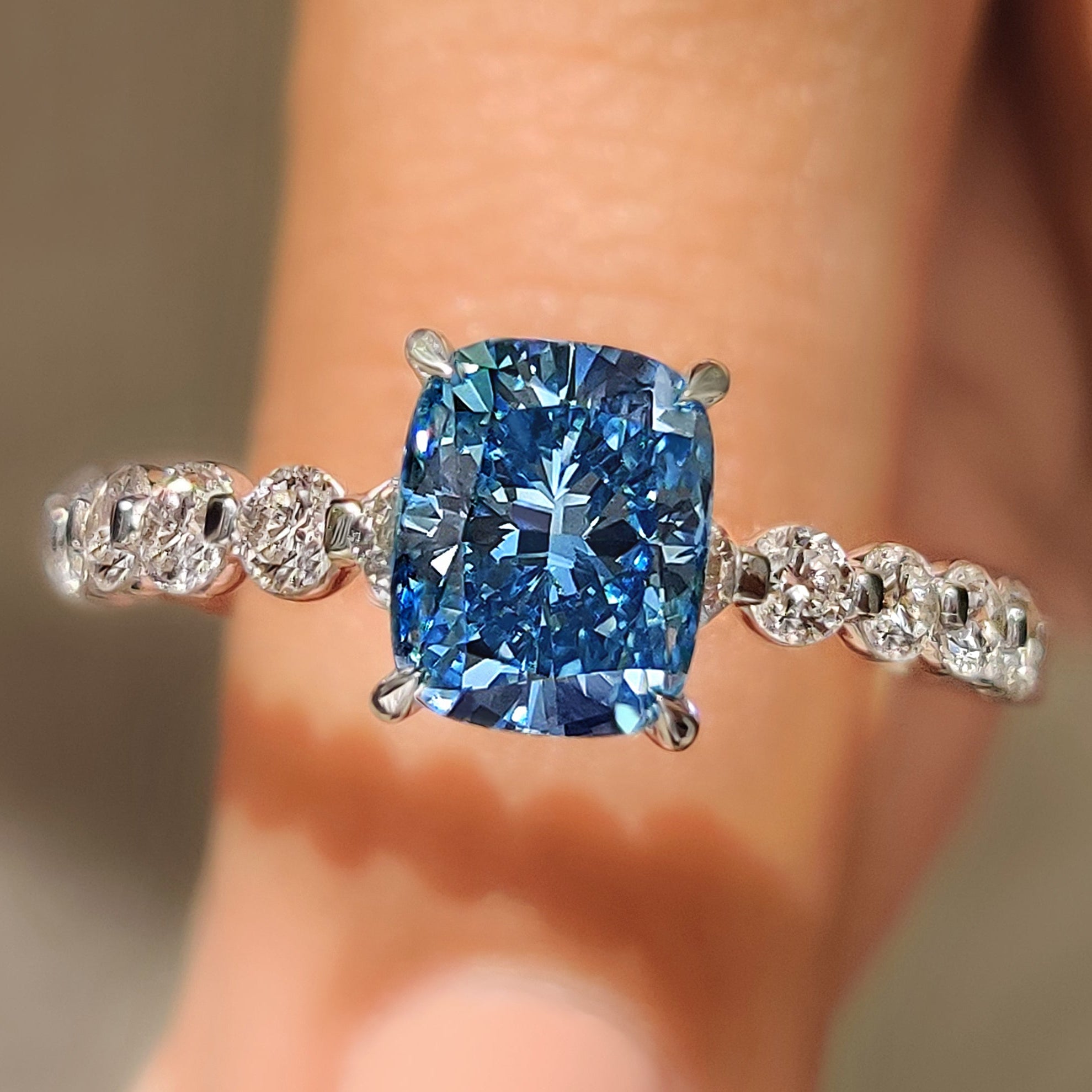
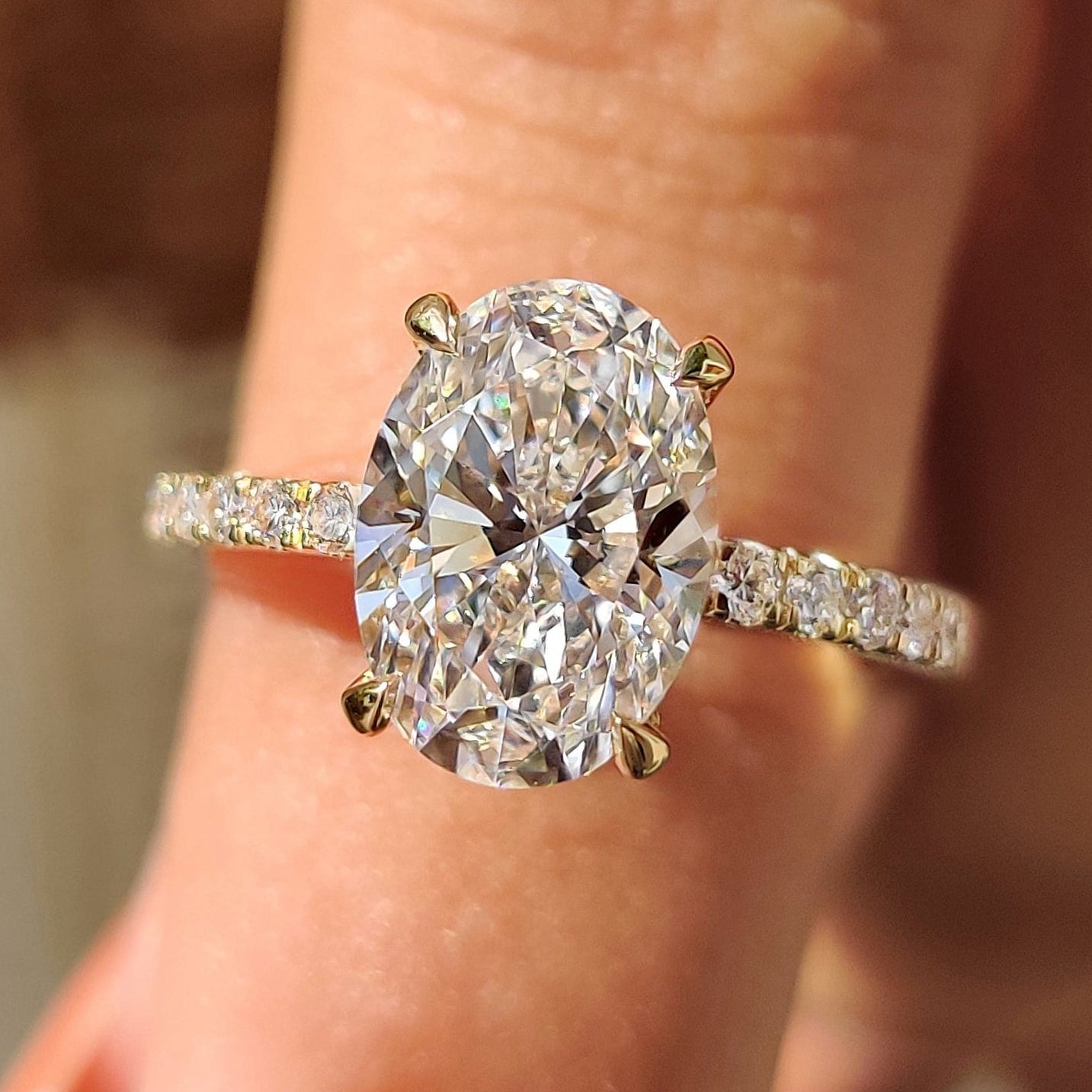
Several variations exist within the pave category and the differences are meaningful for buyers evaluating options.
Full pave runs diamonds around the entire circumference of the band, including the underside. Half pave, also called partial pave, covers only the band’s top portion while leaving the interior in plain metal. Micro pave uses very small stones, often under 0.01 carats each, creating a finer shimmer than standard pave. French pave, sometimes called U-cut pave, uses small U-shaped cuts in the metal between stones to expose more of each stone’s surface, maximizing light return and creating the brightest version of the setting.
What all pave settings share is the effect of raising the ring’s overall sparkle without altering the center stone’s specifications. The band itself becomes a light-catching surface, which changes the visual experience of the ring considerably. For buyers who want a ring that reads as elaborate and brilliant across the entire piece rather than focused on a single point, pave is the direct path to that result. The small diamonds used in pave settings do not need high clarity grades to look clean. Most buyers find VS2 to SI1 is the practical range. For a detailed breakdown of what clarity grade actually matters in pave diamonds, see our guide on Pave Diamonds and Clarity.
Solitaire vs pave: Key Differences
| Feature | Solitaire | Pave |
|---|---|---|
| Visual character | Clean, focused, minimal | Brilliant, detailed, glamorous |
| Sparkle source | Center diamond only | Center diamond + band diamonds |
| Perceived center stone size | Stone reads on its own | Band sparkle can amplify center stone |
| Maintenance | Low - no small stones to check | Higher - prongs require regular inspection |
| Cost structure | More budget for center stone | Additional cost for accent stones and labor |
| Resizing | Straightforward | More complex, especially full pave |
| Daily wear practicality | Very high | Moderate - active lifestyles need more care |
| Wedding band pairing | Flexible with most styles | More specific pairing considerations |
| Best suited for | Minimalist buyers, stone-first priorities | Buyers who want all-over brilliance |
Sparkle and Visual Impact
The sparkle difference between a solitaire and a pave ring is real, and it is not just a matter of more or less. It is a matter of kind. A solitaire concentrates all of its light return in one place. A round brilliant center stone in a clean solitaire produces the full depth and fire of that diamond: the scintillation patterns, the white flashes, and the colored dispersion with nothing competing for attention beside it. The visual experience is intense and singular. The eye goes to the diamond and stays there.
A pave ring distributes sparkle along the band, creating a ring that produces light from multiple sources simultaneously. When you look at a pavé ring on a hand in motion, the band catches directional light from angles the center stone cannot reach. The total amount of light coming from the ring is higher, but it is also spread across a larger surface. The center stone still leads the visual hierarchy, but the band participates in a way that changes how the ring reads overall.
Neither result is objectively better. Buyers who want a ring that reads as bright and active from across a room often prefer pave. Buyers who want the specific character of their center diamond, its particular fire, its face-up pattern and its personality to dominate without competition often prefer a solitaire. Understanding which of these describes your own visual preference is the most useful first step in the decision.
Which Setting Makes the Diamond Look Bigger?
A pave band can make the center diamond appear larger than it actually is, and this is one of the reasons pave settings are popular with buyers who want maximum visual impact from a given carat weight.
The mechanism is perceptual rather than physical. A plain metal solitaire band creates a clear visual boundary between the diamond and the ring. The eye reads the stone as having a defined edge where it meets the metal. A pave band blurs that boundary by introducing sparkle right up to the base of the center stone, making it harder for the eye to identify exactly where the diamond ends and the band begins. This ambiguity reads as more stone, even when the diamond’s physical dimensions are unchanged.
The effect is most pronounced with well-matched pave stones that are close in color to the center diamond. If the accent stones are noticeably warmer or cooler than the center stone, the contrast can actually work against the illusion and draw attention to the boundary rather than softening it.
Buyers who prioritize the perceived size of their center diamond and are weighing solitaire against pavé for that reason specifically will generally find pavé delivers the larger visual impression. Buyers for whom the actual face-up appearance of the diamond is the primary goal – who want to see the stone itself, not the impression of it – typically find the solitaire more satisfying once they can compare both settings in person.
Maintenance, Durability and Everyday Wear
This section is where the practical reality of the two settings diverges most significantly, and it deserves honest treatment because it affects how the ring looks and feels years into daily wear, not just on the day it is purchased.
A solitaire engagement ring requires minimal maintenance beyond what any diamond ring requires. The center stone should be checked periodically to confirm the prongs remain secure, and the ring benefits from regular cleaning to maintain brilliance. Beyond that, the plain metal band is essentially maintenance-free. There are no small stones to monitor, no pave prongs to inspect, and no risk of a tiny accent diamond loosening and being lost during daily activities.
A pave ring requires more attentive care. Each small diamond in a pavé band is held by tiny beads or prongs, and those settings can wear or shift with daily contact over time. A well-made pave ring from a reputable jeweler will hold its stones reliably with normal wear, but regular professional inspection, typically every six to twelve months, is genuinely advisable rather than optional. If a pave stone loosens and is not caught early, it can be lost entirely, and replacement requires a matching stone and a skilled setter.
For buyers with very active lifestyles, jobs that involve regular contact with hard surfaces, or simply a preference for low-maintenance ownership, the solitaire is the more practical long-term choice. For buyers who will treat a pavé ring with appropriate care and maintain it regularly, the additional maintenance is manageable and the visual return is meaningful.
Cost and Value: Where Should You Spend?
The cost difference between a solitaire and a pave setting of the same center diamond is real and worth understanding, because it affects what the ring can be rather than just what it costs.
In a solitaire, nearly the entire ring’s cost goes toward the center stone. The band itself, plain metal, four or six prongs, adds relatively little to the total. This means that a buyer with a fixed budget can direct the maximum proportion of that budget toward the qualities that matter most in a center diamond: carat weight, cut, color and clarity.
In a pave ring, the band represents an additional cost beyond the center stone. The accent diamonds themselves must be purchased and matched. The labor required to set dozens of small stones precisely is significantly greater than the labor required to set one large stone in a solitaire. The total cost of the ring increases, which means either the overall budget needs to increase or some proportion of it is redirected from the center stone toward the setting.
This trade-off is neither right nor wrong as a decision, but it is worth being explicit about. A buyer who chooses pave for the visual effect should understand that they are, in practical terms, trading some center stone quality or size for that band sparkle. A buyer who chooses solitaire gets the maximum center stone for their budget but accepts that the band will not contribute independent brilliance. Knowing which trade-off feels more worthwhile for your priorities makes the cost comparison clear.
Lifestyle and Practical Considerations
Beyond maintenance, lifestyle shapes the solitaire versus pave decision in a few additional ways that are worth thinking through before purchasing.
Activity level matters. Buyers who work in environments with regular hand use, who participate in sports or outdoor activities, or who frequently work without gloves around hard surfaces will subject a pave band to more contact than the setting is designed to handle without some wear over time. A solitaire with a plain band handles those conditions considerably better. The center stone in a well-set solitaire is also better protected than tiny accent stones in a pavé band when exposed to hard impacts from unusual angles.
Resizing is a practical consideration that buyers may underestimate at purchase time. Ring sizes change over years; pregnancy, weight changes, and age-related changes in finger size are all common. A solitaire ring can typically be resized without significant complication. A half-pave ring can usually be resized with some work, depending on where the pave begins and ends relative to the sizing area. A full pave ring where stones run the full circumference, including the underside, is significantly harder and sometimes impossible to resize without removing and replacing stones. For buyers who anticipate needing future adjustments, this is a meaningful practical distinction.
Profession and environment matter too. People who wash their hands frequently, work in medical settings, or handle chemicals regularly will find the plain band of a solitaire more compatible with their daily routine than a pave band that requires more careful cleaning and can trap residue between the small stones.
Wedding Band Pairing Differences
A solitaire engagement ring is among the most versatile foundations for wedding band pairing because its plain shank creates no constraints. A straight pave band, a curved contour band, a plain metal band, a beaded milgrain band all can sit comfortably beside a solitaire without visual conflict or physical interference. Buyers who are undecided about wedding band style or who want flexibility to change the look of their ring set over time will find a solitaire accommodating.
A pave engagement ring introduces more specific pairing considerations. The visual weight of a pave shank means a plain wedding band alongside it can look intentionally minimalist or can read as unfinished depending on the specific proportions and the buyer’s aesthetic. Many buyers with pave engagement rings choose a pave wedding band to create a cohesive band-and-band look that wraps the finger in continuous sparkle. Others choose a slim, plain band that creates deliberate contrast. Both can work, but the pairing decision requires more thought than it does with a solitaire.
There is also a physical consideration. The raised bezel or high prong setting that many pave engagement rings use can make it difficult for a straight wedding band to sit flush against the ring without a gap. A curved or contoured band sized specifically for the engagement ring profile is sometimes necessary to achieve a flush fit. This is worth discussing with a jeweler before selecting a wedding band and ideally, before purchasing the engagement ring if you already have a wedding band style in mind.
Lab Grown Diamonds: Solitaire vs Pave
Lab grown diamonds have changed the practical calculus of both settings in ways that buyers evaluating ring options in 2026 should understand clearly.
In the solitaire context, the most significant change is what a given budget can access in terms of center stone size and quality. A lab grown diamond of the same cut, color, and clarity as a natural diamond costs significantly less per carat. For buyers who choose a solitaire because they want to maximize center stone presence, lab grown diamonds mean that the level of center stone previously accessible at a higher budget is now achievable at a lower one. The value proposition of the solitaire, putting as much budget as possible toward the diamond, becomes even stronger when the diamond itself costs substantially less.
In the pave context, lab grown accent diamonds have made it possible to specify higher-quality accent stones without a proportionate increase in cost. The visual coherence of a pavé band depends significantly on the quality and consistency of the accent stones; mismatched colors or poorly cut melee diamonds produce a band that looks irregular under close inspection. With lab grown melee diamonds more accessible, buyers can more readily request consistent quality across the band at a price point that would previously have required compromise.
For buyers at any budget level, the combination of lab grown center stones and lab grown accent diamonds means that both settings are more achievable at higher specifications than they were before lab grown production became widespread. The decision between solitaire and pave does not need to be constrained by budget in the way it might have been previously, which shifts the decision back toward what the buyer actually wants to see on their hand every day.
How to Choose Between Solitaire and pave
The right choice depends on how you want your ring to look, perform, and fit your lifestyle.
Choose Solitaire for Center Stone Focus
Choose a solitaire if you want maximum attention on the center diamond. Its plain band keeps the design simple and directs more of your budget toward the stone.
Choose Pave for More Sparkle
Choose pave if you want sparkle across the ring rather than from the center stone alone. The trade-off is a higher setting cost and more maintenance.
Consider Your Lifestyle
A solitaire suits active lifestyles and frequent hand use because it has fewer accent stones and prongs to maintain. Pave can work for daily wear but requires more care and regular inspections.
Think About Future Resizing
A solitaire offers greater flexibility if you expect your ring size to change. Pave rings can be harder to resize, especially when diamonds extend around the entire band.
Consider Custom Design
If neither option feels right, custom design lets you combine elements from both settings. Carat Diamonds offers custom jewelry services for buyers who want more control over their ring’s design.
Make the Choice Based on Daily Wear
Consider how you will actually wear the ring rather than choosing based only on appearance. Both settings offer distinct advantages, so your lifestyle, budget, and priorities should guide the decision.
Find Your Perfect Engagement Ring
Explore engagement rings in solitaire, pave, halo, vintage or nature inspired and other popular settings.


