

The diamond itself has not changed. The cut, carat weight, and millimeter measurements stay the same. What changes is the frame around it, and that frame affects how large the diamond appears to the eye.
A 4 prong setting generally makes a diamond look slightly larger than a 6 prong setting on the same stone size. Four prongs cover less of the diamond’s edge, leaving more of the surface visible. Six prongs cover more of the perimeter and can make the diamond appear a little more contained.
That is the clear answer. The reasons behind it, and when the difference actually matters, are what help you make the right choice.
Do 4 or 6 Prongs Make a Diamond Look Bigger?
In a 4 prong setting, a round brilliant diamond looks slightly larger because less of the stone’s outline is covered by metal. The eye sees more of the diamond’s circumference, which reads as a slightly wider face-up presence.
In a 6 prong setting, more of the diamond’s girdle is held by metal contacts. This can make the stone look slightly more enclosed within the setting, reducing the perceived edge-to-edge width very slightly.
The key distinction is that neither setting actually changes the diamond’s size. The carat weight, table diameter, and millimeter spread remain identical. What changes is how much of that surface the eye can see without metal interrupting the outline. Perceived size and actual size are two different things, and prong count affects only the first.
Why 4 Prongs Can Make a Diamond Look Larger

Less Metal Around the Diamond
A 4 prong head uses four contact points to hold the diamond. Between each prong, the girdle of the stone is open to view. That uninterrupted space allows the eye to trace the full curve of the diamond’s edge with fewer interruptions. Less visual interruption from metal typically translates into a perception of more stone.
More of the Face-Up Surface Remains Visible
Each prong tip sits at the point where the crown meets the girdle, covering a small area of the stone’s perimeter. Four prong tips cover four points. Six prong tips cover six. The remaining perimeter is open in both cases, but four prong designs leave more of that perimeter unobstructed. The face-up table itself is not obscured by prongs in either design – the visual difference is at the outer edge of the stone.
How the Eye Reads the Diamond’s Outline
The human eye tends to read the visible boundary of an object as its full size. If part of a diamond’s edge is covered by a prong, the eye draws the shape inward to the visible edge rather than the true edge beneath the metal. Four prongs cover fewer edge points, so the eye traces a larger perceived outline. Six prongs introduce more coverage at six evenly spaced points around the outline, which can reduce that traced perimeter slightly.
This is partly why the four prong impression of a larger diamond exists even without any actual difference in the stone.
How 6 Prongs Change the Diamond’s Appearance
A Rounder Visual Outline
Six evenly spaced prongs sit around a round brilliant diamond at consistent intervals. This geometric regularity can make the diamond’s outline look slightly more circular – a subtle but real visual effect. For buyers who want their round diamond to read as classically round, six prongs can reinforce that quality. The Tiffany-style six prong solitaire is associated specifically with this visual outcome.
More Metal Around the Girdle
Six prong contacts around the stone’s perimeter introduce more metal touching the girdle at six points rather than four. Each prong sits against the stone and, depending on prong thickness, can visually break the diamond’s edge in six places rather than four. This is not a deficiency of the six prong design. It is simply the trade-off between a setting that emphasizes roundness and one that emphasizes openness.
Why Some Diamonds Can Look Slightly Smaller
Because six prongs introduce more metal around the girdle, the effect can be to visually contain the diamond slightly more than a four prong equivalent. The difference is subtle and depends significantly on prong thickness and design. A six prong setting with very fine, slim prongs may look nearly identical to a four prong setting. A heavier six prong head can create a more enclosed appearance.
4 Prongs vs 6 Prongs
| Feature | 4 Prong Setting | 6 Prong Setting |
|---|---|---|
| Perceived diamond size | Slightly larger | Slightly smaller |
| Visible diamond outline | More open | More enclosed |
| Visual outline character | Slightly squarish at four points | More consistently round |
| Girdle coverage | Four metal contact points | Six metal contact points |
| Security redundancy | Standard – inspect regularly | Additional support if one prong is damaged |
| Classic associations | Four-claw solitaire | Tiffany-style solitaire |
| Best suited for | Buyers wanting maximum visual size | Buyers wanting roundness and additional redundancy |
Prong Thickness vs Prong Count
This is the question most buyers do not think to ask, and it changes the entire 4 vs 6 comparison.

A thick 4 prong setting can cover more visual area than a delicate 6 prong design. If the four prongs are wide and heavy, they cover a larger proportion of the diamond’s visible perimeter than six slim, fine prongs would. The result is that a heavy 4 prong head may actually make the diamond appear smaller than a light 6 prong head with fine wire-like prongs.
Prong thickness is rarely displayed prominently in product listings. It varies by designer, metal, prong style, and ring gauge. When evaluating two settings for how they affect perceived diamond size, prong thickness is as important as prong count, sometimes more important.
Tapered prongs, which are thicker at the base and narrow at the tip, cover less of the stone’s surface at the critical contact point than flat or rounded prongs of equivalent base width. Claw prongs, which curl more tightly around the stone, can create a more secure grip with less visual interruption than a rounded prong of the same base dimension.
The practical takeaway: do not evaluate four versus six prongs in isolation. Look at the specific prong design, thickness, and style alongside the count.
What Makes a Diamond Look Bigger
Prong count contributes to perceived size, but several other factors matter more.
Actual millimeter spread: The physical table diameter of the diamond determines how much of the finger it covers. A well-cut 1 carat round brilliant measures approximately 6.4 to 6.5 mm across. A poorly cut 1 carat stone with weight hidden in the depth may measure 6.0 mm or less. The difference in face-up appearance between two 1 carat diamonds at these dimensions is more significant than any prong-count difference could create.
Cut quality: An excellent or ideal cut brings more light to the table and creates more visual presence. A poorly cut stone of the same carat weight returns less light and can appear duller and smaller in use, regardless of prong count.
Setting height: A higher setting elevates the stone, allowing more light to enter from below and potentially increasing perceived presence. A low-profile setting sits the stone closer to the finger, which can make the diamond appear slightly more contained regardless of prong count.
Prong thickness: As discussed, thick prongs cover more of the visible edge. Slim prongs expose more of the outline. This interacts directly with perceived size independent of whether there are four or six of them.
Metal visibility around the stone: Bezel settings, which wrap the stone in a continuous metal border, reduce perceived size more than any prong configuration. Within the prong family, the differences are comparatively subtle.
The actual dimensions of the diamond matter far more than prong count alone. Buyers who want their diamond to look as large as possible will get better results by prioritizing face-up spread and excellent cut quality over the difference between four and six prongs.
4 Prong vs 6 Prong Security
A well-designed 4 prong setting, properly fitted and maintained, can hold a diamond securely for decades. The security concern with four prongs is not that they are inherently weaker, but that a six prong design provides additional redundancy: if one prong becomes damaged, bent, or worn, five others continue supporting the stone. In a four prong setting, the remaining three prongs carry the full load if one fails.
This additional redundancy is genuinely useful and worth acknowledging, particularly for buyers who are hard on jewelry or have active lifestyles. It does not mean that a four prong ring is unsafe for general wear. Regular professional inspection of prong integrity is typically recommended every six to twelve months, addressing the maintenance gap regardless of prong count.
No professional gemological authority states that a specific carat size automatically requires six prongs. Four prong settings are used across a full range of diamond sizes in fine jewelry. The choice between four and six prongs does not need to be treated as a safety vs aesthetics binary. Both can be secure when properly executed and maintained.
Which Should You Choose: 4 Prongs or 6 Prongs?
The answer comes down to what you are optimizing for.
Choose a 4 prong setting if:
- You want the most open face-up appearance for the diamond
- You prefer less visible metal around the stone’s edge
- You want the diamond to appear as wide as the setting allows
- You are drawn to a lighter, less heavy frame around the stone
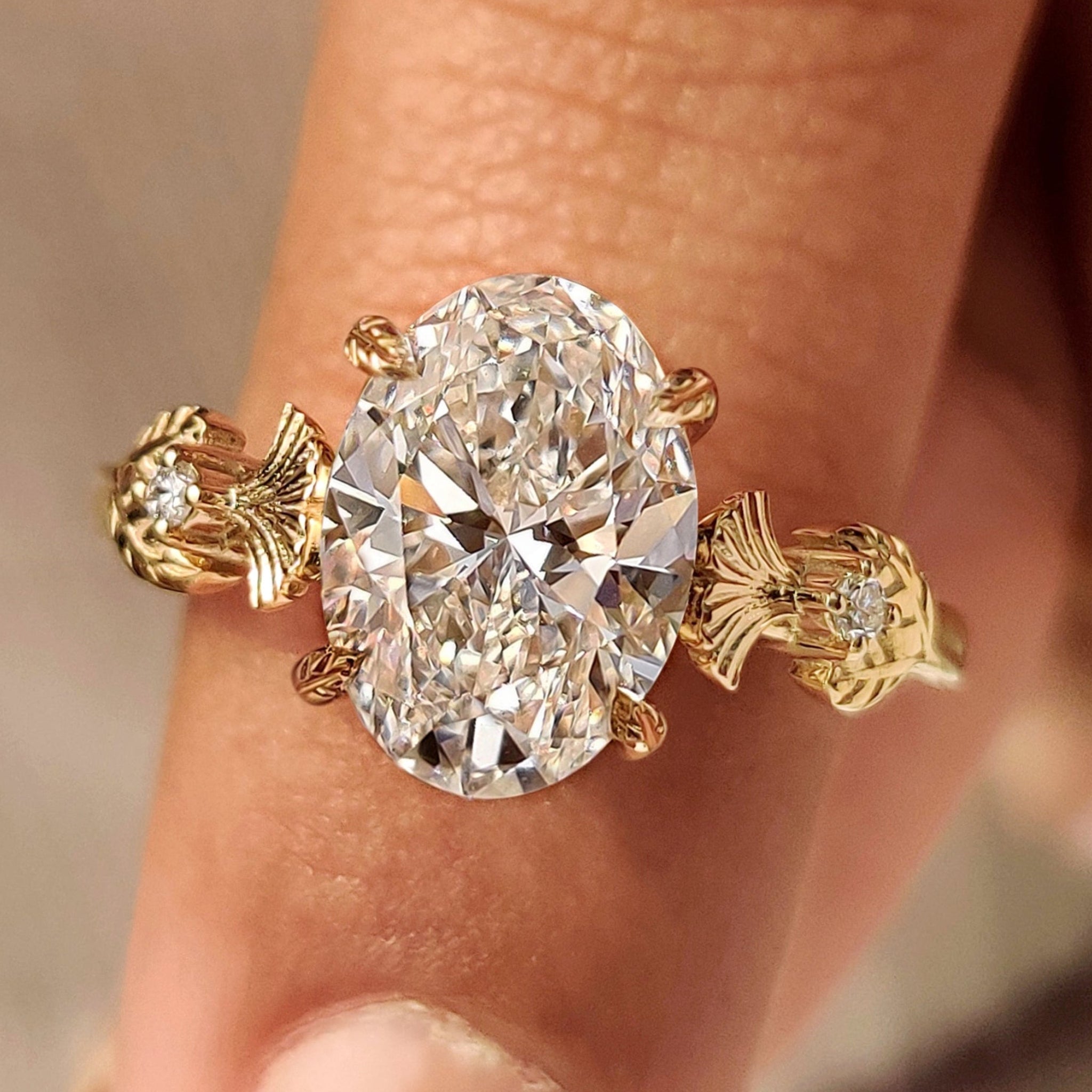
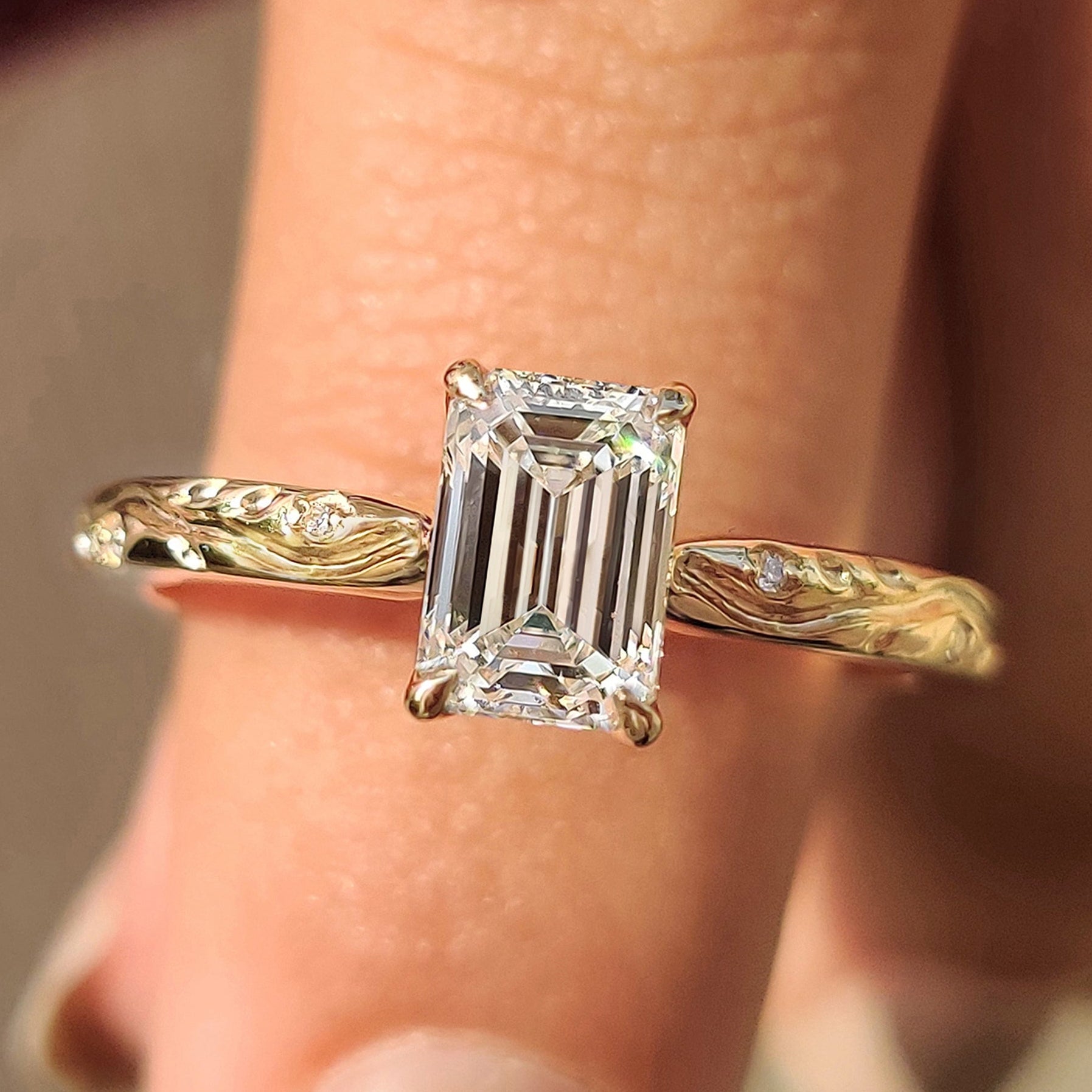
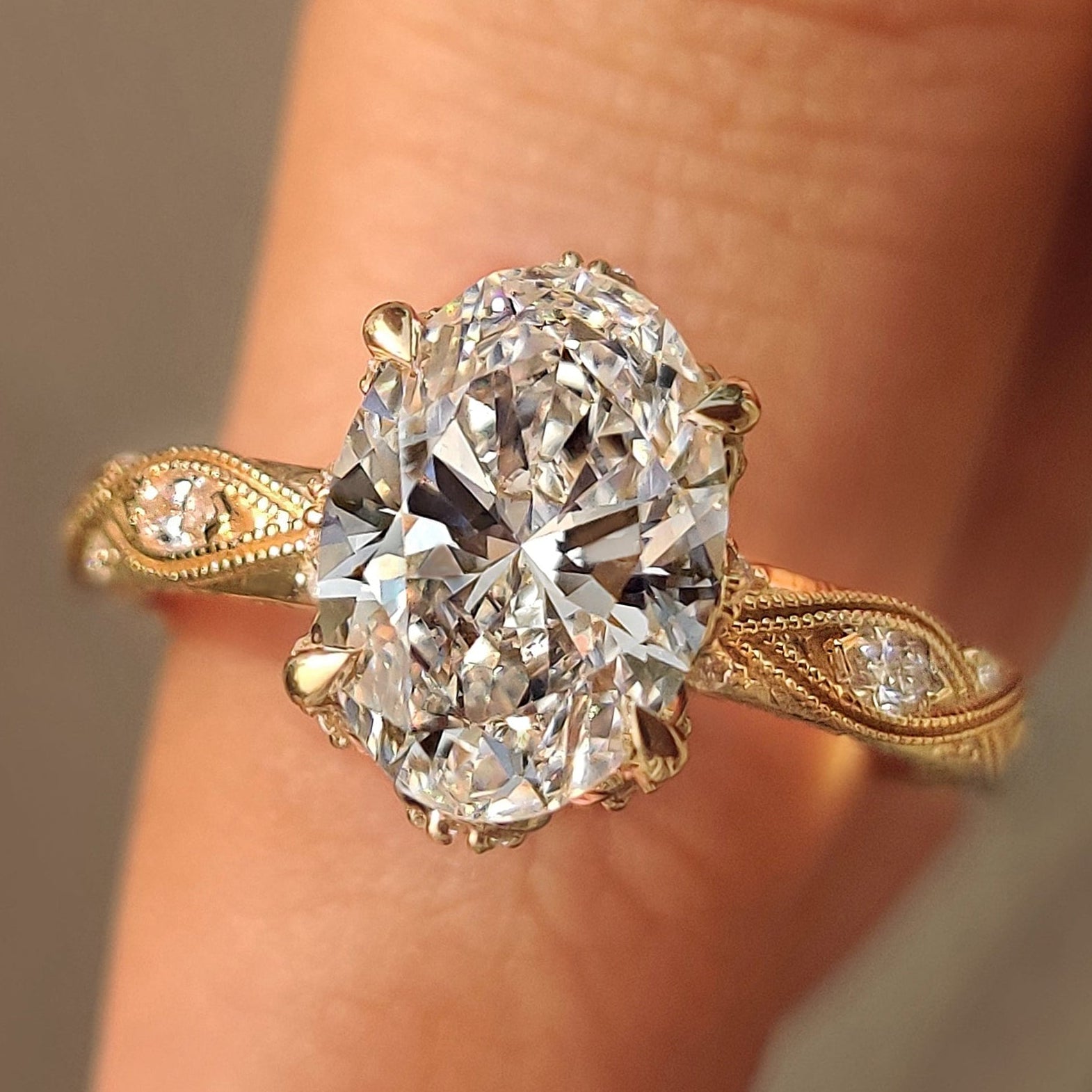
A round cut diamond with a four prong low-set double pave band is an example of how a four prong head creates an open look while the band adds brilliance around it. View the Round Cut Diamond Lab Grown Solitaire with double pave band for a four prong reference point.
Choose a 6 prong setting if:
- You prefer a classic round appearance for the diamond’s outline
- You want additional prong redundancy in the setting
- You are drawn to the association with traditional six prong solitaire design
- You prefer a slightly more enclosed look that reads as more substantial
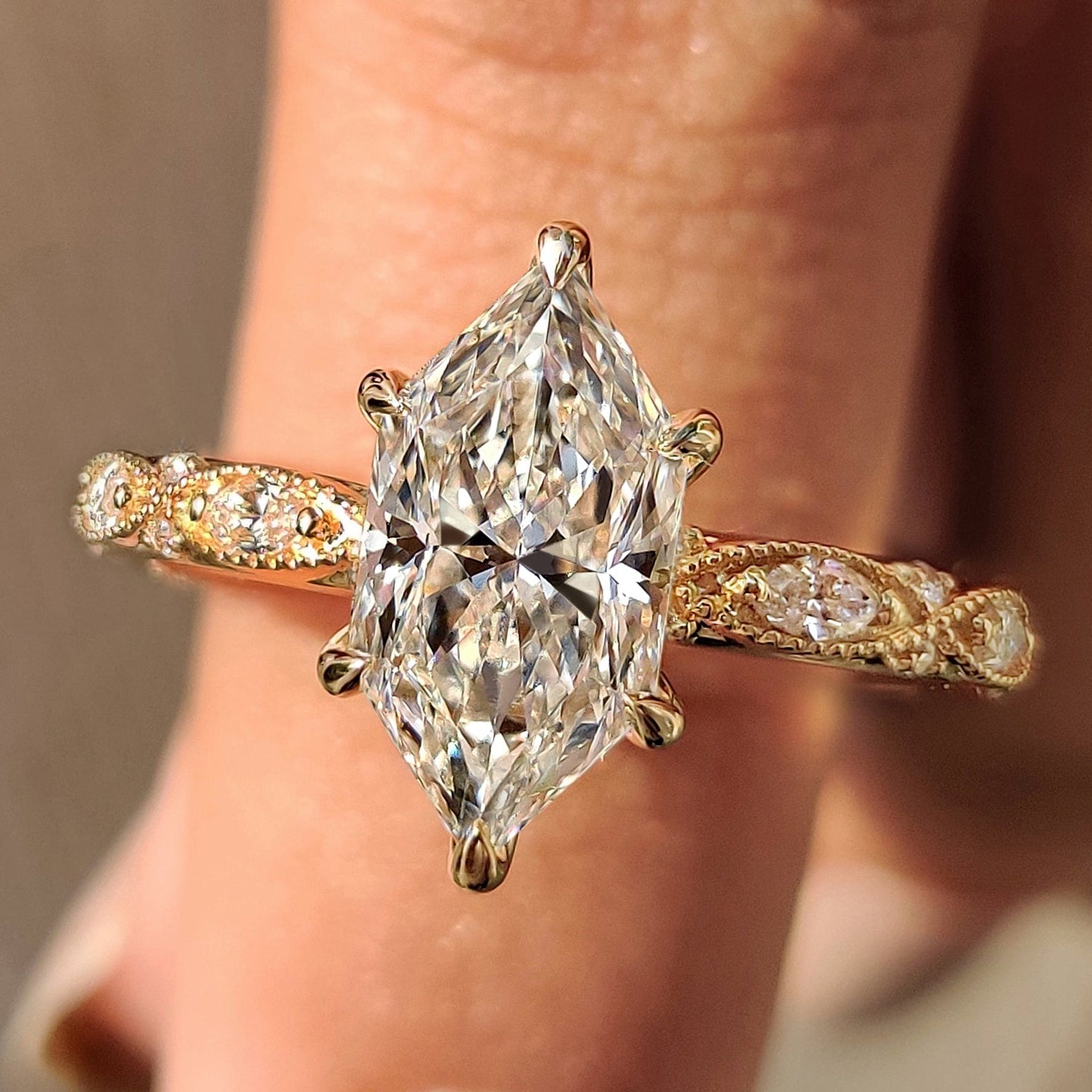
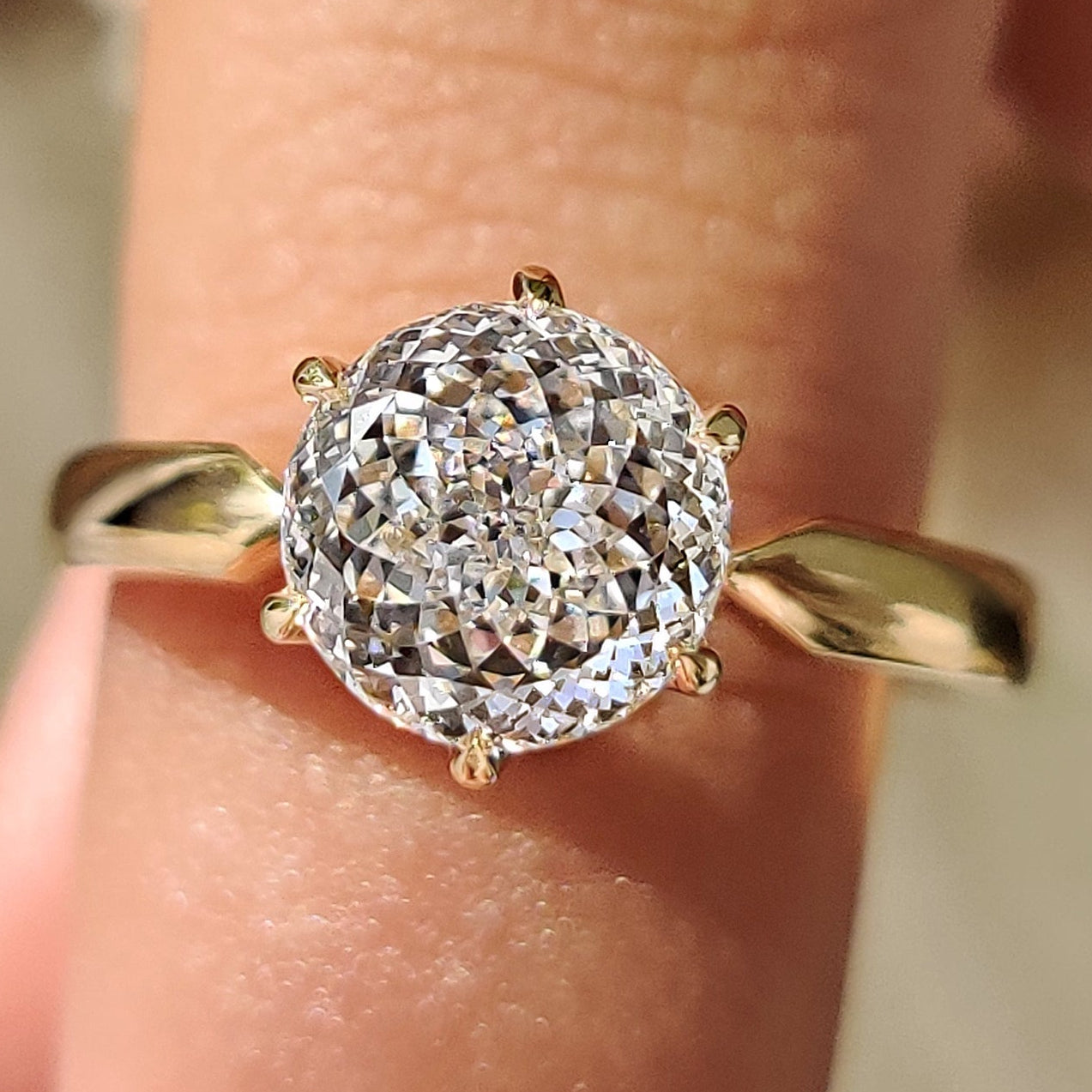
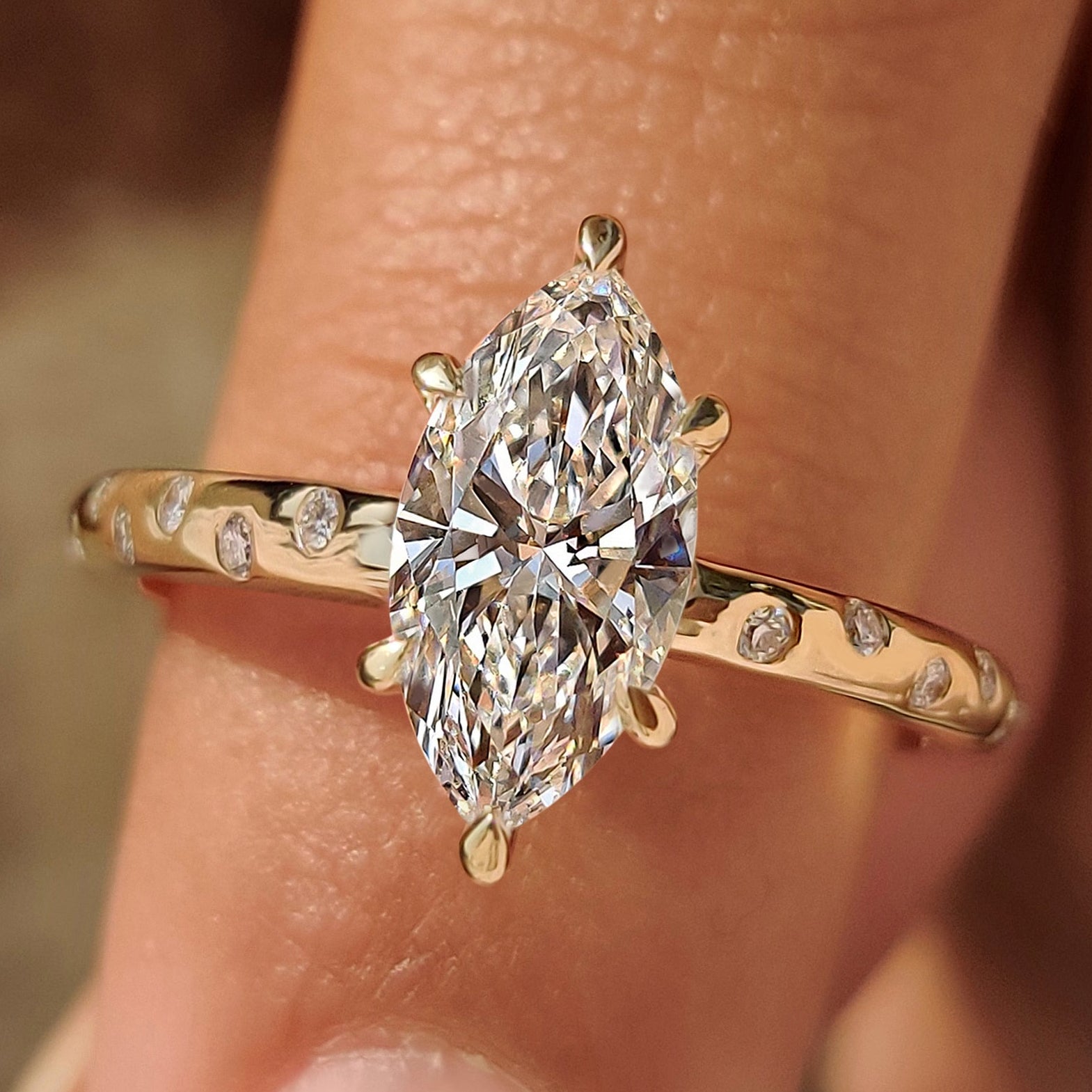
A six prong round brilliant with a knife-edge band is a strong example of how the six prong format reads in a classic solitaire context. The six prong round cut lab grown diamond engagement ring is a direct reference.
Neither choice is universally better. A buyer who wants the most visual stone presence should lean toward four prongs with a fine, tapered prong design. A buyer who values additional prong redundancy and a rounder outline should lean toward six.
Conclusion
The same diamond can look slightly different in a four prong setting versus a six prong setting, and now you understand why. Four prongs expose more of the stone’s perimeter, creating a perception of slightly more visual width. Six prongs reinforce the round outline and provide additional structural redundancy. Neither changes the actual dimensions or carat weight of the diamond.
If maximizing perceived size is the goal, four prongs generally give a slight advantage. If roundness of outline and an extra prong contact point matter more, six prongs deliver that. Prong thickness, cut quality, and actual millimeter spread will have a larger effect on how the diamond looks than prong count alone.
The decision is worth making intentionally, but it is not the most important variable in the ring.
Find Your Round Diamond Ring
Compare round diamond engagement rings in different prong settings to find the look and security that suit you.


