

The diamond gets most of the attention. But the setting holding it determines how much light it catches, how secure it stays over a lifetime of wear, and whether the ring suits your daily life. Choose the wrong setting for the right diamond and you undermine both.
Specifically, this guide covers every major diamond ring setting type, what each one does, how it affects sparkle and durability, which lifestyles it suits, and what to watch for before you buy.
What Is a Diamond Setting?
A diamond setting is the metal framework that secures a diamond or gemstone in a piece of jewelry. It determines how the stone sits, how much light reaches it, and how protected it is during daily wear. The setting you choose affects three things above everything else: the diamond’s brilliance, the ring’s durability and how comfortably it wears day to day.
No setting is universally better than another. Each involves a trade-off between light exposure, protection, maintenance, and style. The best setting is always the one that fits both the stone and the person wearing it.
Solitaire Setting
The solitaire setting is the most purchased engagement ring style in the world, and its dominance is not accidental. It features a single center diamond held by prongs with no accent stones, no surrounding halo, and no embellishment on the band. Every element of the design directs attention to one thing: the diamond itself.
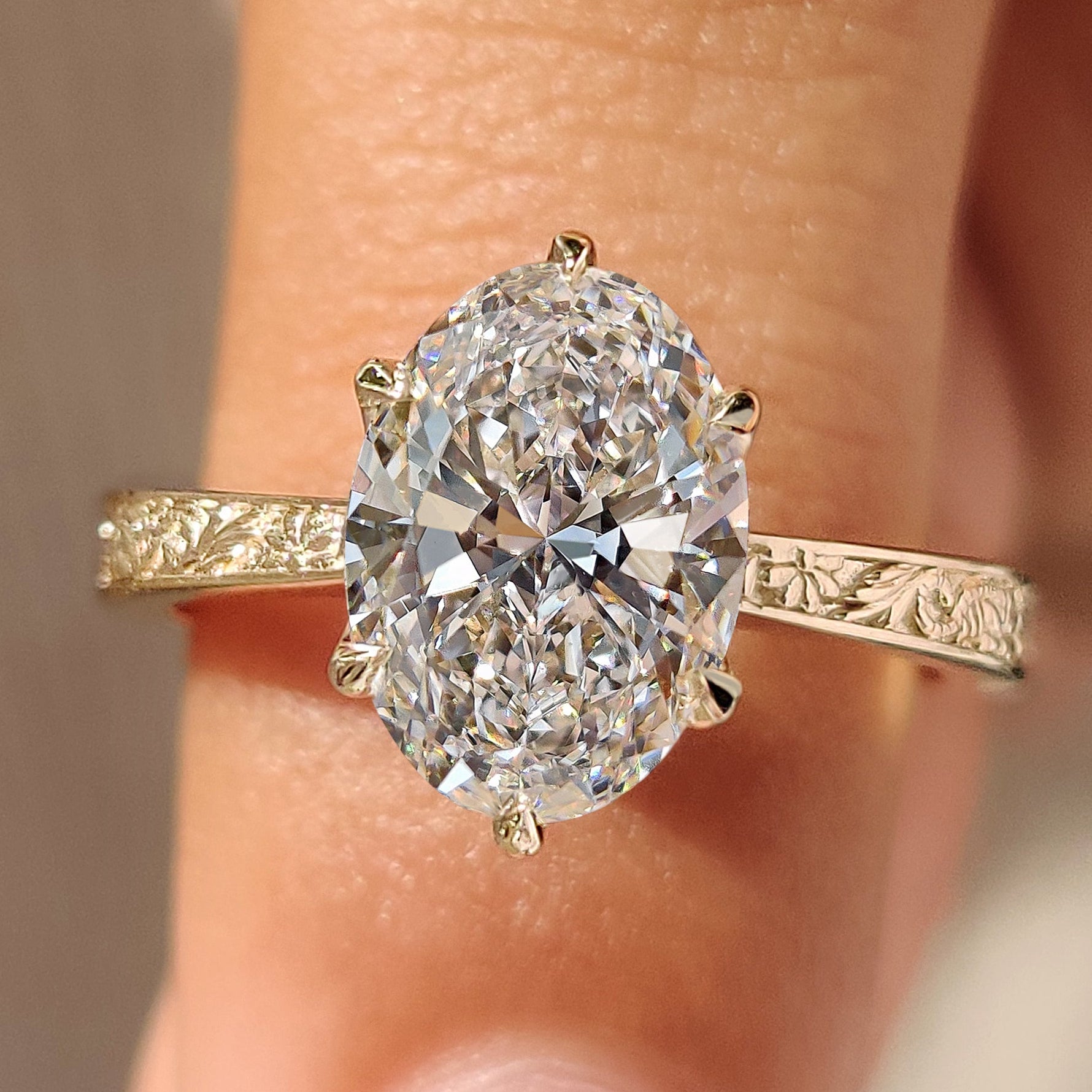
Solitaire Oval Diamond Ring In Art Deco
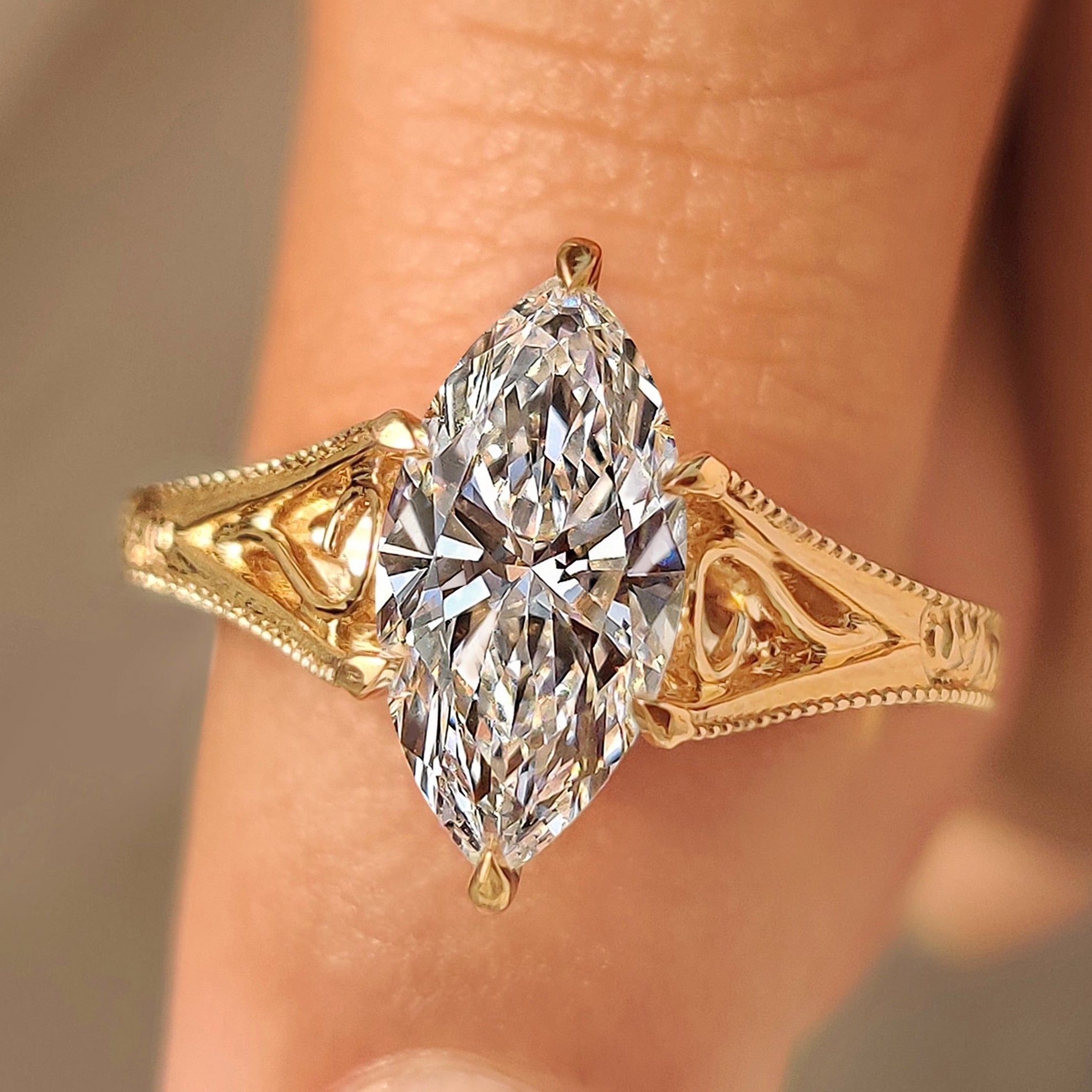
Solitaire Style Marquise Cut Diamond Ring in Milgrain Details
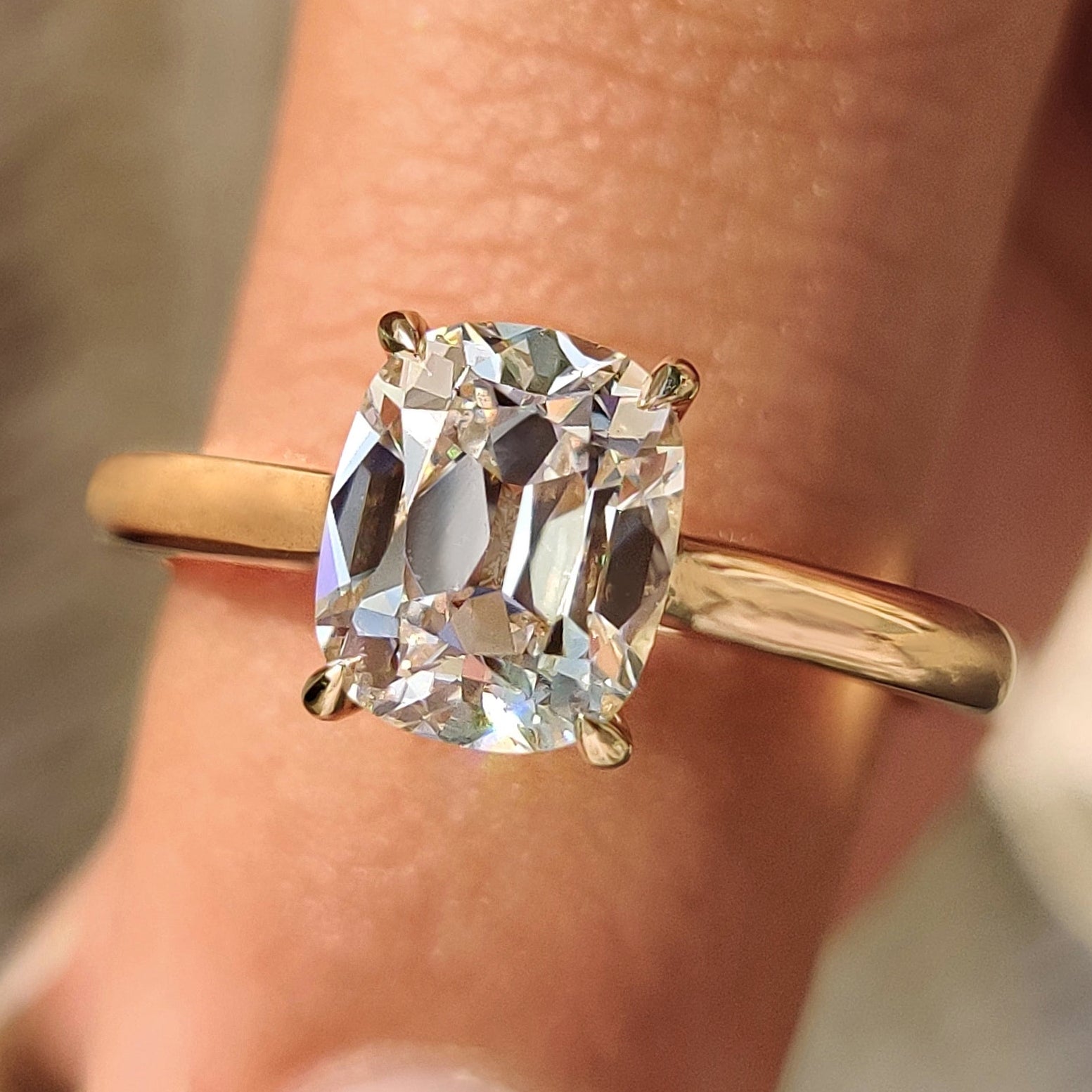
Cushion Old European Cut Diamond Ring in Solitaire Setting
What makes a solitaire work is what it removes. Without side stones or a decorative band competing for visual attention, the center stone becomes the entire statement. This makes the solitaire the most effective setting for showcasing a high-quality lab grown diamond; cut grade, color, and clarity are all fully visible with nothing to distract from or compensate for them.
Four-Prong vs. Six-Prong Solitaire
The two most common solitaire configurations differ in both appearance and function.
A four-prong solitaire uses minimal metal contact, which exposes more of the diamond’s surface and creates a cleaner, more contemporary silhouette. Round brilliants appear slightly more circular in a four-prong setting, and the open spaces between prongs allow light to enter freely from every direction.
A six-prong solitaire adds two additional contact points that distribute the holding force more evenly across the stone. It is slightly more secure over years of daily wear, and the additional prongs give the ring a more traditional, formal appearance. The classic Tiffany-style engagement ring uses six prongs for exactly this reason.
Neither configuration is objectively better. The choice comes down to whether you prioritize a cleaner, more minimal look or a slightly more secure, more traditional one.
Low-Profile vs. High-Profile Solitaire
The height at which the diamond sits above the band is a separate decision from prong count.
A high-profile solitaire elevates the diamond significantly, maximizing light exposure from below and giving the ring a prominent, classic presence. It photographs dramatically and shows the stone at its most brilliant. The trade-off is practicality: a high-set stone catches on fabric more easily and is more vulnerable to side impact.
A low-profile solitaire brings the stone closer to the band, creating a sleeker, more wearable ring that sits better under gloves and snags less on clothing. It is the practical choice for everyday wear without sacrificing the solitaire aesthetic. Many buyers with active lifestyles choose a low-profile prong solitaire as the ideal balance between brilliance and durability.
When to Choose a Solitaire Setting
A solitaire setting is the right choice when the center diamond is the priority and nothing else should compete with it. It suits buyers who prefer understated elegance over maximum decoration, want a ring that will never feel dated, and are choosing a high-quality stone where every facet deserves to be seen.
The solitaire is also the easiest setting to pair with a wedding band. Because the band is plain or minimally detailed, almost any wedding bandpavé, eternity, plain metals- sits comfortably alongside it without clashing.
Prong Setting
The prong setting is the most widely used diamond setting in fine jewelry, accounting for roughly 40% of all engagement rings sold. It holds the diamond using small metal claws, typically four or six that grip the stone at its girdle and lift it above the band. This elevated position exposes the maximum surface area of the diamond to light from above, below, and the sides.
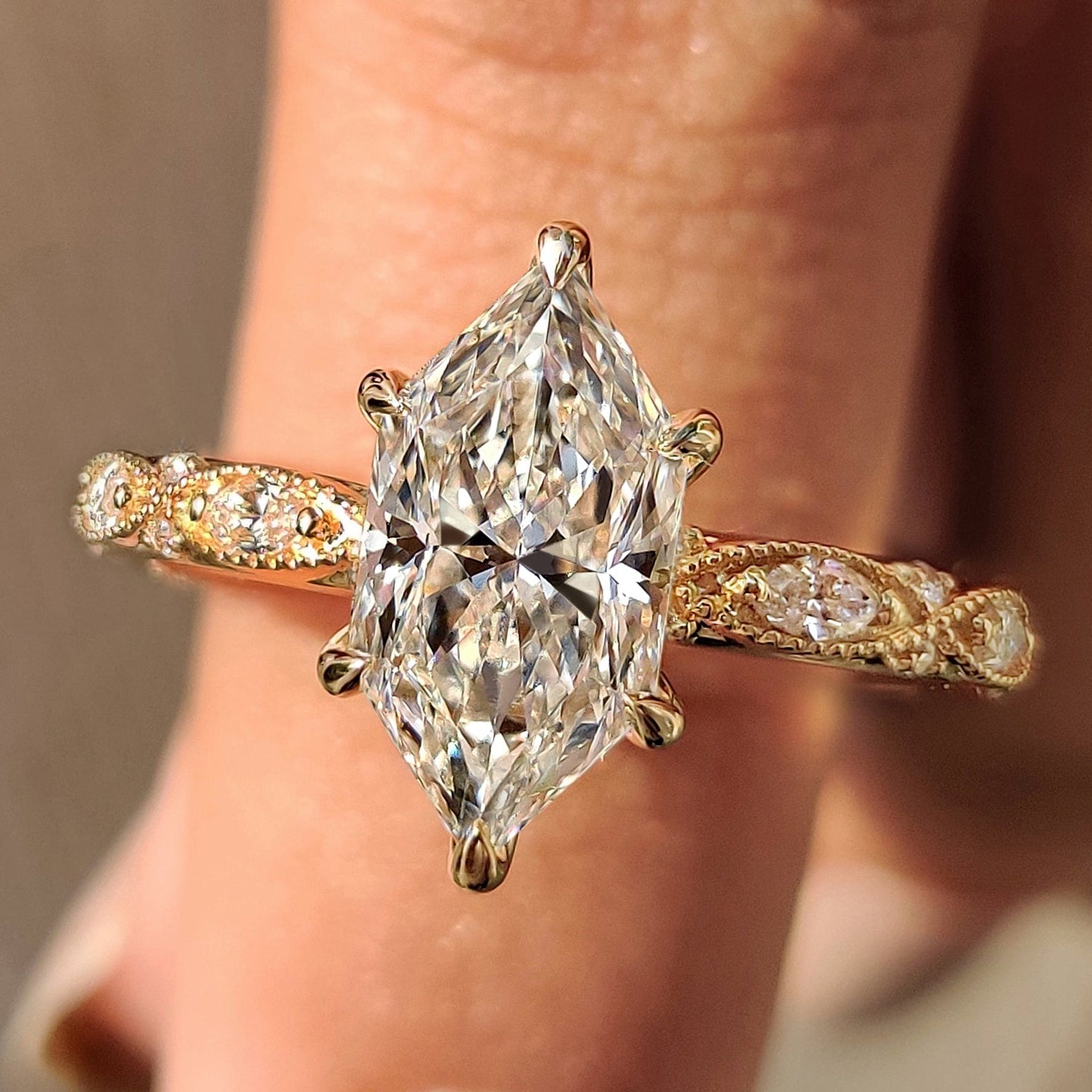
Dutch Marquise Vintage Diamond Engagement Ring
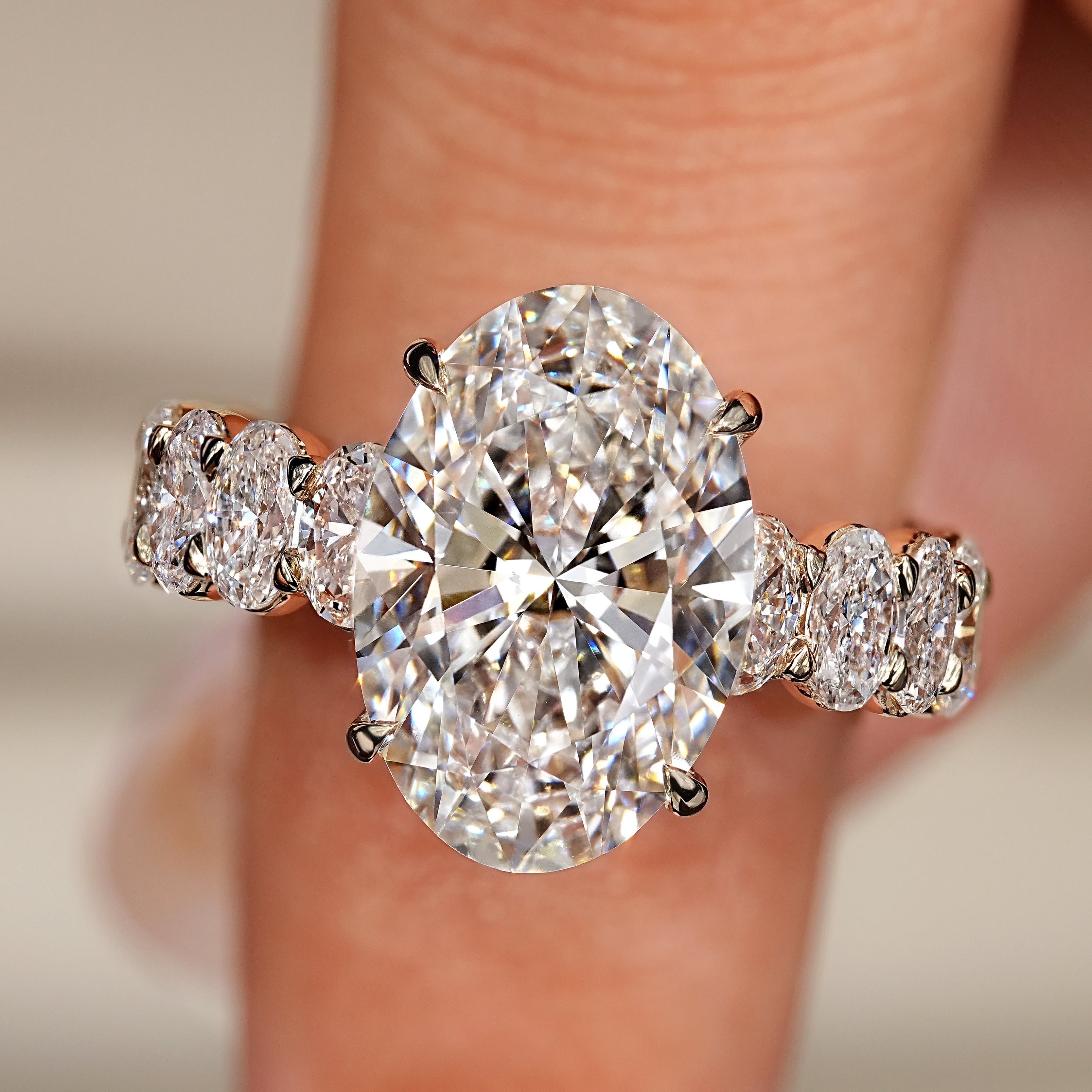
Oval Engagement Ring with Four Claw Prong Setting
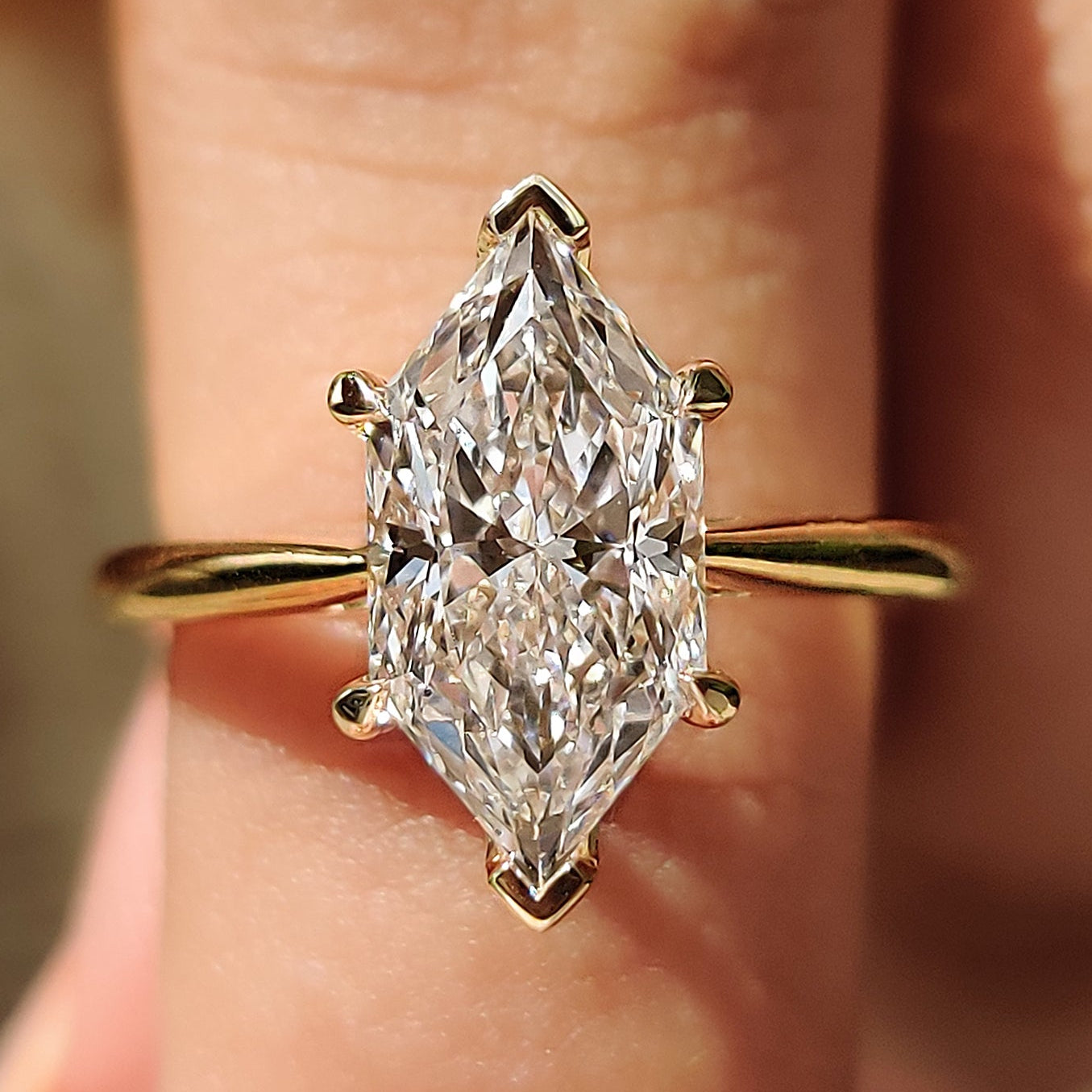
Dutch Marquise Hidden Halo Diamond Ring
Four prongs create a cleaner, more minimal silhouette and make round and cushion cut diamonds appear slightly more rounded. Six prongs provide slightly more security and are the standard in the classic Tiffany-style solitaire, where the additional contact points distribute hold more evenly across the stone.
Types of Prong Settings
Beyond the standard four or six prong arrangement, several variations exist:
- Claw prongs have pointed tips that sit more visibly against the stone, giving the ring a sharper, more contemporary look.
- Rounded prongs have smooth, domed tips that are gentler on clothing and slightly more traditional in appearance.
- Shared prong settings use a single prong between two adjacent stones, common in eternity bands and side stone rings.
- V-prongs are specifically designed for pointed stone shapes- marquise, pear, and princess cut- to protect the vulnerable tips from chipping.
When to Choose a Prong Setting
Prong settings are the strongest choice when maximum light performance matters most. Because the stone sits elevated with minimal metal contact, light enters from every direction and reflects at full intensity. This makes prong settings particularly effective for round brilliant, oval, and cushion cut lab grown diamonds, where brilliance and fire are the primary appeal.
The trade-off is maintenance. Prongs wear down gradually over years of daily contact and need periodic inspection and retipping. Check prong integrity once a year; a loose prong is the most common cause of a lost diamond.
Basket Setting
A basket setting is a variation of the prong setting where the base of the diamond is cradled in a small metal basket – a framework of connecting metal beneath the stone that supports the prongs from below. The prongs rise from this basket structure rather than directly from the band, creating a more substantial and decorative mount beneath the center stone.
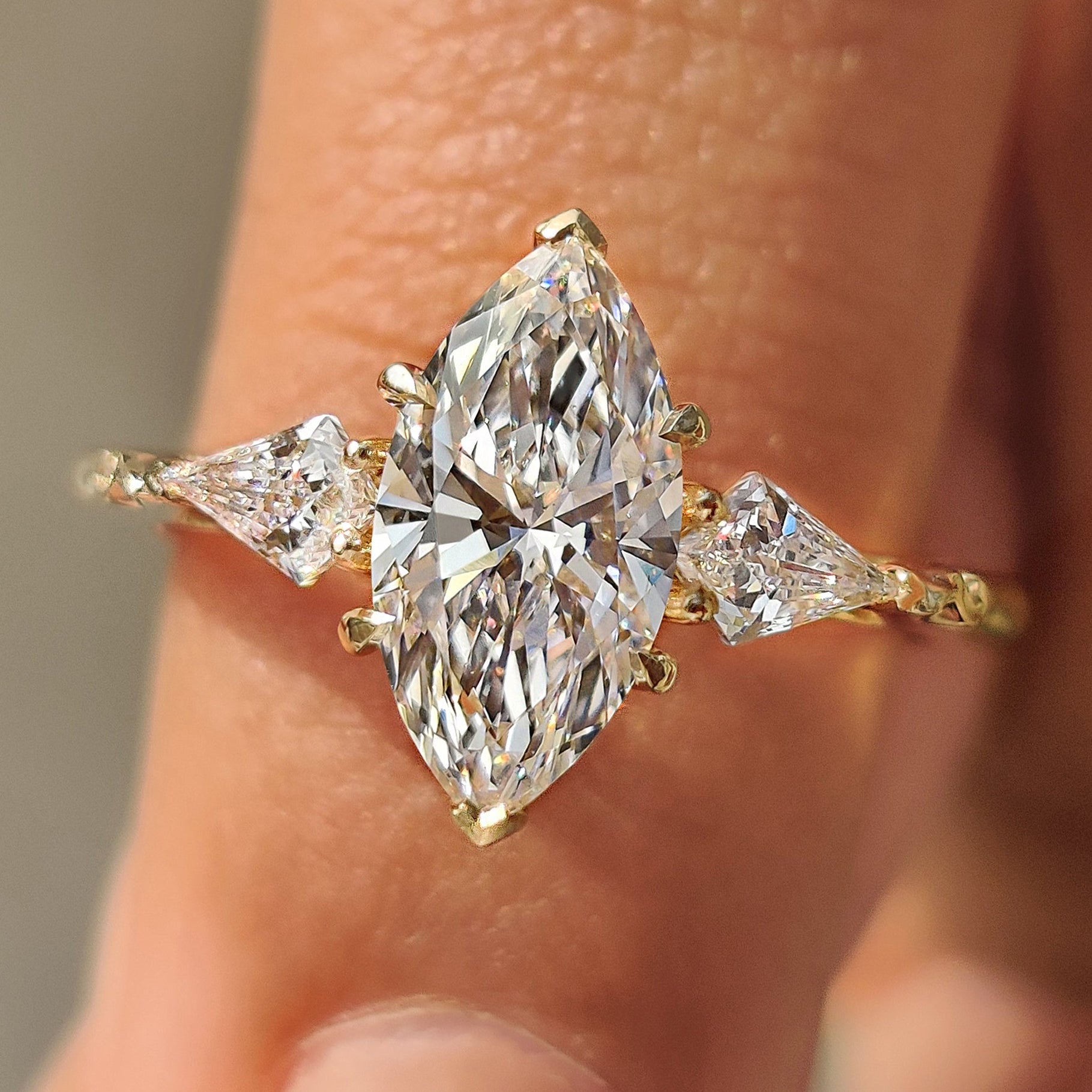
Vintage Style Marquise Diamond Ring with Basket Filigree Details
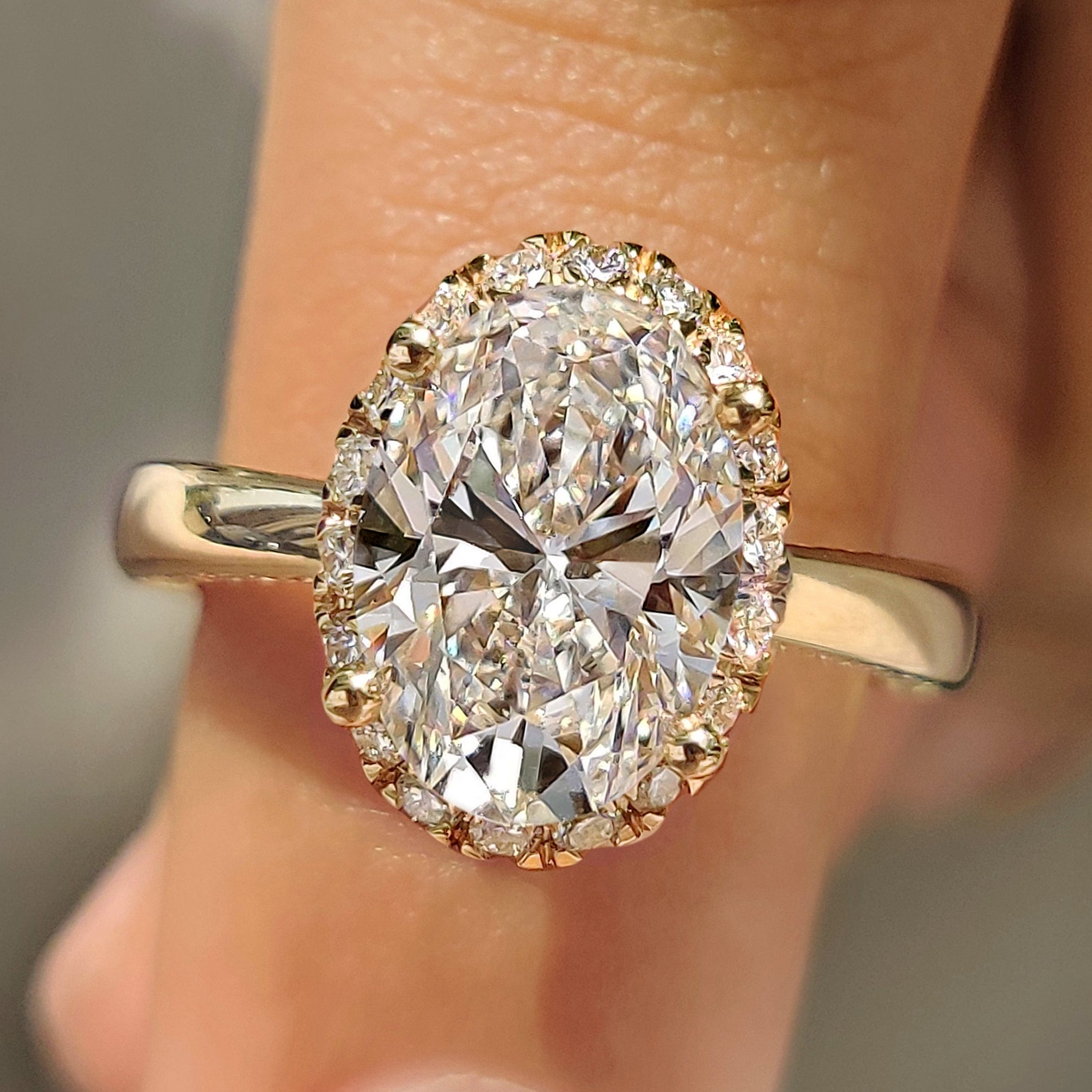
Oval Cut Diamond Ring in Round Cut Diamond Basket Setting
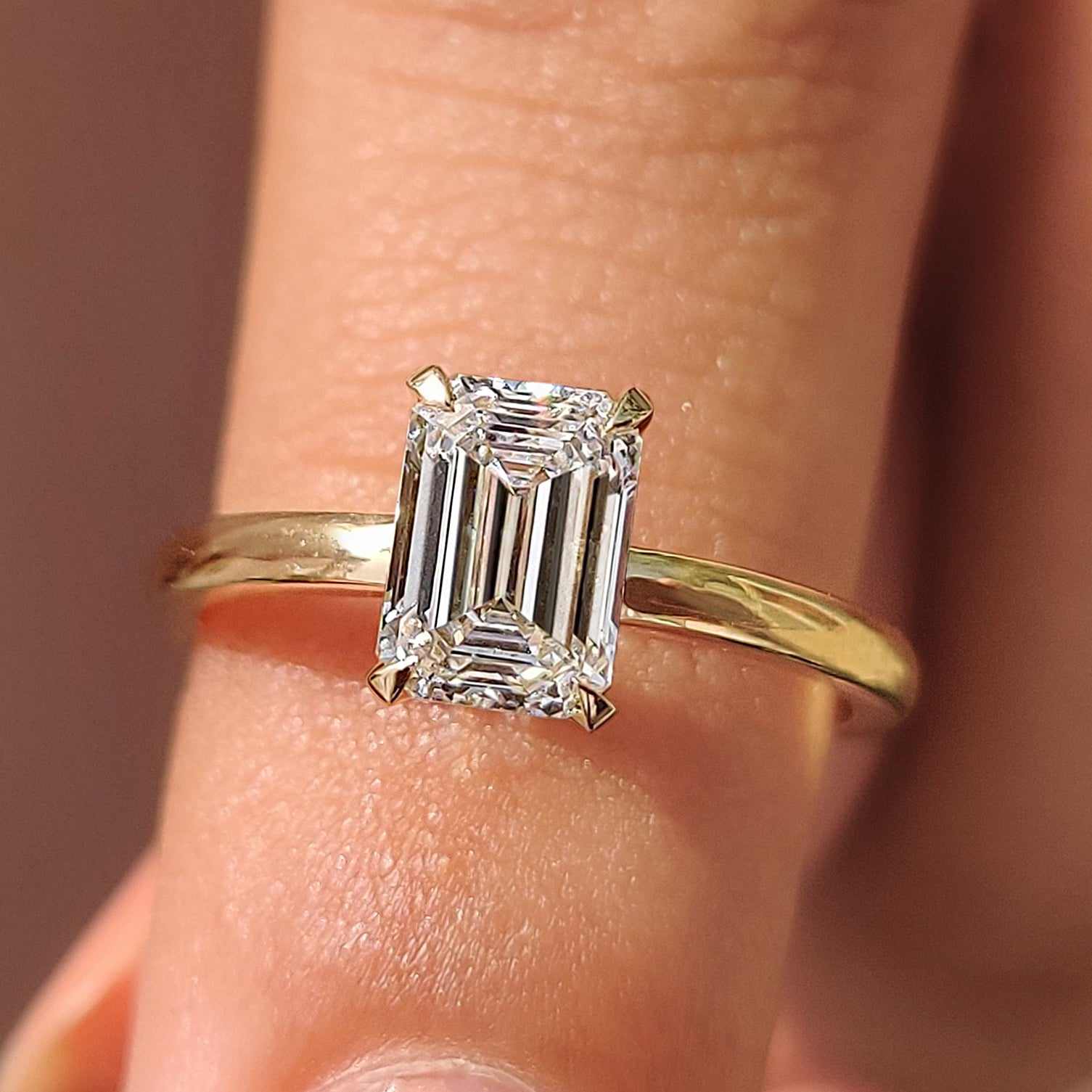
Emerald Cut Solitaire Ring In Basket Design
The basket is often visible as a small but distinct architectural element between the bottom of the diamond and the top of the band. It gives the ring more visual depth at the center point and adds a degree of structural support that a simple prong-on-band design does not have.
Low Basket vs. High Basket
A high basket setting raises the center diamond more prominently above the band, similar in effect to a cathedral setting but with the distinctive basket mount rather than arched supports. It creates a bold, traditional ring profile with strong visual presence.
A low basket setting keeps the diamond closer to the band while still using the basket framework for support. The result is a ring that retains the elegance of the basket mount while sitting more comfortably on the finger and snagging less during daily wear. For buyers who want the classic basket aesthetic without an overly elevated stone, the low basket is a practical and popular middle ground.
Basket Setting vs. Plain Prong Setting
The visual and structural differences between a basket setting and a standard prong setting are most apparent in the side profile. A plain prong setting has thin metal claws rising directly from the band with minimal visible structure beneath the stone. A basket setting shows a defined framework beneath; the connecting metalwork between prongs creates a more finished, intentional appearance when viewed from the side or at an angle.
From a durability standpoint, the basket structure distributes stress across multiple connected points rather than relying solely on individual prong contact. This makes it slightly more resistant to prong bending from lateral impact compared to a minimal prong-only mount.
When to Choose a Basket Setting
A basket setting suits buyers who want the light performance of a prong setting with more visible craftsmanship at the mount. It is a particularly strong choice for round brilliant and cushion cut diamonds, where the basket’s symmetrical structure complements the stone’s proportions naturally.
It is also a practical choice for buyers who want a more elevated look without committing to a full cathedral design. The basket provides height and presence without the sweeping arched shoulders of a cathedral, making it more compatible with a wider range of wedding band profiles.
Bezel Setting
A bezel setting encircles the diamond with a continuous rim of metal that wraps around the stone’s entire edge, holding it securely without any raised prongs. The result is a low-profile, smooth ring that sits close to the finger with no protruding elements.
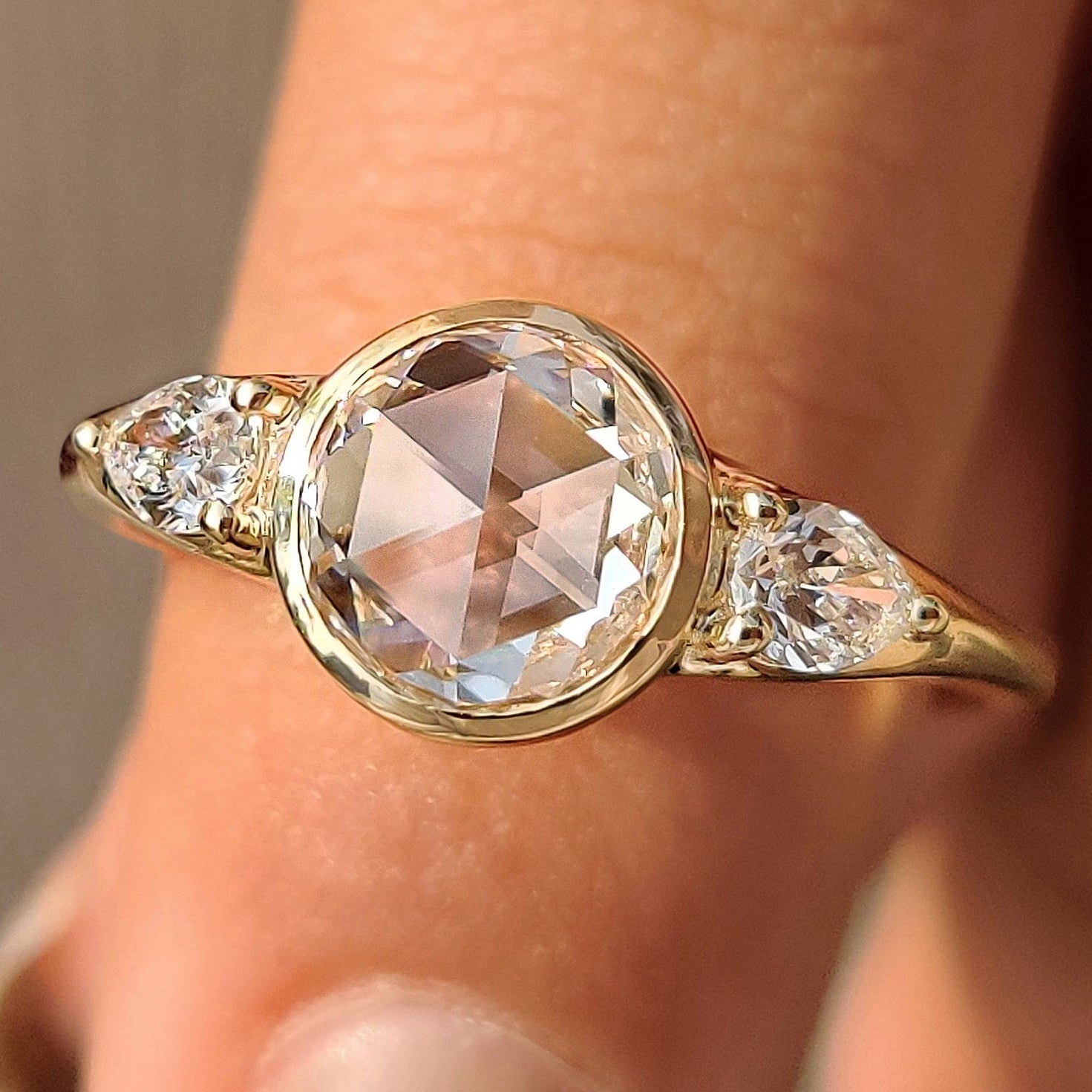
Round Rose Cut Bezel Setting Engagement Ring
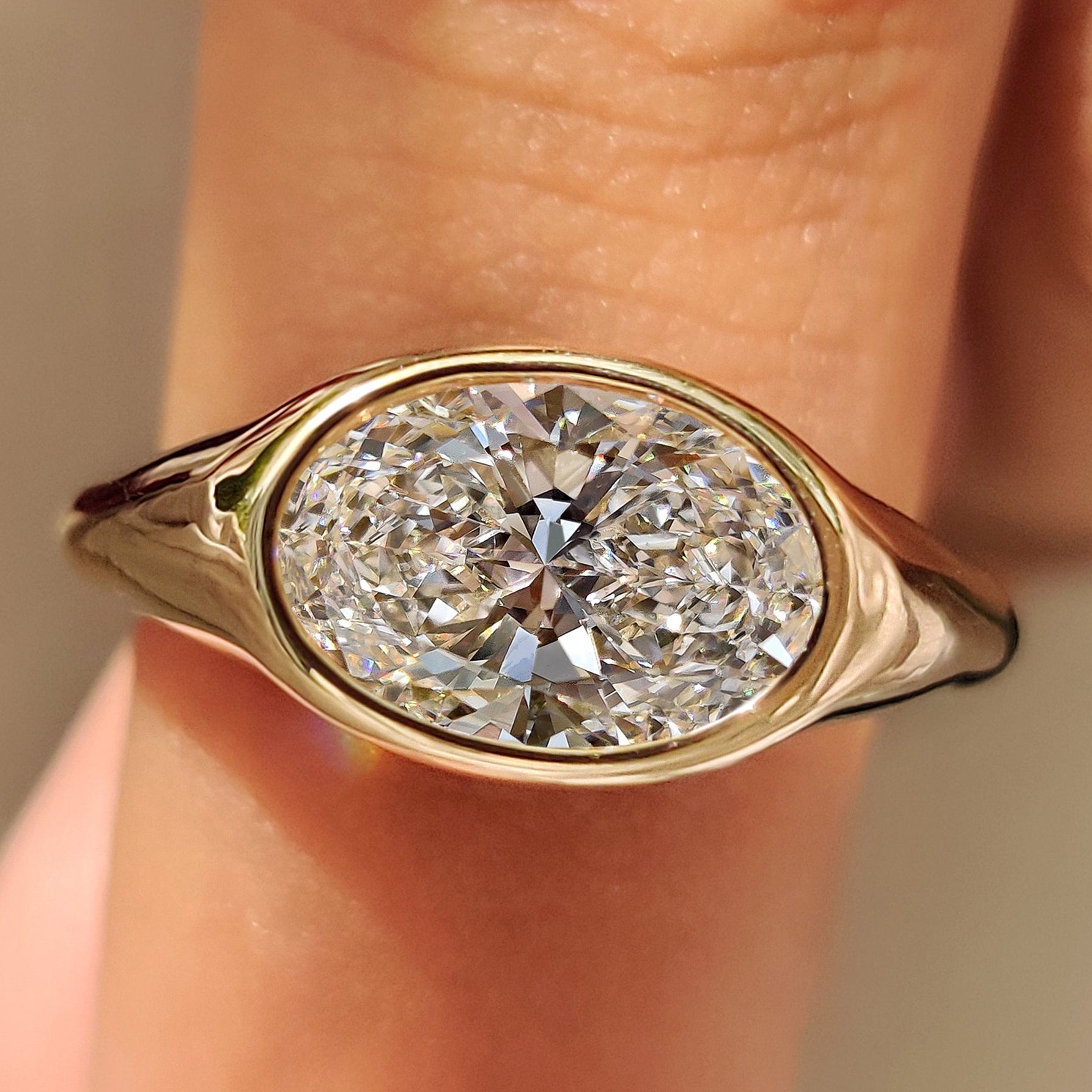
Solitaire Oval Diamond Ring in Bezel Setting
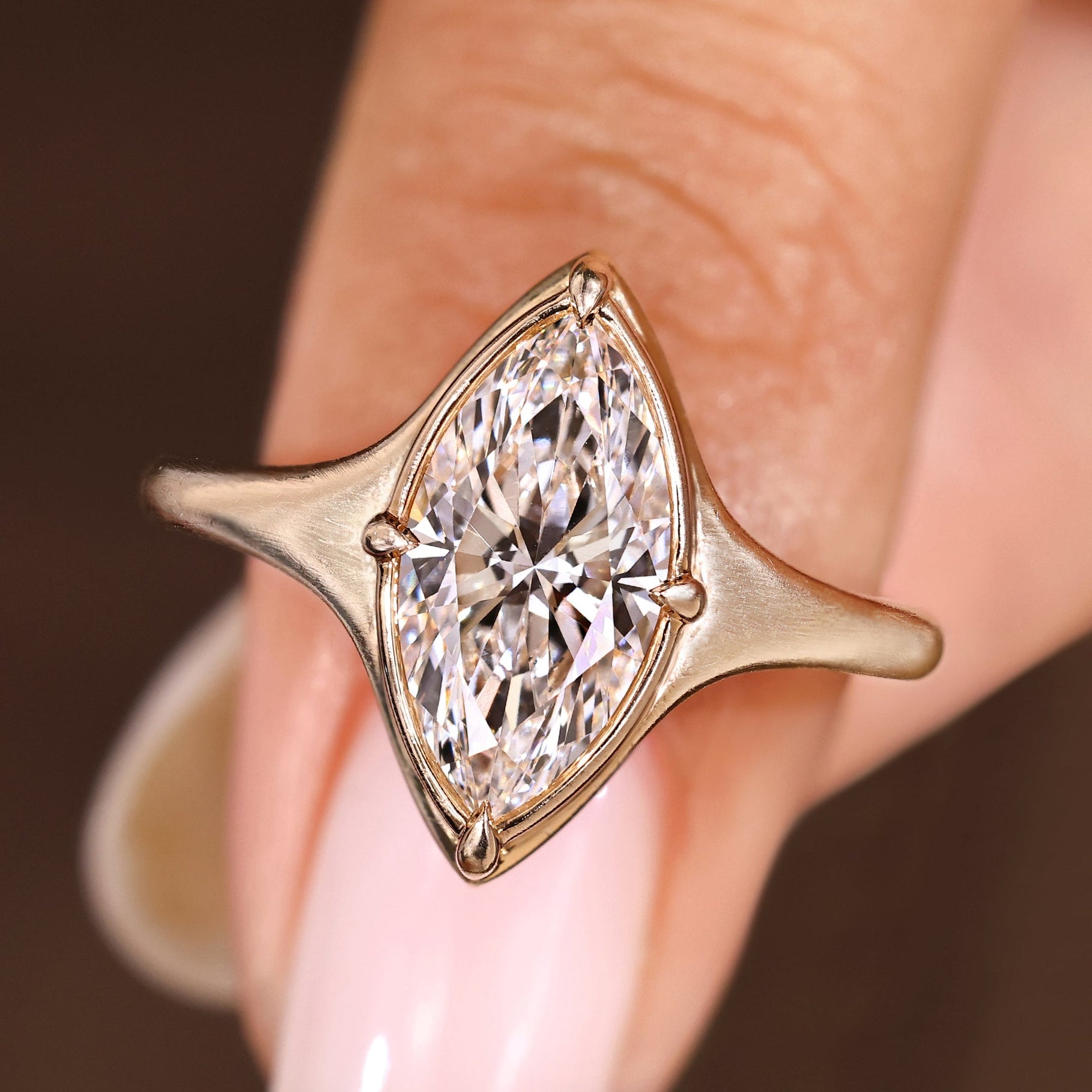
Marquise Cut Diamond Engagement Ring in Bezel Setting
The bezel setting makes up about 5 to 7 percent of engagement rings and is especially popular with people who want a sleek, modern look or something built for everyday wear. It is also considered the most secure of all diamond setting types; the metal surrounds the stone, making it extremely difficult for the diamond to loosen or shift under normal conditions.
Full Bezel vs. Partial Bezel
- A full bezel completely encircles the stone, offering maximum protection and the cleanest visual profile.
- A partial bezel (also called a semi-bezel) leaves the sides of the stone open, offering more light exposure than a full bezel while retaining some of the protective structure.
When to Choose a Bezel Setting
A bezel setting is the right choice for active lifestyles. Nurses, teachers, athletes, and anyone who works with their hands benefits from the smooth, snag-free profile. There are no prongs to bend, catch on clothing, or require retipping. Long-term maintenance costs are lower than prong settings for this reason.
The only meaningful trade-off is light. A full bezel slightly restricts light entry from the sides, which reduces fire and scintillation compared to a prong setting. For buyers who prioritize durability and a modern aesthetic over maximum sparkle, the bezel is an excellent long-term choice.
Bezel settings work particularly well with oval cut engagement rings and emerald cuts, where the setting’s clean lines complement the stone’s geometry.
Halo Setting
A halo setting surrounds the center diamond with a ring of smaller accent diamonds set in tiny prongs or pave, creating a frame of continuous sparkle around the main stone. The halo setting is the second most popular engagement ring style, making up around 15 to 18 percent of all rings.
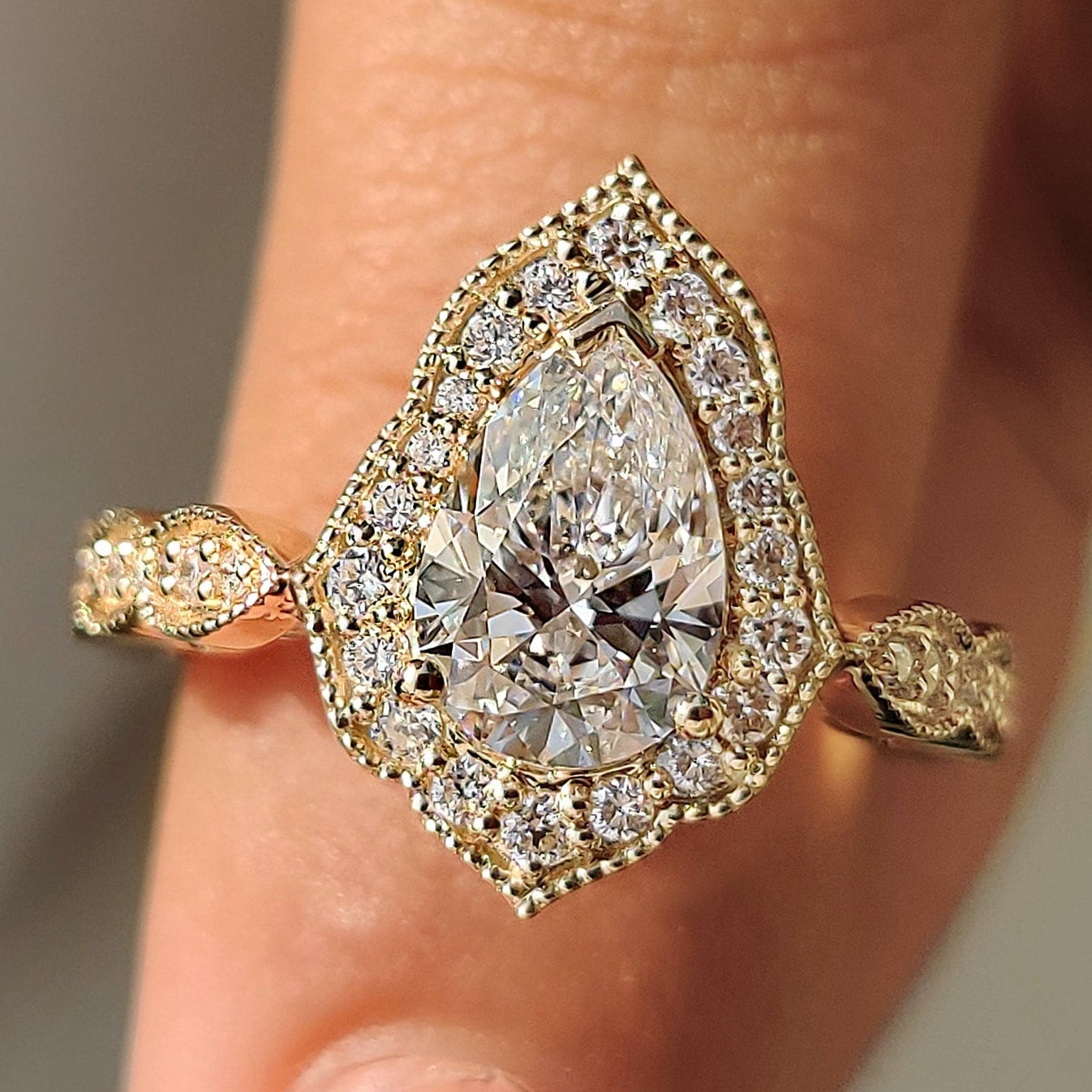
Pear Cut Vintage Diamond Engagement Ring in Halo Setting
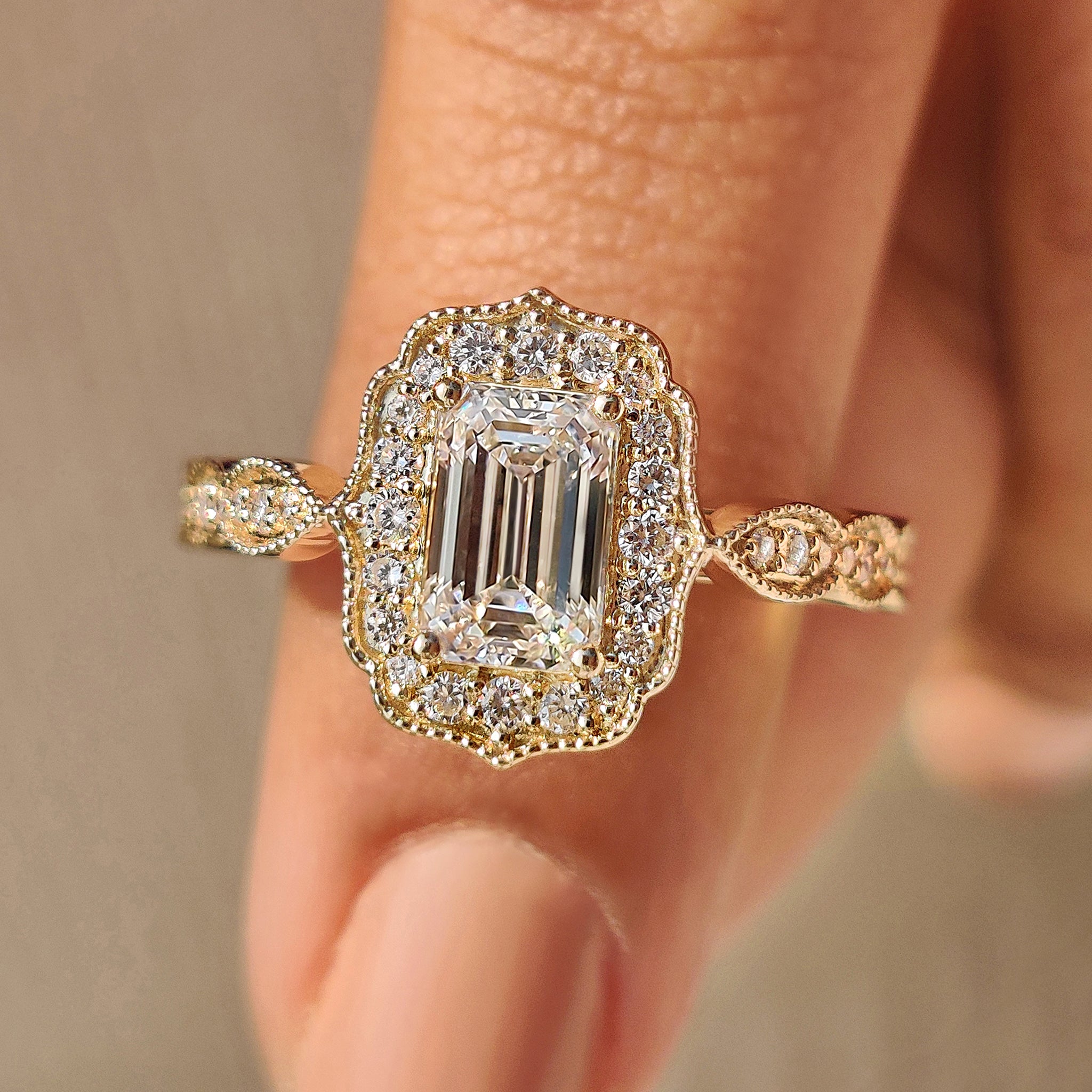
Emerald Cut Diamond Ring in Round Diamond Halo Style
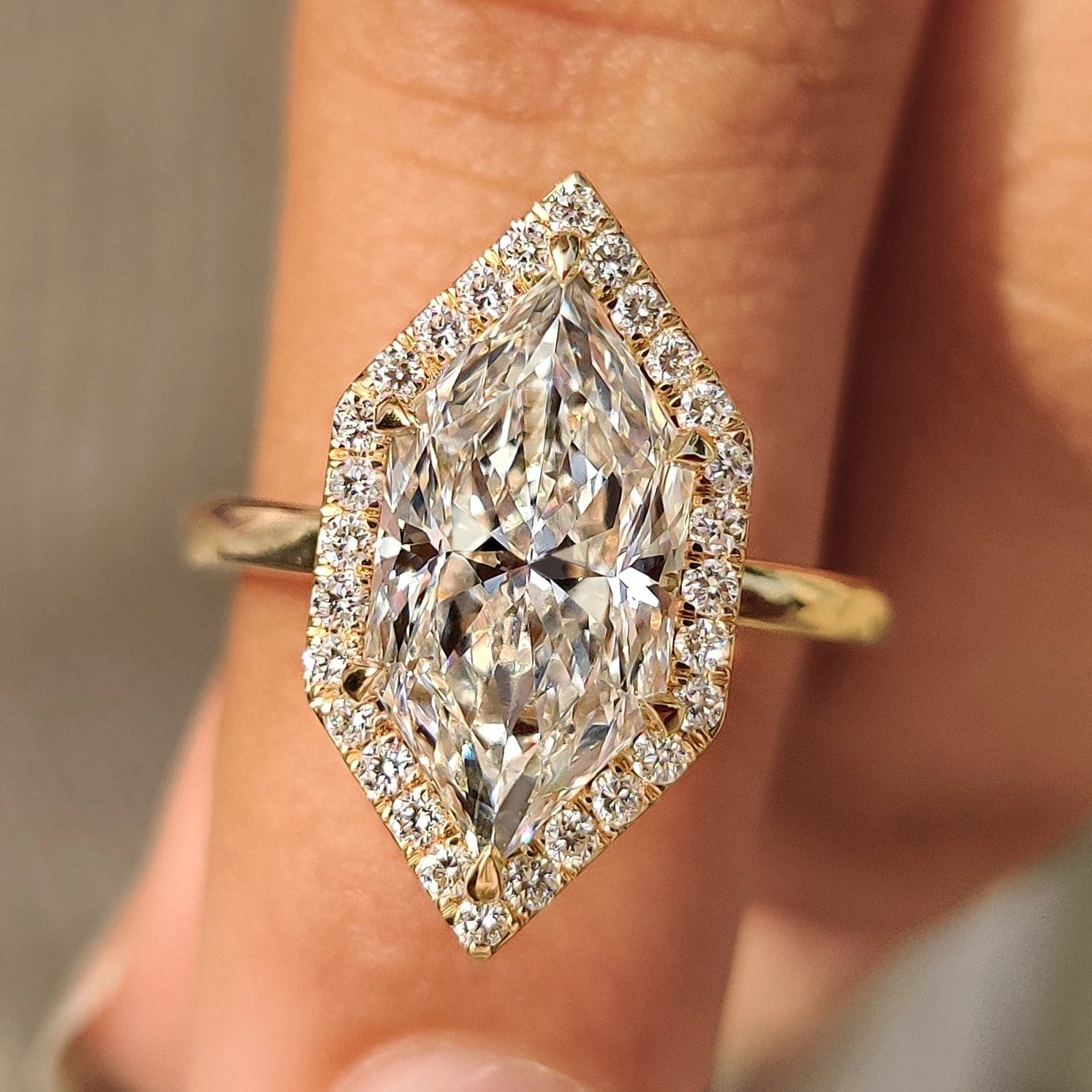
Dutch Marquise Diamond Ring In Halo Setting
The halo serves two purposes simultaneously. It dramatically increases the total sparkle of the ring by adding dozens of small light-reflecting surfaces around the center stone. And it creates the optical illusion of a larger center diamond. A 0.50 ct center stone with a halo looks similar in size to a 0.75–0.80 ct stone without one. For buyers who want maximum visual impact at a specific budget, this size-to-price advantage is significant.
Single Halo vs. Double Halo vs. Hidden Halo
- A single halo places one row of accent diamonds directly around the center stone – the most common configuration and the most balanced in terms of scale.
- A double halo adds a second outer ring of diamonds, creating more drama and further increasing the apparent size of the center stone.
- A hidden halo places small diamonds beneath the center stone inside the gallery, invisible from above but visible from the side. The ring reads as a clean solitaire face-on while adding unexpected sparkle from certain angles. This is the current preference for buyers who want halo brilliance with a more understated aesthetic.
When to Choose a Halo Setting
Halo settings suit buyers who want the largest-looking ring within a set budget, prefer maximum sparkle over minimalism, or love vintage-inspired aesthetics. Round, oval, cushion, and pear shapes work particularly well with halos because their curves align naturally with the circular accent frame.
The small stones in the halo sit in micro-prongs that can loosen over time, similar to pavé. Cleaning between the halo and center stone requires care. Plan for annual professional cleaning and periodic prong checks on the accent stones.
Explore halo engagement rings and hidden halo styles to compare both approaches side by side.
Pave Setting
A pave setting covers the surface of the ring band with small diamonds set so closely together that the metal beneath them is nearly invisible. The name comes from the French word for “paved”; the stones appear to form a continuous glittering surface along the band.
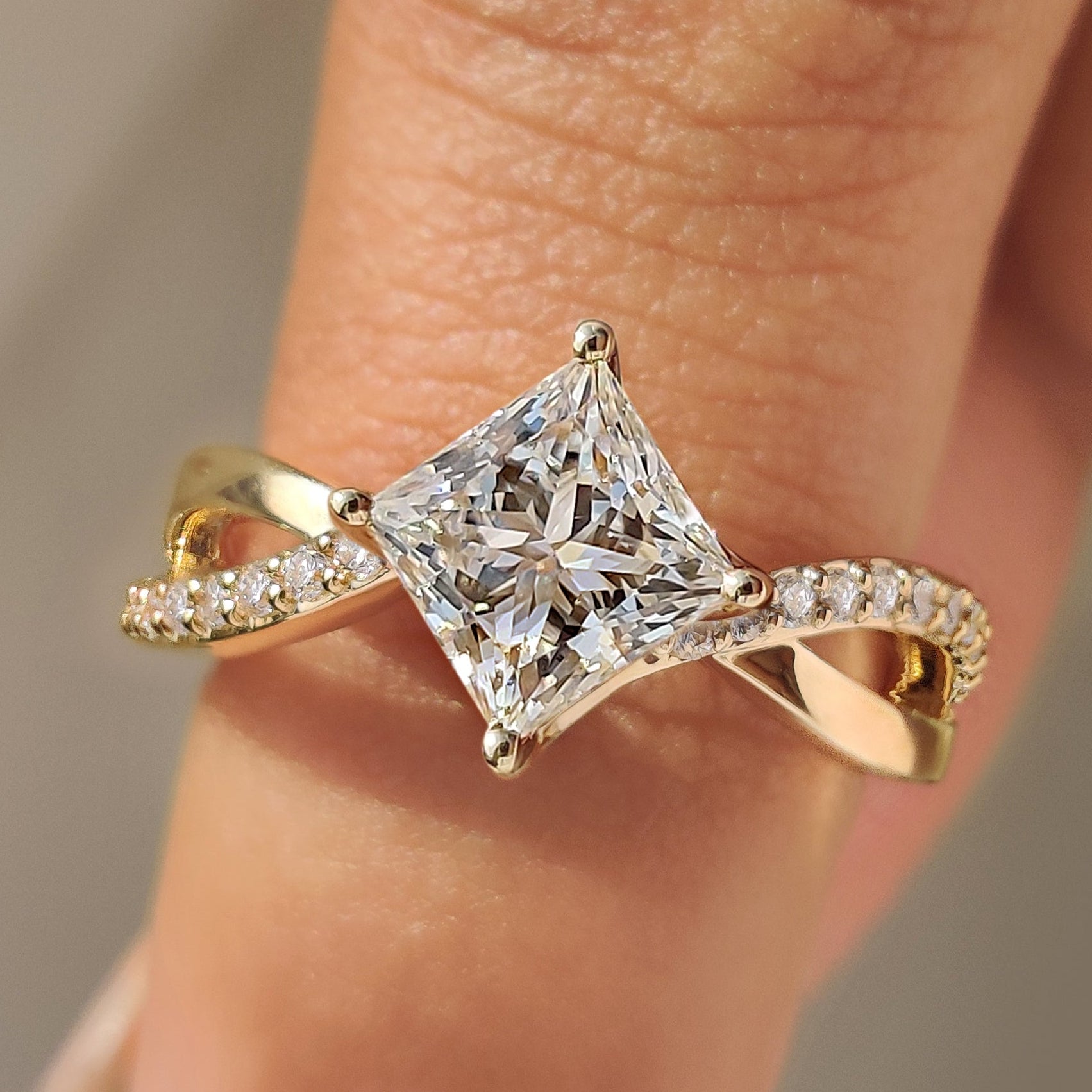
Twisted Pave Princess Cut Diamond Ring With Euro Shank
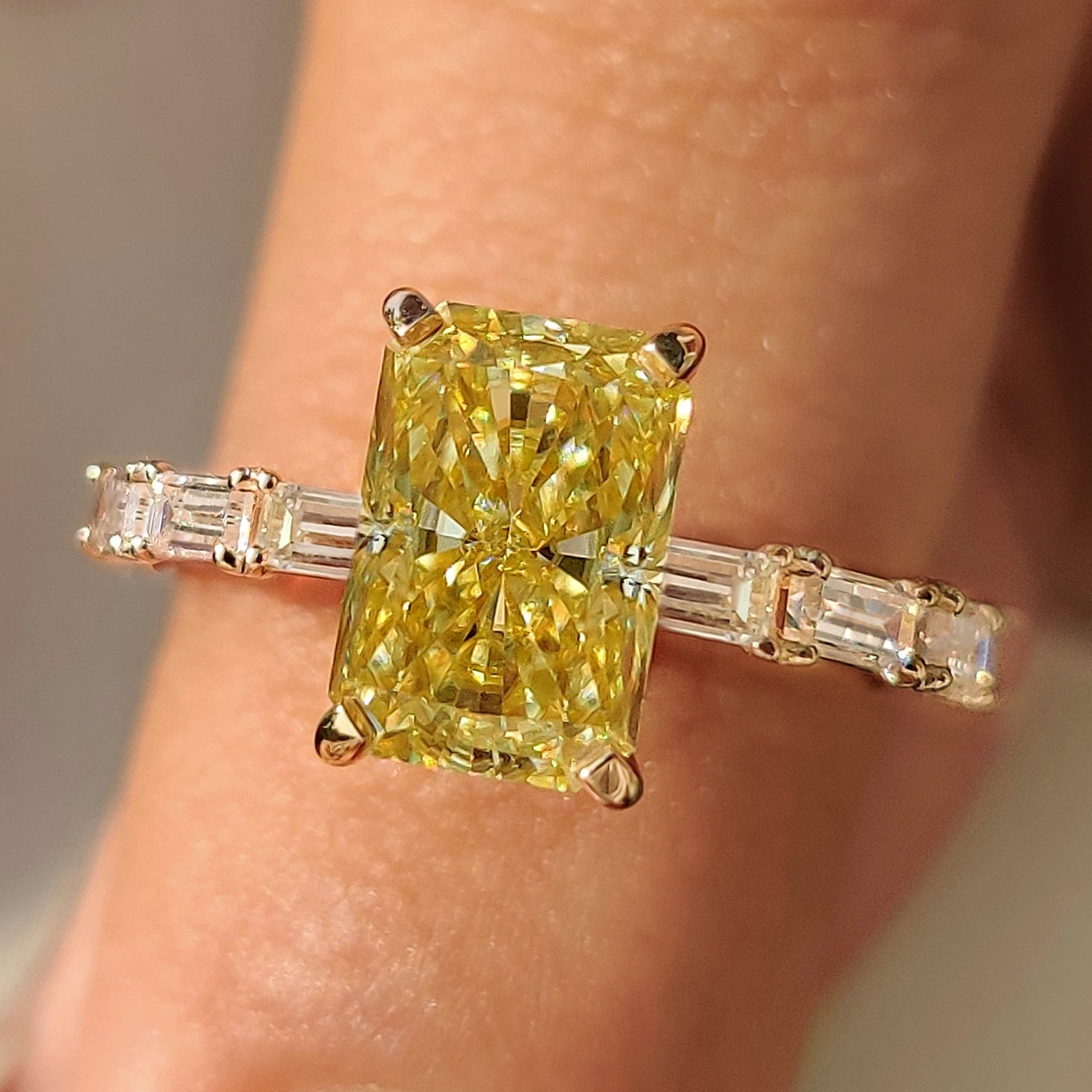
Radiant Cut Yellow Moissanite Ring in Pave Setting
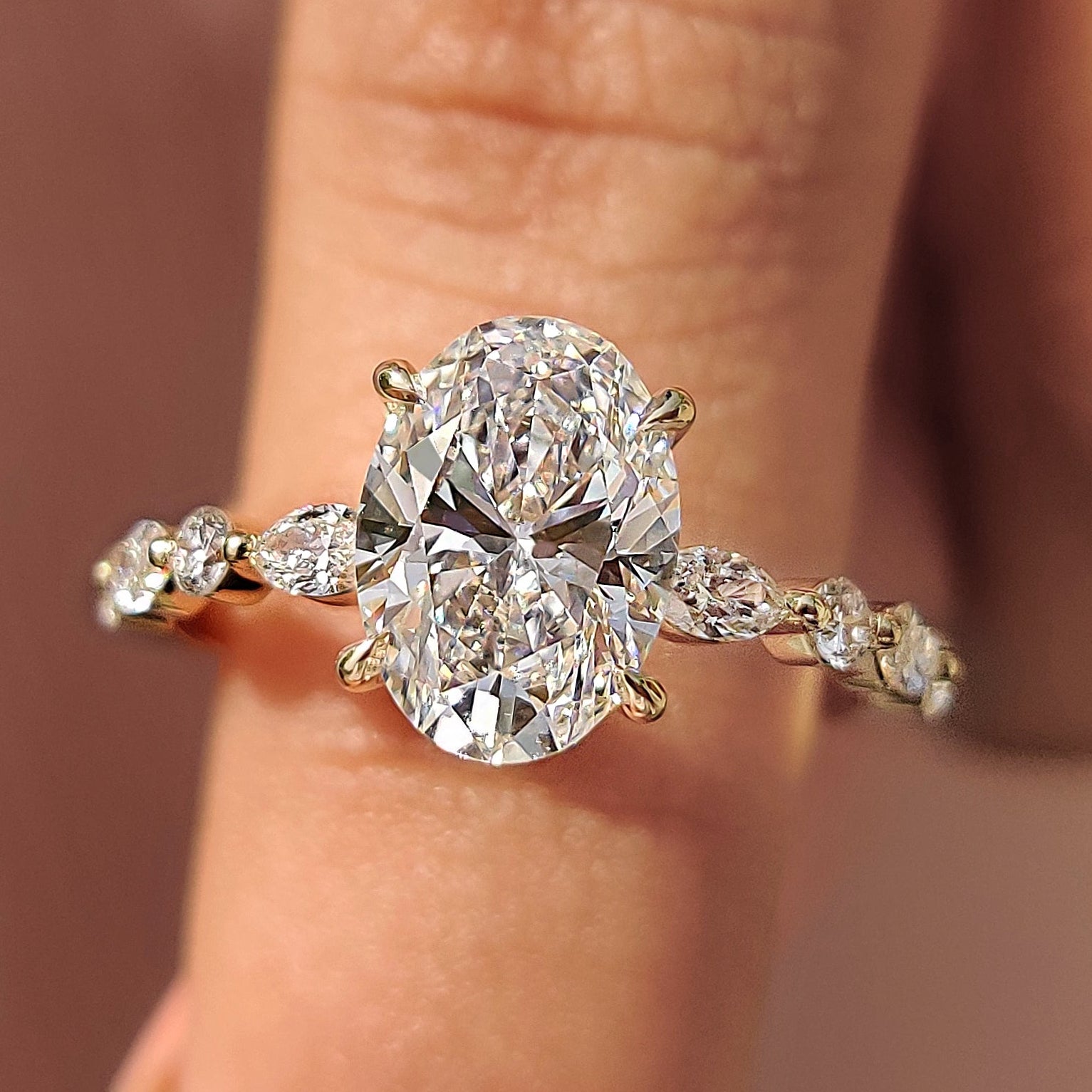
Oval Pave Engagement Ring Featuring Marquise Pave Band
Each small stone is held by tiny beads or prongs raised from the metal, creating a texture that catches light from every direction. A pave band paired with any center stone setting dramatically increases the overall sparkle of the ring without changing the center stone itself.
Traditional Pave vs. Micro Pave vs. French Pave
- Traditional pave uses slightly larger accent stones with small beads holding them in place. The metal is minimally visible between stones.
- Micro pave uses even smaller diamonds set more precisely, creating a finer, more delicate texture. Common in high-end engagement rings.
- French pave uses V-shaped metal cuts between stones rather than beads, exposing more of the stone’s surface and allowing maximum light return. Produces the most intense sparkle of the three variations.
When to Choose Pave
Pave bands suit buyers who want their ring to sparkle continuously along the entire band, not just at the center stone. They work in almost any combination with a solitaire center for understated elegance, with a halo for maximum brilliance, or as a standalone eternity band.
The maintenance consideration is real. Over years of wear, individual pave stones can loosen, particularly in rings worn daily. Annual professional inspection is strongly recommended for any ring with a pave band to catch loose stones before they fall out.
For pave bands and pave engagement rings, Carat Diamonds offers both full and half-pave designs.
Channel Setting
A channel setting places diamonds directly into a groove cut into the band, with two parallel metal walls holding the stones on either side. There are no prongs over the tops of the stones; only the metal channel on each side secures them. The result is a smooth, flush surface with no raised elements.
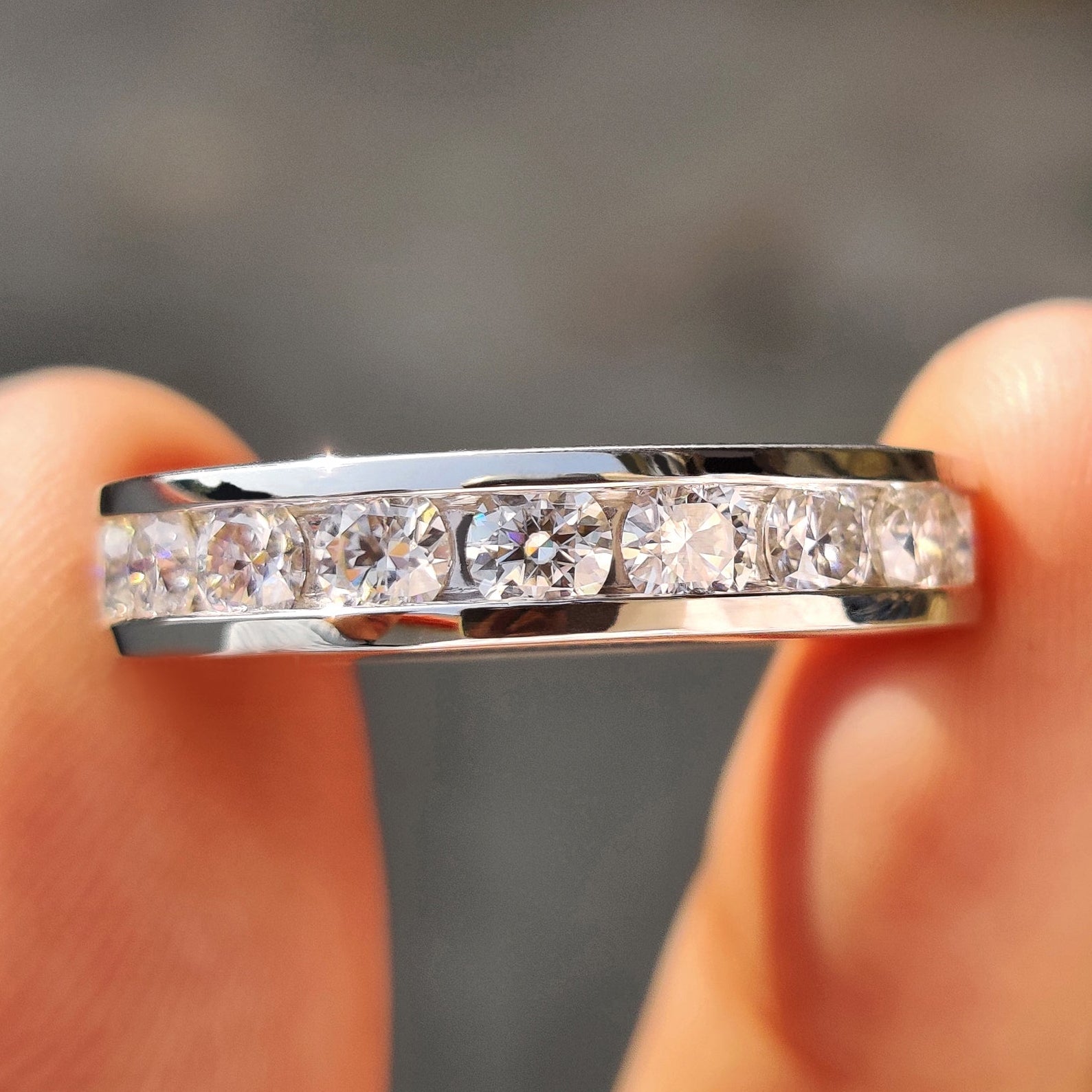
Round Cut Full Eternity Channel Set Wedding Band
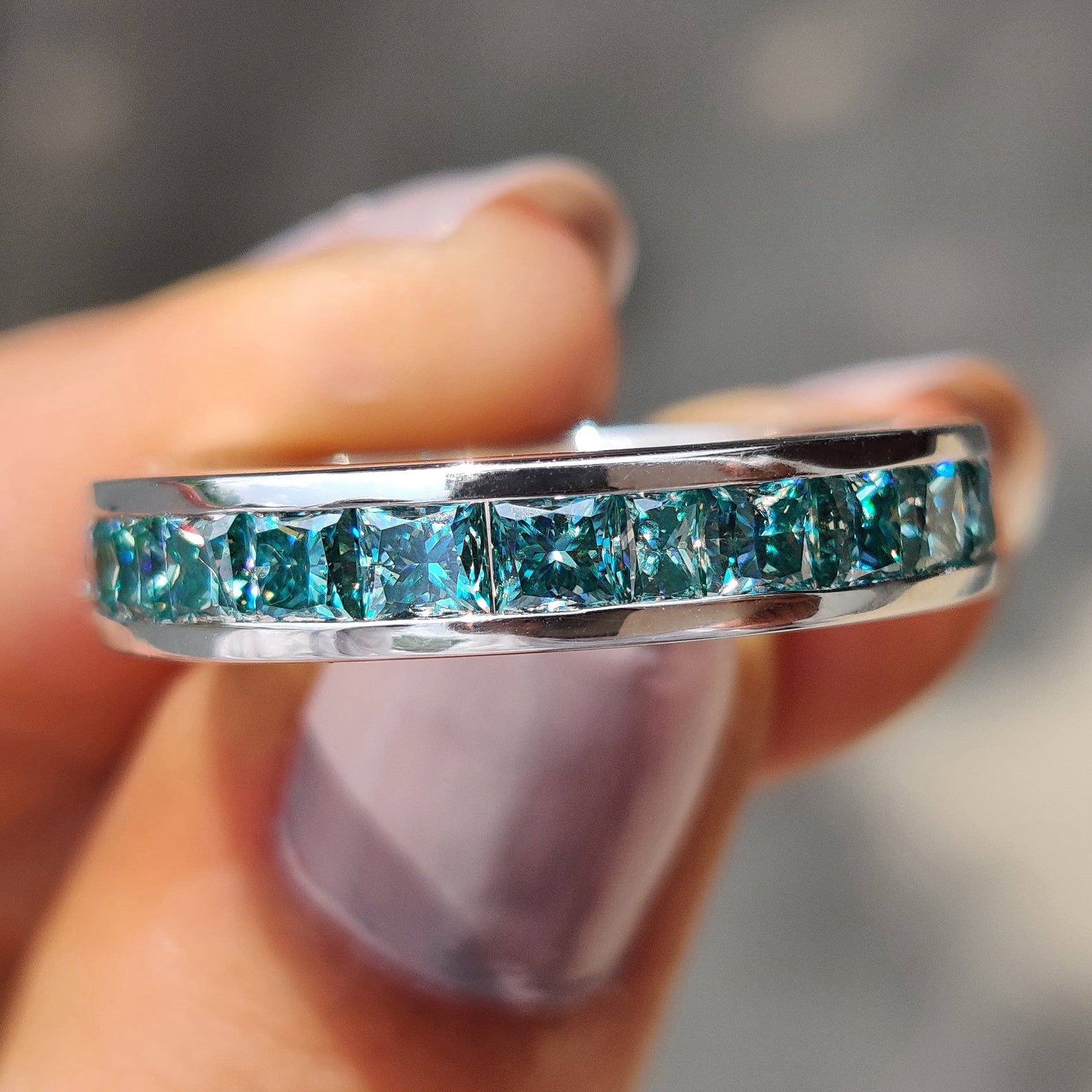
Princess Cut Channel Set Wedding Band
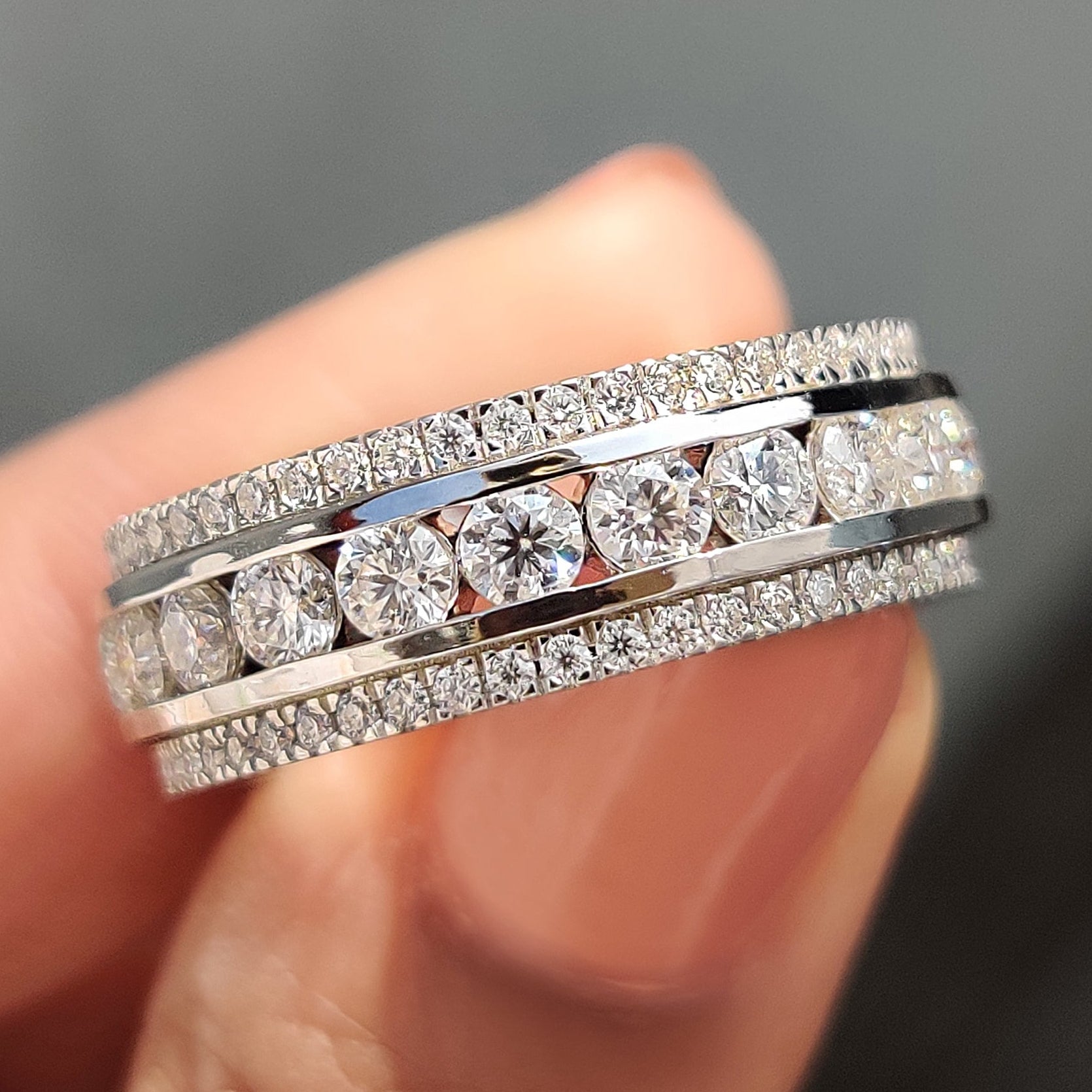
Three Row Pave Band With Clean Channel Set Style
Pave settings have tiny diamonds held by small prongs on the surface of the band, while channel settings have diamonds set into a groove within the band. Pave offers more sparkle, while channel is smoother and more secure.
When to Choose a Channel Setting
Channel settings are the natural choice for eternity bands and wedding bands where a continuous row of diamonds sits along the full circumference of the ring. The enclosed design makes them significantly more resistant to snagging and impact than pavé or prong-set bands.
For buyers with active lifestyles who still want diamond accent bands, a channel set wedding band is one of the best practical options. The stones are protected on both sides and cannot be snagged from above. The trade-off is light exposure because the metal walls partially cover the stone sides; channel-set diamonds sparkle less intensely than pavé-set equivalents.
Resizing a channel set ring requires careful work by an experienced jeweler and is best avoided in rings where the channel runs the full circumference.
Three Stone Setting
A three stone setting features a center diamond flanked by two side stones, all held in prongs. The traditional symbolism of past, present and future makes it one of the most meaningful engagement ring designs available. Three-stone settings are also popular for anniversary rings marking milestone years.
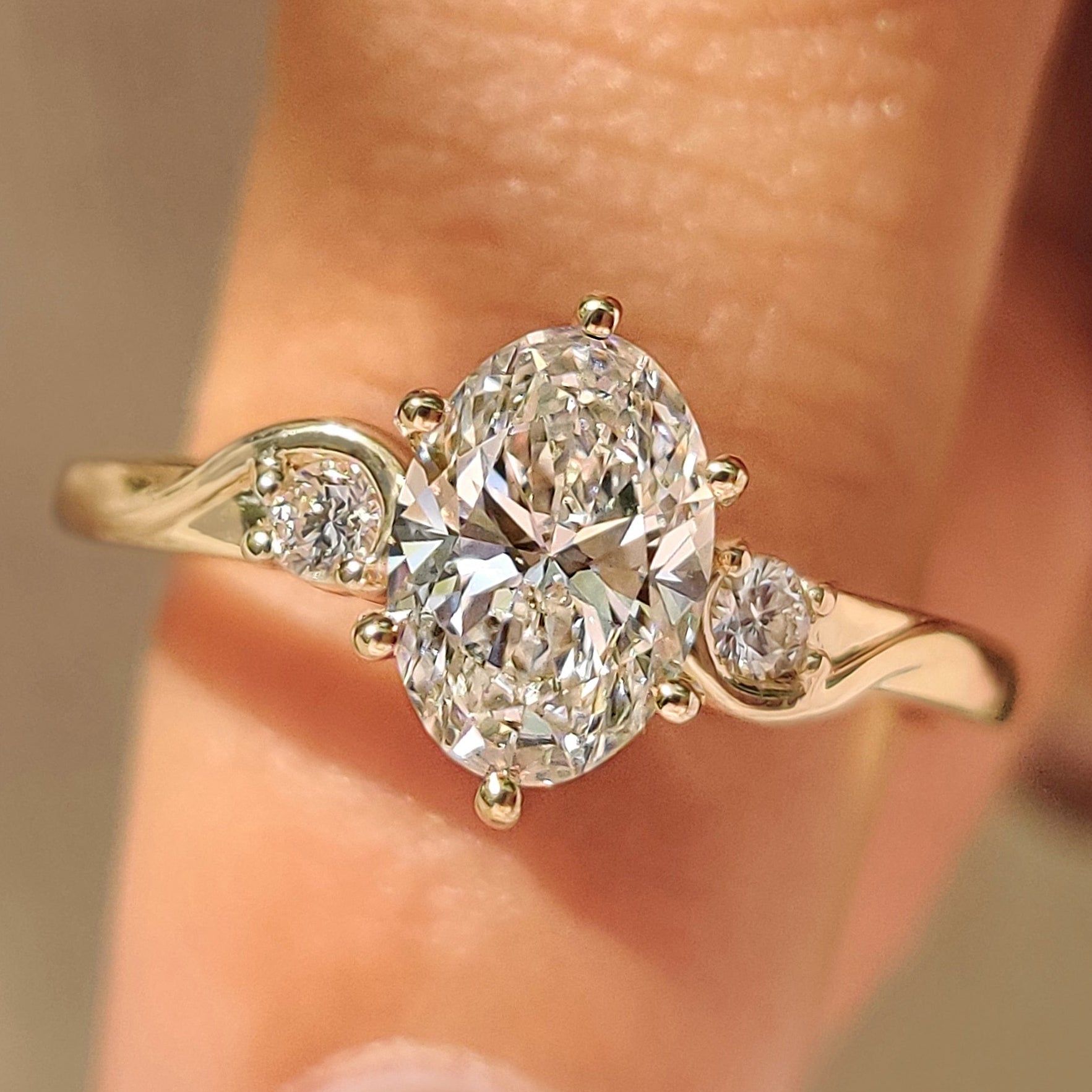
Three Stone Style Oval Cut Engagement Ring with Round Side Stone
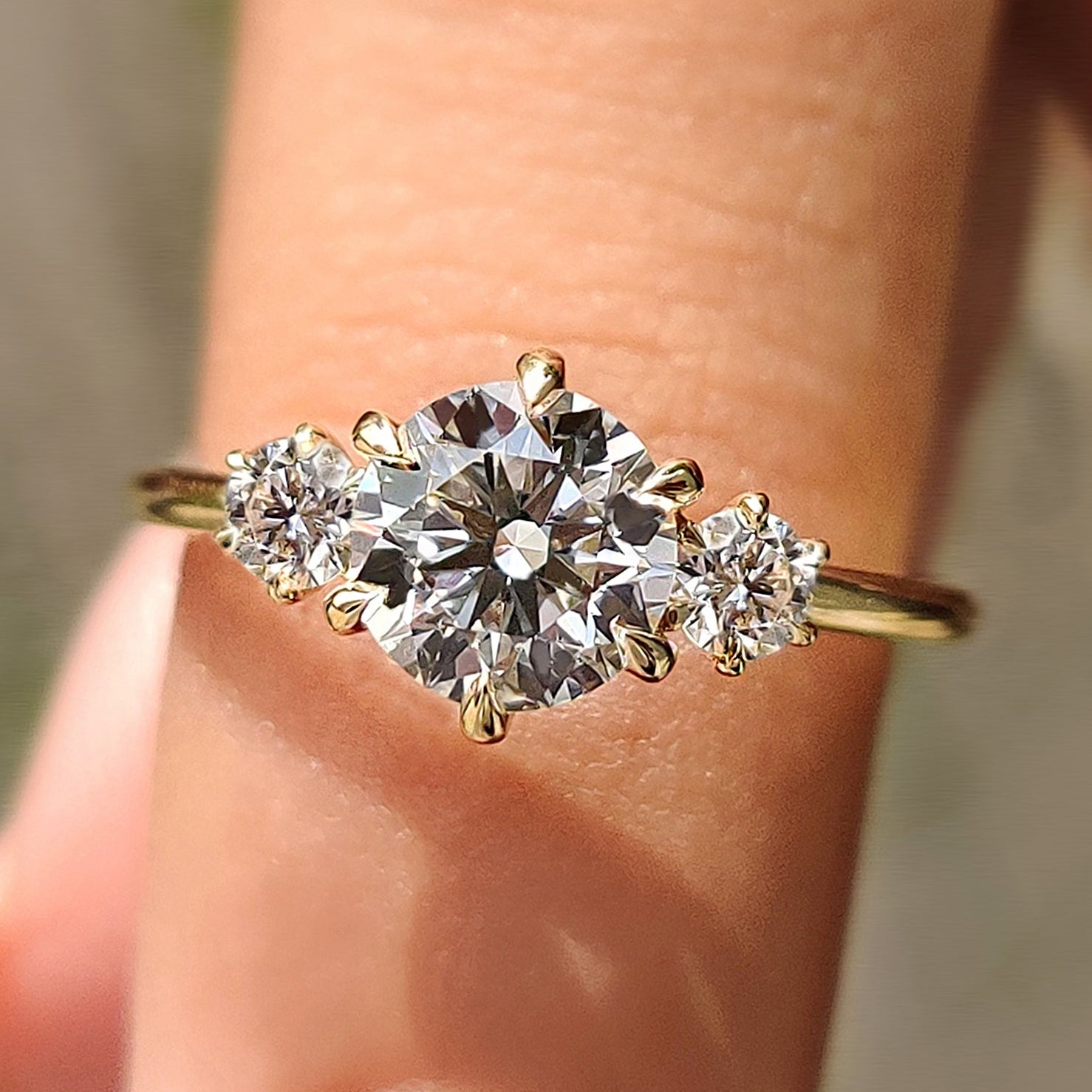
Round Cut Three Stone Diamond Engagement Ring
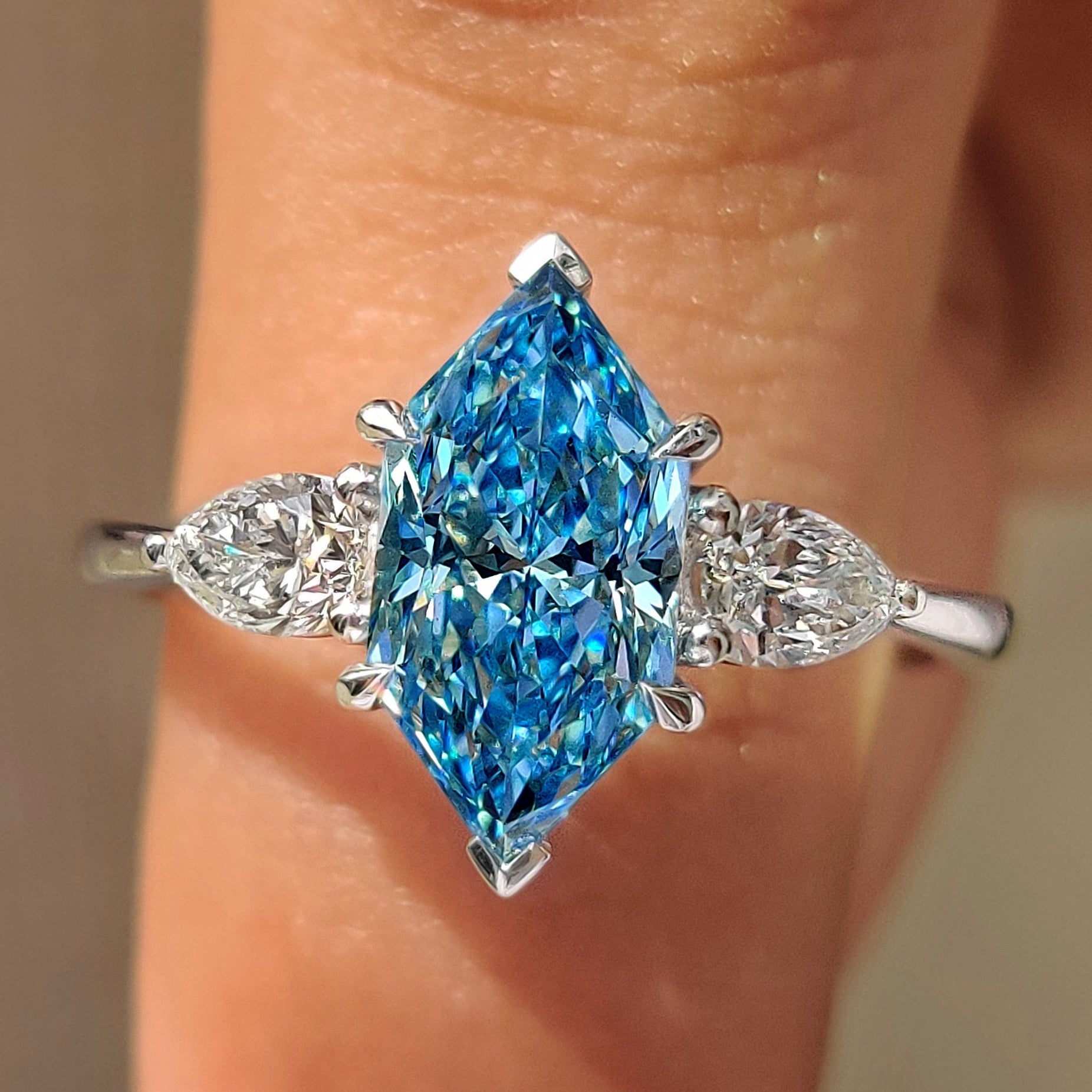
Blue Dutch Marquise Three Stone Ring with Pear Side Stones
The side stones can match or complement the center stone. A round brilliant center with two pear-shaped sides creates an elegant, tapered look. A cushion center with two elongated side stones creates width and balance. Mixing stone shapes in a three stone setting is increasingly popular and produces a more individualized ring than any all-matching combination.
How Three Stone Settings Affect Sparkle and Size
Three stone rings increase total carat weight and sparkle compared to a solitaire of the same center stone. The side stones also create visual width on the finger, making the ring appear more substantial from a face-up view. For buyers who want a meaningful design with genuine visual presence, the three stone setting delivers both without requiring an exceptionally large center stone.
Explore three stone engagement rings, including combinations pairing lab grown diamond center stones with side stones in complementary shapes.
Cathedral Setting
A cathedral setting uses arching metal supports that sweep upward from the band to elevate and frame the center stone. The arches create a visual impression of height and grandeur; the stone sits noticeably above the band, giving the ring a pronounced, architectural presence.
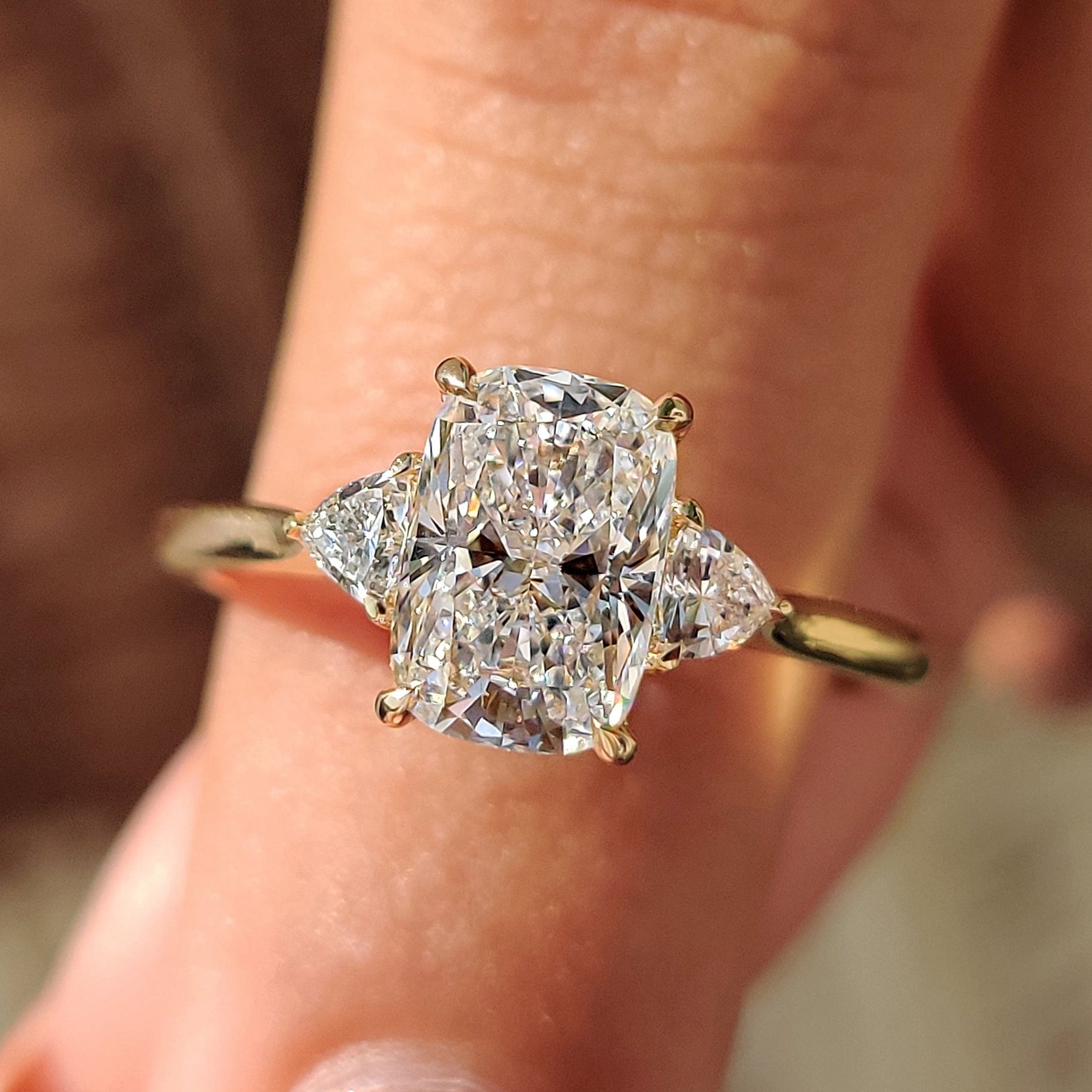
Elongated Cushion Cut Engagement Ring With Cathedral Setting
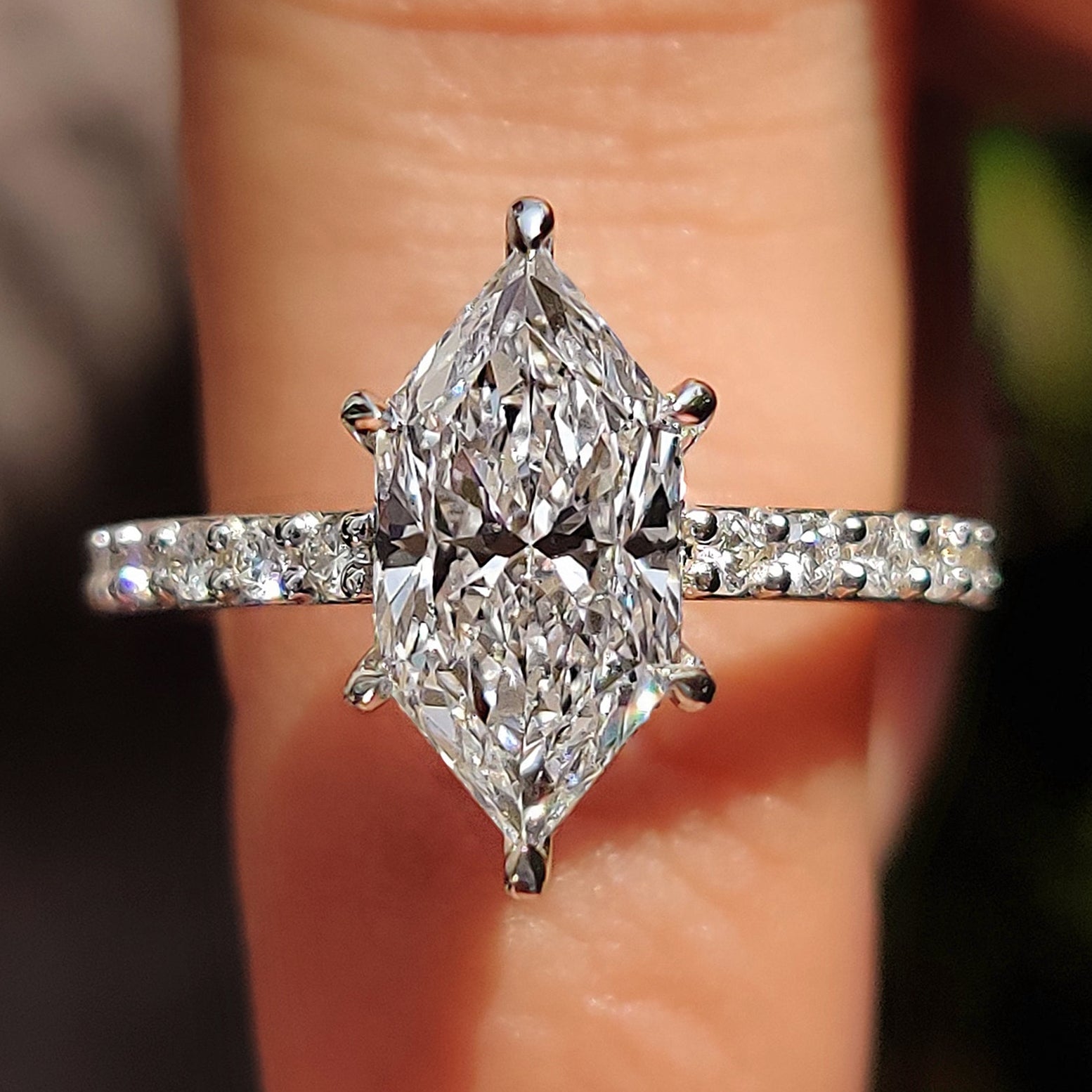
Dutch Marquise Cathedral Setting Engagement Ring
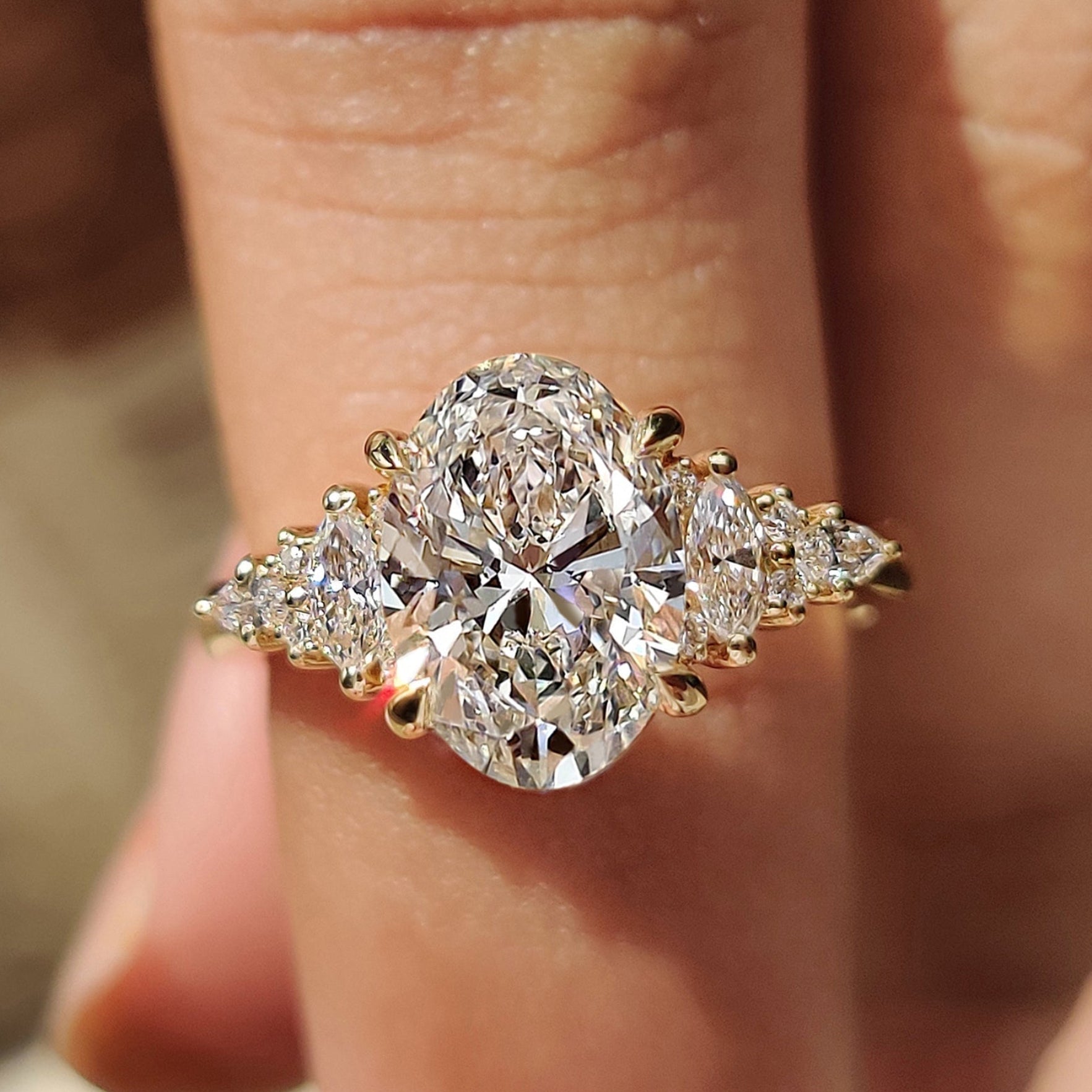
Oval Cut Cathedral Setting Engagement Ring
The cathedral structure also serves a practical function: it protects the lower portion of the center stone on its sides while keeping the top exposed for maximum light entry. This makes it a middle ground between a high-set prong solitaire and a lower-profile setting.
Cathedral settings suit buyers who want a ring with a strong visual presence and a traditional, formal aesthetic. They are less practical for active lifestyles, as the elevated profile can snag on fabrics and the underside is harder to clean thoroughly.
Tension Setting
A tension setting holds the diamond using the compression pressure of the metal band itself rather than prongs or a bezel. The stone appears to float between two open ends of the band, with nothing visibly holding it in place from above or below.
The design is visually striking and structurally precise. The band must be engineered specifically for each stone’s dimensions, which makes every tension ring a custom piece. This precision also means tension settings cannot be resized without rebuilding the ring; accurate finger sizing before purchase is essential.
Is a Tension Setting Safe?
A well-made tension setting is safe for daily wear. The compression holds the stone more securely than loose prongs do. The primary risk is in choosing an uncertified or poorly made ring where the tension has not been properly calibrated; in those cases, the stone can shift under impact. From a reputable jeweler using appropriate metal, the stone holds firmly.
For a complete guide on safety, durability, and what to look for when buying, read the tension setting engagement ring guide.
Flush Setting (Gypsy Setting)
A flush setting, also called a gypsy setting, sinks the diamond directly into the metal so that the table of the stone sits level with the band surface. There is no elevation and no protrusion; the diamond is entirely recessed into the metal.
Flush settings are the most protected of all diamond settings. The stone cannot catch on anything because nothing rises above the band surface. They suit buyers with extremely active lifestyles or those who want the most understated possible look for a diamond accent.
The trade-off is sparkle. With the stone set deep in the metal and only the table exposed, light entry is minimal compared to elevated settings. Flush settings are best used for accent stones or subtle diamond details rather than for showcasing a high-quality center stone.
Bar Setting
A bar setting holds diamonds in place using vertical metal bars between each stone rather than full channel walls or individual prongs. The bars run perpendicular to the band, holding the sides of each stone while leaving the top and bottom of each diamond open to light.
The result is more light exposure than a channel setting while maintaining a clean, orderly appearance. Bar settings suit buyers who want the structured look of a channel set band with more brilliance; the open top and bottom of each stone allow considerably more light to reach the diamond compared to a fully enclosed channel.
Diamond Setting Effects: Comparison
The setting you choose has a measurable effect on how much light your diamond returns. Prong settings allow the most light entry, producing peak brilliance. Bezel and flush settings trade some sparkle for security. Pave and halo settings compensate by adding accent diamonds that multiply the ring’s overall light return.
| Setting | Light Exposure | Sparkle Level | Security | Maintenance | Best For |
|---|---|---|---|---|---|
| Solitaire (4-prong) | Maximum | Highest | Medium | Annual prong check | Clean focus on center stone |
| Solitaire (6-prong) | Maximum | Highest | Medium-high | Annual prong check | Classic elegance, daily wear |
| Basket | Maximum | Highest | Medium-high | Annual prong check | Elevated look, decorative mount |
| Bezel (partial) | Moderate | Medium-high | High | Minimal | Modern aesthetic, comfort |
| Halo | High | Very high | Medium | Annual accent check | Visual size, maximum impact |
| Hidden halo | High | High | Medium | Annual accent check | Subtle brilliance, solitaire look |
| Pave band | High | Very high | Medium | Annual stone check | Band sparkle, glamorous rings |
| Channel | Moderate | Medium | High | Low | Eternity bands, daily wear |
| Three stone | High | Very high | Medium-high | Annual prong check | Symbolism, balanced presence |
| Cathedral | High | High | Medium | Moderate | Traditional, formal settings |
| Tension | High | High | High (if quality) | Low | Contemporary, custom rings |
| Flush | Minimal | Low | Highest | Very low | Accent stones, athletic wear |
| Bar | Moderate-high | Medium-high | Medium-high | Low | Structured band sparkle |
Choose the Right Diamond Setting
The right setting is always determined by three factors together: your lifestyle, your stone, and your aesthetic preference. None of these can be evaluated independently of the others.
Choose by Lifestyle
Active or hands-on lifestyle: Bezel, channel, or flush settings offer the best protection. They have no raised elements to snag, bend, or collect debris. Additionally, a low-profile prong solitaire also works well if the diamond sits close to the band.
Moderate daily wear: Prong solitaires, three stone, and cathedral settings are all appropriate for everyday wear with standard care. Annual prong inspection keeps them in optimal condition.
Occasional or special occasion wear: Pave bands, high halo settings and tension designs are all well-suited for rings worn with care rather than constant daily activity.
Choose by Diamond Shape
Round brilliant diamonds are the most versatile; they work in every setting type. Oval and cushion cuts look particularly strong in halo and bezel settings. Step cuts such as emerald and Asscher read best in clean, minimal settings – prong solitaires or bezels where their geometry can be fully appreciated. Pointed shapes like marquise and pear need V-prongs to protect their tips.
All diamond shapes are available as lab grown diamonds at Carat Diamonds, with IGI certification included on every diamond.
Choose by Aesthetic
If your preference is classic and traditional, a four- or six-prong solitaire or cathedral setting is the natural starting point. Modern and minimal buyers tend to prefer bezel, tension, or flush designs. Romantic and maximalist aesthetics suit halo, double halo, and pavé combinations. Vintage Inspired designs typically combine prongs with pave, milgrain detail, or ornate gallery work on the underside of the setting.
Care for Different Diamond Setting Types
The maintenance requirements of your ring depend almost entirely on which setting type you choose.
Prong settings need the most active maintenance. Have prongs checked annually by a jeweler. Most jewelers will inspect settings at no charge during routine cleaning visits. Worn or bent prongs should be retipped before the stone becomes loose.
Bezel and channel settings require very little maintenance beyond regular cleaning. The enclosed metal structure is self-supporting and does not wear down the way individual prongs do.
Pave and halo settings require annual inspection of the accent stones. Individual micro-prongs holding small stones can loosen with impact or heavy wear. Catching loose stones early prevents loss.
Tension settings are low-maintenance once the ring has been confirmed secure but should be checked periodically to confirm the spring tension in the metal has not shifted.
For home cleaning, warm water with a drop of mild dish soap and a soft toothbrush are appropriate for all setting types. For full guidance, visit the our jewelry care page.
Conclusion
The setting is not a minor detail. It is the structure that determines how your diamond performs optically, how safely it wears over a lifetime, and how the ring looks and feels on your hand every day. The time spent understanding each type before buying is time that pays back in a ring you never have to second-guess.
Prong settings maximize brilliance, while bezels offer greater durability and halos create more visual impact. If you want something completely personal, start with a custom design consultation.
Find the Right Setting for You
Choose the setting that fits your style and lifestyle.


