

Looking for a diamond cut that doesn’t whisper but sparkles like it has a personality? Meet the Portuguese cut diamond. This multi-faceted beauty delivers intense brilliance, deep fire, and a vintage vibe that feels both royal and rebellious.
In this guide, you’ll learn what makes the Portuguese style diamond special, how it compares to other cuts, and why it’s becoming a favourite for engagement rings and collector gemstones.
Let’s get into the sparkle science with a little humor along the way.
What Is a Portuguese Cut Diamond?
A Portuguese cut diamond is a round gemstone cut known for its high facet count and layered, geometric sparkle pattern.

Unlike standard round brilliant diamonds, which usually have 57 or 58 facets, a high facet count diamond like the Portuguese cut often features well over 100 facets, arranged in concentric rows. These extra facets reflect light from more angles, which creates a kaleidoscope style shimmer.
Think of it as the overachiever of the diamond world. More facets, More sparkle. More “wow.”
The History Behind the Portuguese Cut
The Portuguese cut has roots in antique European cutting traditions. Early gem cutters experimented with deeper pavilions and additional facet layers to maximize light return from candlelight and natural daylight.
While the name suggests Portuguese origins, the cut likely evolved through European craftsmanship and later gained popularity in fine jewelry markets worldwide.
Collectors often associate the vintage Portuguese cut stone with heirloom jewelry, thanks to its old-world charm and intricate design.
So yes, this cut has history, depth, and serious main-character energy.
What Makes the Portuguese Cut Unique?
1. Extremely High Facet Count
The standout feature of a Portuguese cut gemstone is its dense facet structure. Multiple rows of triangular and kite-shaped facets cover both the crown and pavilion.
More facets mean:
- More internal reflections
- More light dispersion
- More colorful flashes (aka fire)
If regular diamonds sparkle, this one throws a light show.
2. Deep Pavilion Design
Portuguese cut stones usually have a deeper pavilion than modern brilliant cuts. This design enhances internal reflections and gives the gem a bold, dimensional look.
The result? A diamond that looks like it has layers of light stacked inside it.
3. Kaleidoscopic Sparkle Pattern
Instead of broad flashes of light, you get many smaller sparkles that shift as the stone moves. The pattern looks almost geometric, like a crystal chandelier shrunk down to ring size.
If you enjoy detail, this cut delivers it in high definition.
Why Choose a Portuguese Cut Engagement Ring?
Couples today search for rings that tell a story. A Portuguese cut engagement ring delivers romance, history, and standout style all in one.

1. Unique Brilliance
With its high facet count, this cut creates a lively, glittering effect that feels rich and multidimensional. Instead of large flashes, you get a cascade of tiny sparkles that shimmer from every angle. If you want a ring that catches eyes across the room, this cut delivers.
2. Vintage Appeal
The Portuguese cut has an old-world soul. It pairs beautifully with antique-inspired settings, and details like milgrain, halos, and filigree enhance its romantic, heirloom feel. It’s ideal for lovers of vintage elegance.
3. Incredible Depth
This cut is known for its deeper profile, which gives the stone a dramatic, almost regal presence. The added depth enhances light play and makes the gem feel luxurious and substantial.
4. Bold Without Looking Oversized
Because of its depth and sparkle pattern, a Portuguese cut stone feels impressive on the finger without appearing too large or overwhelming. It strikes that sweet spot between statement-making and refined.
5. Full of Character
Portuguese cut stones aren’t mass-produced, which makes them feel special and intentional. Choosing one shows an appreciation for craftsmanship, detail, and individuality.
Basically, it says “timeless” with a wink.
Best Gemstones for the Portuguese Cut
While many people talk about Portuguese cut diamonds, cutters often use this style for colored stones.
Popular Choices Include:
- Amethyst
- Citrine
- Blue Topaz
- Garnet
- Sapphire
The Portuguese cut gemstone works beautifully with transparent stones that show off internal light play. The added facets enhance color depth and brightness.
Diamonds look brilliant in this cut, but colored stones turn it into a fireworks show.
Pros and Cons of the Portuguese Cut
Pros
- Exceptional sparkle
- Unique and uncommon
- Strong vintage appeal
- Eye-catching depth and dimension
Cons
- Deeper cut can make the stone appear smaller face-up
- Complex faceting may hide inclusions less effectively than step cuts
Every cut involves trade-offs. The Portuguese cut simply chooses sparkle over subtlety.
How Light Performance Works in a Multi-Faceted Diamond Cut
Light enters through the top of the diamond. Facets inside the stone bounce it around like a hall of mirrors. The light exits back through the crown, creating brilliance and fire.

A high facet count diamond increases the number of reflective surfaces. More surfaces mean more opportunities for light to bounce, split, and flash.
So yes, this cut basically traps light and throws a party with it.
Ideal Settings for a Portuguese Style Diamond
A Portuguese cut diamond already brings intense sparkle and vintage personality, so the right setting is all about enhancing, not overpowering. Its natural drama.
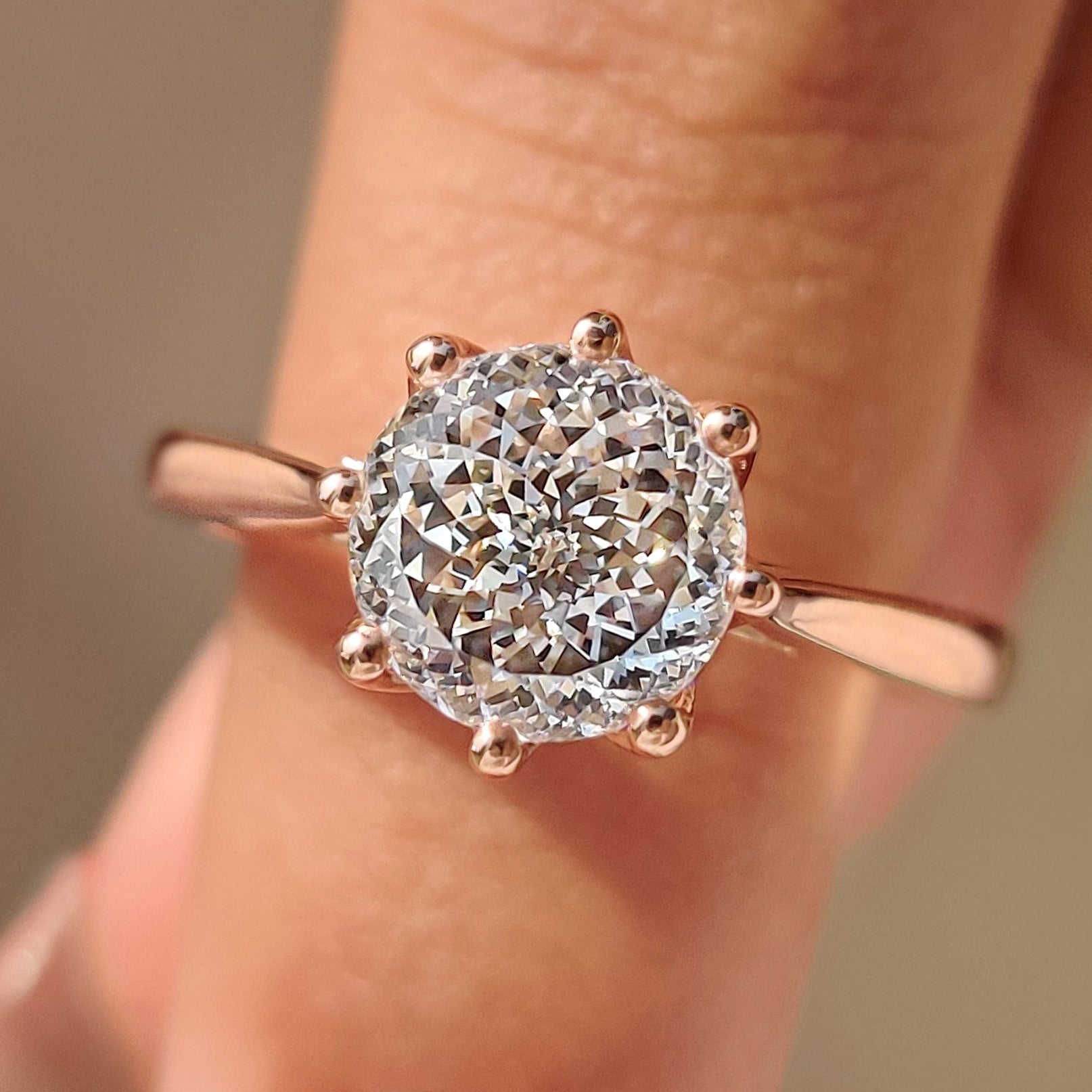
Portuguese Cut Diamond Ring in Solitaire Style
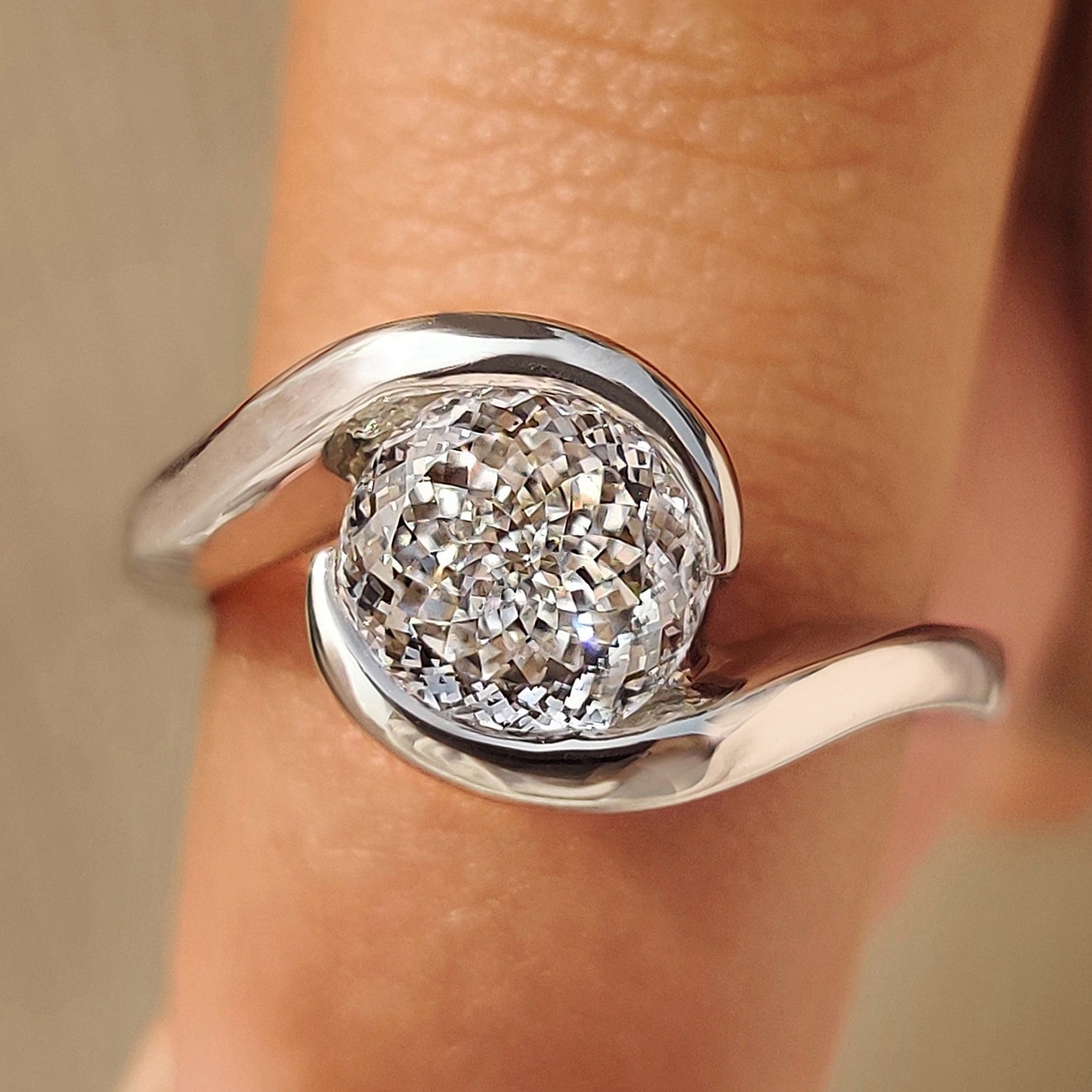
Solitaire Portuguese Cut Diamond Ring in Half Bezel
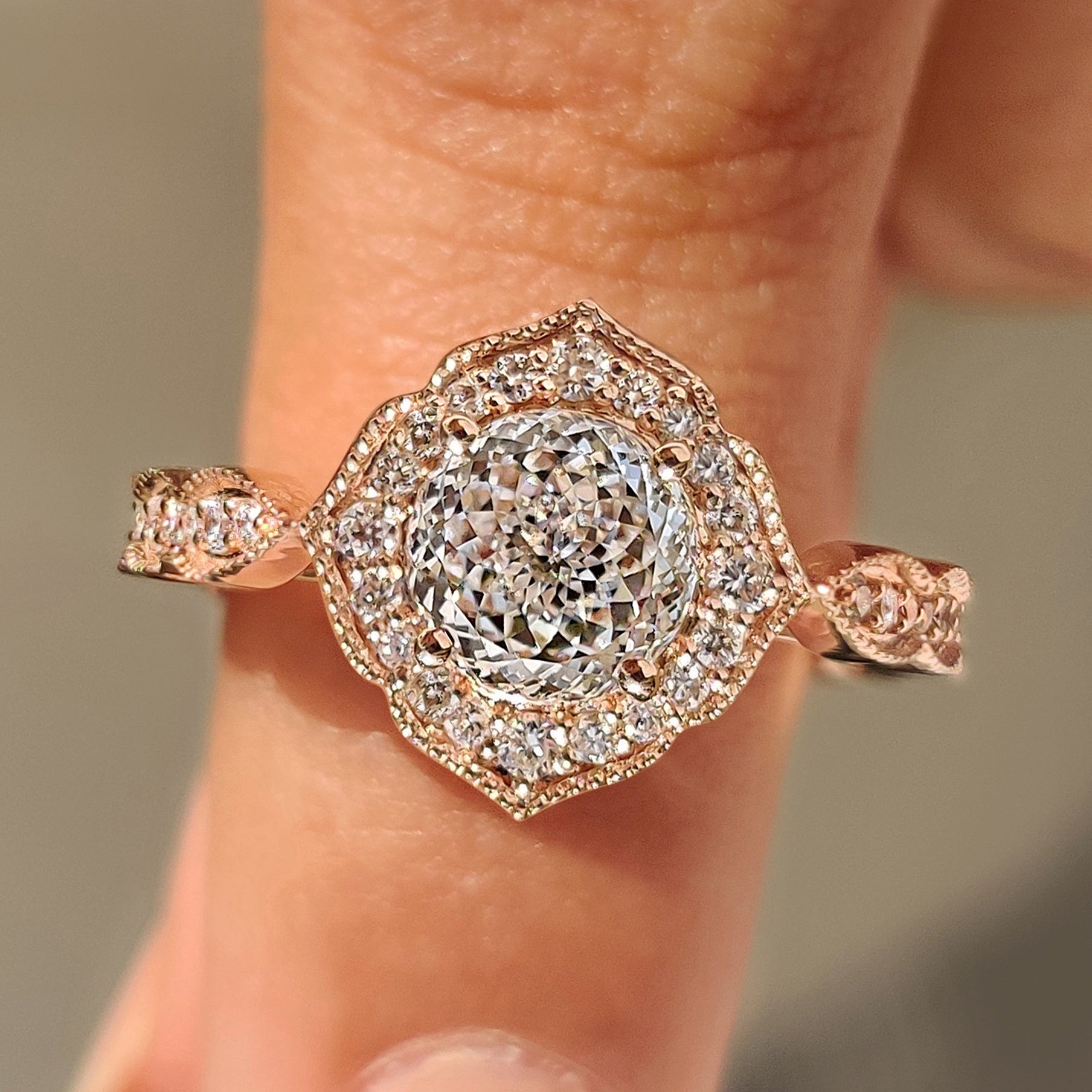
Portuguese Cut Diamond Ring in Milgrain Vintage Style
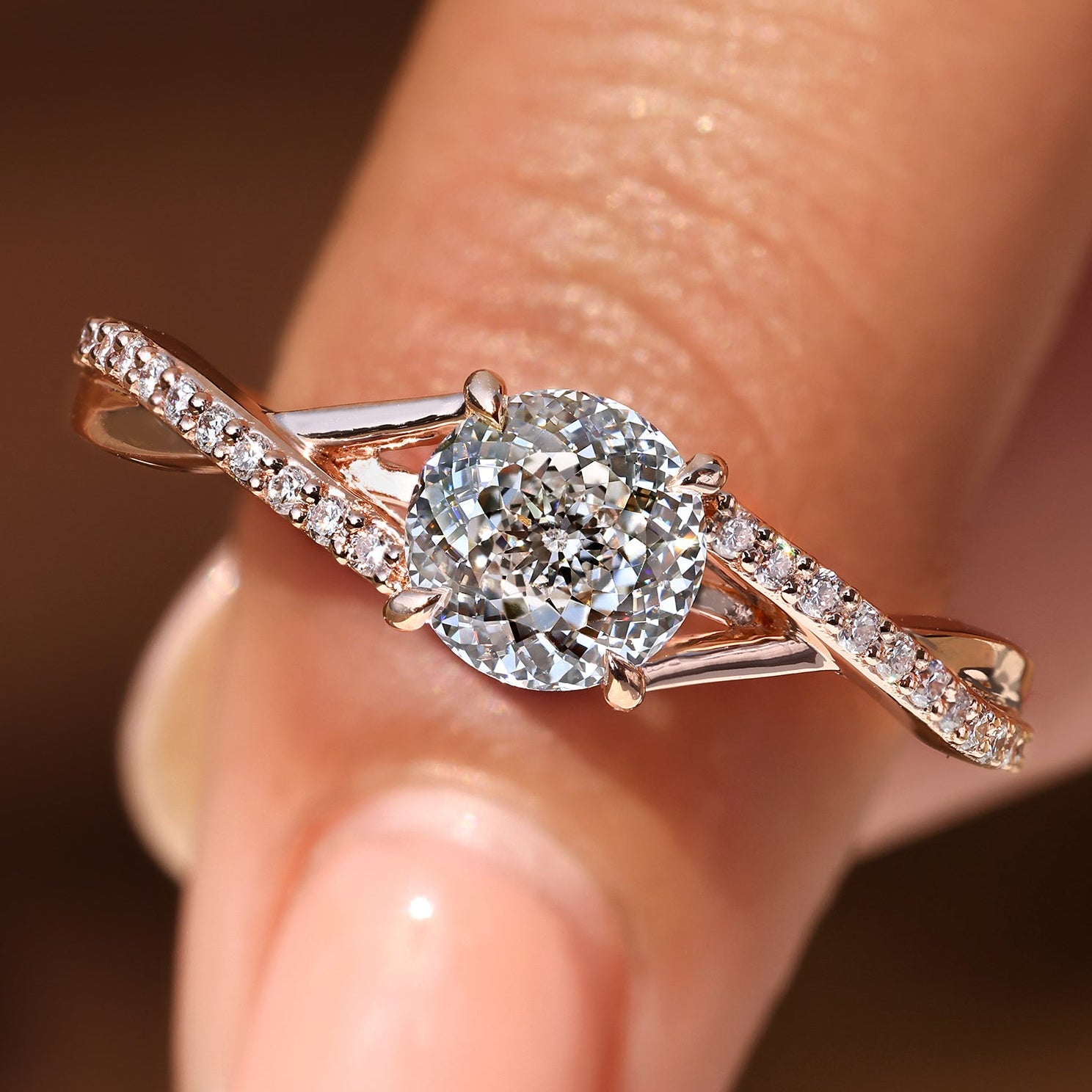
Portuguese Diamond Ring With Round Cut Pave Band
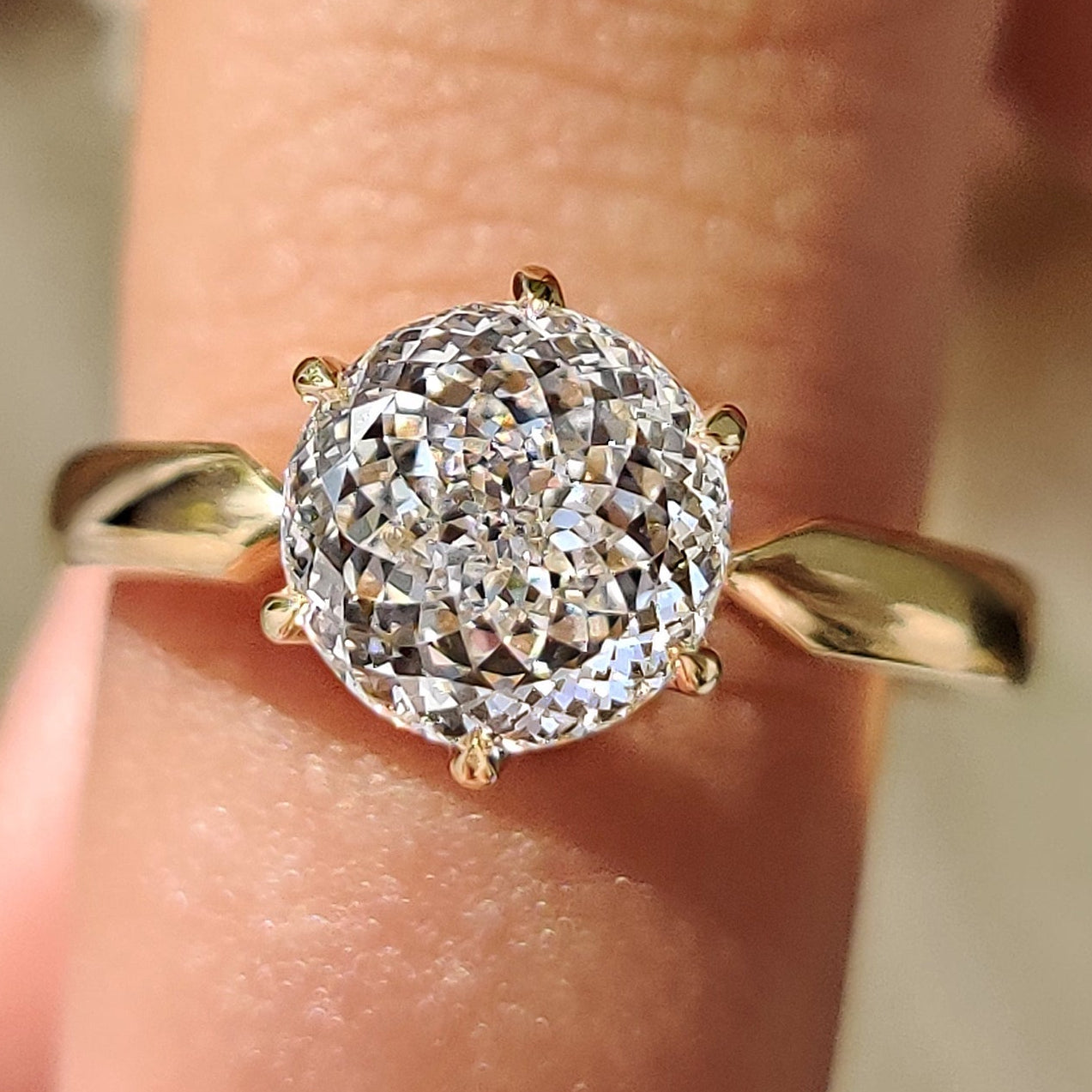
Portuguese Cut Diamond Ring With Tulip Setting
Halo Settings
A halo of small surrounding diamonds amplifies the already dazzling brilliance of a Portuguese cut. The extra sparkle frames the stone and adds even more light return, making the center diamond look brighter, larger, and impossibly lively. It’s a glamorous choice that still feels romantic rather than flashy.
Vintage-Inspired Mounts
This cut shines brightest in settings with history in their design. Filigree, hand engraving, and milgrain details beautifully echo the intricate faceting of the stone. These delicate metal accents enhance the old-world character and give the ring an heirloom feel, like it has a love story built right in.
Solitaire Settings
A simple solitaire lets the Portuguese cut be the star of the show. With minimal metal and clean lines, all attention goes straight to the diamond’s depth and sparkle pattern. It’s an elegant, timeless option that highlights the cut’s uniqueness without any distractions.
Bezel or Semi-Bezel Settings
For a slightly more modern twist, a bezel or partial bezel can frame the stone while still letting light in. The smooth metal edge contrasts beautifully with the intricate faceting, creating a look that’s both refined and distinctive.
Minimal metal. Maximum sparkle.
Portuguese Cut Diamonds vs. Other Fancy Cuts
| Feature | Portuguese Cut | Cushion Cut | Emerald Cut | Old Mine Cut |
|---|---|---|---|---|
| Look | Detailed, bold sparkle | Soft, pillow shape | Sleek, rectangular | Chunky, antique |
| Facets | Very high, complex | Mixed brilliant | Step-cut (clean lines) | Fewer, larger |
| Sparkle Style | Bright, fiery, dramatic | Soft, romantic glow | Flashy mirrors, less fire | Warm, chunky sparkle |
| Light Performance | Maximum brilliance and fire | Balanced sparkle | Emphasizes clarity over sparkle | Subtle, antique glow |
| Shape Feel | Round with intricate pattern | Rounded square | Long, straight edges | Cushion-like but deeper |
| Vibe | Energetic & eye-catching | Classic & romantic | Calm & elegant | Vintage & historic |
| Rarity | Less common, unique choice | Very popular | Popular in vintage styles | Mostly seen in antique stones |
| Best For | Maximum sparkle lovers | Soft, timeless style | Understated elegance | True antique charm |
Is the Portuguese Cut More Expensive?
The cut itself doesn’t automatically raise the diamond’s price. However, the additional faceting requires more labor and skill, which can influence cutting costs.
Pricing still depends mainly on:
- Carat weight
- Color grade
- Clarity grade
- Overall cut quality
Rarity in the market can also affect availability, which sometimes impacts price.
So you might pay a little more for craftsmanship, but you also get a gem that doesn’t look like everyone else’s.
Final Thoughts: Is the Portuguese Cut Right for You?
The Portuguese cut diamond offers unmatched sparkle complexity, vintage charm, and standout presence. It doesn’t aim to blend in. It aims to shine from every angle.
Whether you choose a Portuguese cut engagement ring or a colored Portuguese cut gemstone, you get a piece of craftsmanship that celebrates light, detail, and individuality.
Some diamonds whisper elegance.
This one walks into the room and owns it.
And honestly? We love that energy.
Bring Portuguese Cut Sparkle to Life
Transform this mesmerizing diamond style into a bespoke ring crafted to your vision. Distinctive brilliance, heirloom quality.


