

Choosing a setting for a Dutch Marquise engagement ring is not simply about picking a style you like. The cut’s six edge points, straight or angled sides and two pointed ends create specific considerations for prong placement, tip protection, and stone visibility. Your setting also affects the ring’s orientation, profile, and wedding-band fit. This guide explains how each setting works with Dutch Marquise geometry so you can choose a design that protects the stone while keeping its distinctive outline visible.
Dutch Marquise vs Traditional Marquise: Key Design Differences
A traditional marquise has a curved outline that flows continuously from tip to tip on both sides. A Dutch marquise has a different geometric character: the sides run straight or at a slight angle rather than arching in a continuous curve, producing an elongated hexagonal shape. Both cuts share two pointed ends, but the Dutch marquise outline is angular in a way that the standard marquise is not.
That geometric difference matters for setting choices. The straight sides mean any prong, bezel edge, or side stone that interrupts those edges is immediately apparent. A prong that might read as barely noticeable on a round or oval stands out more clearly against the defined side of a Dutch Marquise. The outline is part of what makes the cut distinctive, so how the setting supports or obscures that outline is a genuine design consideration, not just an aesthetic preference.
Symmetry is also more important here than for softer shapes. Because the outline is geometric, any unevenness in the stone’s unequal side angles or off-center points reads as an error in a way it would not on a more organic silhouette. Evaluating the actual stone carefully, preferably through clear photographs and video, is a useful step before finalizing a setting. The Dutch Marquise Cut Diamond Guide covers what to look for when assessing the stone itself.
What Should You Look for in Dutch Marquise Setting?
Protect Pointed Ends
Both tips of a Dutch Marquise taper to a point, and pointed ends are structurally more vulnerable than the broader sections of any diamond. The setting needs to address them. V prongs, which cup each tip in a V shaped metal contact, are a common approach that provides coverage while keeping the long sides of the stone open to view. A bezel is another option, wrapping the entire girdle, including the tips, in a continuous metal rim. Open prong structures can also work when prong placement is thoughtfully positioned at or near the tips.
The amount of coverage is a genuine trade-off: more metal at the tips provides more protection but covers more of the pointed outline. How much of the tip you want exposed versus covered is partly a practical decision and partly a visual one.
Keep Geometric Outline Visible
The Dutch Marquise’s outline is its most distinctive characteristic. Settings that cover the long sides, a significantly heavy bezel wall, side stones that crowd the stone’s edges, or thick prongs placed along the middle of the sides reduce how clearly the hexagonal shape reads. Open prong configurations and thin bezels that follow the outline closely tend to preserve more of the stone’s visual character.
This is not a universal argument for open settings. More coverage means more protection, and for active wearers or particular work environments, that trade-off may be worth it. Knowing it exists helps you evaluate any specific setting honestly.
Consider Ring Profile
How high the Dutch Marquise sits above the band, the shape of the gallery beneath the stone, and how the shank transitions into the setting all affect both appearance and practicality. A higher-profile setting makes the outline more prominent and typically allows more light to reach the stone from below. A lower-profile setting keeps the stone closer to the hand. Open gallery structures beneath the stone allow light to enter from multiple directions, which generally supports visual performance.
Think About Wedding Band Fit
Setting architecture directly affects how a wedding band sits next to the engagement ring. A high-set center stone, a pronounced cathedral structure, or an east-west orientation all change the profile the band has to work around. A gap between the rings is not inherently a problem, but knowing in advance whether you need a curved band or whether a straight band will sit cleanly is practical planning that saves difficulty later.
Best Settings for Dutch Marquise Diamond
V Prong Setting
V prongs are designed specifically for pointed diamond shapes. Each tip of the Dutch Marquise sits inside a V shaped metal contact that cradles and protects it without covering the long sides. This leaves the elongated hexagonal outline largely visible while still providing structural coverage where the stone is most exposed.
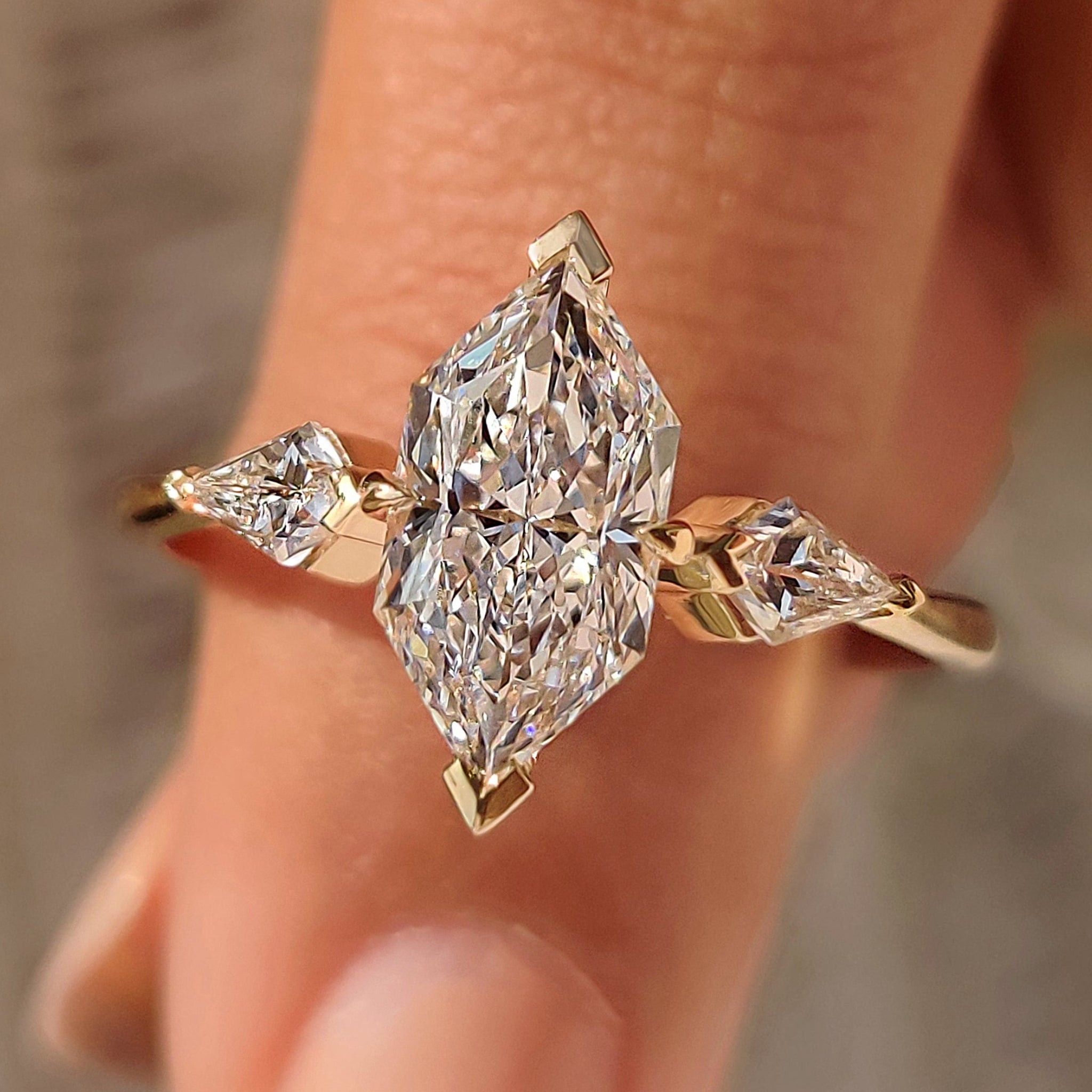
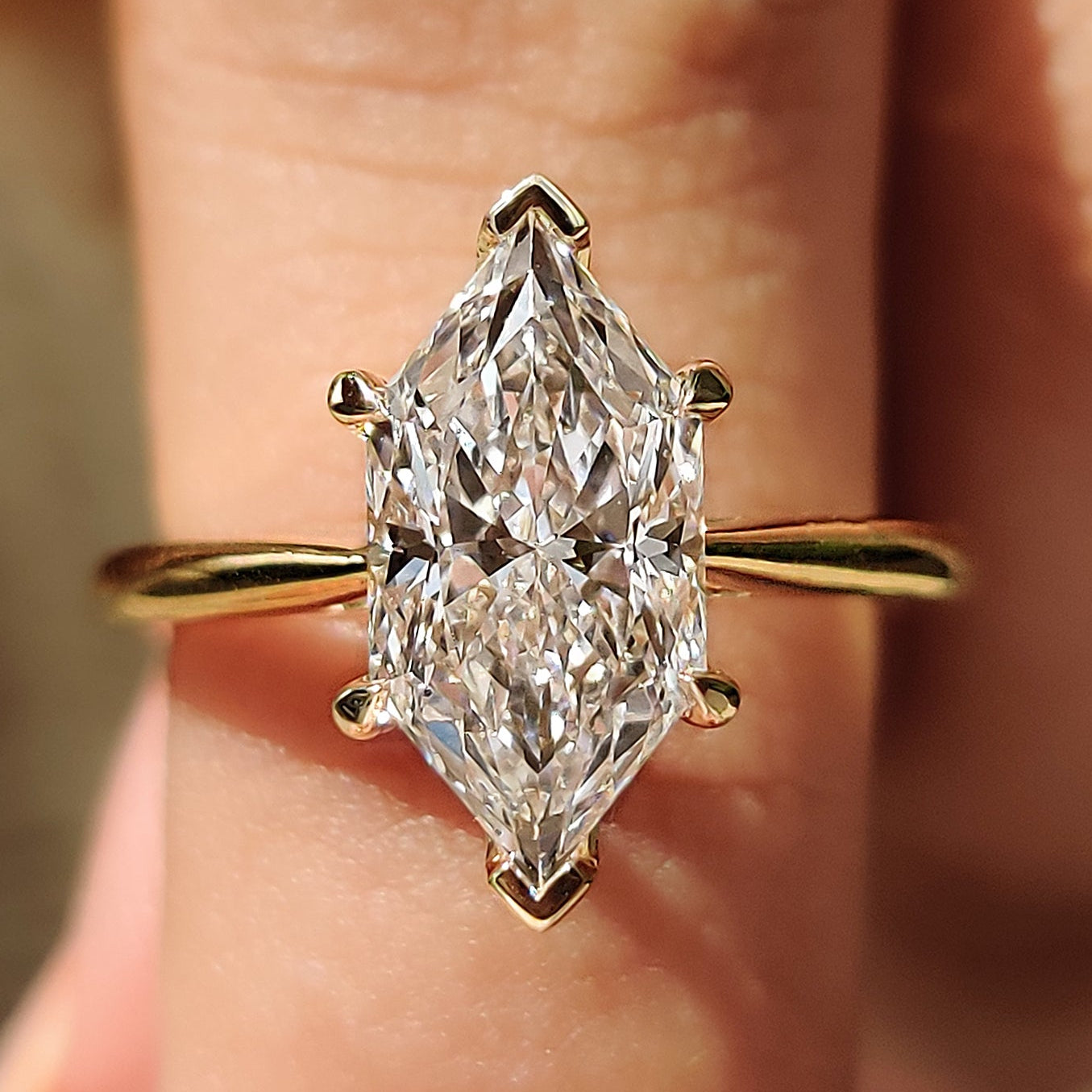
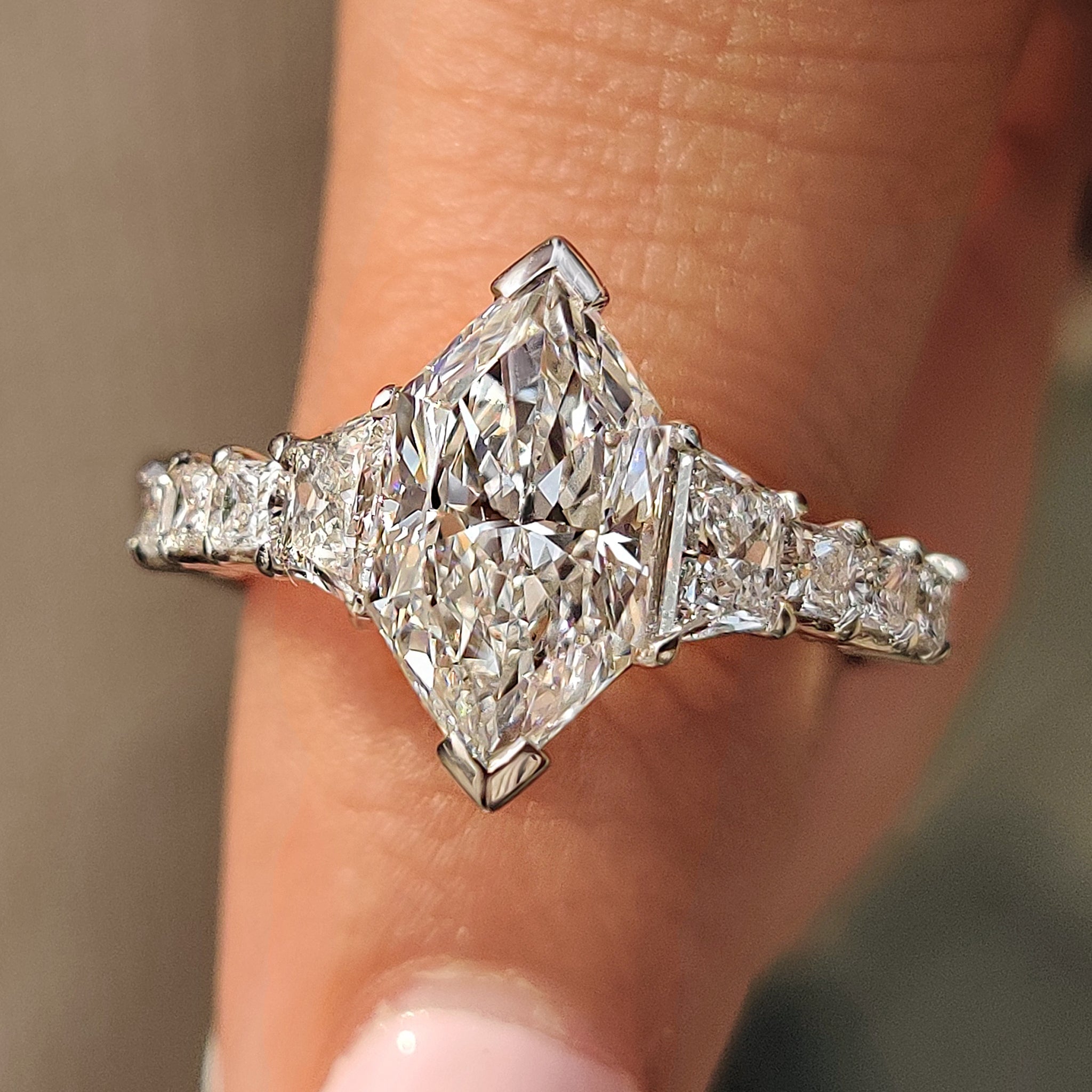
Prong count, V contact thickness, and the gallery structure beneath the stone vary across specific designs. A four prong arrangement with V contacts at each tip is one common approach. Six prong designs distribute support more broadly. The Dutch Marquise Engagement Ring with Distance Pave Prong Style, which uses a six prong arrangement alongside marquise and round side stones, shows how prong structure and side stones can function together without obscuring the center stone’s outline.
Bezel Setting
A bezel wraps the entire girdle of the stone in a continuous metal rim. For a Dutch Marquise, the bezel follows the hexagonal outline, which means the geometric shape is reinforced rather than contradicted by the metal. The angular perimeter of the stone becomes the visible boundary of the setting, giving the ring a clean and architectural character.
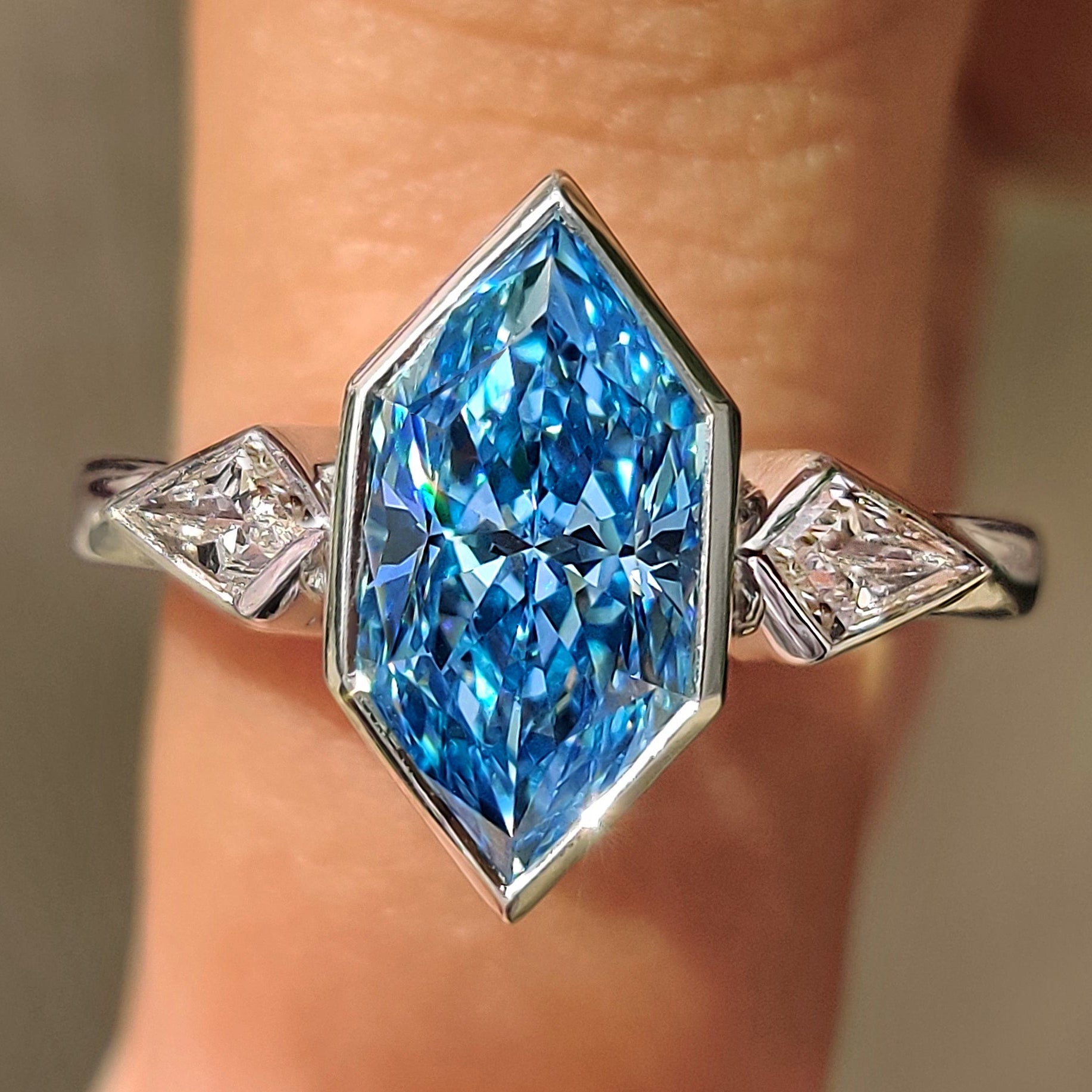
The practical advantage is comprehensive protection at all edges, including both tips. The visual consideration is that a bezel reduces how much of the stone’s side profile is exposed. Some buyers find this creates a more controlled, graphic look. Others prefer more of the stone visible. Neither position is wrong; it comes down to the visual quality you want the ring to carry.
Solitaire Setting
A solitaire presents the Dutch Marquise as the sole visual focal point, with no surrounding accent stones or halos. The geometric outline stands entirely on its own, which works well when the stone has strong visual character and you want nothing competing with the shape.
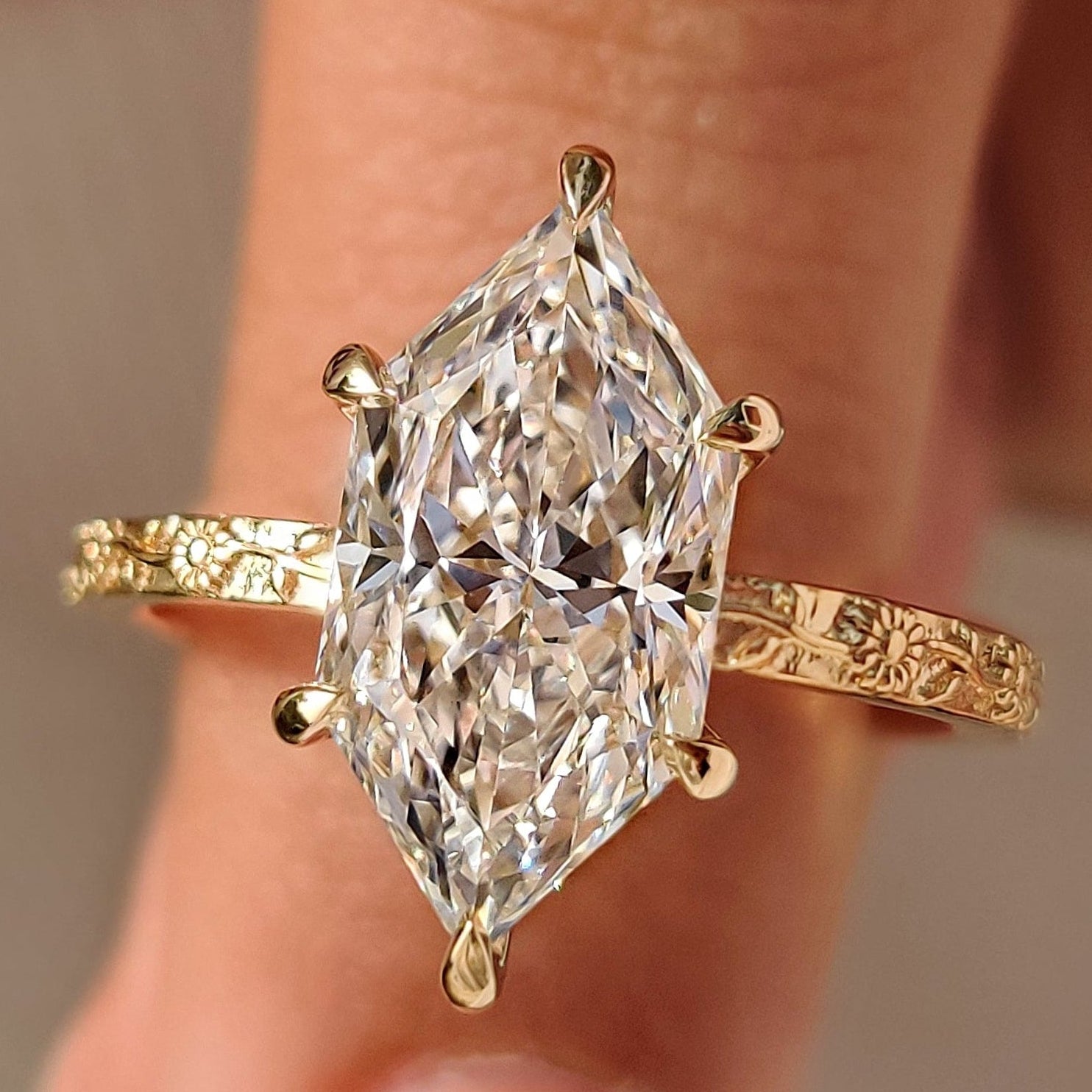
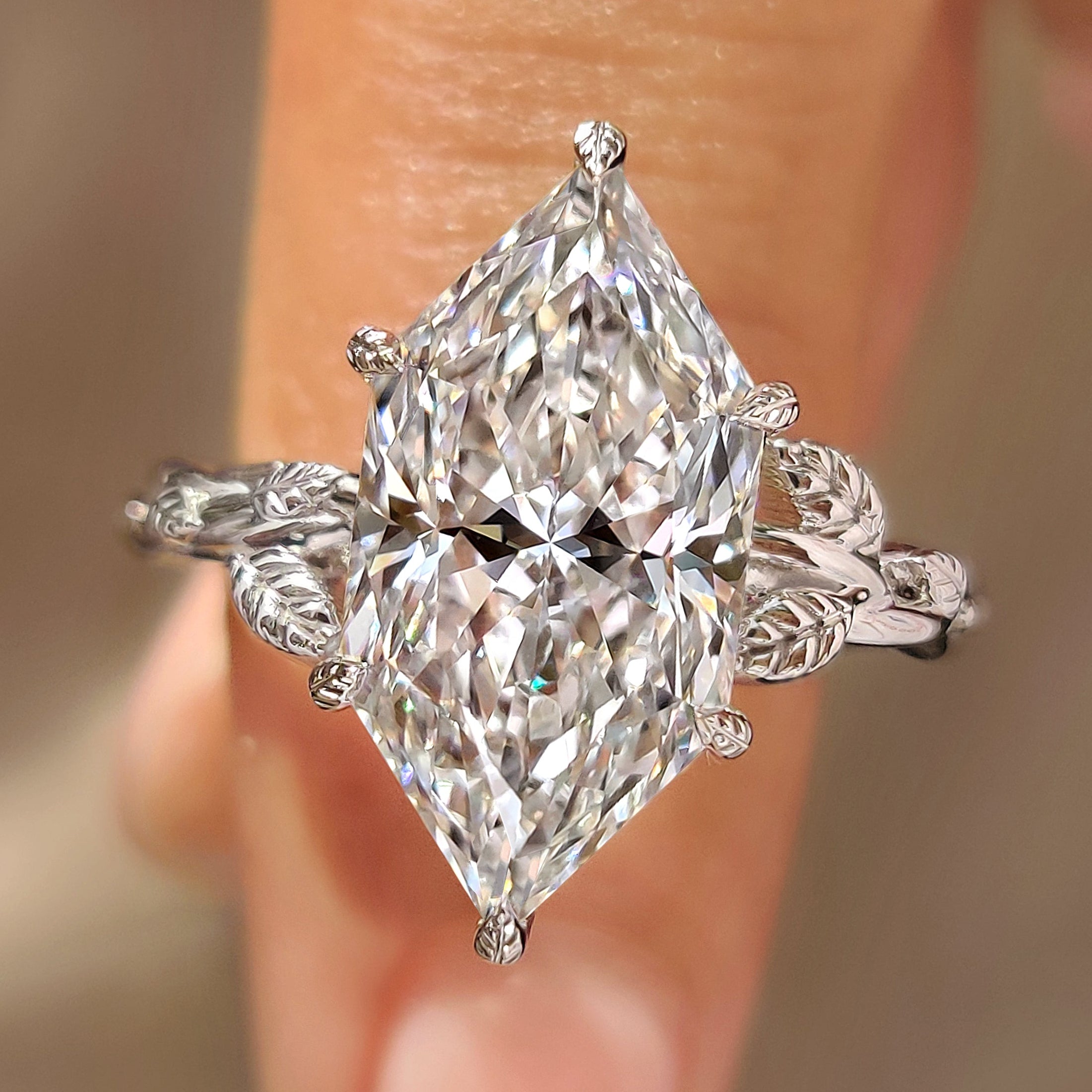
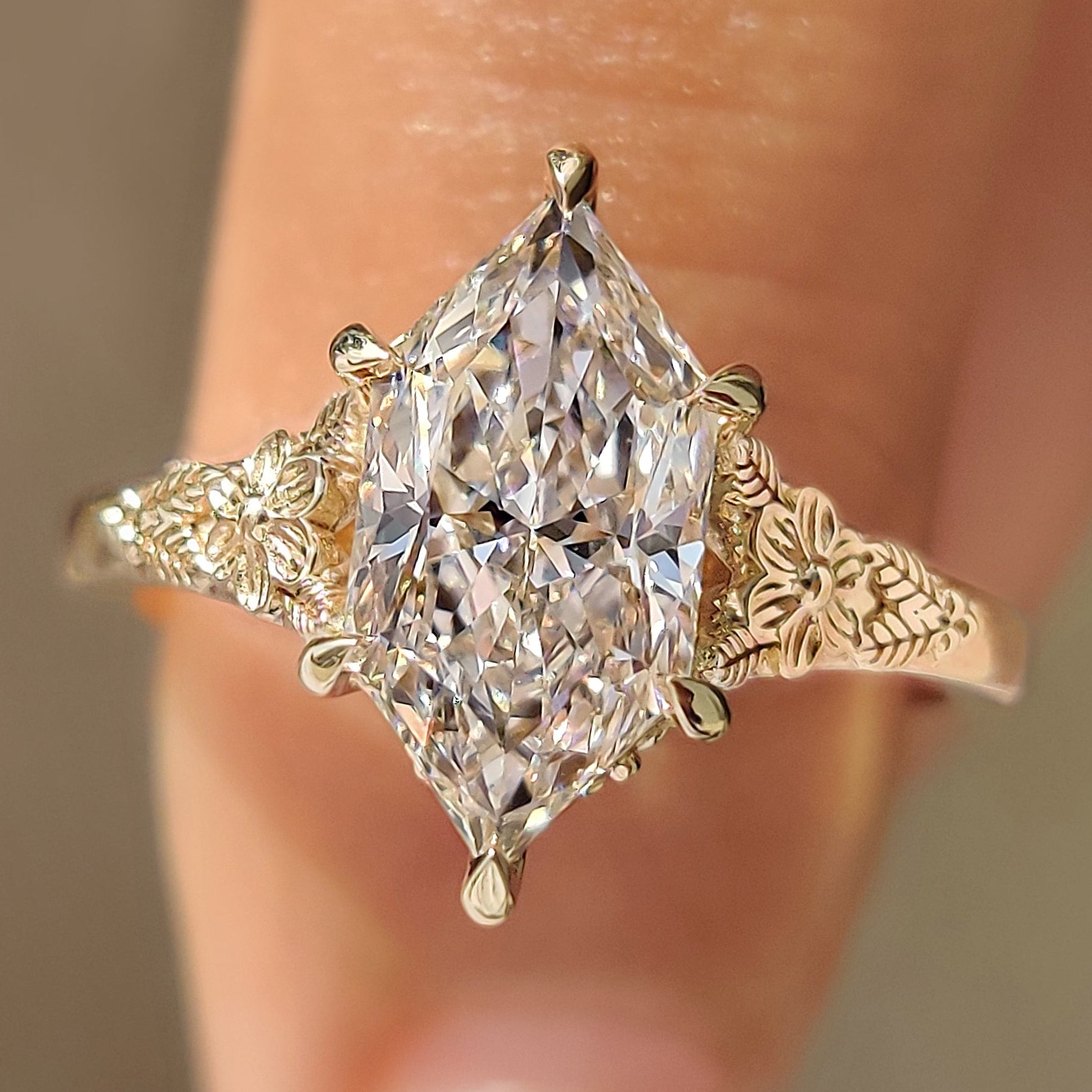
Protection still needs to be addressed regardless of how minimal the overall design appears. The prong structure at the tips matters as much in a solitaire as in any other setting. Dutch Marquise Engagement Ring with Leaf and Vine Shank is a solitaire-style design where the center stone carries the visual focus and the six leaf-style prongs provide structure without detracting from the outline.
Halo Setting
A halo frames the Dutch Marquise with accent stones around its perimeter, increasing the ring’s overall visual presence and adding light around the center stone. For this specific cut, the halo’s shape matters more than it does for a round or oval. A geometric or angular halo that follows the hexagonal outline reinforces the cut’s character. A softer rounded halo creates a deliberate contrast with the straight-sided geometry.
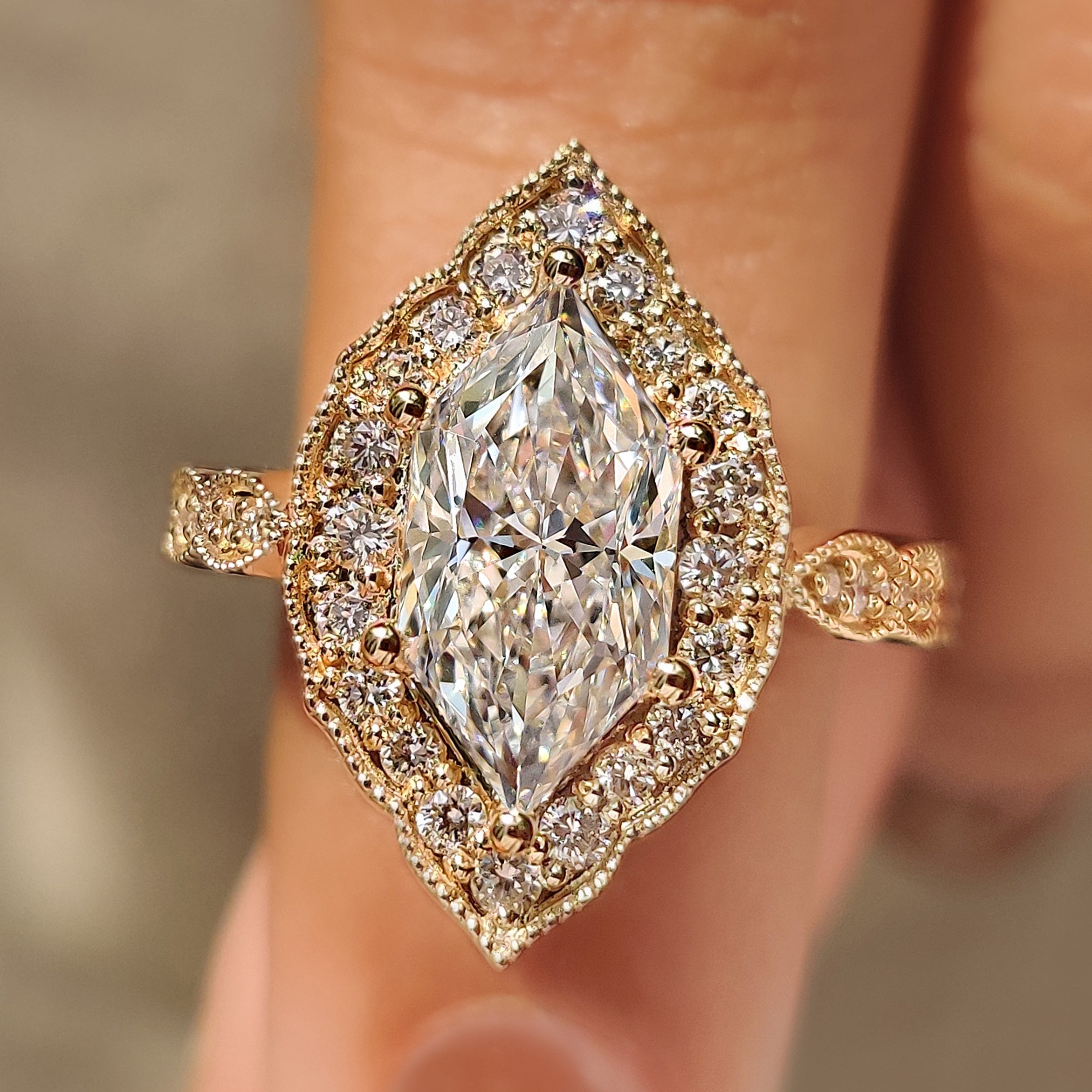
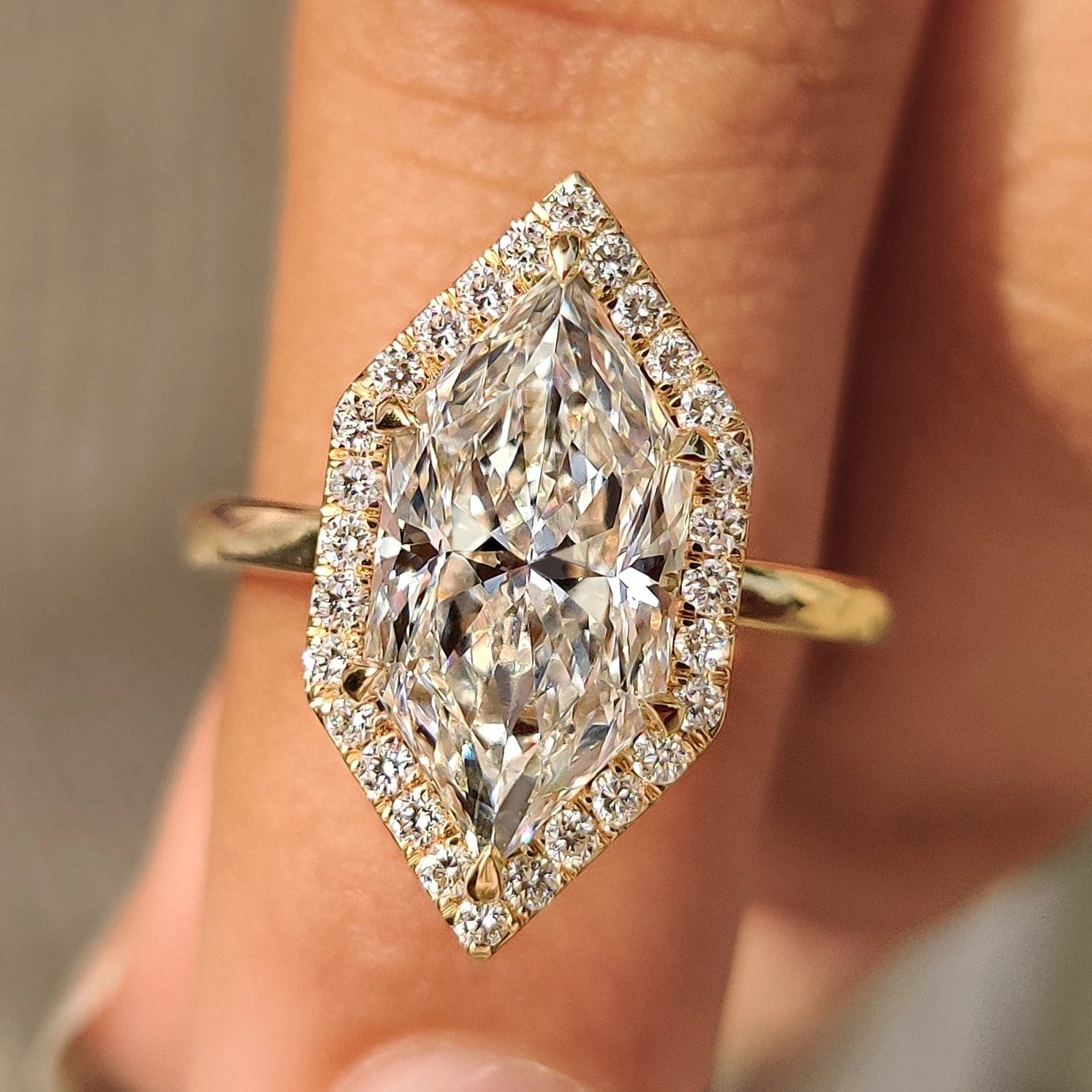
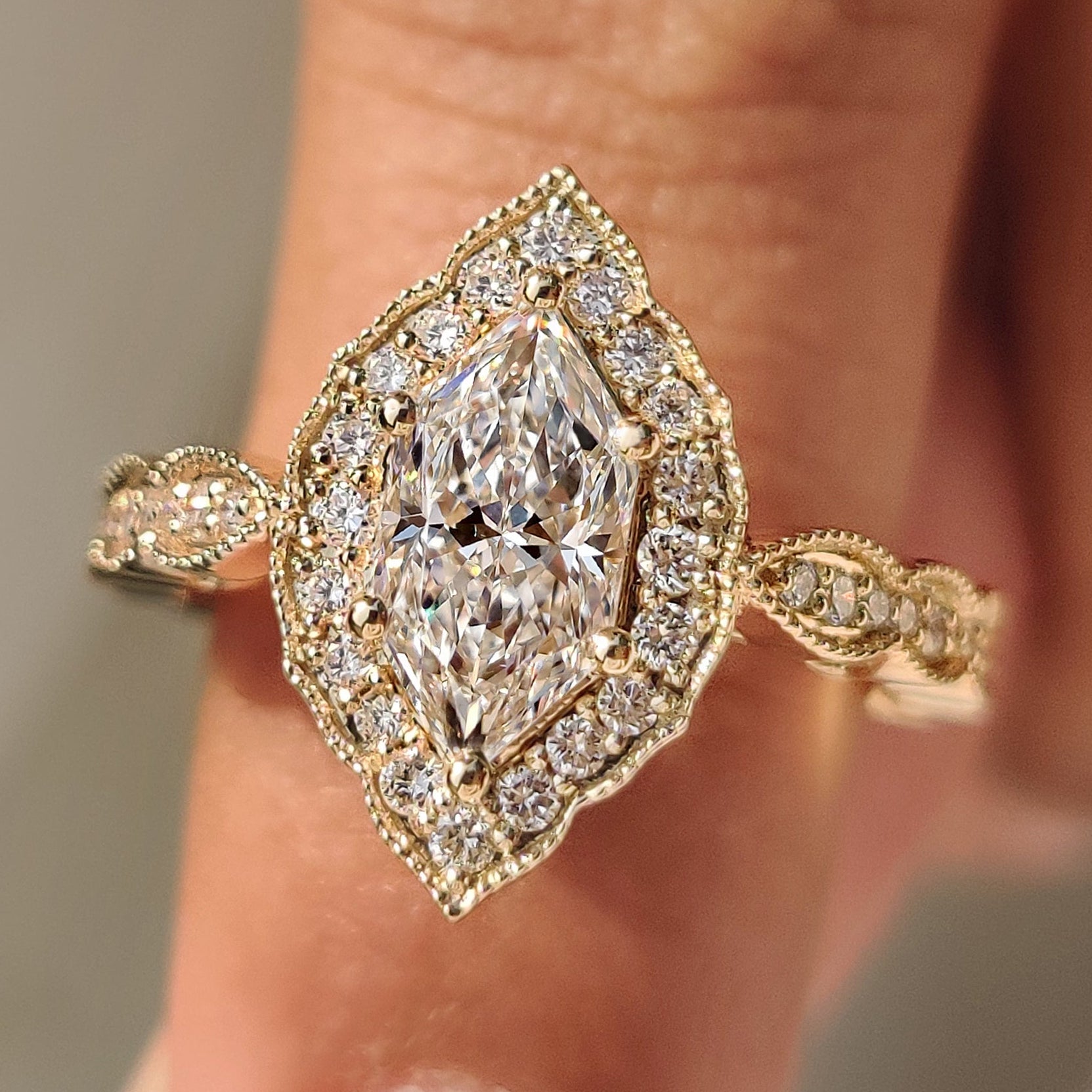
Both can work, but the visual result is different. The Dutch Marquise Engagement Ring in Vintage Style pairs a halo with milgrain and a cathedral structure, showing how a halo can work alongside more detailed setting architecture without overcomplicating the ring.
Three Stone Setting
Three stone designs place the Dutch Marquise as the center stone alongside two flanking stones. The side stone shape has a significant effect on the overall visual balance. Tapered baguettes narrow toward the center and draw the eye inward, working naturally with elongated center stones. Straight baguettes create a more linear, horizontal composition. Round side stones add softness alongside the geometric center.
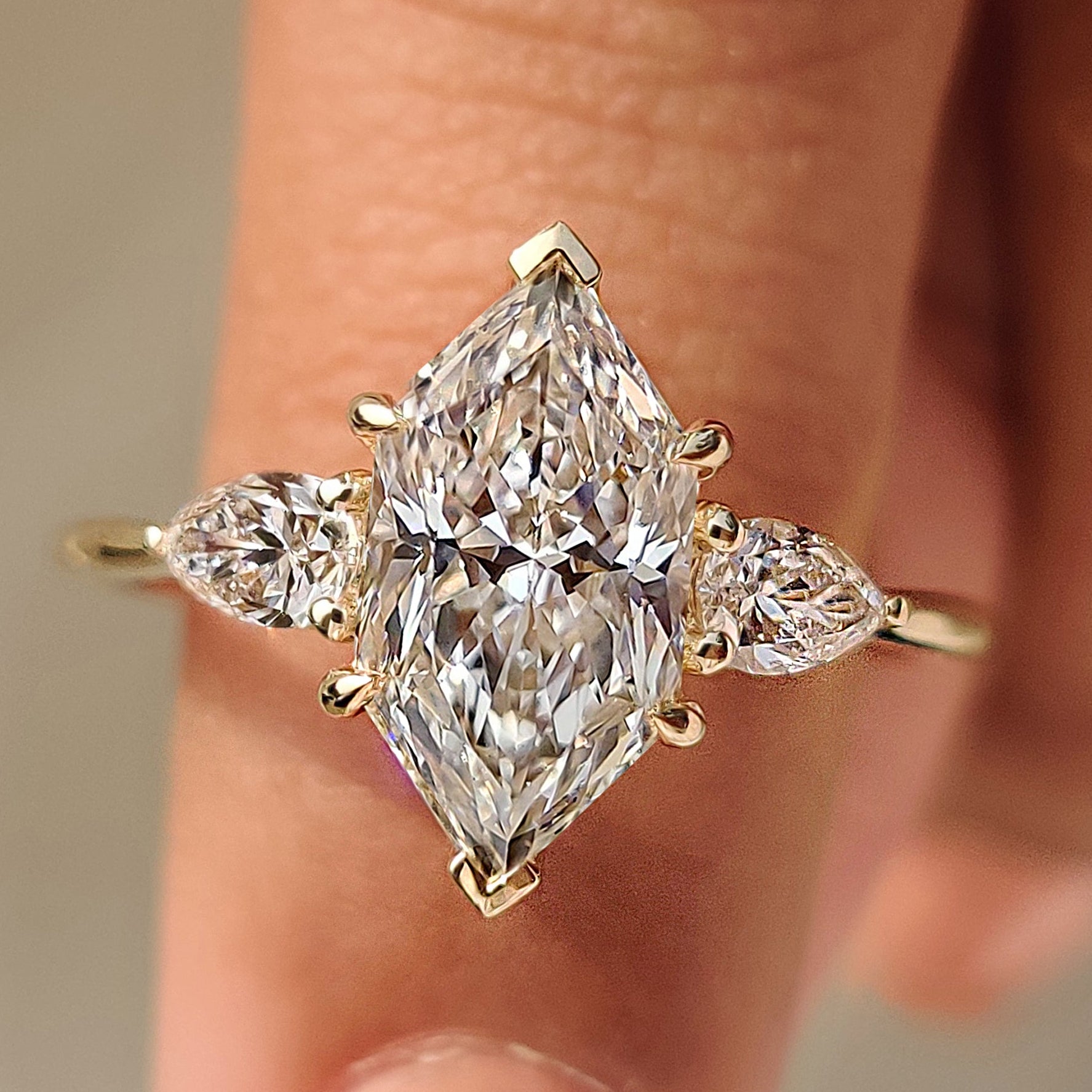
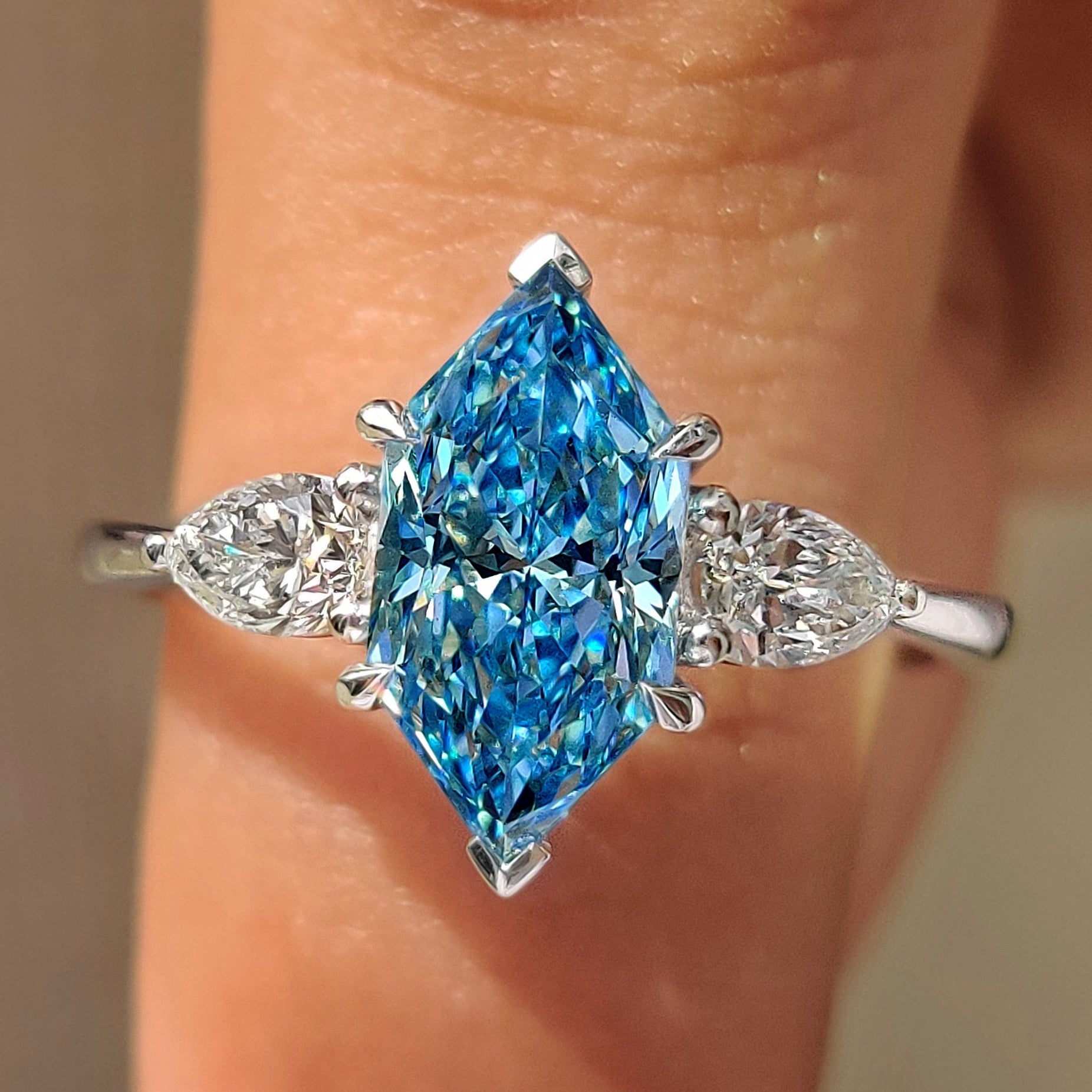
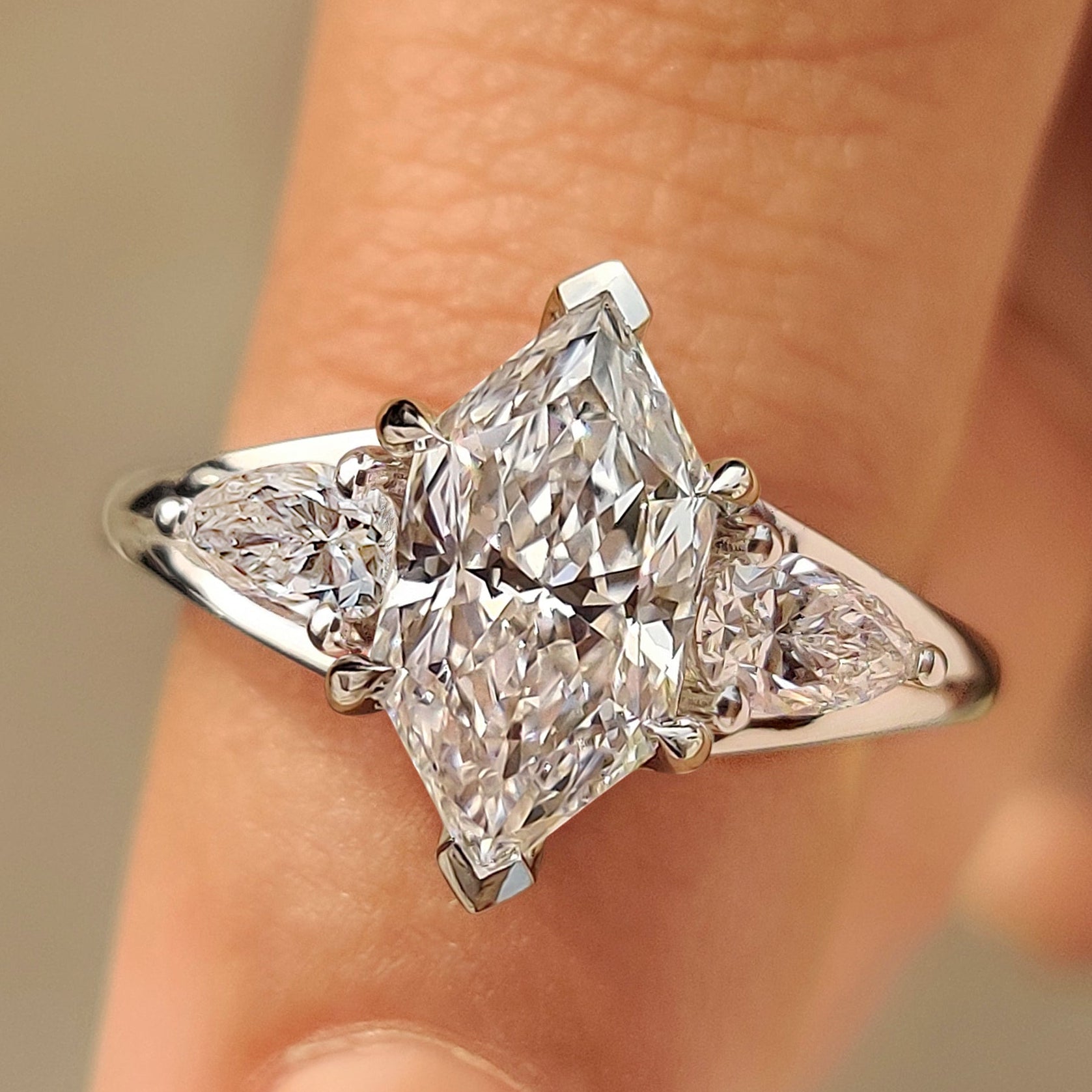
Proportional balance matters. Side stones that are too large relative to the Dutch Marquise compete with the center outline rather than supporting it. The Dutch Marquise Engagement Ring in Open Gallery Style uses round side stones alongside an open gallery structure, illustrating how side stones and setting architecture interact in a three-stone layout.
Vintage and Art Deco Settings
The straight sides and angular geometry of a Dutch Marquise align naturally with Art Deco and geometric vintage design languages. Milgrain beading, filigree metalwork, split shanks, and angular architectural details share the same visual logic as the stone’s outline. A more detailed or structured shank does not have to fight against the Dutch Marquise shape the way it might against a softer stone profile.
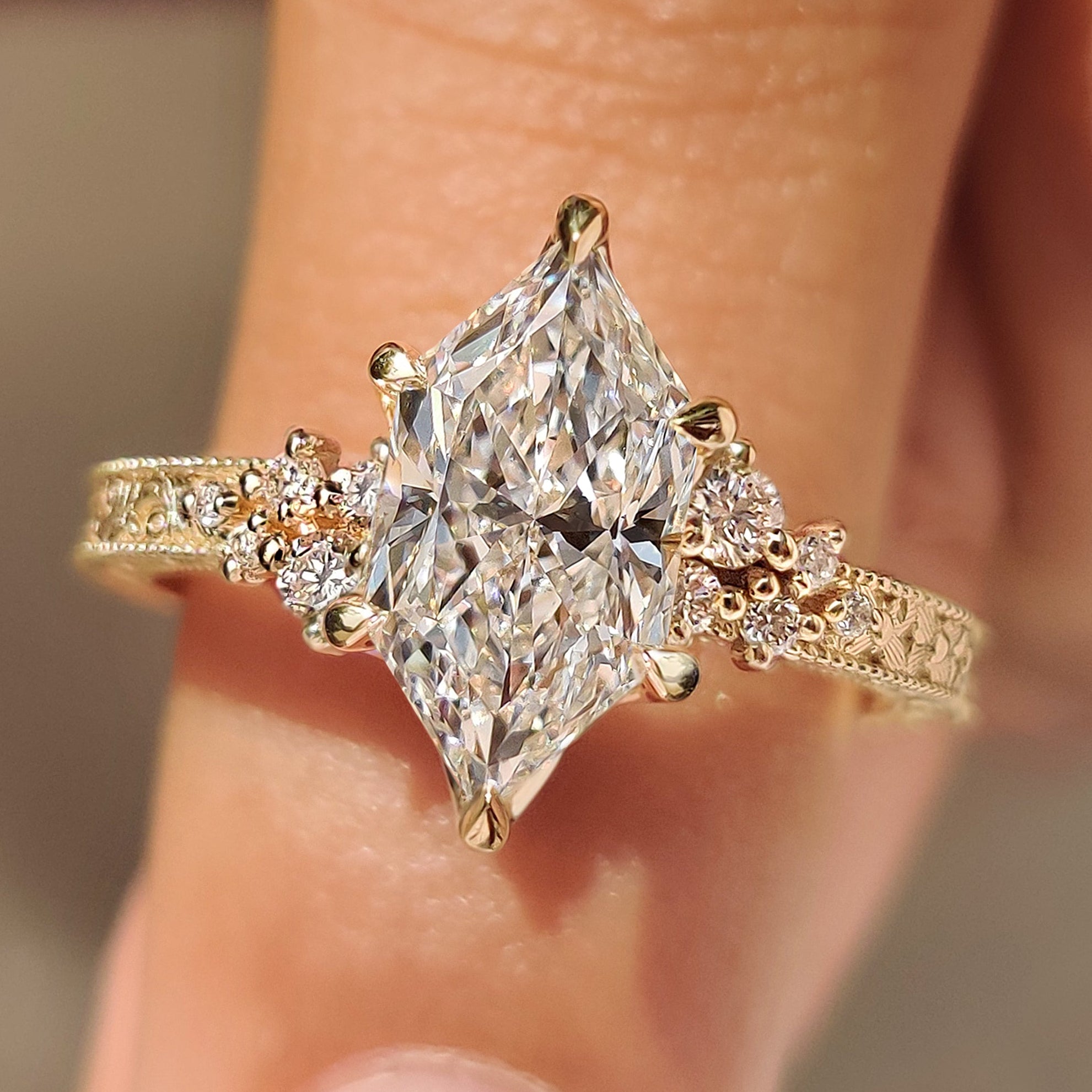
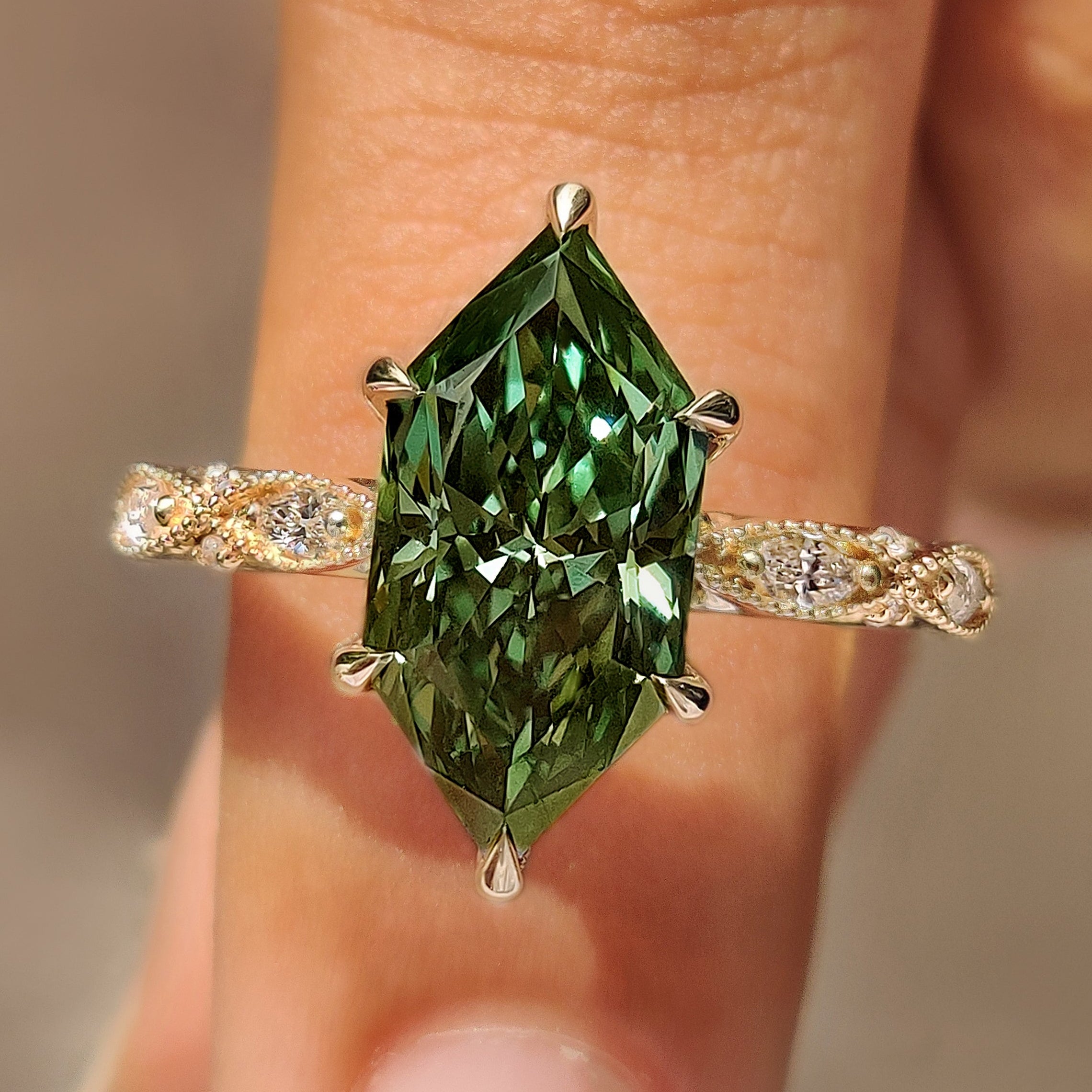
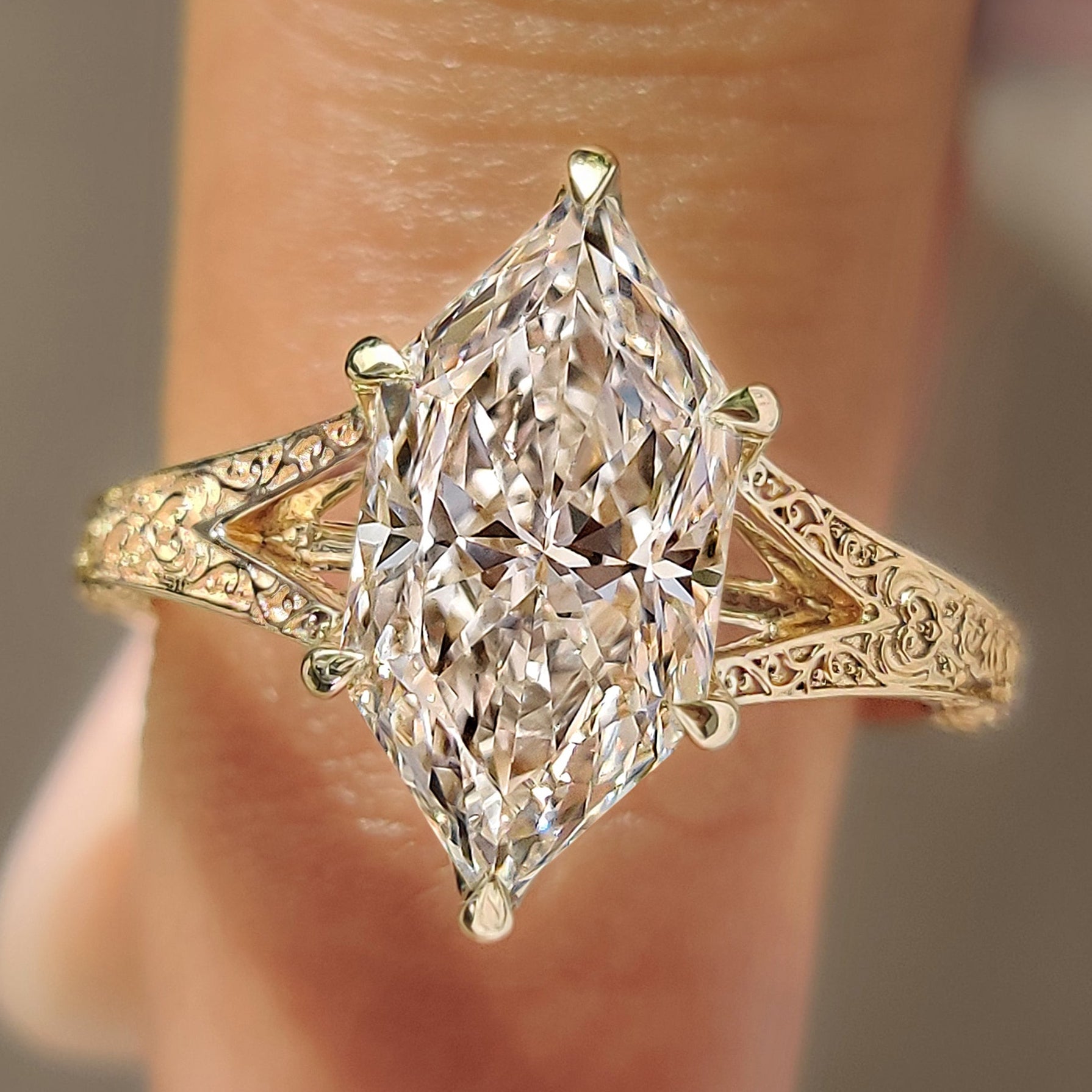
Cathedral and tulip-style gallery structures can lift the stone above the band in a way that adds setting character without overwhelming the design. Art Deco Dutch Marquise Engagement Ring in Vintage Style combines a split shank, milgrain and a six claw tulip-cathedral structure, showing how these elements work together in a cohesive design.
Can Dutch Marquise Be Set East West?
East west orientation rotates the Dutch Marquise 90 degrees so the long axis runs horizontally across the finger. The pointed ends move to the lateral extremities of the ring and the broader section of the stone faces upward. For a Dutch Marquise specifically, the straight sides create a distinct horizontal geometric bar in this orientation rather than a more flowing, elongated look, which can make for a strong contemporary design.
Prong placement adjusts accordingly in east-west designs, with the tips now positioned at the left and right extremities. The protective requirements for the tips remain the same regardless of orientation.
Wedding band fit in east west orientation differs from vertical placement. The horizontal span of the stone and the lateral position of the tips affect how a band sits alongside the engagement ring. A straight band may work well in some designs; others may pair more naturally with a curved band. The actual ring design determines fit more than orientation alone. If east-west positioning appeals to you, the Dutch Marquise Engagement Ring Ideas resource covers how orientation affects design choices across a range of examples.
Choosing the Right Dutch Marquise Setting
Rather than ranking settings overall, it is more useful to connect specific structures to what you actually want from the ring.
If you want the Dutch Marquise outline to be the complete visual focus with nothing else contributing, a solitaire with a clean prong structure is the most direct approach.
If tip protection is a clear priority and you want comprehensive edge coverage, a bezel addresses the entire perimeter. V prongs specifically at the tips offer protection while keeping more of the long sides visible.
If you want the stone to carry more visual presence, a halo that follows or frames the geometric outline achieves this. The halo’s shape relative to the Dutch Marquise outline is worth evaluating in actual photographs.
If the angular geometry of the stone appeals to you aesthetically, Art Deco and vintage-influenced settings extend that character into the setting structure itself.
If you want a different visual relationship between the stone and the hand, east-west orientation changes that equation significantly.
For buyers who want to see how these directions translate into finished rings, the Dutch Marquise engagement rings collection at Carat Diamonds covers the main setting approaches.
How Does Setting Affect Dutch Marquise Wedding Band Fit?
The engagement ring’s profile determines how a wedding band can sit next to it. For Dutch Marquise designs, several setting characteristics affect this.
A high-set center stone or a cathedral arch creates elevation between the underside of the stone and the band surface. A straight wedding band may sit cleanly beneath this overhang in some cases or may leave a visible gap depending on the dimensions. A curved or contoured band can close that gap and sit more closely against the engagement ring.
Halo settings add width at the shoulder area, which can affect how a band sits laterally. The halo’s height above the band surface matters as much as its presence.
East west oriented rings have a different fit situation from vertical placements. The tips extending to the sides create a different physical boundary for a second band to sit against, and the fit depends on the specific ring geometry rather than orientation alone.
The practical takeaway is to evaluate wedding band fit against the actual engagement ring before making a final selection, either by physically testing bands or by getting specific dimensions from the jeweler and discussing the fit based on the setting’s profile.
How to Choose Dutch Marquise Engagement Ring Setting
Working through this in sequence makes the decision more manageable.
Evaluate the stone first. The Dutch Marquise’s symmetry, proportions, and outline clarity affect which setting structures will work well. A stone with strong geometric symmetry reads clearly in any setting; one with uneven sides or an off-center point will be more visible once set.
Decide how much tip protection you want. This points toward V prongs, bezel or an open approach with carefully placed contacts at the tips.
Decide how much of the geometric outline you want visible. More coverage means more protection; less coverage reveals more of the stone’s straight-sided shape.
Choose orientation. North-south is the conventional placement. East west changes the visual and practical character of the ring substantially and affects wedding-band fit.
Choose the overall setting direction: solitaire, halo, three stone or vintage influenced. This connects to both your style preference and practical considerations around band fit.
Consider the wedding band fit before finalizing the engagement ring. Knowing whether you need a curved band or whether a straight band will work gives you a more complete picture of the overall ring cost and design before committing.
Review actual ring images and video rather than choosing from setting names alone. How the Dutch Marquise sits in the metal is easier to assess through photographs. They also show how much of the outline remains visible. Proportions are often clearer in photographs than in descriptions.


