

In early 1796, a young French general offered a gold ring set with two pear shaped stones. The design was unique rather than grand and the ring later became one of the most referenced pieces in engagement ring history. That ring belonged to Joséphine de Beauharnais and the style it helped define is still called Toi et Moi.
Meaning of a Toi et Moi Ring
“Toi et Moi” is French for “you and me.” The design places two principal gemstones side by side on a single band. Modern wearers often read each stone as representing one person in the relationship. The arrangement itself carries the meaning; the specific gemstones, shapes and proportions remain a matter of personal choice.
The Ring Napoleon Gave Joséphine in 1796

Napoleon Bonaparte presented the ring to Joséphine de Beauharnais in early 1796, shortly before their civil marriage on 9 March. At the time, he was a rising military officer with limited personal means. The ring reflected that reality: an 18th-century gold band set with two pear shaped stones, one a deep blue sapphire and the other a colorless diamond, each weighing just under one carat and placed side by side.
The pairing was unusual for an engagement ring of the period. Most high-status jewelry emphasized display. This ring emphasized the relationship. Sapphire has long been associated with fidelity and diamond with constancy, though there is no primary evidence that Napoleon selected the stones specifically for those meanings. The visual message of two distinct gems joined on one band has remained the core of the style.
Why Was Napoleon Attracted to Joséphine?

Joséphine (born Marie-Josèphe Rose Tascher de la Pagerie) was a widow six years older than Napoleon, with two children from her previous marriage. They met in late 1795. Contemporary accounts and Napoleon’s own letters describe a rapid and intense attraction. His surviving correspondence from the Italian campaign is filled with declarations of longing.
The relationship was emotional and politically complicated. It ended in annulment in 1810 when Joséphine could not provide an heir, though Napoleon ensured she retained the title of Empress. The engagement ring remained with her and later passed through the Bonaparte family.
What Happened to the Original Toi et Moi Ring?
After Joséphine died in 1814, the ring stayed within the Bonaparte family for nearly two centuries. It later formed part of the collection of Prince Victor Napoléon and Princess Clémentine. In March 2013, it appeared at Osenat auction house in Fontainebleau, timed to coincide with the 250th anniversary of Joséphine’s birth.
Bidding opened at €10,000–€15,000. The hammer price reached €730,000 (approximately $949,000–$950,000 at 2013 exchange rates). With the auction house’s 25 percent buyer’s premium, the buyer paid about €912,500 or about $1.17 million. The buyer remained anonymous, and the ring entered a private collection. Experts noted that the extraordinary price reflected provenance rather than the intrinsic value of the stones themselves.
It is important to distinguish this engagement ring from other jewelry associated with the couple. A separate gold and enamel band marked “NB” with the inscription “AMOUR SINCERE” also survives, as does a different wedding ring that followed its own path through the family and is now associated with the tomb of Napoleon III at Farnborough Abbey. The famous Toi et Moi piece is the 1796 engagement ring.
Famous Toi et Moi Rings: From Jackie Kennedy to Modern Celebrities

Jacqueline Bouvier’s 1953 engagement ring from John F. Kennedy is the most famous American example. The John F. Kennedy Presidential Library and Museum describes it as a Van Cleef & Arpels design consisting of a 2.88 carat diamond mounted next to a 2.84 carat emerald-cut emerald with tapered baguettes. The ring has been displayed at the Kennedy Library, though it is not part of a permanent public collection.
In 2020, Ariana Grande’s engagement ring brought the style to a new audience. It paired an oval diamond, set at a tilt, with a pearl on a slim band. Reports suggested the pearl may have a family connection, possibly linked to a ring her grandmother had made using a pearl from her grandfather’s tie pin, but that detail has been discussed as reported speculation rather than confirmed fact.
Megan Fox’s 2022 ring, designed by Stephen Webster, is the most discussed recent example. Stephen Webster’s own description confirms the design: two perfectly matched pear-shaped gems, a D-color antique-cut diamond and an untreated Colombian emerald, connected by a magnet and set on two interlocking bands of thorns. Machine Gun Kelly said the stones represent the couple’s birthstones.
| Wearer | Year | Stones | Designer |
|---|---|---|---|
| Jacqueline Kennedy | 1953 | 2.88 ct diamond, 2.84 ct emerald | Van Cleef & Arpels |
| Ariana Grande | 2020 | Oval diamond, pearl | Reported custom design |
| Megan Fox | 2022 | Pear diamond, Colombian emerald | Stephen Webster |
These rings are not copies of the 1796 designs. They show how flexible the two-stone idea is. The constant is balance, not a fixed formula.
The Megan Fox Ring and the “Love Is Pain” Conversation
The discussion around Megan Fox’s ring is specific and modern, not a historical dispute about toi et moi rings in general.
Machine Gun Kelly said the two thorn bands were designed to draw together “as two halves of the same soul forming the obscure heart that is our love.” He also said the thorns were intended to make the ring painful to remove, a detail reported in interviews around the engagement. That comment started a conversation about whether pain belongs in a romantic symbol. For more details about the design and its symbolism, read our guide to Megan Fox's engagement ring. Some readers found it poetic; others found it uncomfortable. The reaction was a discussion about one custom design, not a rejection of toi et moi rings.
There is also a quieter debate: whether a two stone ring is an engagement ring at all. Traditionally, engagement rings have one center stone. Toi et moi rings challenge that convention, which is exactly why some couples choose them.
Choose a Toi et Moi Ring Today
Modern Toi et Moi rings offer a wide creative range. Couples frequently combine different shapes so each stone keeps its own character. Color contrast, such as a colored gemstone beside a diamond, can strengthen the “you and me” reading. Size balance matters for visual harmony; one stone does not need to dominate the other.
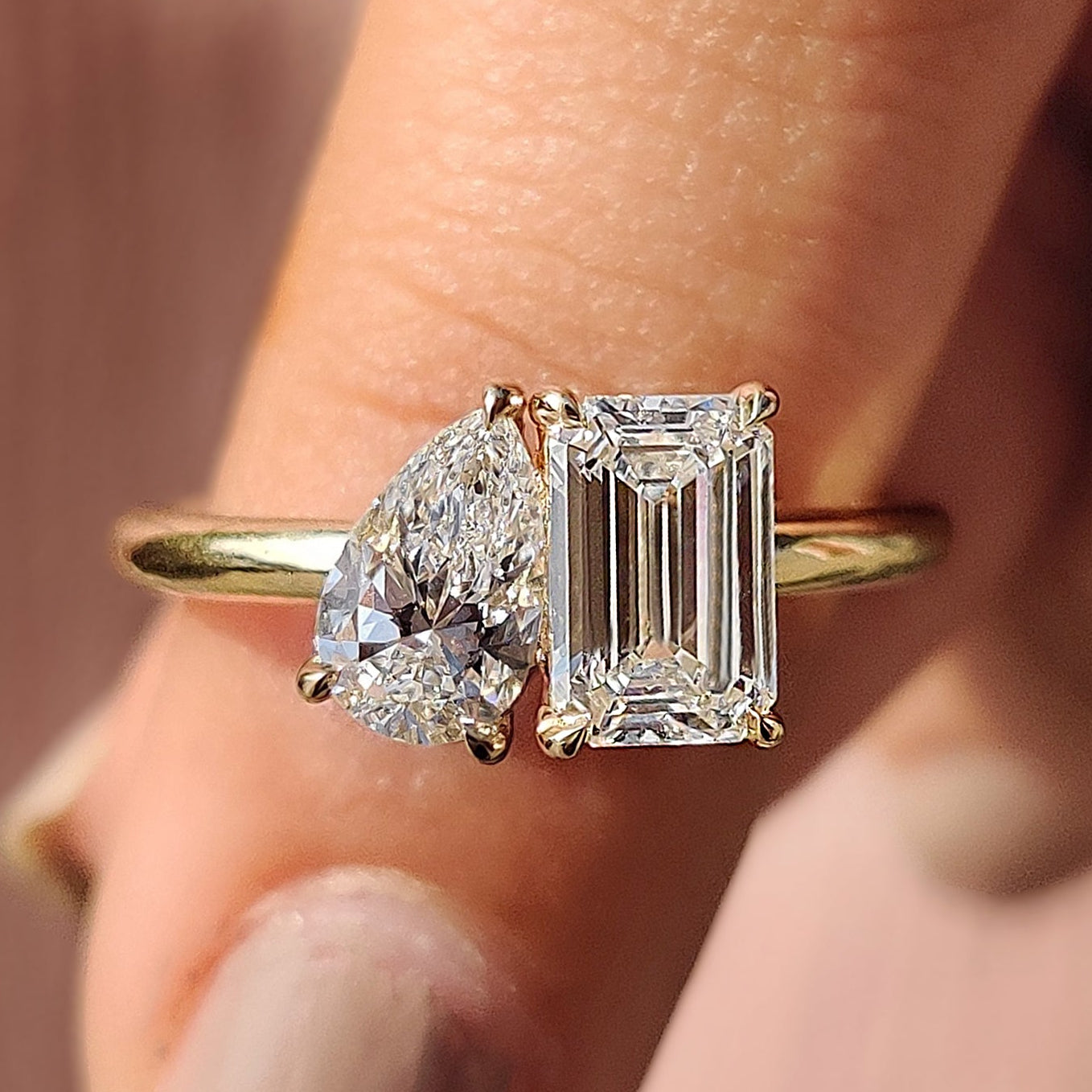
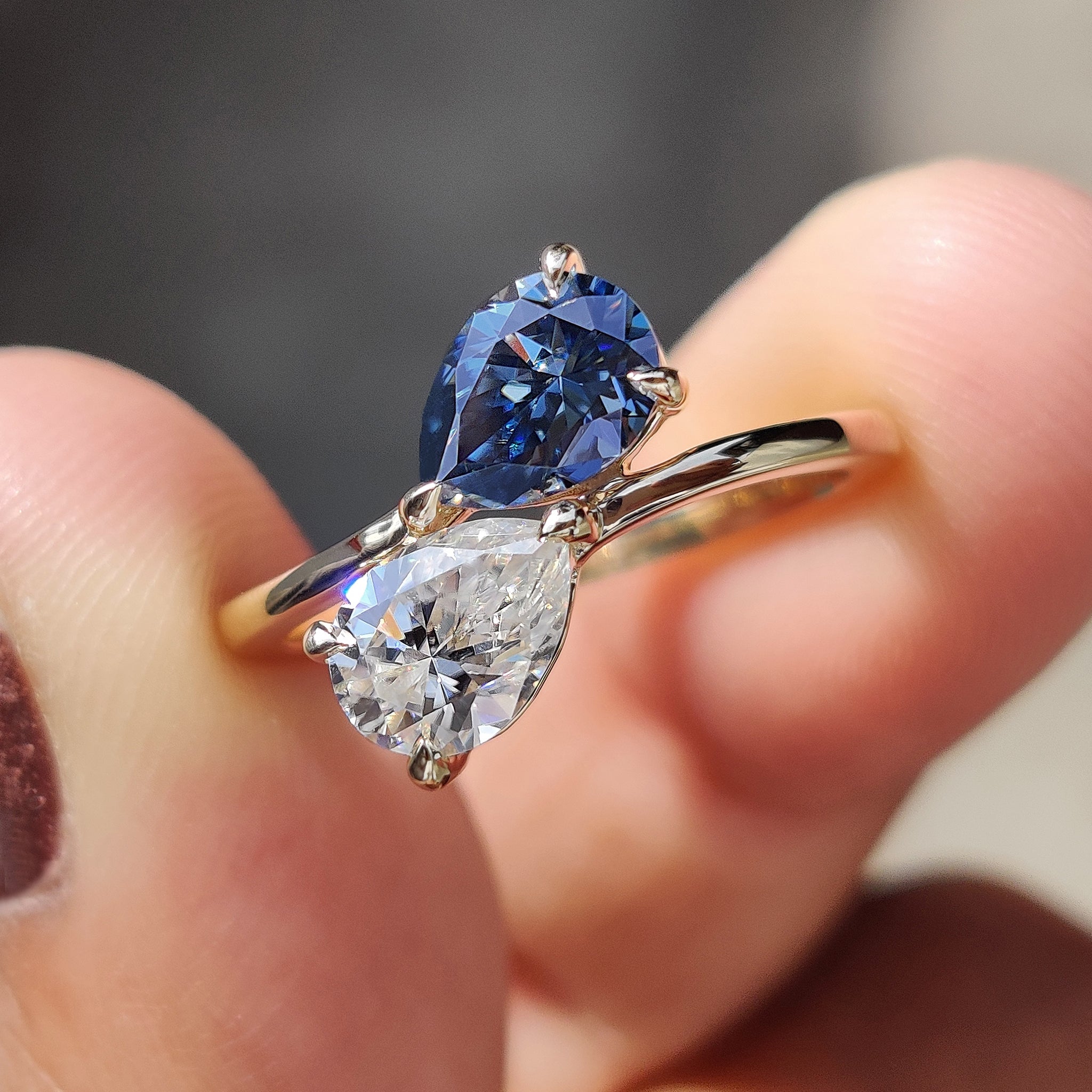
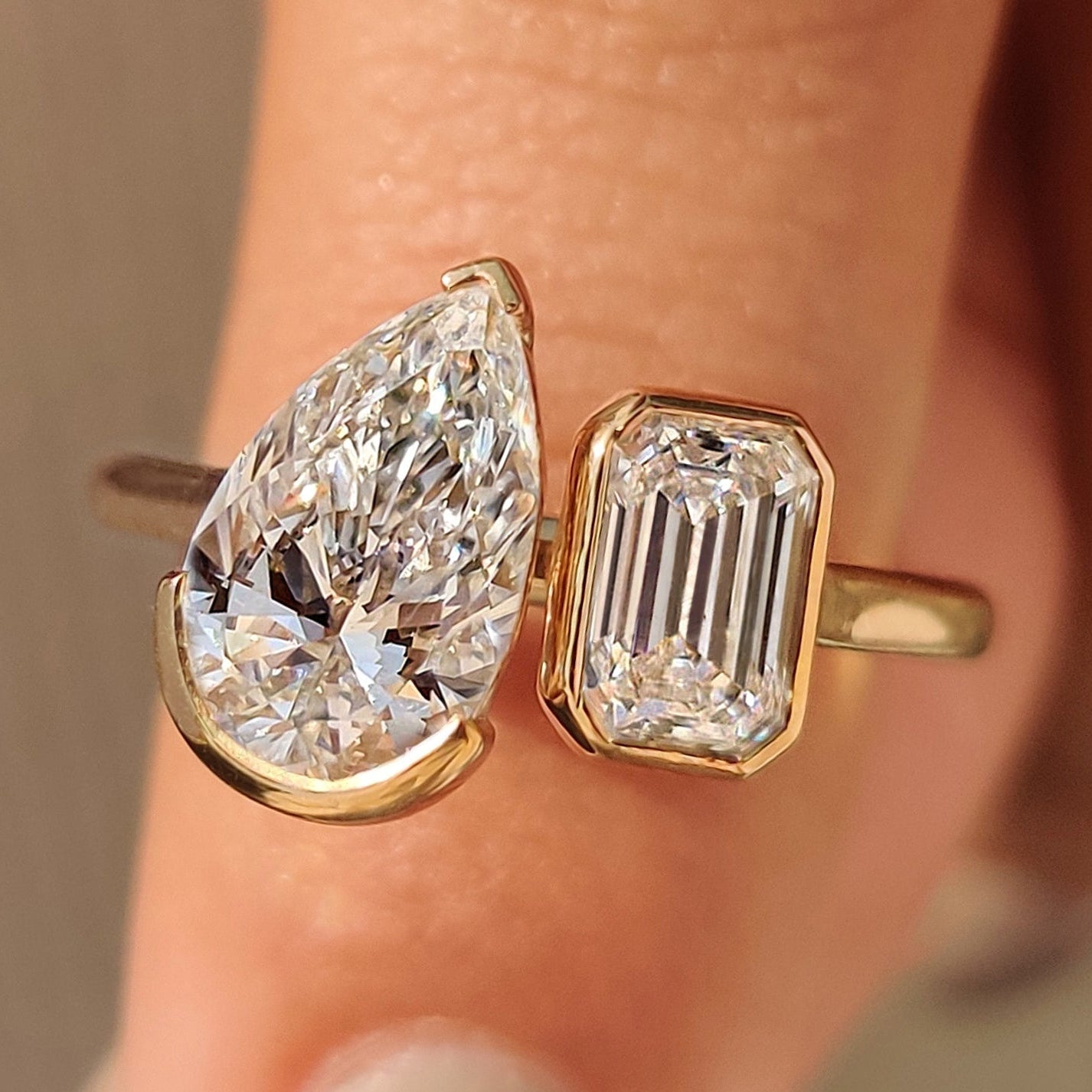
Secure settings are essential because two stones create two points of potential wear. Prongs, bezels or hybrid mountings should protect both gems, especially any pointed ends. Everyday comfort and the ability to wear a wedding band beside the ring should also be considered during design. Lab grown diamonds and colored gemstones give additional options for size, quality, and budget while preserving the two-stone concept.
Check out Toi et Moi engagement rings to see how contemporary designers interpret the style.
Conclusion
Napoleon and Joséphine’s 1796 ring was never intended as a public statement of power. It was a personal object that placed two distinct stones side by side. That simple idea has proved durable. More than two centuries later, the Toi et Moi format continues to appeal to couples who want a ring that visually represents partnership rather than a single dominant stone. The historical example remains the clearest expression of the design’s original form.


