


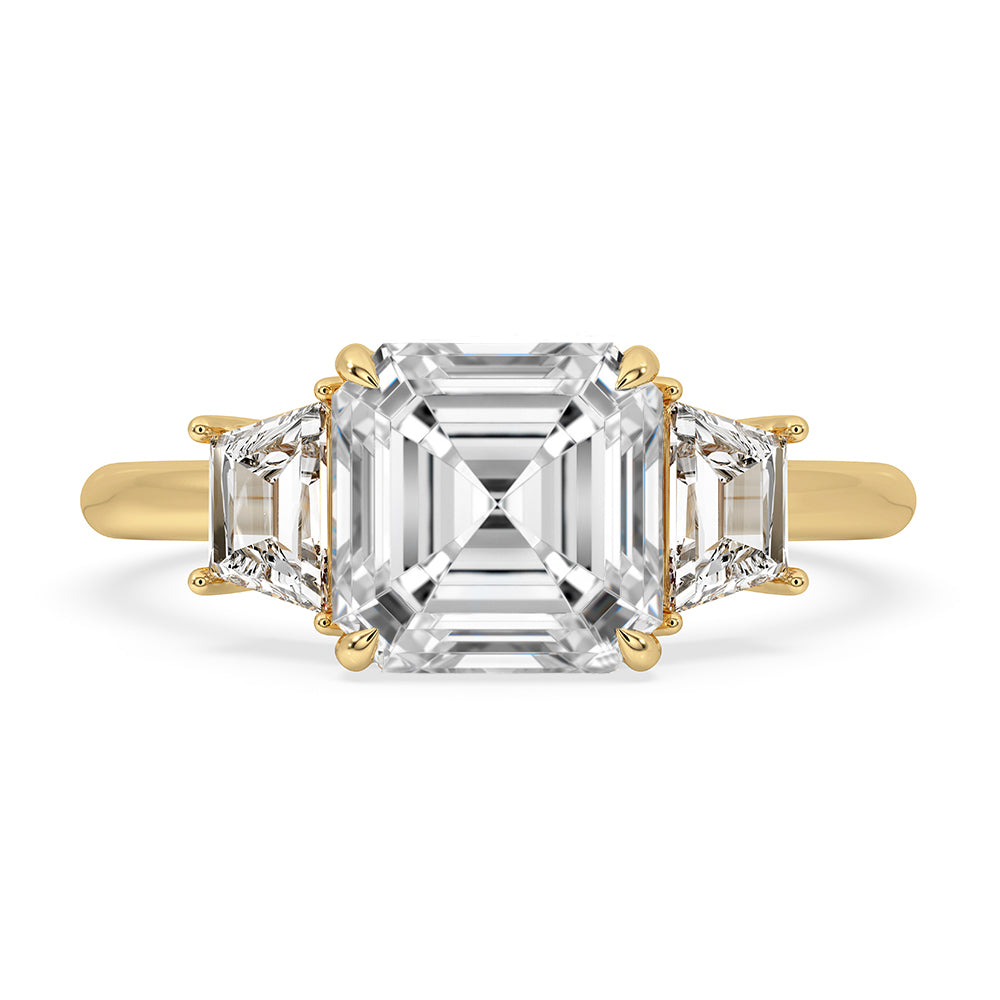
Crisp lines. Vintage charm. A cool, hall-of-mirrors glow. The Asscher cut diamond stands out with its square shape and step-cut facets that create deep, glassy flashes instead of busy sparkle.
An Asscher cut diamond feels elegant, architectural, and quietly confident – perfect for anyone who loves clean design with old-world character.
In this Asscher cut diamond guide, you’ll learn how to choose a beautiful stone, what makes Asscher cut diamond sparkle different, and how to care for your diamond so it stays bright year after year.
What Is an Asscher Cut Diamond?

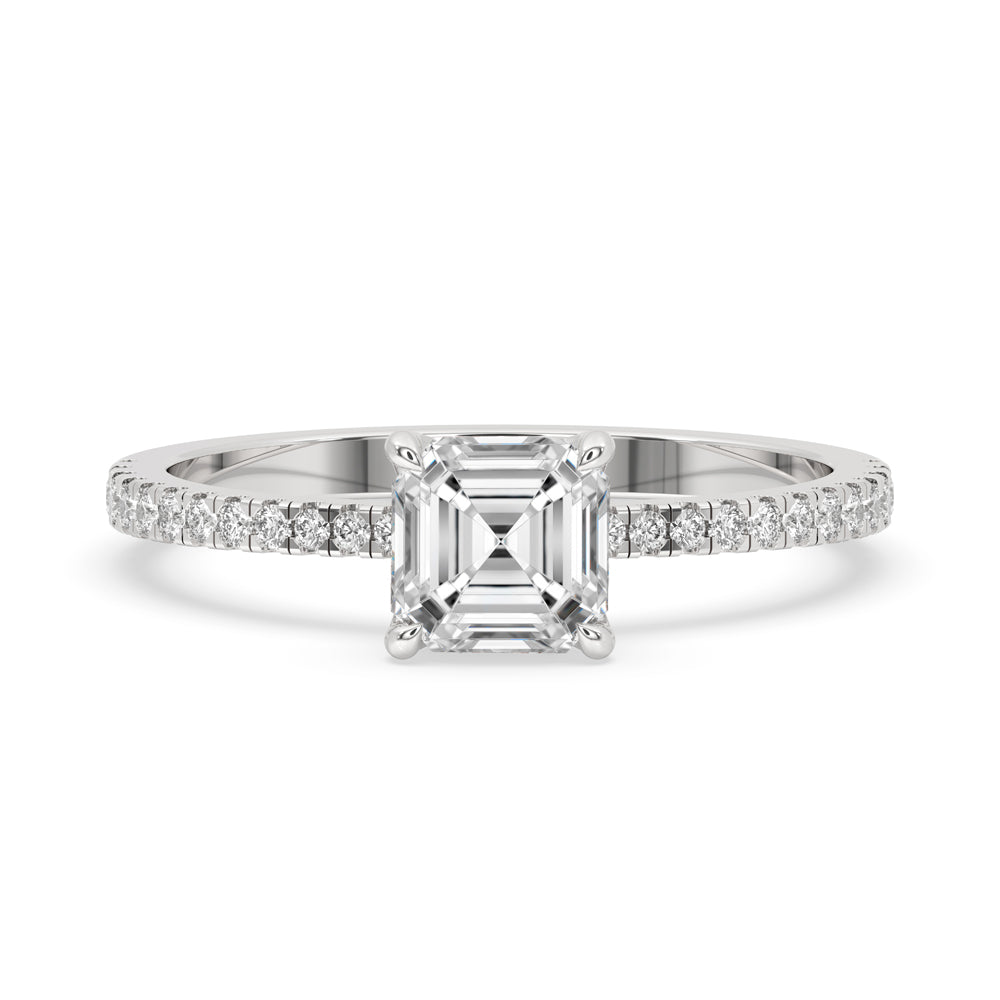
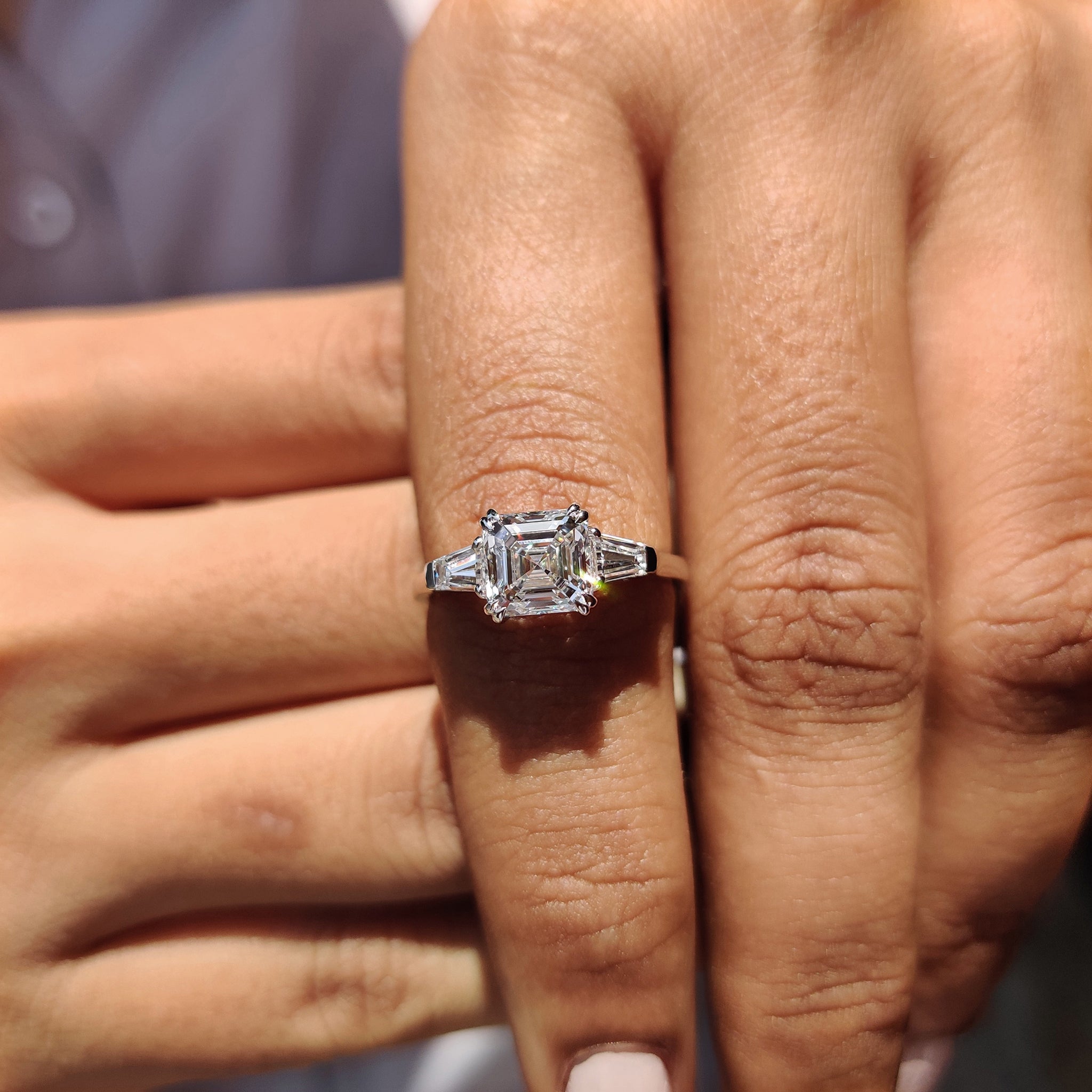
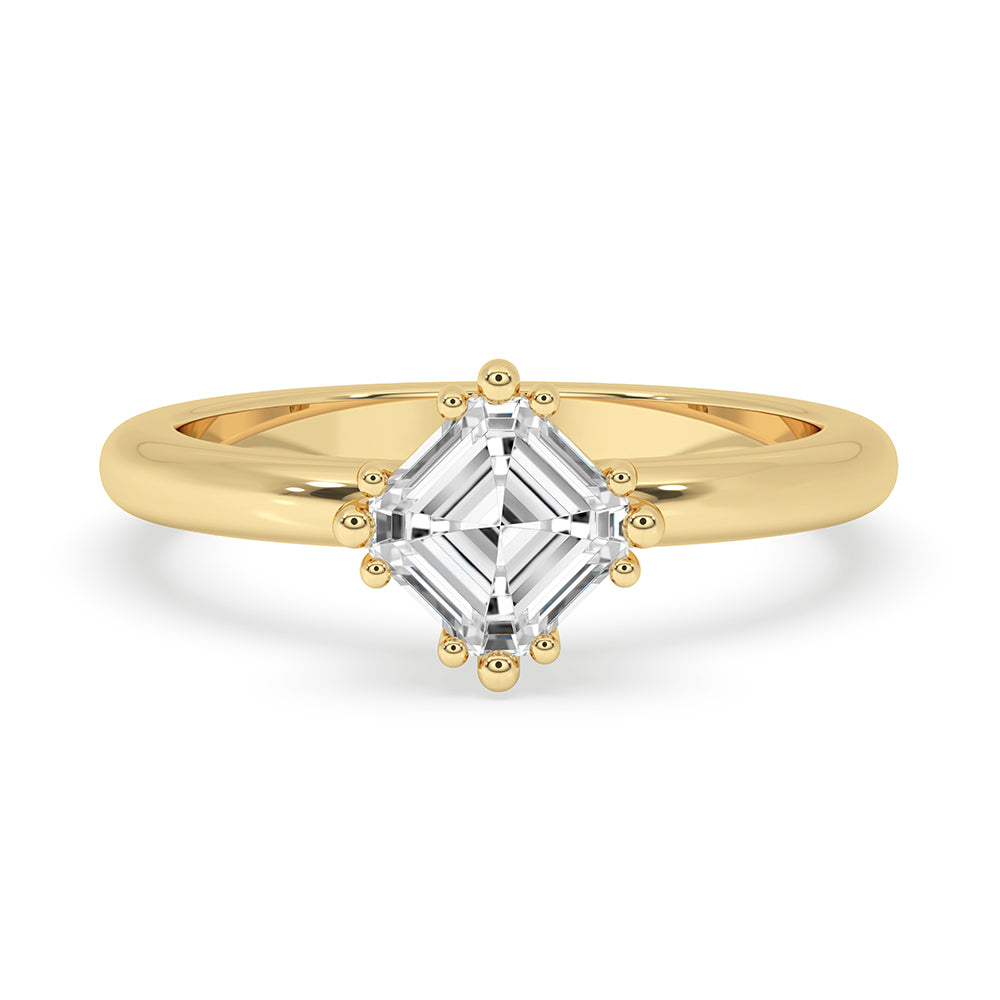
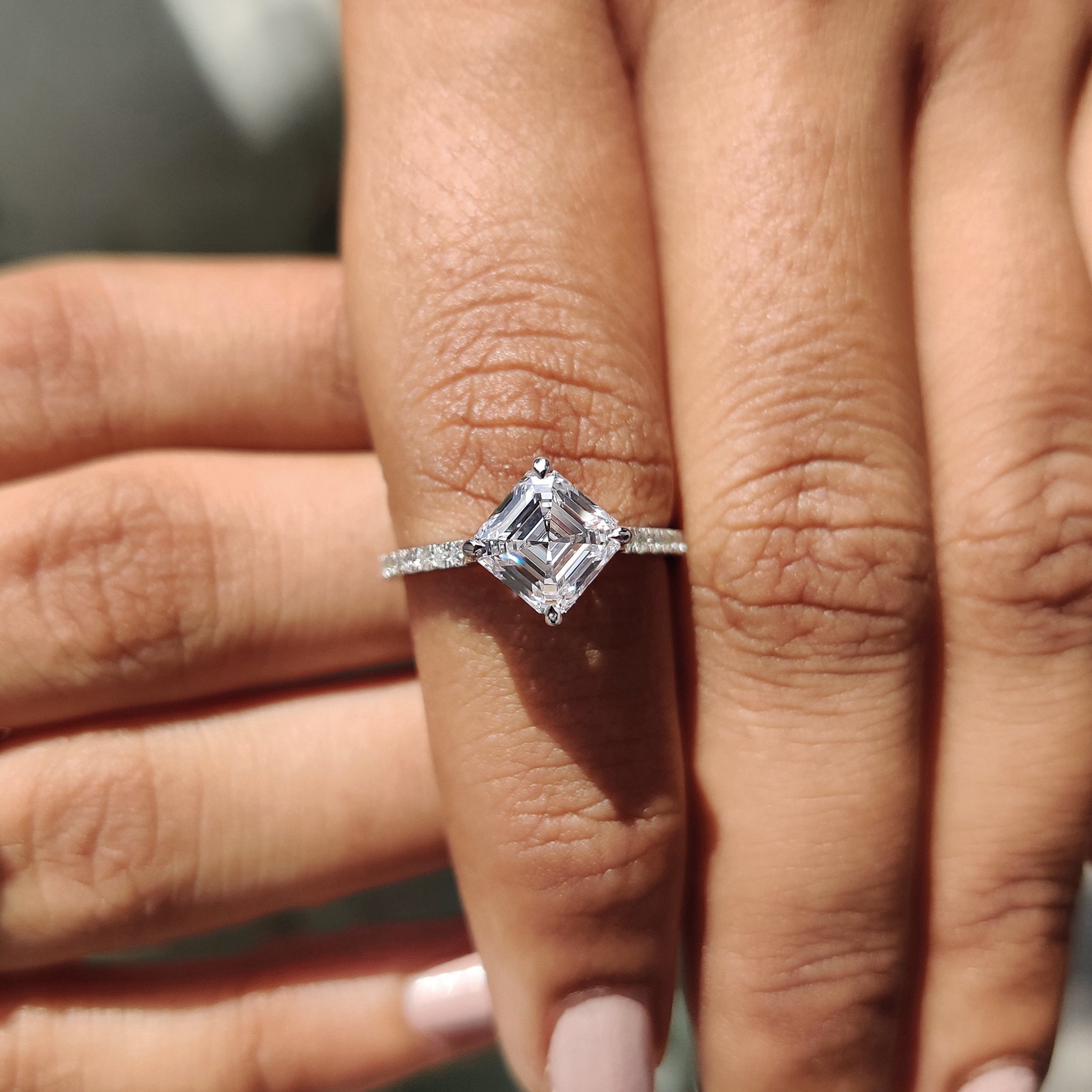
An Asscher cut diamond is a square step-cut diamond with trimmed corners. From the top, it forms an octagon. Its layered facets pull your eyes toward the center, creating a striking “hall of mirrors” effect.
The design came from the Asscher family in the early 1900s. It became popular during the Art Deco period, which favored symmetry and strong lines. That design influence still shows today, which is why many Asscher cut diamond engagement rings have a vintage feel.
Key traits include:
- Square outline with trimmed corners
- Step-cut facets arranged in concentric squares
- High crown and deep pavilion
- Small table compared to many modern cuts
- Clear, mirror-like light pattern
These features make the Asscher cut diamond very different from brilliant cuts like round or princess.
Why People Love Asscher Cut Diamond Engagement Rings
Asscher cut diamond engagement rings appeal to buyers who want elegance over glitter. Instead of many tiny sparkles, an Asscher cut diamond shows broad flashes of light that turn on and off as the ring moves.
Many people choose an Asscher cut diamond because it looks refined, balanced, and distinctive without being flashy.
Reasons buyers choose this shape:
- Distinctive vintage character
- Clean symmetry that looks structured and neat
- An Asscher cut diamond has a bold, architectural presence
- Strong performance in bezel and halo settings
- Eye-catching depth when viewed face-up
This cut often attracts people who like emerald cuts but prefer a square shape.

Asscher Cut Diamond Quality Factors
Because the Asscher cut diamond has open, transparent facets, quality matters a lot. Every detail shows more clearly than in brilliant cuts.
Cut Quality
Cut quality affects how light moves through the stone. A well-cut Asscher shows even brightness and a centered windmill pattern.
Look for:
- Table: 60-68%
- Depth: 60-68%
-
Length-to-width ratio: 1.00-1.05 for a square outline
Avoid stones with a dark center or dull edges. Those signs point to weak proportions.
Clarity
Step cuts act like clear windows. Inclusions stand out easily, even small ones.
For a clean look in an Asscher cut diamond:
- VS1 or VS2 offers strong value with a clean appearance
- SI1 can work if inclusions stay near the corners
- Avoid visible marks in the center
Always view magnified images and videos before buying.

Color
This cut reveals body color more than brilliant cuts. Warmer tones show faster because of the open facet pattern.
Best color ranges:
- D-F for a bright white look
- G-H for balance between appearance and price
- I-J only if set in yellow or rose gold, which can mask warmth
Carat Weight and Face-Up Size
An Asscher cut diamond carries more weight below the surface because of its deep pavilion. That means it looks slightly smaller from above than a round diamond of the same carat weight.
Some buyers choose a slightly higher carat weight to balance that visual size difference.
Now That You Know What to Look For
Put your knowledge into action and explore Asscher cut diamonds that meet ideal cut, clarity, and color standards.
Asscher Cut Diamond vs Other Cuts
| Cut | Shape | Facet Style | Sparkle | Clarity Visibility | Color Visibility | Size Look | Style |
|---|---|---|---|---|---|---|---|
| Asscher | Square, cropped corners | Step cut | Broad flashes | High | High | Smaller face-up | Vintage, geometric |
| Emerald | Rectangular | Step cut | Long flashes | High | High | Larger than Asscher | Sleek, elegant |
| Princess | Square | Brilliant cut | Intense sparkle | Low | Low | Larger appearance | Modern, bold |
| Cushion | Soft square | Mixed brilliant | Soft fiery glow | Medium | Medium | Slightly larger | Romantic, vintage feel |
| Round | Round | Brilliant cut | Maximum brilliance | Low | Very low | True to carat | Classic, timeless |
| Oval | Oval | Brilliant cut | Bright elongated sparkle | Medium | Medium | Appears larger | Elegant slimming look |
| Radiant | Rectangular/square | Brilliant cut | Strong sparkle | Low | Low | Larger appearance | Glamorous, bright |
| Pear | Teardrop | Brilliant cut | Lively sparkle | Medium | Medium | Appears larger | Unique, graceful |
| Marquise | Elongated oval with points | Brilliant cut | Bright sparkle | Medium | Medium | Appears larger | Dramatic, bold |
| Heart | Heart | Brilliant cut | Lively sparkle | Medium | Medium | Slightly smaller | Romantic, symbolic |
If you love Asscher diamonds, don’t miss these other equally stunning diamond cuts.
Marquise | Emerald | Oval | Pear | Round | Cushion | Heart | Radiant | Princess
How to Choose the Right Asscher Cut Diamond

Use this step-by-step checklist while shopping:
Step 1: Check the Shape
• The diamond should look square, not rectangular
• Corners must be evenly trimmed
Tip: Check the length-to-width ratio on the grading report. Aim for 1.00-1.05.
Step 2: Look for the Windmill Pattern
• A clear “X” pattern should appear in the center
• This shows strong symmetry and good cutting
Tip: Watch the 360° video and pause when the diamond faces up to see the pattern clearly.
Step 3: Prioritize Clarity
• Choose VS1 or VS2 clarity for an eye-clean look
• Avoid inclusions in the center of the stone
Tip: Use HD zoom images and review the clarity plot on the certificate.
Step 4: Choose the Right Color
• D-H color grades look bright and near colorless
• Lower grades may show warmth more easily in step cuts
Tip: Compare diamonds side by side and view videos in neutral lighting, not only spotlight lighting.
Step 5: Evaluate Cut Proportions
• Table: 60–68%
• Depth: 60–68%
• Facets should look sharp and balanced
Tip: Read the proportion details on the grading report and watch how light moves in the video.
Step 6: Don’t Judge Only by Carat
• Asscher diamonds look smaller face-up than many other cuts
• Measurements matter just as much as carat weight
Tip: Check the millimeter dimensions listed on the report to understand the real visual size.
Asscher Cut Diamond Pros and Cons

Before choosing this shape, review both sides.
Pros
- Strong vintage character
- Bold geometric pattern
- Elegant, broad flashes of light
- Less common than round or princess cuts
- Great symmetry and structure
Cons
- Shows inclusions more easily
- Reveals color faster than brilliant cuts
- Looks smaller face-up for its carat weight
- Sparkle appears softer than round diamonds
If you love symmetry and clarity, the pros often outweigh the cons.
Best Settings for Asscher Cut Diamonds
The right setting protects the corners and highlights the geometric design.
- Solitaire: A simple design that keeps all attention on the stone’s shape. Corner prongs help keep it secure
- Halo: A border of small diamonds adds extra sparkle and makes the center stone appear bigger. Square halos match the shape beautifully.
-
Three-Stone: Side stones with straight edges complement the center and add a vintage, balanced look.
-
Bezel: A metal rim surrounds the stone for strong protection and a sleek, modern style – great for everyday wear.
-
Pavé Band: Tiny diamonds along the band add shimmer without taking attention away from the center stone. It keeps the design elegant and refined.
-
Cathedral Setting: The band arches upward to hold the stone, giving the ring height and a grand, classic appearance.
-
Vintage / Milgrain Setting: Fine details, engraving, or milgrain edges enhance the old-world charm that pairs beautifully with this step-cut shape.
-
Split Shank: The band divides as it approaches the center, adding finger coverage and making the ring look more elaborate while still balanced.
-
East-West Accent Design: While the center stone stays square, side details or baguette accents placed horizontally create a distinctive, modern twist.
-
Hidden Halo: Small diamonds sit beneath the center stone, adding sparkle from the side view without changing the clean top look.
- Tension-Style Setting: The stone appears suspended between the band for a bold, contemporary feel. Protective corner support is important here.
Metal choice tip: White gold and platinum highlight the crisp lines. Yellow gold gives a warmer, antique touch.
Metal Choice for Asscher Cut Diamond Rings
Metal color and purity both shape the overall personality and durability of an Asscher cut diamond ring. Because this cut features step facets and a hall-of-mirrors effect, the metal you choose can either sharpen its geometry or add warmth and softness.
Silver
Silver has a bright white shine and offers a more affordable option for a cool-toned look. However, it is softer than gold or platinum and can scratch or tarnish over time, so it’s better suited for occasional wear rather than everyday engagement rings.
White Gold
White gold enhances the Asscher cut’s crisp geometry and clean symmetry. Its bright, reflective tone gives the ring a sleek and modern feel while allowing the diamond’s clarity and step facets to stand out.
Yellow Gold
Yellow gold brings warmth and a classic vintage character that pairs beautifully with the Asscher cut’s Art Deco roots. The rich tone creates contrast against the diamond’s structured shape, making the center stone more pronounced.
Rose Gold
Rose gold features a soft blush tone that adds a romantic touch. It gently balances the bold, angular lines of the Asscher cut, creating a unique blend of elegance and warmth.
Platinum
Platinum is a premium choice known for its strength, durability, and naturally white color. It securely holds the diamond and maintains its appearance over time, making it ideal for long-term, everyday wear.
How Metal Color Affects Diamond Appearance
Metal tone can subtly influence how a diamond’s color grade appears. White metals emphasize brightness and clarity, while yellow and rose gold can help near-colorless diamonds appear whiter through contrast.
Frequently Asked Questions
Q: What makes an Asscher cut diamond different from other diamond shapes?
An Asscher cut diamond has a square shape with trimmed corners and step-cut facets arranged in layers. This creates a hall-of-mirrors effect with bold flashes of light instead of the glittery sparkle seen in brilliant cuts like round or princess.
Q: How important is clarity in an Asscher cut diamond?
Clarity matters a lot because the large, open facets make inclusions easier to see. Many buyers choose VS1 or VS2 clarity to keep the diamond looking clean to the naked eye.
Q: Which color grades look best in Asscher cut diamonds?
This cut shows body color more than brilliant shapes. Diamonds in the D to H range usually appear bright and near colorless. Slight warmth may become noticeable in lower grades.
Q: Do Asscher cut diamonds sparkle less than round diamonds?
Yes, but the sparkle looks different rather than weaker. Asscher cut diamonds show larger flashes of light that turn on and off slowly, while round diamonds produce constant glitter.
Q: What is the difference between a Royal Asscher and a standard Asscher cut?
The Royal Asscher cut includes more facets and is branded by the Royal Asscher company. It often shows stronger light performance, but the classic Asscher cut still offers the same square shape and step-cut style.
Q: Can I safely buy an Asscher cut diamond online?
Yes, as long as you review grading reports, high-resolution images, and 360° videos. Checking clarity plots and proportions helps you judge quality before buying.
Q: How should I clean an Asscher cut diamond at home?
Use warm water, mild soap, and a soft brush to remove dirt and oil. Step-cut facets show smudges more easily, so regular gentle cleaning keeps the diamond looking bright.
Q: What carat size works best for an Asscher cut engagement ring?
Many buyers choose slightly higher carat weights to balance the smaller face-up appearance. The best size depends on personal style and budget.
Is the Asscher Cut Diamond Right for You?
This diamond shape suits you if you:
- Love vintage or Art Deco style
- Prefer bold flashes over tiny sparkles
- Notice symmetry and fine detail
- Want a ring that stands apart from common shapes
It may not suit someone who wants the brightest sparkle possible or the largest visual size for the carat weight.
Design a Ring Defined by Asscher Elegance
Let the iconic square silhouette shine in a custom setting tailored to your vision. Vintage geometry, modern artistry.


