

Two engagement rings can look almost identical from the top, yet differ significantly when viewed from the side or underneath. The difference often comes down to how far the small accent diamonds extend around the band. Half pave leaves part of the band in plain metal, while full pave carries the diamonds around the ring. That extra coverage can influence the price, resizing options, cleaning and everyday wear.
This guide compares half pave, full pave, and three-quarter pave so you can understand the trade-offs and choose a setting that suits your style, budget and plans for long-term wear.
Difference Between Half Pave and Full Pave
The distinction is straightforward: half pave places accent diamonds along the top and outer sides of the band, leaving the interior portion plain metal. Full pave extends those accent diamonds all the way around the band, including the underside that rests against the palm side of the finger.
In practical terms, a half pave band has two distinct zones: a diamond-set upper surface and a smooth metal base. A full pave band has a uniform diamond-set surface across its entire circumference. Most shoppers only see the ring from above, so the visual difference during daily wear is often less dramatic than the description suggests. The meaningful differences show up in other areas.
Do Half Pave and Full Pave Rings Look Different on Hand?
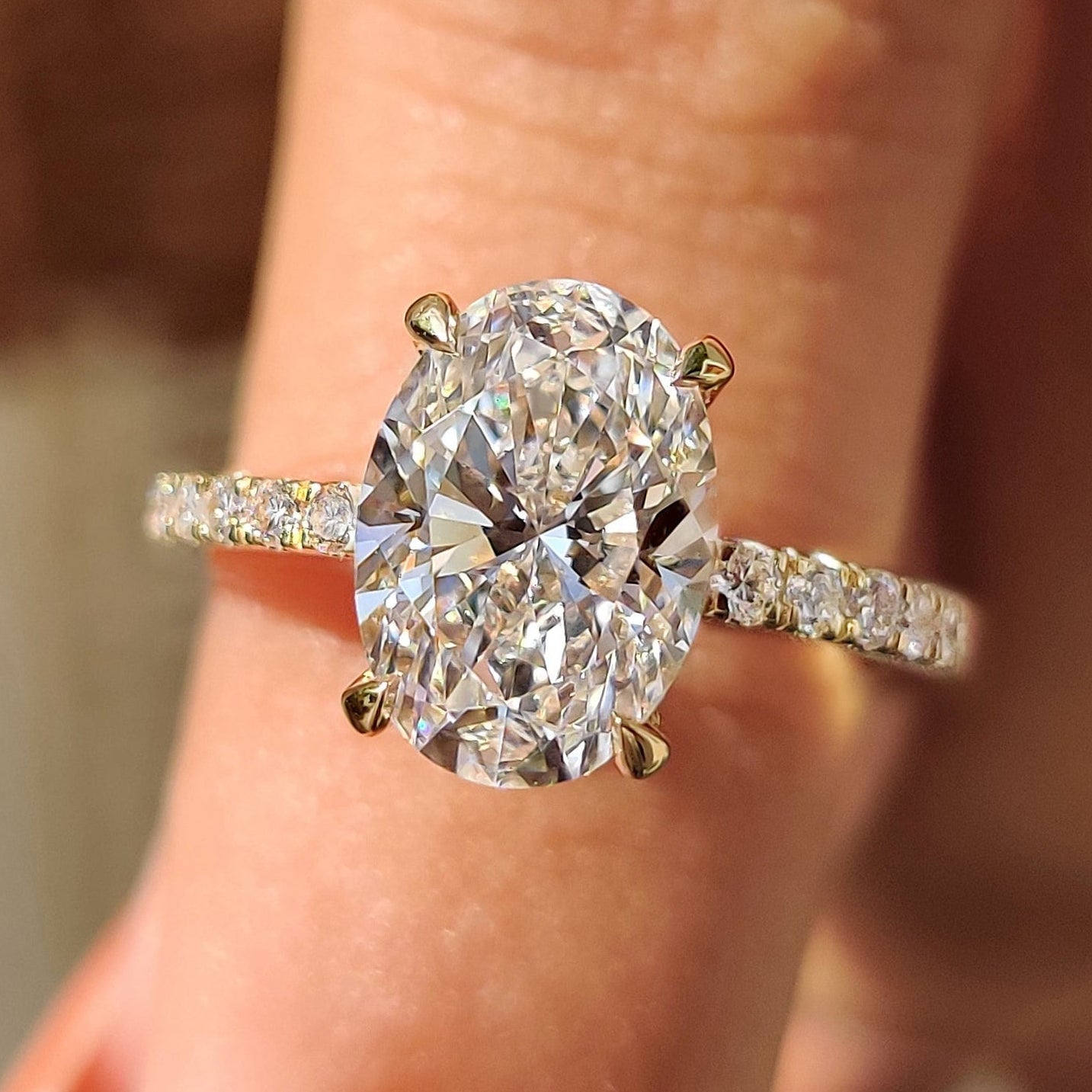
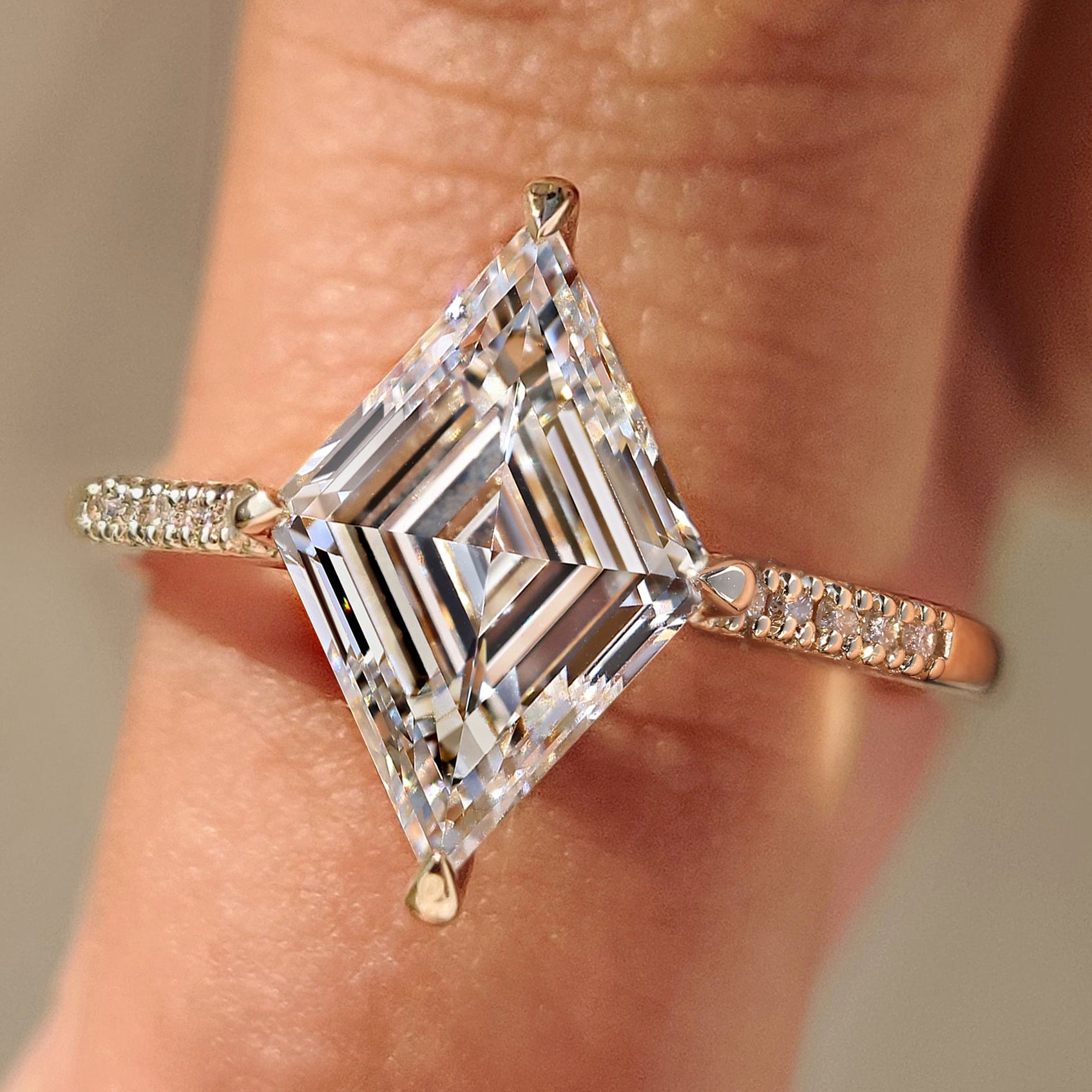
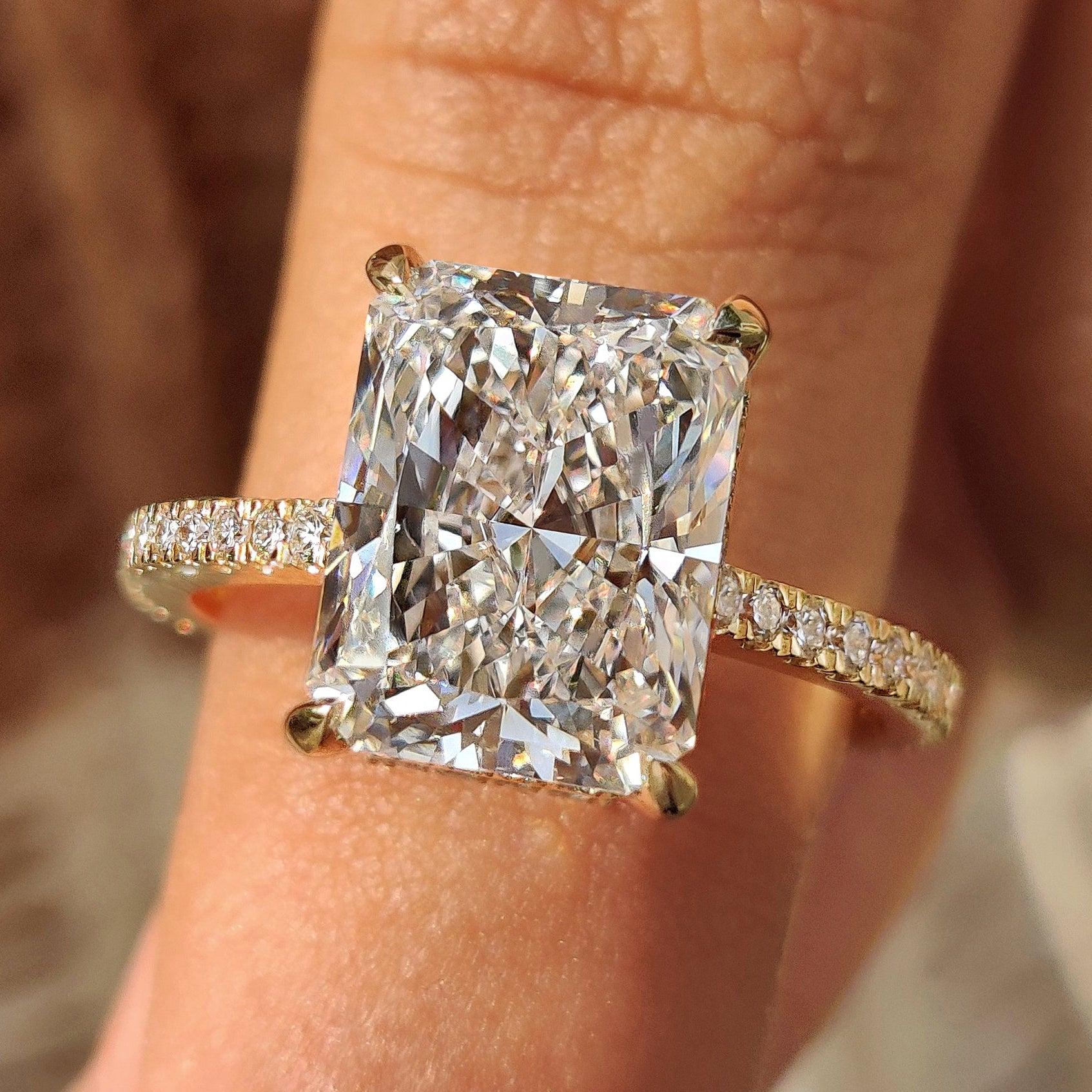
From directly above, half pave and full pave rings can look nearly the same. Both display accent diamonds along the visible upper band, and the density, stone size, and setting style matter more to the overall sparkle than whether the underside is covered.
The visual difference is more apparent when the ring is removed and examined from all sides. Full pave has a more complete, continuous diamond coverage when the ring is held up to the light. Some buyers find that quality compelling – a ring that looks finished from every angle. Others have no preference because that part of the ring is rarely visible when worn.
The setting style also plays a role. French pave, micro pave, and standard pave each create slightly different textures and light patterns regardless of whether coverage is half or full. For a deeper look at how accent diamond quality and setting style affect a pave ring’s appearance, Check out our guide on Pave Diamonds and Clarity covers those details directly.
Half Pave vs Full Pave: Cost Difference
Full pave rings generally cost more than half pave rings of the same design. The reason is straightforward: more accent diamonds and more setting labor. A full pave band requires additional stones to cover the underside, plus the skilled work of setting them precisely and securely.
How much more depends on the band width, accent diamond size, total stone count, and the complexity of the setting. The difference is real but not uniform. A narrow full pave band with very small accent stones may cost more than a half modestly pave equivalent. A wide, full pave band with larger stones can carry a significantly higher price.
The tradeoff worth considering: most of the cost difference goes toward coverage that is not visible during normal wear. Whether that investment makes sense is a personal decision, not a universal answer.
Can Half Pave and Full Pave Rings Be Resized?
This is one of the more practical differences between the two settings, and it deserves honest treatment.
A half pave band has a plain metal section on the underside. That section gives a jeweler a workable area to cut, remove, or add metal during a resizing. It does not guarantee easy resizing; the result also depends on the band’s thickness, the metal, the ring’s overall construction, and how significant the size change needs to be, but the plain section generally makes the process more straightforward.
A full pave band has accent diamonds across the entire circumference. That means any resizing work involves the diamond-set area, which increases complexity. Some full pave rings can be resized by a skilled jeweler with experience in pave work. Others may require removing and resetting stones. A few designs make resizing very difficult regardless of the jeweler’s skill.
If you expect your ring size to change over time, whether due to pregnancy, temperature shifts, or weight changes, half pave offers more flexibility. Before purchasing any pave ring, asking the jeweler about their specific resizing approach for that design is a sensible step. Check out our pave engagement rings collection to compare half pave and full pave designs across multiple settings and center-stone shapes.
Comfort and Everyday Wear
Comfort comes down to individual preference and ring construction rather than a clear advantage for either setting.
Some wearers find the plain interior of a half pave band smooth and comfortable, particularly for people who are active throughout the day or who notice the band against their palm. Others wear full pave rings daily without any comfort issue because the small accent diamonds, when set properly, sit within the metal surface rather than protruding above it.
Construction quality matters more than the pave type. A well-made full pave ring with properly set stones sits as comfortably as a half pave ring. A poorly made ring of either type can create snag points, irritation or discomfort. Looking at the setting closely or asking about the setting profile before purchase is more useful than assuming one type is automatically more comfortable.
Cleaning and Maintenance
Both half pave and full pave rings benefit from the same basic care approach.
Gentle cleaning with warm water and a soft brush removes everyday buildup that can dull the appearance of accent diamonds. Residue from lotions, soaps, and cosmetics tends to collect between the small stones and reduces sparkle over time. Regular cleaning, even just rinsing with warm water after washing your hands, makes a noticeable difference.
The more important maintenance step is checking for loose accent stones. Small pave diamonds are held by tiny beads or prongs that can wear down with use. If a stone moves even slightly in its setting, take the ring to a jeweler before the stone falls out. Full pave rings have more stones and more setting contacts to maintain, which means there are more points to monitor.
Professional inspection by a qualified jeweler helps catch problems early. The ring’s construction and how often the wearer uses it determine the frequency. Any time you notice a stone that looks different or a setting that feels rough, treat that as a prompt for inspection rather than waiting for a scheduled appointment.
Half Pave vs Full Pave vs Three-Quarter Pave
| Comparison | Half Pave | Three-Quarter Pave | Full Pave |
|---|---|---|---|
| Diamond coverage | Around half the band | Around three-quarters of the band | Around the entire band |
| Appearance | More plain metal underneath | More diamond coverage around the sides | Diamonds continue around the underside |
| Cost | May cost less | Often falls between the two | May cost more due to additional diamonds and setting work |
| Resizing | Generally more flexibility | Depends on the remaining plain-metal section | Can be more complicated |
| Maintenance | Checks needed for set diamonds | More diamond-set area to inspect | Diamonds need checking around the full band |
| Best for | Sparkle with more plain metal | A balance of coverage and flexibility | Continuous diamond detail |
Which Pave Setting Should You Choose?
The right choice depends on what you prioritize.
Choose half pave if:
- Resizing flexibility matters to you now or in the future
- You prefer a smooth inner band surface
- You want to keep the accent diamond budget focused on what is most visible
- The engagement ring will be worn with an active lifestyle
Choose full pave if:
- You want consistent diamond coverage visible from all angles
- Ring size stability is not a concern
- The design includes a full pave look that the ring’s overall aesthetic depends on
- You prefer the finished look of complete coverage
Consider three-quarter pave if:
- You want more sparkle presence than half pave provides
- You want some resizing flexibility preserved
- You find the full pave cost or maintenance considerations too significant
Before you buy, check:
- Whether the specific ring can be resized and by how much
- Where the accent diamonds end on the band (ask for interior images if buying online)
- The setting style: micro pave, French pave, standard pave
- The accent diamond size and approximate total stone count
- The band width and how it will sit alongside your intended wedding band
If you are still deciding whether pave is the right style overall, Solitaire vs Pave Comparison covers that broader choice, which is a different question from half vs full coverage.
Conclusion
Half pave and full pave rings look nearly the same during daily wear. The practical differences in resizing, cost, and maintenance are real but manageable with the right information. Half pave gives you more flexibility; full pave gives you complete coverage. Three-quarter pave sits between them for buyers who want both qualities without fully committing to either.
The best setting is the one that matches how you actually live with the ring, not just how it looks in a photograph.


