

If you love diamonds with personality, history, and a glow that feels more candlelight than spotlight, you’ll love the old mine cut diamond.
This guide explains everything you need to know, from its origin and shape to its pros, cons, and how it compares to modern cuts. Whether you’re shopping for an old mine cut diamond engagement ring or just researching antique diamonds, you’ll find clear, fact-based answers here.
Let’s start with the basics:
Old Mine Cut Diamond
An old mine cut diamond is a hand-cut diamond style that dates from the early 18th century through the late 19th century. Jewelers cut these stones long before modern machines and lasers existed. They shaped each one by hand, using simple tools and natural light.

This cut became popular during the Georgian and Victorian eras. It later evolved into the old European cut, which eventually led to today’s round brilliant.
In simple terms, the old mine cut is the great-grandparent of modern round diamonds.
Key Characteristics of an Old Mine Cut Diamond
You can recognize an old mine cut by its distinctive features:
- Cushion-like outline (slightly rounded square shape)
- High crown (the top portion above the girdle)
- Small table (the flat top facet)
- Deep pavilion (bottom portion)
- Large open culet (visible facet at the bottom)
- 58 facets (similar count to modern brilliant cuts, but arranged differently)
These diamonds sparkle differently. Instead of sharp, white brilliance, they produce a softer glow with larger flashes of light. Many people describe it as romantic or candlelit.
That glow is not a flaw. It reflects the cutting style and the lighting conditions of the era. Jewelers designed these stones to shine under candles, not LED showroom lights.
Why Old Mine Cut Diamonds Look Different
Modern diamonds aim for maximum brilliance and fire using precise angles. Laboratories and research institutions such as the Gemological Institute of America (GIA) have studied how light interacts with diamond facets. Today’s cuts follow strict proportion guidelines.
Old mine cuts do not follow those modern standards. Cutters prioritized weight retention and worked with the natural shape of the rough diamond.
That’s why:
- The table appears smaller.
- The crown sits higher.
- The culet looks larger.
- The symmetry may feel slightly irregular.
Those differences create bold flashes instead of pinfire sparkle. Some people prefer that vintage personality over modern uniformity.
Old Mine Cut Diamond Engagement Ring: Why It’s Trending
Vintage engagement rings continue to gain popularity. Many couples now want something meaningful rather than mass-produced.
An old mine cut diamond engagement ring offers:
- Historical character
- Unique facet patterns
- Handcrafted charm
- Sustainability through reuse

Photo: Taylor Swift and Travis Kelce/Instagram
Choosing an antique diamond also supports sustainable jewelry practices. When you reuse a historic stone, you avoid new mining.
Old mine cut diamonds have been around for centuries, but they're seeing renewed interest. Reports about Taylor Swift's engagement ring have introduced this antique diamond cut to many first-time buyers, making it one of the most talked-about vintage-inspired engagement ring styles today.
That’s a logical bonus. You get beauty and reduce environmental impact.
Old Mine Cut Diamond vs Other Cuts
Buyers often compare antique cuts with modern styles. Let’s break it down clearly.

Old Mine Cut vs Round Brilliant
The round brilliant dominates today’s market. It maximizes brilliance and sparkle through precise angles.
| Feature | Old Mine Cut | Round Brilliant Cut |
|---|---|---|
| Overall Shape | Cushion-like with rounded corners | Perfectly round and symmetrical |
| Sparkle Style | Soft, warm, candlelight-like sparkle | Bright, intense brilliance and fire |
| Facet Pattern | Large, hand-cut facets | Precision-cut facets optimized for light |
| Light Performance | Romantic glow with less light return | Maximum light return and sparkle |
| Historical Style | Antique cut from the 18th–19th century | Modern cut developed for ideal brilliance |
| Overall Look | Vintage, unique, and character-rich | Clean, classic, and highly symmetrical |
| Best For | Vintage-inspired engagement rings and collectors | Everyday wear and modern engagement rings |
Differences:
- Round brilliant: bright white sparkle, precise symmetry
- Old mine cut: softer glow, visible culet, cushion outline
If you want maximum sparkle, choose modern. If you want personality and romance, choose old mine.
Old Mine Cut vs Old European Cut
The old European cut developed after the old mine cut.
| Feature | Old Mine Cut | Old European Cut |
|---|---|---|
| Overall Shape | Cushion-shaped with softly rounded corners | Perfectly round shape |
| Sparkle Style | Soft, warm, candlelight-like sparkle | Brighter, more balanced sparkle |
| Facet Pattern | Large, hand-cut facets with an open culet | Symmetrical hand-cut facets with an open culet |
| Light Performance | Gentle glow with broader flashes of light | Better light return and increased brilliance |
| Historical Style | Popular during the Georgian and Victorian eras | Popular during the Edwardian and Art Deco eras |
| Overall Look | Rustic, vintage, and full of character | Refined vintage appearance with improved symmetry |
| Best For | Antique-inspired rings and vintage jewelry lovers | Classic vintage engagement rings with more sparkle |
Main differences:
- Old European: round shape
- Old mine: cushion shape
- Both: high crowns and small tables
- Old European: slightly improved symmetry
Think of the old European cut as a transitional upgrade.
Old Mine Cut vs Cushion Cut
This comparison often confuses buyers.
| Feature | Old Mine Cut | Cushion Cut |
|---|---|---|
| Overall Shape | Cushion-shaped with softly rounded corners | Cushion-shaped with modern proportions |
| Sparkle Style | Soft, warm, candlelight-like sparkle | Bright, lively sparkle with more brilliance |
| Facet Pattern | Large, hand-cut facets with an open culet | Precision-cut facets, typically without an open culet |
| Light Performance | Gentle glow with broad flashes of light | Higher light return and stronger brilliance |
| Historical Style | Antique cut from the 18th–19th century | Modern evolution of the Old Mine Cut |
| Overall Look | Rustic, vintage, and full of character | Clean, refined, and contemporary |
| Best For | Vintage-inspired engagement rings and antique jewelry | Modern engagement rings with a classic cushion shape |
Modern cushion cuts may look similar in outline. However, their facet patterns differ significantly.
Modern cushion cuts:
- Often have larger tables
- Use modified brilliant facet patterns
- Focus on modern light performance
Old mine cuts:
- Show chunkier facets
- Feature larger culets
- Offer antique personality
Not every cushion is an old mine cut. Always check the facet structure and certification.
Pros and Cons of Old Mine Cut Diamond
No diamond cut suits everyone. Let’s look at honest advantages and disadvantages.
Pros
- Unique Appearance: No two stones look identical. Each old mine cut carries subtle differences in symmetry and facet alignment.
- Vintage Charm: These diamonds reflect 18th and 19th century craftsmanship.
- Softer Light Performance: Many buyers prefer bold flashes over modern sparkle.
- Sustainability: Reusing antique diamonds reduces demand for new mining.
- Rarity: These stones are no longer mass-produced.
Cons
- Less Brilliance: Modern cuts outperform old mine cuts in measured brilliance.
- Harder to Find: You cannot walk into every jewelry store and find one.
- Pricing Can Vary: Rarity sometimes increases price. Condition also matters.
- May Show Color More Easily: The open culet and larger facets can reveal body color more clearly.
Understanding these pros and cons helps you decide logically, not emotionally.
How to Identify a Genuine Old Mine Cut Diamond
Buyers should verify authenticity carefully.
Look for:
- Cushion outline
- High crown
- Small table (typically under modern proportions)
- Visible culet
- Chunky facets

Ask for grading from reputable labs like GIA. While not all antique stones carry certification, documentation helps confirm authenticity and quality.
Also inspect the setting. Many old mine cut diamonds sit in Georgian, Victorian, or Edwardian mountings.
Are Old Mine Cut Diamonds Valuable?
Value depends on several factors:
- Carat weight
- Color grade
- Clarity grade
- Cut quality (within antique standards)
- Condition (chips, abrasions)
- Provenance
Antique diamonds do not automatically cost more than modern stones. However, high-quality examples in good condition can command strong prices due to rarity.
Market demand also influences pricing.
Best Settings for an Old Mine Cut Diamond Engagement Ring
These diamonds shine in vintage-inspired settings.
Popular choices include:
Solitaire with delicate prongs
A simple solitaire allows the diamond’s distinctive shape and bold flashes of light to take center stage. Slim prongs keep the look refined while securing the stone beautifully.
Halo with milgrain detail
A halo of smaller diamonds adds presence without distracting from the center stone. Milgrain edging – tiny bead-like detailing – enhances the vintage feel and pairs perfectly with the old-world character of the cut.
Victorian-style cluster settings
Inspired by 19th-century design, cluster settings surround the center stone with complementary diamonds, creating a romantic, heirloom aesthetic.
Yellow gold or rose gold bands
Yellow gold beautifully complements the warmer tones often found in antique diamonds, enhancing their soft glow. Rose gold adds a romantic warmth that feels especially authentic to vintage styling.
Platinum
For those who prefer contrast, platinum offers a cool-toned backdrop that can make the diamond’s warmth stand out even more while providing exceptional durability.
Yellow gold complements the warmer tones often found in antique diamonds.
Platinum also works well if you want contrast.
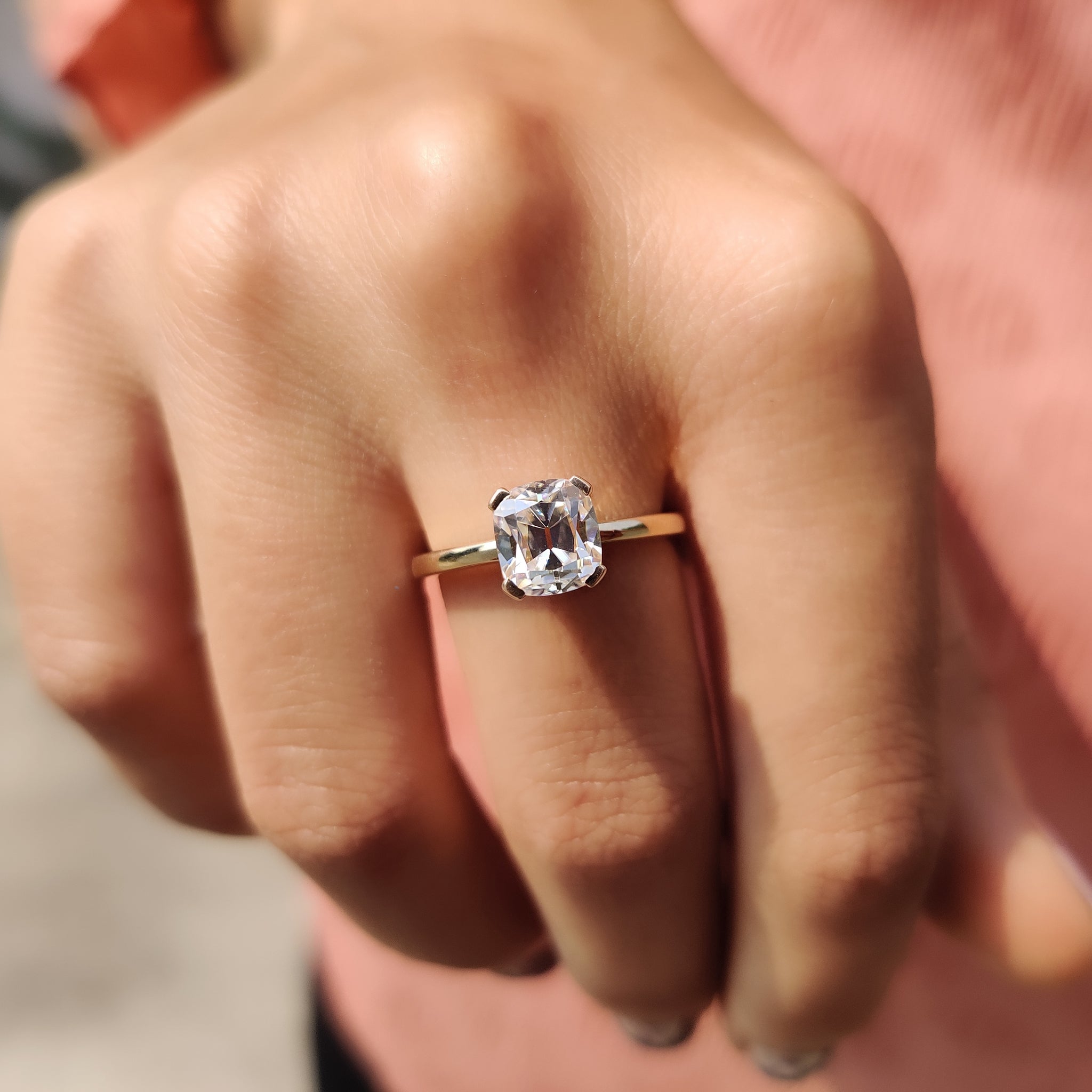
Cushion Old Mine Cut Solitaire Engagement Ring
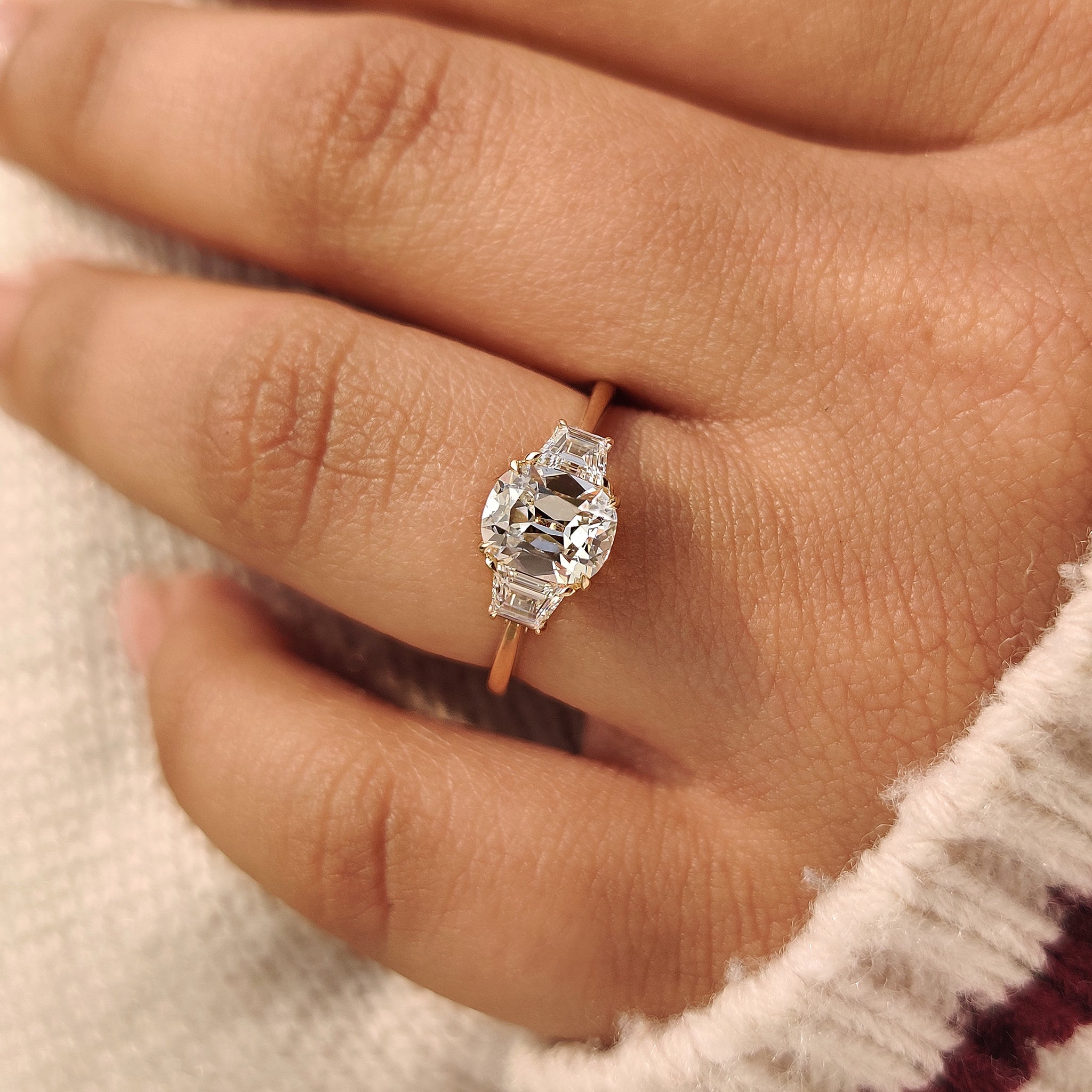
Old Mine Cushion Cut Diamond Ring with Trapezoid Side Stones
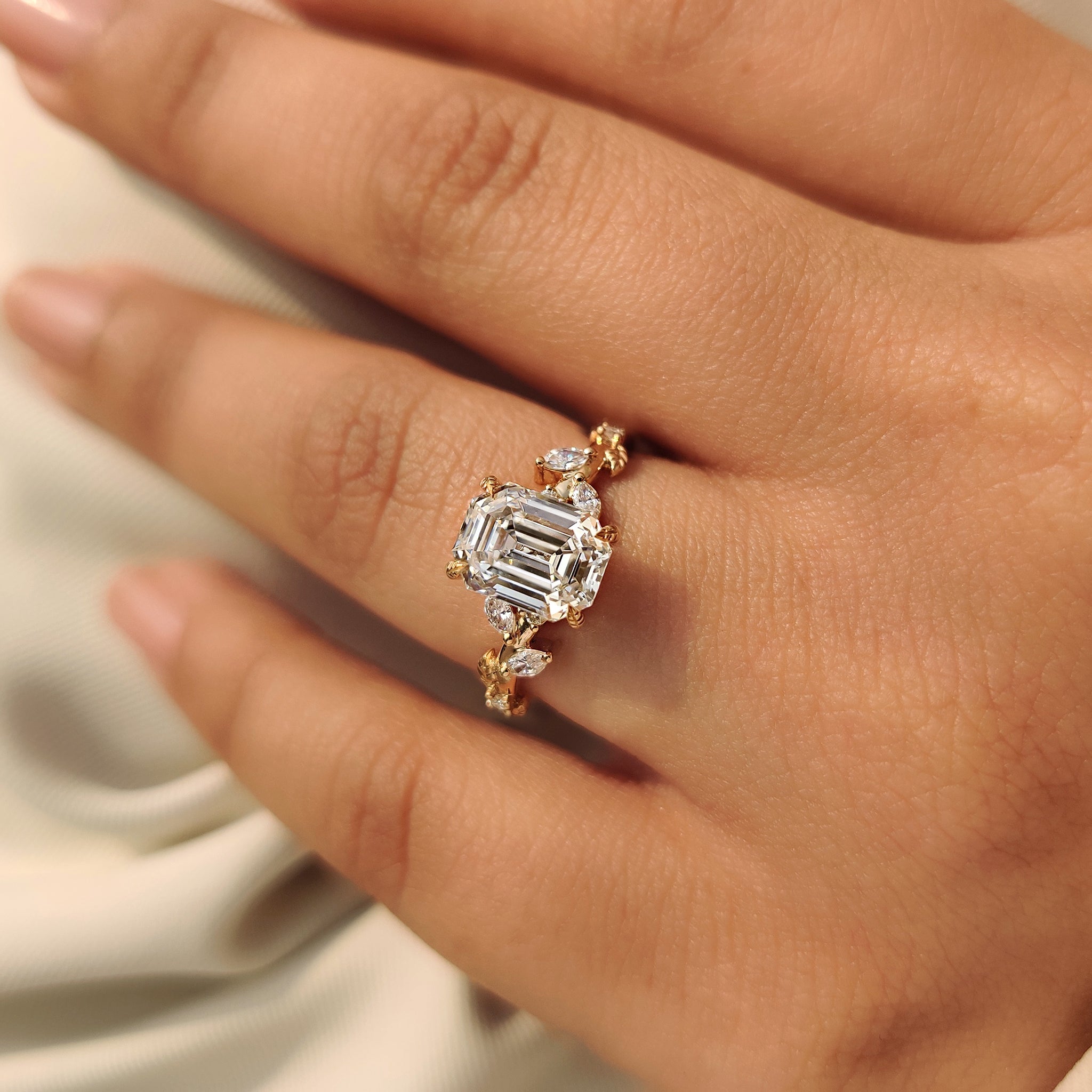
Old Mine Emerald Cut Nature Inspired Ring in Leaf Style Prong
Should You Choose an Old Mine Cut Diamond?
Ask yourself a few questions:
- Do you love vintage aesthetics?
- Do you prefer bold flashes over intense sparkle?
- Do you value history and craftsmanship?
- Do you want something rare?
If you answered yes, an old mine cut diamond might suit you perfectly.
If you want maximum brilliance and perfect symmetry, modern cuts may satisfy you more.
Final Thoughts: Is an Old Mine Cut Diamond Right for You?
An old mine cut diamond carries something modern stones cannot manufacture – history. Skilled hands shaped it centuries ago, long before precision machines and laser mapping entered the scene. Each facet reflects craftsmanship, not algorithms.
This cut does not chase maximum brilliance. It offers depth, warmth, and bold flashes of light that feel intimate rather than electric. Think candlelight instead of camera flash.
And let’s be honest. A diamond that has already lasted for two centuries has proven its durability. That kind of legacy speaks for itself.
Turn Old Mine Brilliance into a Future Heirloom
Celebrate the warm brilliance of an Old Mine cut diamond in a custom setting designed to feel authentically vintage.


