

Tension setting engagement rings are known for their sleek, modern look, but many buyers wonder if they’re actually safe for everyday wear. Unlike traditional prong settings, tension rings hold the diamond in place using pressure from the metal band, creating a stunning “floating” effect. While this design offers maximum sparkle and a minimalist style, it also raises important questions about durability, resizing, and long-term security.
Here, we’ll break down the pros, cons, and expert advice you need to decide whether a tension setting engagement ring is the right choice for you.
How a Tension Setting Actually Works

A tension setting holds the center stone using compression pressure from the ring's metal band rather than prongs or a bezel. The stone sits in precisely cut grooves on both sides of the shank, and the band squeezes it in place with up to 12,000 pounds of pressure per square inch.
The process is computer-calibrated. Each setting is custom-built around the exact specifications of the chosen stone. The placement, depth, and width of the grooves are all calculated to distribute pressure evenly without fracturing the gem. This is why tension settings cannot be made ahead of time. The ring is built specifically for the stone and the wearer's finger size simultaneously.
The result is a diamond that appears to float in midair, with nothing visibly holding it in place.
Are Tension Setting Engagement Rings Truly Safe?
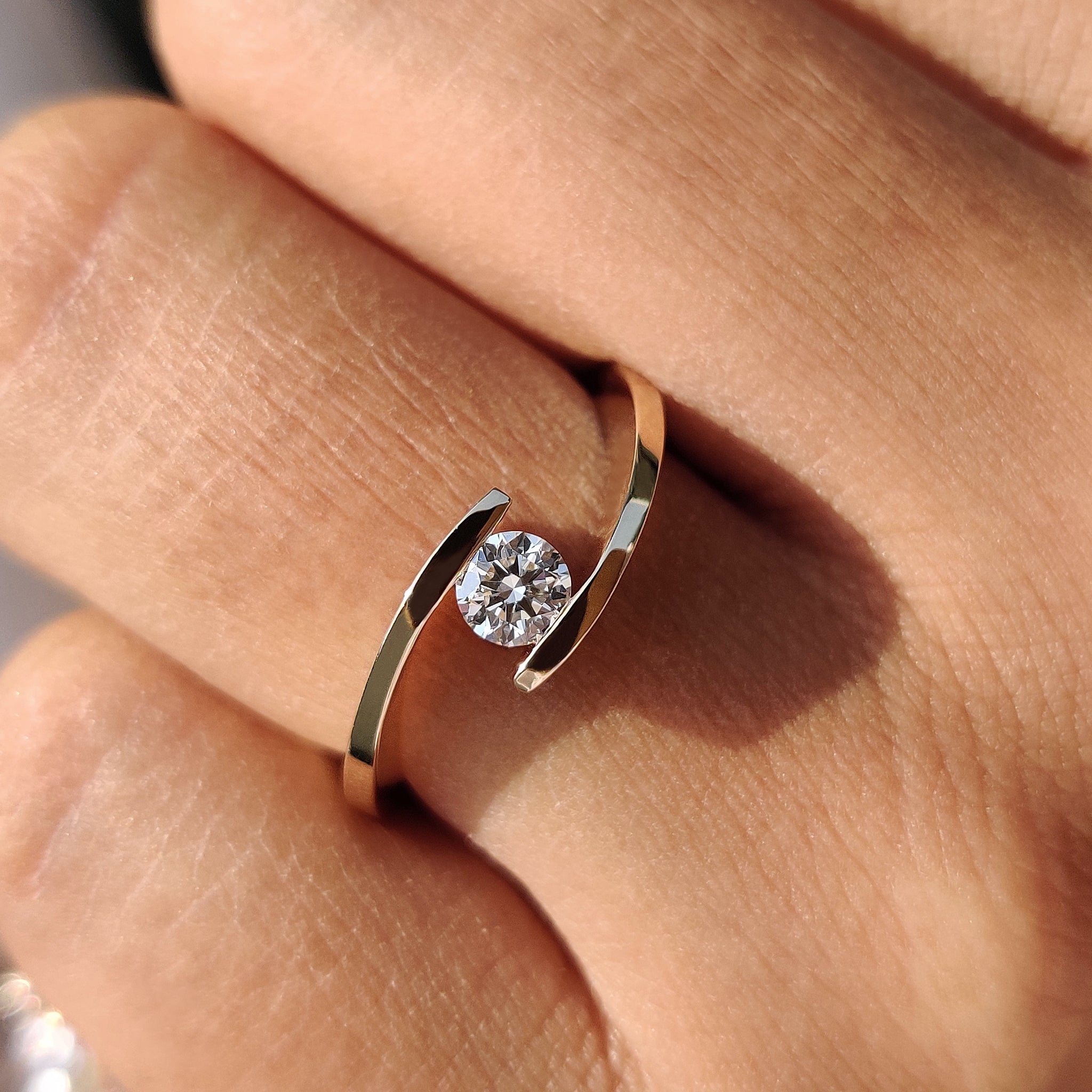
Bypass Diamond Ring In Round Cut Solitaire Design
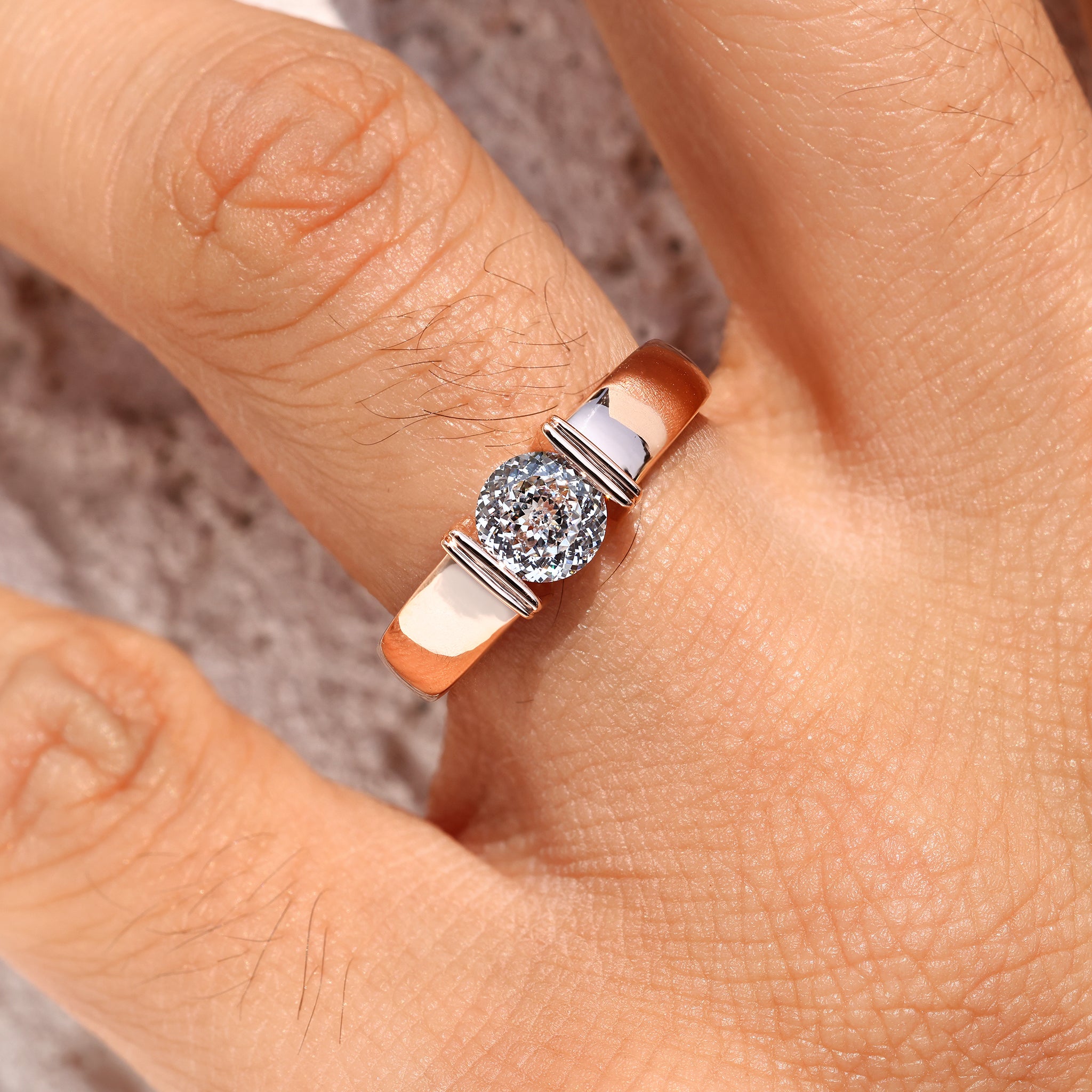
Tension Set Portuguese Cut Men's Solitaire Ring
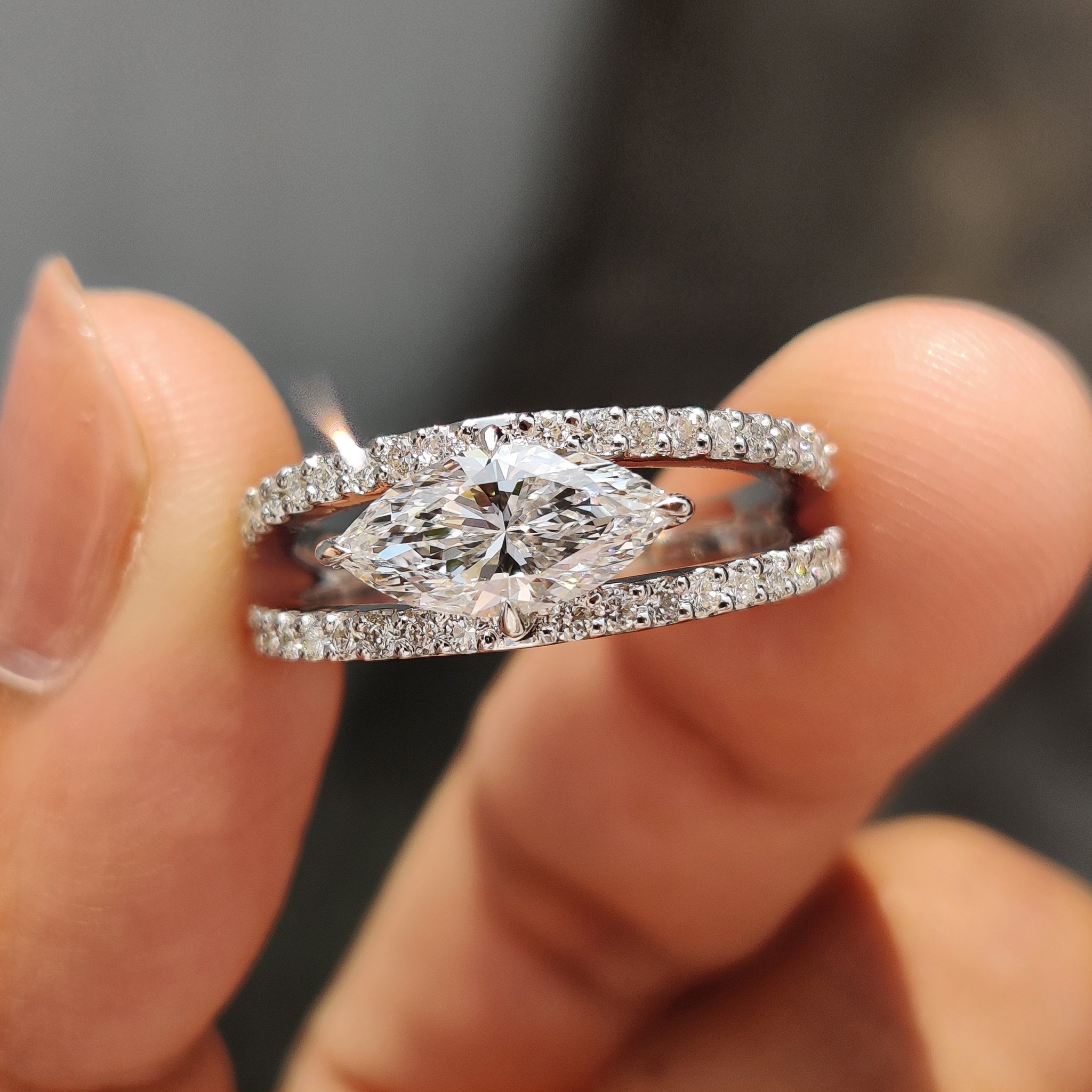
East West Marquise Engagement Ring In Split Shank Style
Yes, with the right craftsmanship and the right stone, a tension setting is secure. The stone has virtually no risk of falling out under normal daily conditions. The pressure holding it in place is significant, and the setting itself, when made by an experienced jeweler using quality metal, does not weaken with regular wear.
That said, the GIA notes that a tension setting "may be a riskier choice for an engagement ring" compared to prong or bezel styles. The concern is not everyday wear; it's extreme impact. A hard strike from an unusual angle, a significant fall, or heavy-duty work with bare hands could theoretically compromise the setting's grip. This does not mean the ring is fragile. It means the setting has less mechanical redundancy than a prong setting, where multiple metal arms each independently hold the stone.
The safety question is better framed as "safe for whom and in what conditions?"
The Real Pros of a Tension Setting
Tension settings offer benefits that no other ring style replicates.
Exceptional brilliance. With no metal covering the top or bottom of the stone, light passes through the diamond from almost every angle. This maximizes fire and sparkle in a way that enclosed settings simply cannot.
Minimal maintenance. Prong settings require regular checks and tightening, since prongs gradually loosen with wear. A tension setting has no prongs to maintain. The stone is either held securely or it is not; there is no gradual deterioration of the mechanism.
Unmistakably modern design. The floating stone aesthetic is clean, architectural, and genuinely distinctive. For buyers who want an engagement ring that looks different from everything else on the market, tension settings achieve that without relying on excessive embellishment.
Custom by nature. Every tension ring is built from scratch for the specific stone and wearer. That level of personalization is built into the design rather than added as an option.
The Cons You Need to Know Before Buying
Resizing is the biggest limitation. Because the tension setting is calibrated to the exact circumference of the wearer's finger, changing the ring size is not a straightforward process. Most jewelers cannot resize a tension ring the way they would a traditional band. Some specialists can remake the setting entirely, which means melting down the original and creating a new one sized correctly. This adds cost and time, and it is not a service every jeweler offers. If your ring size is likely to change, this is a serious consideration.
The cost is higher than average. The custom manufacturing process and precision engineering make tension settings more expensive to produce than standard settings. The price reflects genuine complexity.
Not every stone is suitable. The pressure exerted by a tension setting is significant enough to fracture softer gemstones. Only four stone types are considered safe for tension settings: diamonds, rubies, sapphires, and moissanite. All four rate 9 or above on the Mohs hardness scale. Softer stones like emeralds, opals, or pearls are not appropriate for this setting style.
Stone can appear smaller. On wider shanks, the metal on either side of the diamond can make the visible stone appear smaller than its actual carat weight.
Which Gemstones and Metals Work Best
Only diamonds, rubies, sapphires, and moissanite are hard enough to handle the compression of a tension setting without risk of fracture. Moissanite, in particular, is an excellent choice for this setting; it rates 9.25 on the Mohs scale, offers high brilliance that the open setting amplifies effectively, and comes at a lower price point than natural diamonds for the same carat weight.
Who Should Choose a Tension Setting Engagement Ring?

Choose a tension setting if you work in a professional environment, prioritise aesthetics and brilliance, have a stable ring size, and want something that genuinely stands apart from conventional styles. This setting suits buyers who are deliberate about their choice and comfortable with a ring that requires some lifestyle awareness.
Think carefully before buying if you work with your hands regularly, are involved in contact sports or manual labour, expect your ring size to change in the coming years, or need a ring that can be serviced by any standard jeweler. The setting rewards buyers who understand its requirements and becomes a source of frustration for those who do not.
For buyers drawn to modern, distinctive designs without the resizing limitation, the Dutch marquise engagement rings collection offers a similarly striking aesthetic with more flexibility in care and adjustment.
Tension vs. Prong vs. Bezel Settings
| Feature | Tension Setting | Prong Setting | Bezel Setting |
|---|---|---|---|
| Security | Moderate - Secure when expertly crafted, but heavy impacts or ring deformation can compromise the hold. | High-Multiple metal prongs grip the stone securely, though prongs can wear, bend, or snag over time. | Maximum-A continuous metal rim surrounds the stone, providing the strongest protection against loss. |
| Sparkle & Light Performance | Maximum-Virtually no metal covers the diamond, allowing light to enter from nearly every angle for exceptional brilliance. | Very High-Minimal metal obstruction enables excellent light return, with only small areas covered by prongs. | Moderate-The surrounding metal blocks side light, concentrating brilliance primarily through the top of the stone. |
| Maintenance | Low–Moderate - No prongs to tighten, but periodic professional inspections are recommended to verify tension integrity. | High-Regular inspections are needed to ensure prongs remain secure and free from wear. | Very Low - Durable and snag-free, requiring little more than routine cleaning. |
| Resizing | Difficult / Often Impossible - Usually custom-sized and challenging to adjust later. | Easy - Most jewelers can resize prong-set rings without difficulty. | Moderate - Resizing is possible but more complex than with prong settings. |
| Best For | Modern, minimalist designs with a dramatic “floating diamond” appearance and maximum light exposure. | Buyers who prefer a timeless, classic look with broad design flexibility. | Active lifestyles or anyone prioritizing maximum stone protection and durability. |
| Biggest Advantage | Unmatched visual impact and brilliance. | Best balance of sparkle, security, and practicality. | Highest level of protection and durability. |
| Main Trade-Off | Limited resizing options and lower impact resistance. | Prongs require periodic maintenance. | Slightly reduced light performance compared to open settings. |
Expert Buying Tips for Tension Setting Rings

A few practical guidelines before committing:
- Buy from a specialist. Tension settings require precision engineering. A jeweler with specific experience in this setting style will produce a dramatically more secure result than one treating it as a standard order.
- Confirm your ring size carefully. Have your finger measured at different times of day and in different temperatures. Your tension ring will be built to one fixed size.
- Choose the right stone grade. The open setting shows more of the stone than a prong or bezel would. Clarity and color are more visible here, so prioritize stone quality over carat weight if your budget requires a tradeoff.
- Ask about repair and service policies upfront. Know before you buy whether your jeweler can service or remake the setting if needed and what that process costs.
-
Plan the insurance. Any ring over a certain value benefits from dedicated jewelry insurance. A tension setting, given its custom nature and resizing complexity, is particularly worth insuring.
Frequently Asked Questions
Conclusions
A tension setting engagement ring is not fragile, and it is not inherently unsafe. It is a precision-engineered design that performs reliably when built correctly and worn with basic awareness. The concerns that give some buyers pause, resizing, specialist maintenance, and stone limitations, are real but manageable with the right preparation.
The right buyer for a tension setting is one who has done their research, knows their ring size, and wants a ring that looks like nothing else available. For that buyer, the tradeoffs are easy to accept.
Explore the full engagement ring collection at Carat Diamonds to find styles that match your aesthetic and lifestyle, from precision modern designs to classic and custom options.
Find Your Perfect Tension Setting Ring
Every tension setting at Carat Diamonds is built around your stone, your size, and your style-no compromises.


