

The tulip setting holds a center diamond within a curved, petal-like prong structure that creates a distinctive profile and adds design character without requiring accent stones or a heavily decorated shank. For buyers positioned between a completely plain solitaire and something more elaborate, that balance is exactly what makes the setting worth considering.
Before choosing it, though, it helps to understand what the design actually offers and what depends on the specific construction of the ring.
What Makes Tulip Setting Different?
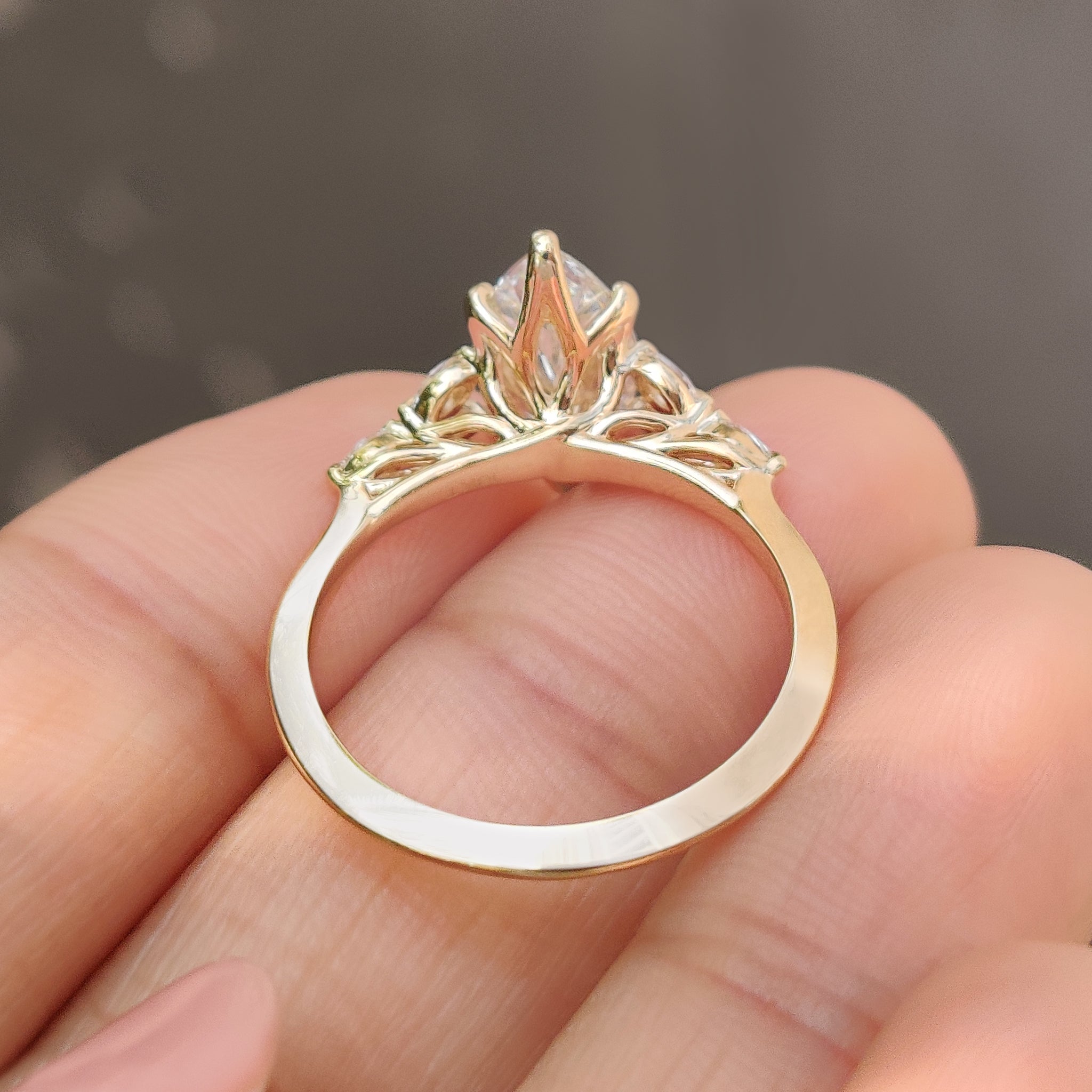
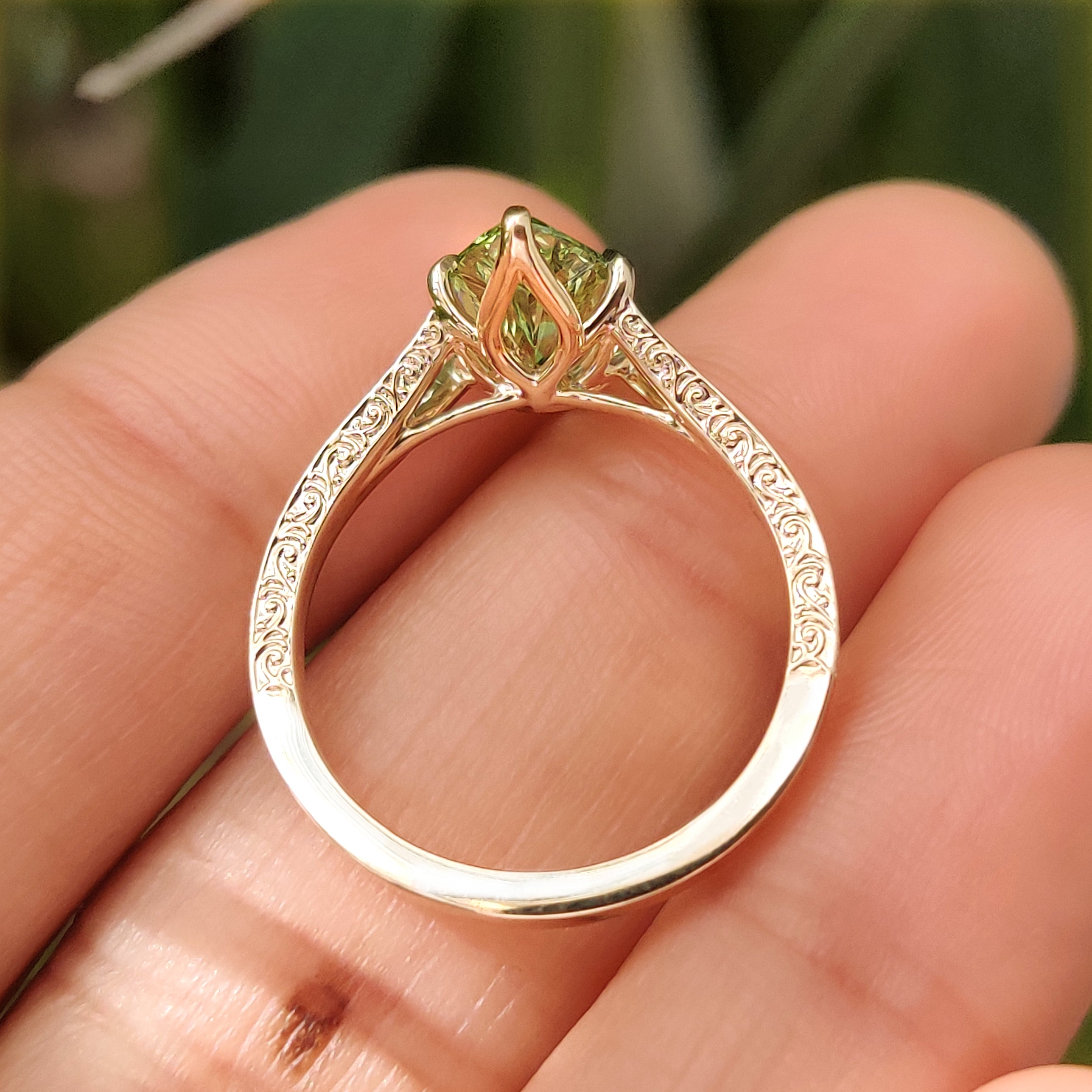
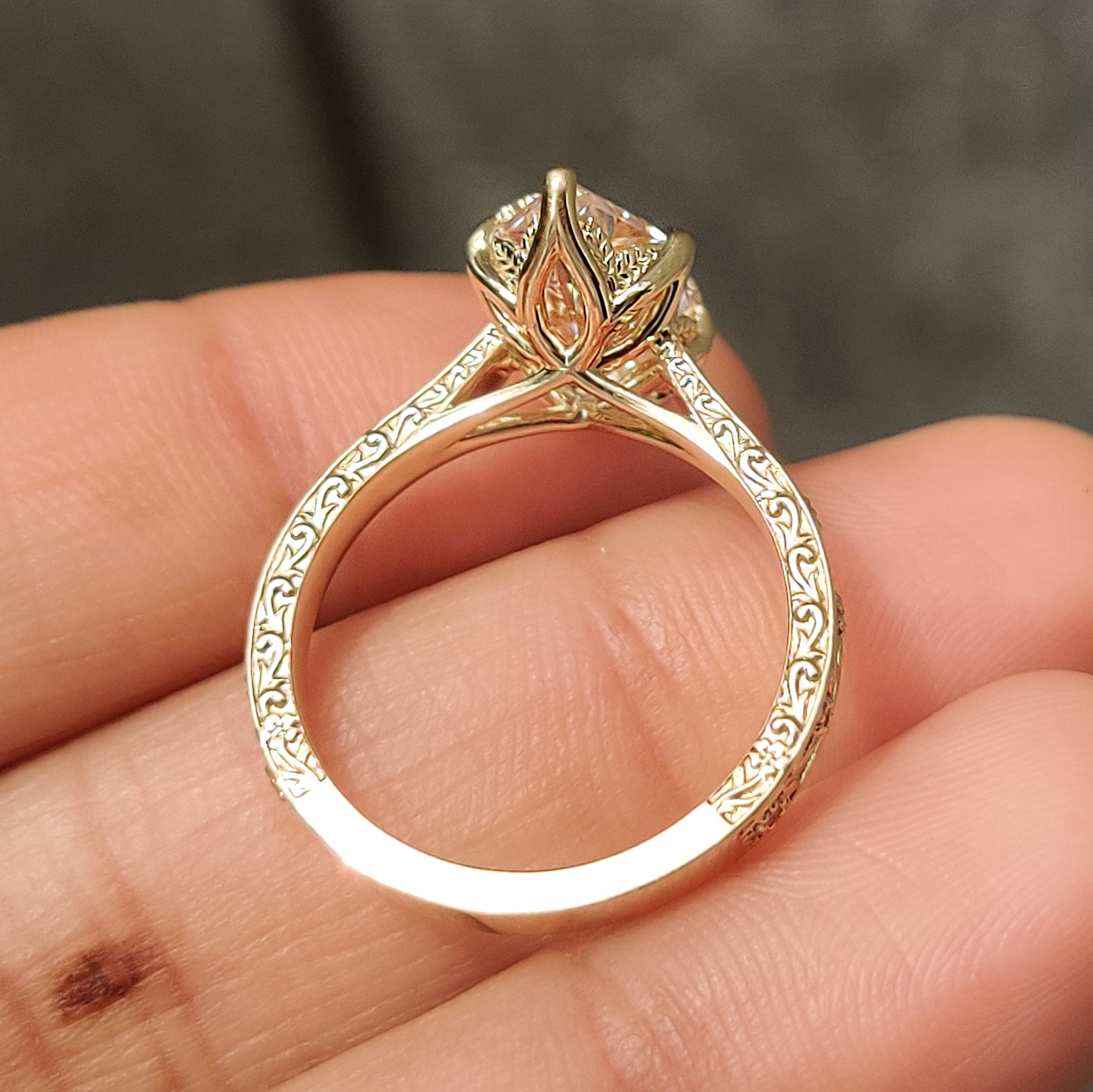
How Tulip Setting Holds the Center Diamond
Rather than straight parallel prongs, a tulip head uses curved metal that flows upward and around the base of the center stone, forming a shape that resembles a stylized flower when viewed from the side. The specific construction varies across designs; prong count, thickness, basket height, and stone compatibility all differ between rings. Two settings described as tulip can look noticeably different in person, which is worth keeping in mind when evaluating options.
Tulip Setting vs Plain Solitaire Setting
Solitaire describes a ring concept: one center diamond, no side stones. Tulip describes the architecture holding that stone. A tulip ring is often a solitaire ring; the distinction is in the design of the head rather than the diamond configuration. A plain solitaire uses straight or lightly tapered prongs. A tulip setting introduces more form to that same element while maintaining the same center-stone focus.
7 Reasons to Choose Tulip Setting Engagement Ring
It Gives Solitaire Ring More Character
A plain solitaire treats the setting as purely functional; the entire ring reads as diamond, band, nothing else. For buyers who find that slightly flat but would find a halo or heavily decorated shank too busy, the tulip head offers a useful middle ground. The curved prong structure becomes a design element rather than a support mechanism, adding visible character to the setting itself without redirecting attention away from the center stone. Up close and from different angles, there is clearly more happening than four straight prongs.
It Creates a Distinctive Side Profile
Most ring photography is shot from above, which means buyers often make their selection based solely on the face-up view. The side profile gets considerably more attention once the ring is actually being worn. In a plain solitaire, the side view is straight prongs and a band. A tulip setting creates a defined petal-like shape in profile that looks considered rather than purely structural, particularly visible from the wearer’s perspective looking at the ring on their hand. Before purchasing, look for photographs taken from multiple angles rather than only overhead.
It Keeps the Center Diamond Visually Open
The curved prongs hold the stone from its base rather than gripping tightly across the crown, leaving much of the diamond’s upper surface and sides accessible to light. This open architecture gives the stone a reasonable opportunity to display its optical character.
Does a Tulip Setting Make a Diamond Sparkle More?
An open tulip-style head allows substantial light access, which can support strong visual performance. That said, diamond cut quality remains the primary factor in sparkle. A well-cut diamond in an open setting will generally look lively and bright. A poorly proportioned diamond will not perform significantly better simply because of the setting structure around it. Think of it as a supporting condition rather than a guarantee.
It Can Suit a Range of Center Diamond Shapes
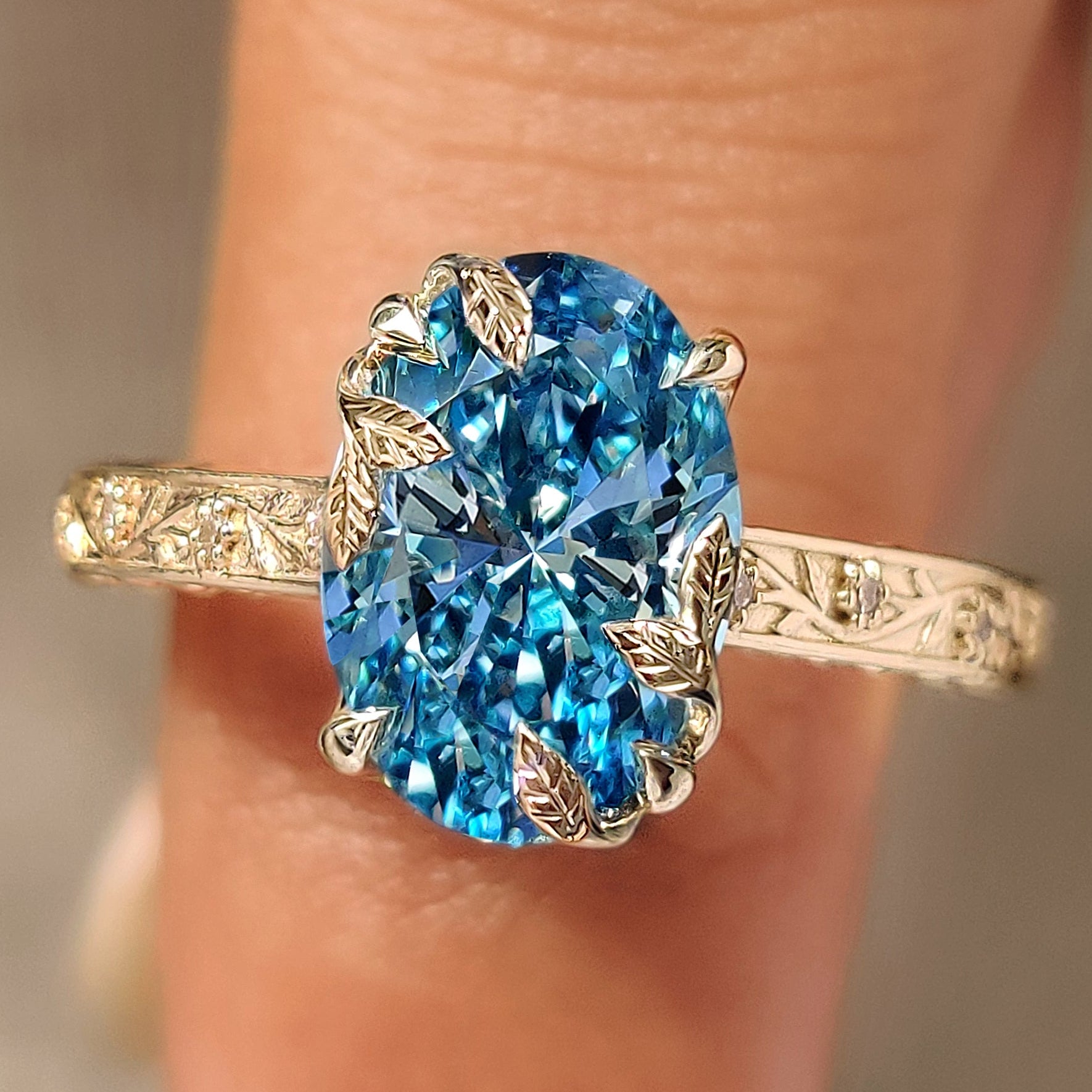
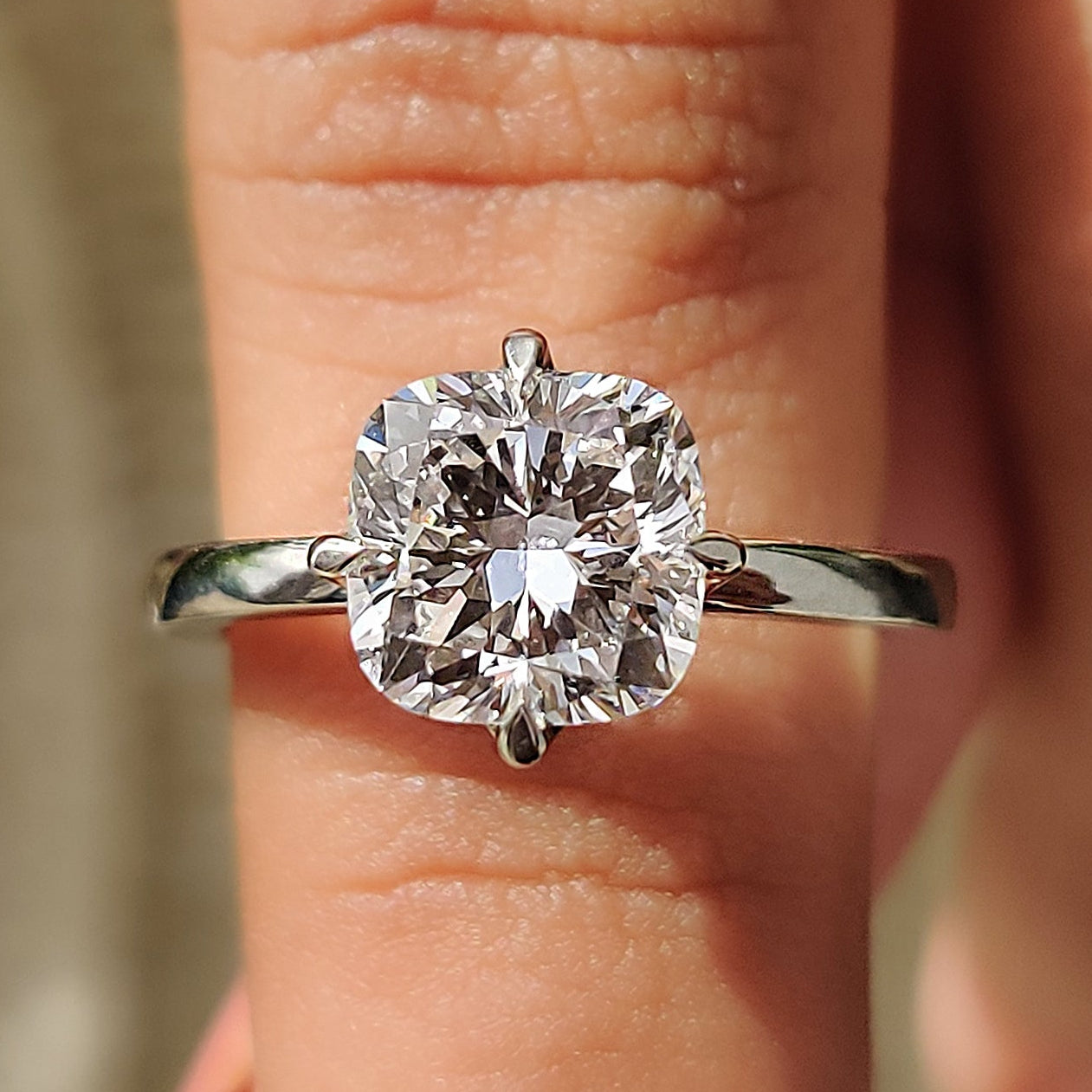
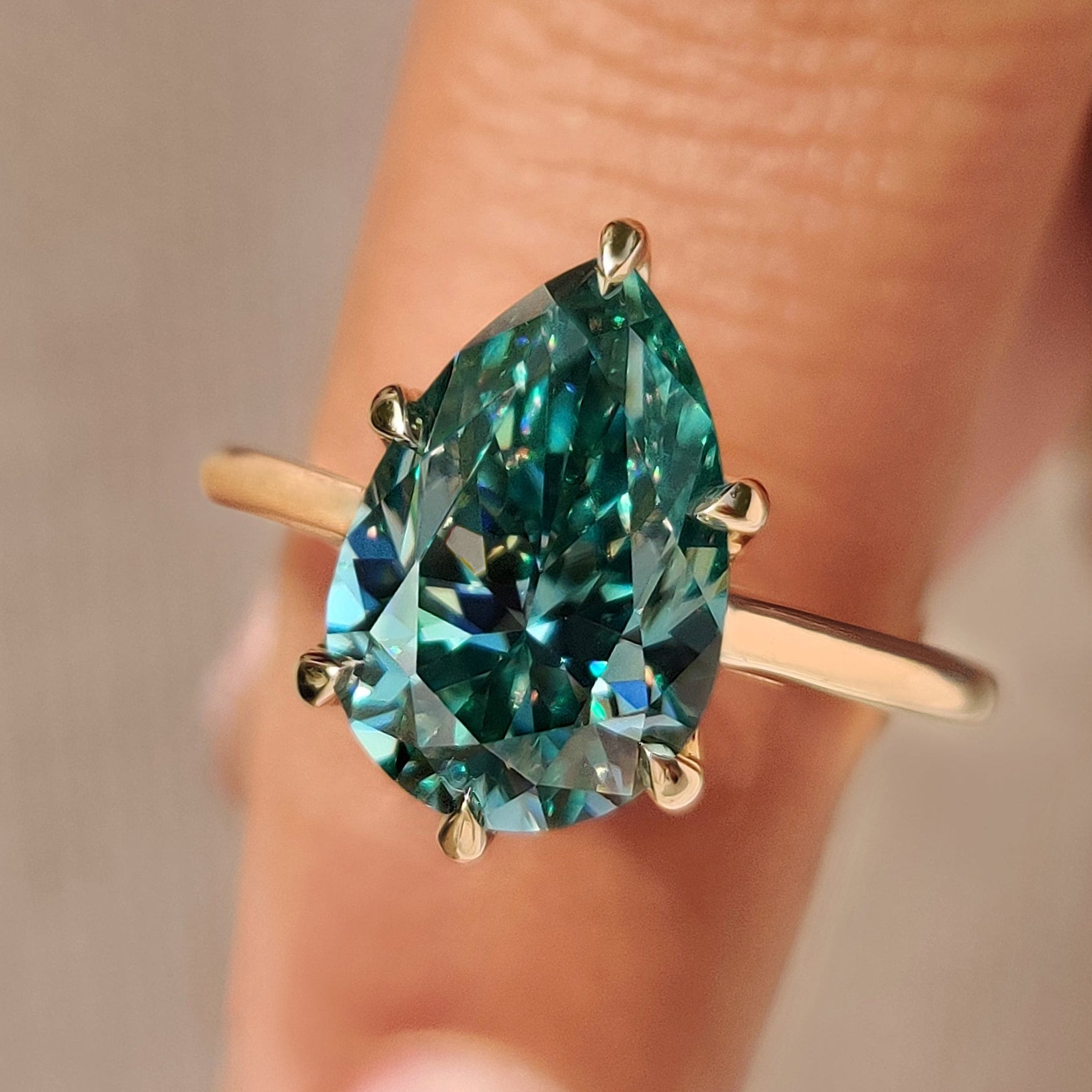
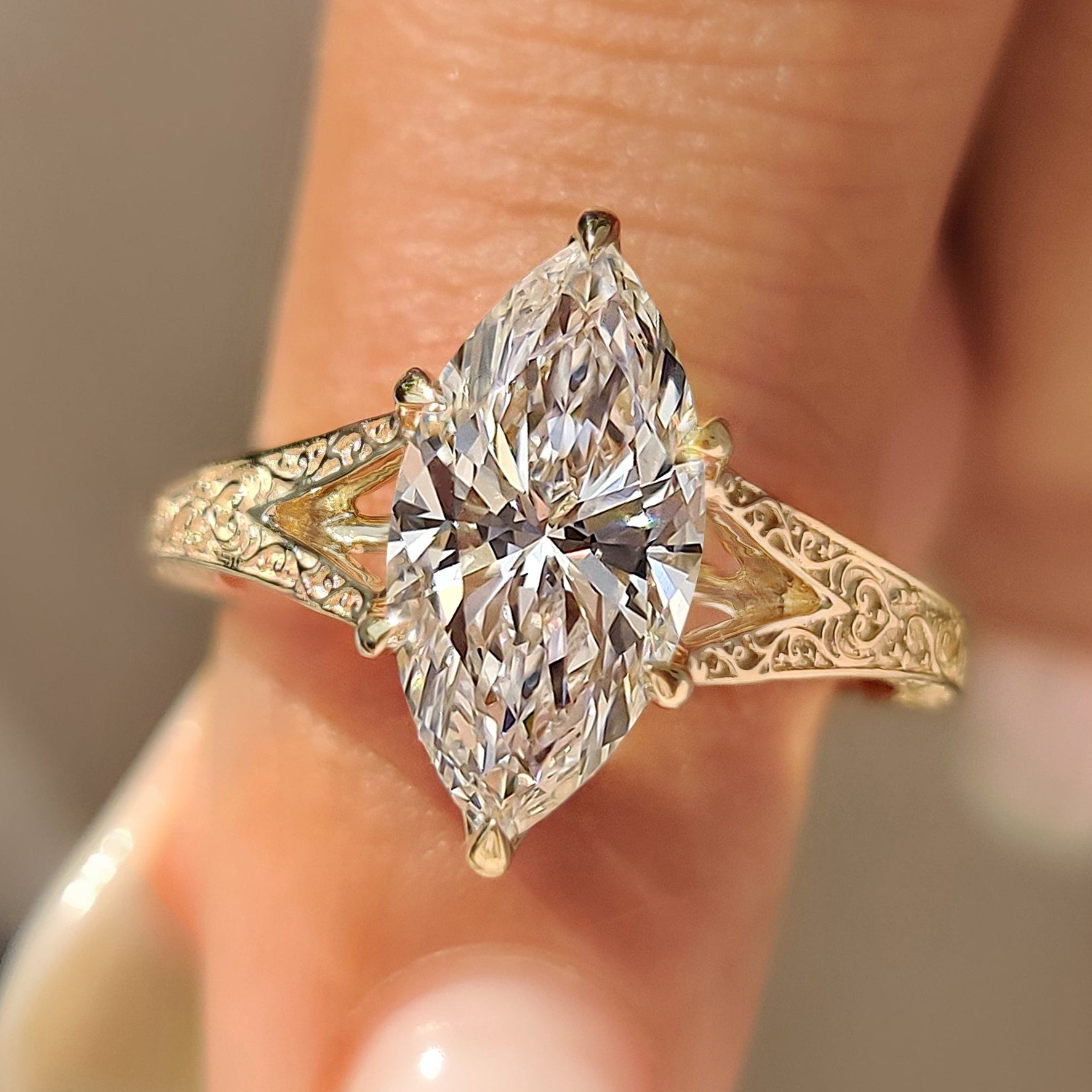
Tulip settings are not exclusively associated with round diamonds. The architecture can be engineered to work with oval, cushion, pear, and marquise shapes as well. For pointed shapes, a well-designed tulip head can position prongs at the tips in a way that integrates naturally with the petal form.
Which Diamond Shapes Work Best With Tulip Setting?
Round diamonds align most naturally with the symmetrical prong arrangement of a typical tulip head. Oval and cushion shapes work well where the basket has rounded contours that follow the stone’s outline. Marquise and pear shapes can be paired with a tulip head where the design specifically accounts for the tips, and in those cases, the combination of two petal-like forms can be visually coherent.
Why the Setting Design Matters More Than the Name
Two rings described as tulip settings may be built for completely different stone shapes and look substantially different from each other. Before buying, look at the actual prong arrangement and basket geometry to confirm the setting is designed for your specific stone rather than relying on the label alone.
It Can Build Protection Into the Design
For pointed diamond shapes such as marquise and pear, the tips are the most structurally vulnerable areas, the thinnest and most at risk of chipping from lateral impact. A tulip setting designed for these shapes can position prongs at the tips as part of the petal form, integrating protection into the design rather than treating it as a separate element. When this is well executed, the protective prong is also a visual component of the head.
Does Tulip Setting Protect the Diamond Better?
Not automatically. Protection depends on prong placement, thickness, count, and the quality of stone seating, not the setting name. A well-built tulip head with adequate prong coverage at vulnerable areas provides meaningful protection. A tulip setting with thin or poorly positioned prongs does not. If protecting a pointed stone is a priority, evaluate specifically how the prongs are arranged around the tips rather than assuming the tulip design handles it.
It Balances Romantic Detail With Clean Overall Look
The tulip setting fits into a useful stylistic position. A plain solitaire carries no visual interest in the setting itself. A halo adds substantial volume through surrounding accent diamonds. A heavily decorated floral design introduces detailed metalwork throughout the ring. The tulip sits between the first and the latter: the petal form adds character without requiring accent diamonds around the stone or complex metalwork across the shank. Whether that reads as romantic, organic, or simply considered depends on how the rest of the ring is designed.
It Gives You More Ways to Personalize the Ring
The tulip head is a structural format rather than a fixed look. It can be combined with a variety of other design elements to produce meaningfully different finished rings. Personalization possibilities include different prong counts, different center stone shapes, yellow, white, or rose gold, pavé or plain shank, side stones, nature-inspired band detailing, hidden halo elements beneath the center diamond, or cathedral shoulders that raise the head above the band. Two buyers choosing a tulip-setting ring can end up with pieces that look quite distinct from each other.
Can Tulip Setting Work with Wedding Band?
Yes, though flush fit depends on the basket height and band profile. Where the tulip basket creates a pronounced curve above the band, a straight wedding band may not nestle closely and a contoured band designed to follow the engagement ring’s profile is often the better solution. Some buyers prefer a small intentional gap between the two rings as a styling choice. Understanding the basket height of any specific ring before choosing a wedding band is a useful practical step.
What to Consider Before Choosing Tulip Setting
Is Tulip Setting Good for Everyday Wear?
A well-built tulip setting can work for daily wear, but the specific construction matters. Higher settings are more exposed to contact during active use. Thinner prongs need more attentive maintenance. For buyers with very active lifestyles or jobs involving frequent hand use, look for a tulip design with a lower profile and substantial prong thickness rather than a tall basket with fine wire prongs.
Does Tulip Setting Sit High on the Finger?
Height varies by design. Many tulip settings do lift the center diamond with some elevation because the basket structure requires space beneath the stone. That elevation can benefit light performance and visual presence. The trade-off is more exposure to contact. If setting height is a concern, ask specifically about the stone’s height above the band for any ring you are evaluating.
How Much Maintenance Does Tulip Setting Need?
Broadly similar to other prong-based settings. Annual professional inspections are a reasonable baseline to confirm no prong has shifted or worn to a point where stone security is at risk. Clean with warm water, mild dish soap, and a soft brush for routine care. If any prong feels sharp against the finger or the stone appears to have moved, have the ring checked promptly rather than waiting for a scheduled appointment.
Tulip Setting vs Other Popular Engagement Ring Settings
| Setting | Main Design Character | Best Suited For |
|---|---|---|
| Tulip | Curved petal-like prongs or basket | Buyers wanting design character without heavy decoration |
| Plain Solitaire | Minimal straight prongs, no setting detail | Buyers who want the stone as the only visual element |
| Cathedral | Raised arched shoulders supporting the center | Buyers wanting a structured formal elevation |
| Halo | Ring of accent diamonds around the center | Buyers wanting more visual volume and perceived size |
| Basket | Defined support beneath the stone without petal form | Buyers wanting a distinct head, more geometric |
Why Choose Tulip Instead of Plain Solitaire?
A tulip head adds form to the setting itself. A plain solitaire does not. If the ring’s character should come entirely from the diamond, choose solitaire. If you want the setting to contribute something visually beyond its function, tulip is worth considering.
Why Choose Tulip Instead of Halo?
A halo adds accent diamonds around the center stone, increasing visual volume and perceived size. A tulip setting keeps the design interest at the prong level without surrounding the stone with additional diamonds. Choose tulip for setting detail without the visual weight or cost of a halo.
Why Choose Tulip Instead of Cathedral Setting?
A cathedral setting raises the center diamond using arched metal shoulders. The result is structured and formal. A tulip setting achieves elevation through its basket form and reads softer and more organic than cathedral architecture. Both are center-stone-focused designs; the difference is primarily stylistic.
How to Choose the Right Tulip Setting
Start With the Diamond Shape
Establish which center stone shape you want, then confirm the specific tulip setting is engineered for that shape. A round-optimized head may not properly accommodate an oval or marquise stone. Ask the jeweler directly and look at the prong arrangement in detail.
Decide How Much Detail You Want
The tulip head is one element of a larger ring design. A tulip head on a plain polished band is a cleaner, more minimal ring than the same head paired with pavé shoulders and side stones. Think through the whole ring rather than evaluating the setting in isolation.
Check the Setting Height and Band Fit
Ask about the diamond’s height above the band for any specific ring. Consider how that elevation suits your lifestyle and whether a curved wedding band will be needed for a close fit.
Look at the Actual Prong Construction
Prong count, thickness, and placement around vulnerable areas matter more than the setting label. Look at the specific basket design, confirm the prongs provide solid stone seating, and for pointed shapes, check how the tip areas are handled. The Marquise Diamond Nature Inspired Engagement Ring in Tulip Setting is a useful reference point for seeing how a well-designed tulip head handles a pointed stone shape. For buyers who want to specify their own combination of center stone, metal, and design details, the custom jewelry service at Carat Diamonds allows that level of control.
MAKE IT YOURS
Create A Tulip Setting Made For You
Start with a tulip setting and customize the diamond shape, metal, and details to create an engagement ring that fits your style.


