


Oval cut diamonds are a beautiful blend of brilliance and elegance. Designed with the same faceting style as round brilliant diamonds, the oval shape delivers impressive sparkle while offering a more unique and elongated look. This combination makes an oval cut diamond engagement ring a popular choice for modern couples who want something classic yet distinctive.
One of the biggest advantages of oval diamonds is their flattering shape. The elongated silhouette creates the illusion of longer, slimmer fingers and also makes the diamond appear larger than a round stone of the same carat weight. Because of this visual size advantage, oval diamonds are often seen as a smart choice for buyers who want maximum impact without stretching their budget.
With timeless appeal and contemporary style, oval cut diamonds are now one of the most sought-after engagement ring shapes.

History & Rise in Popularity
The modern oval cut diamond was developed in the 1960s by master diamond cutter Lazare Kaplan. By adapting the round brilliant faceting pattern into an elongated form, he created a shape that preserved sparkle while offering a fresh, elegant outline.
Although oval diamonds have been around for decades, their popularity has surged in recent years. Celebrities, influencers, and designers have embraced oval cut diamond engagement rings, making team a major trend in bridal jewelry. Their ability to feel both vintage-inspired and fashion-forward gives them wide appeal.
Today, the oval cut is considered a timeless diamond shape that bridges the gap between traditional brilliance and modern style.
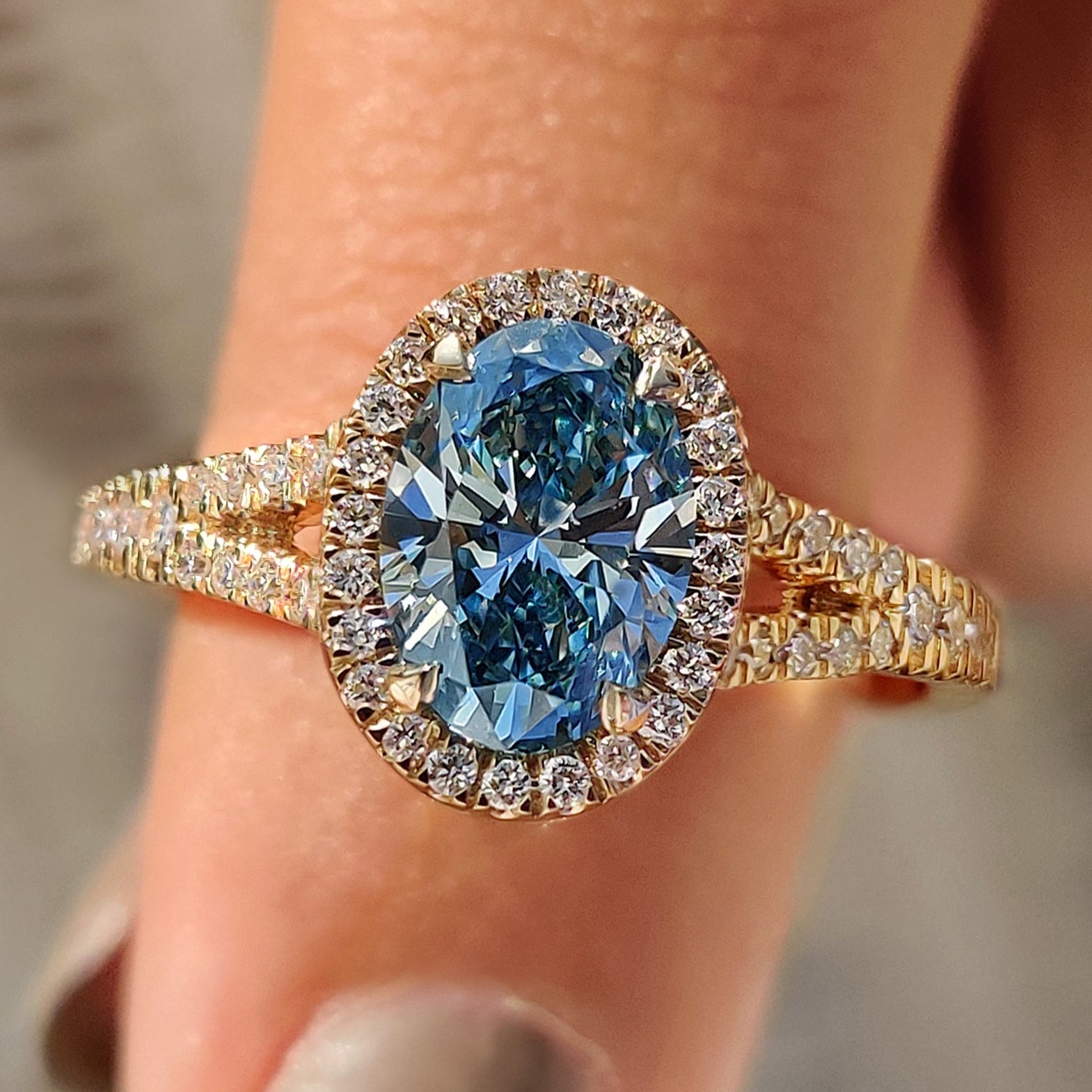
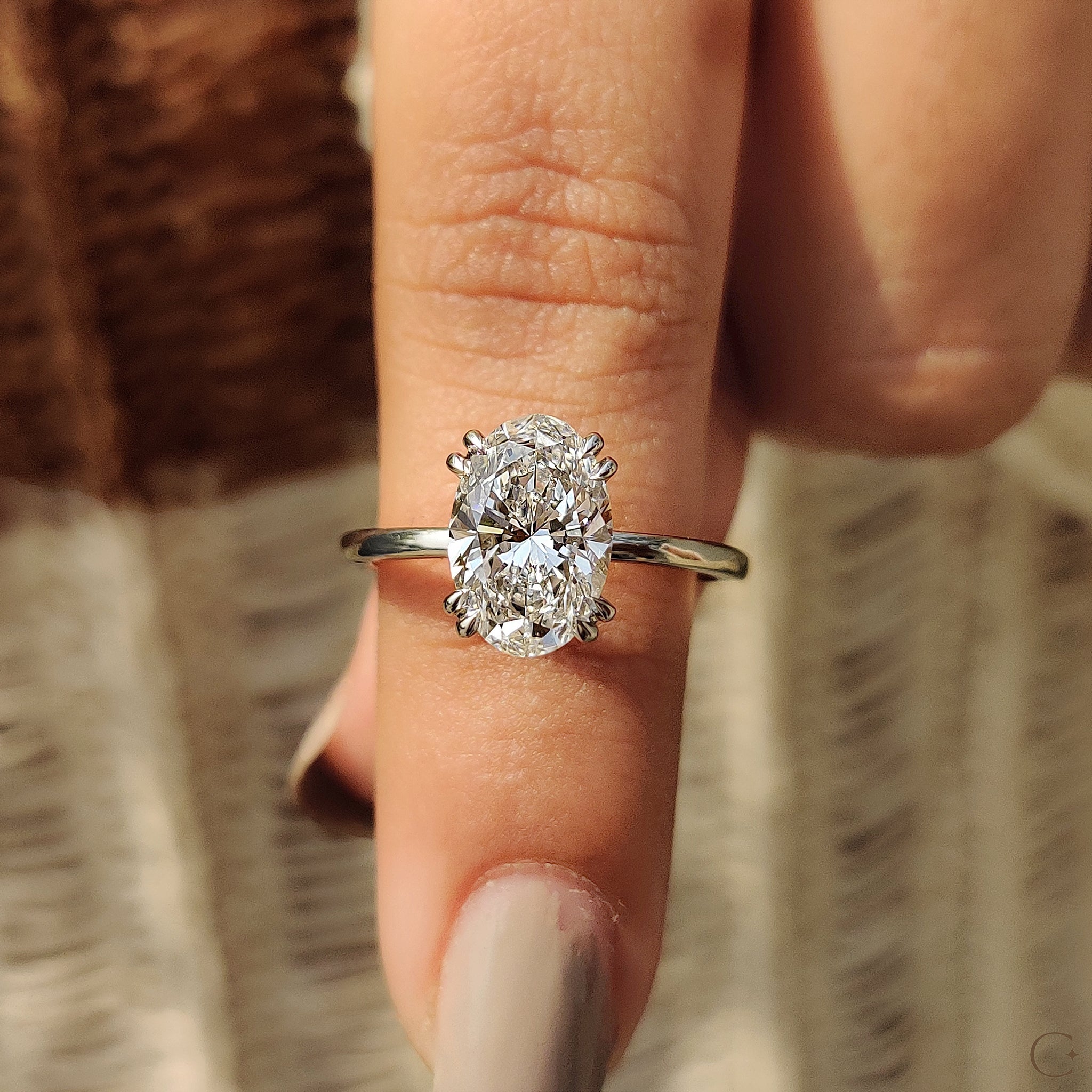
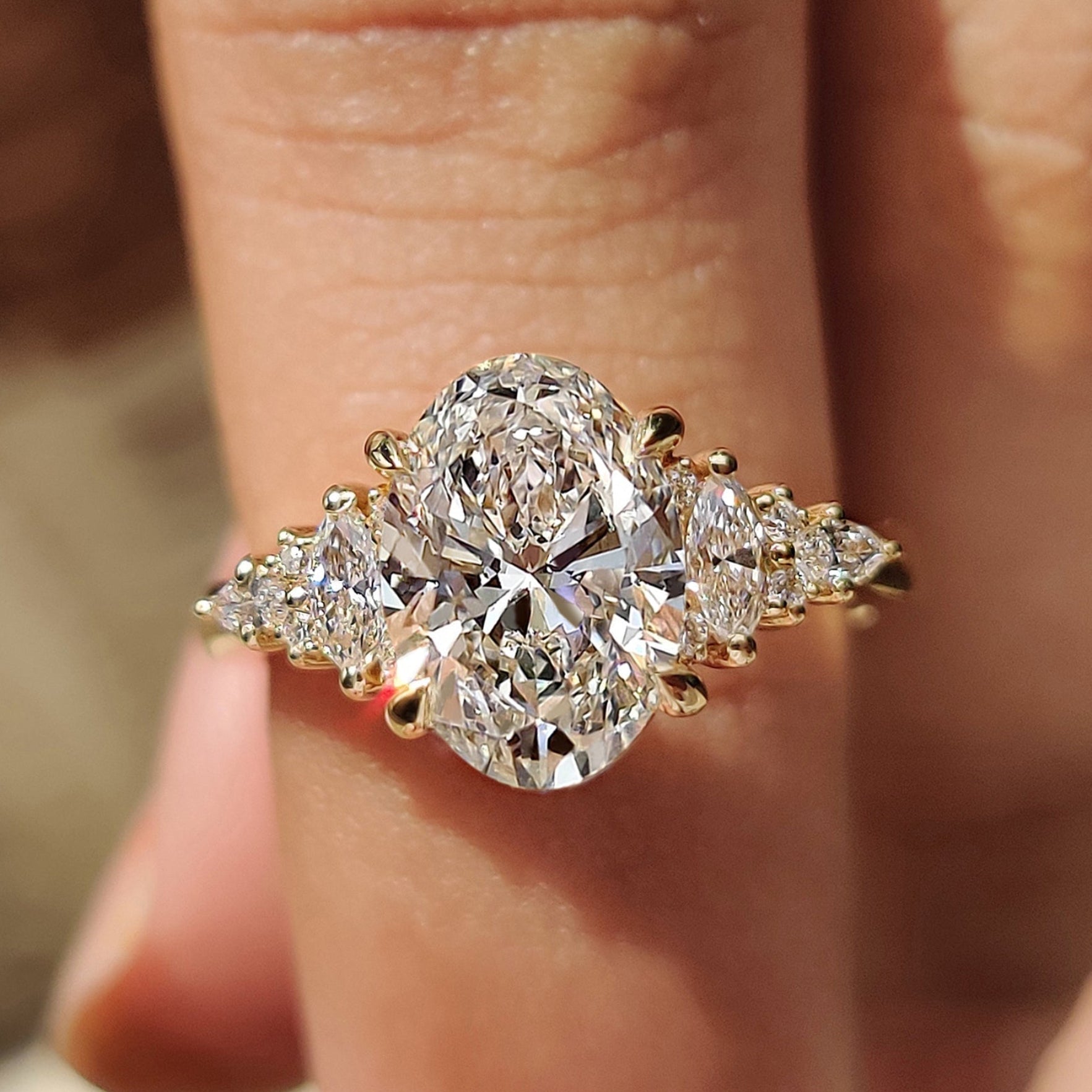
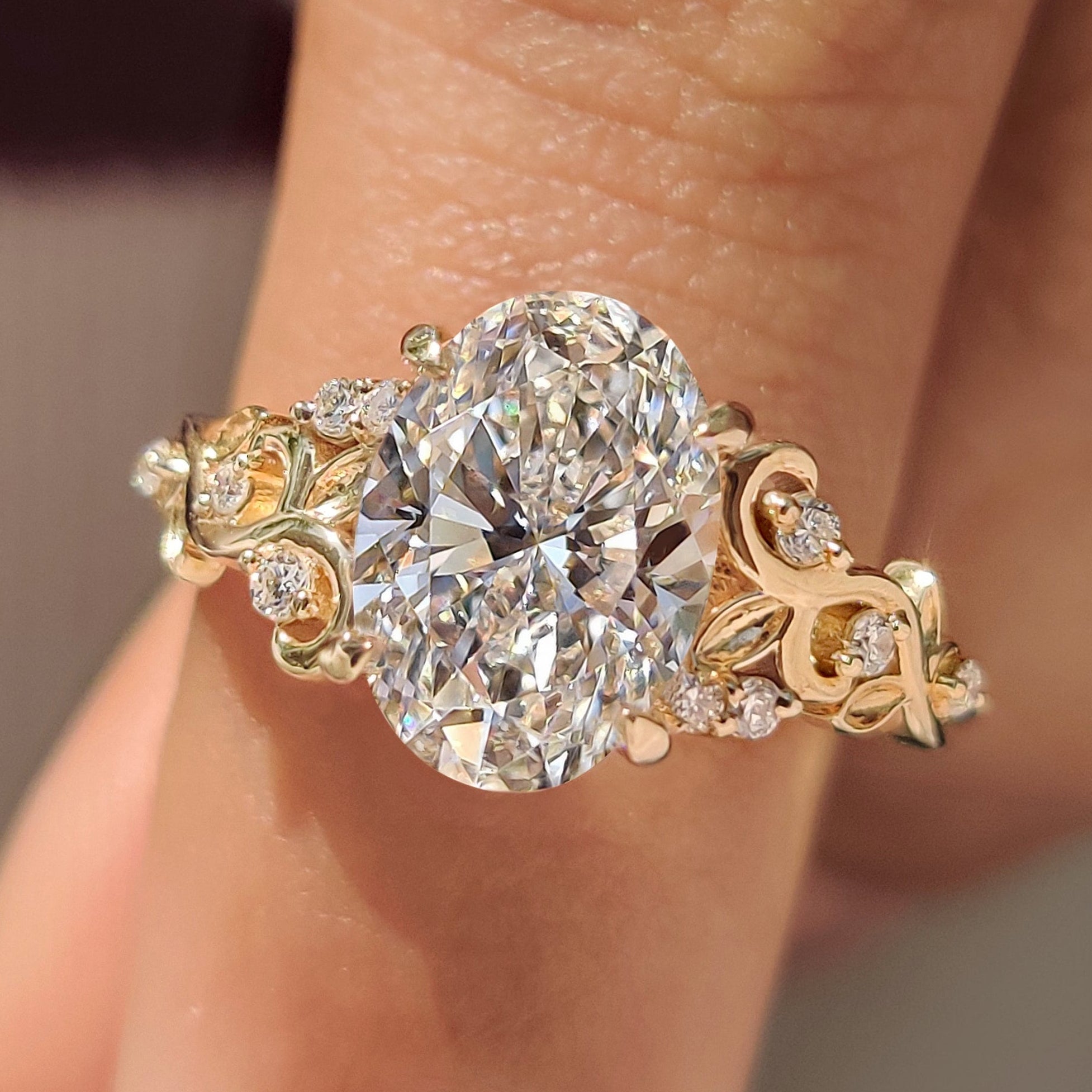
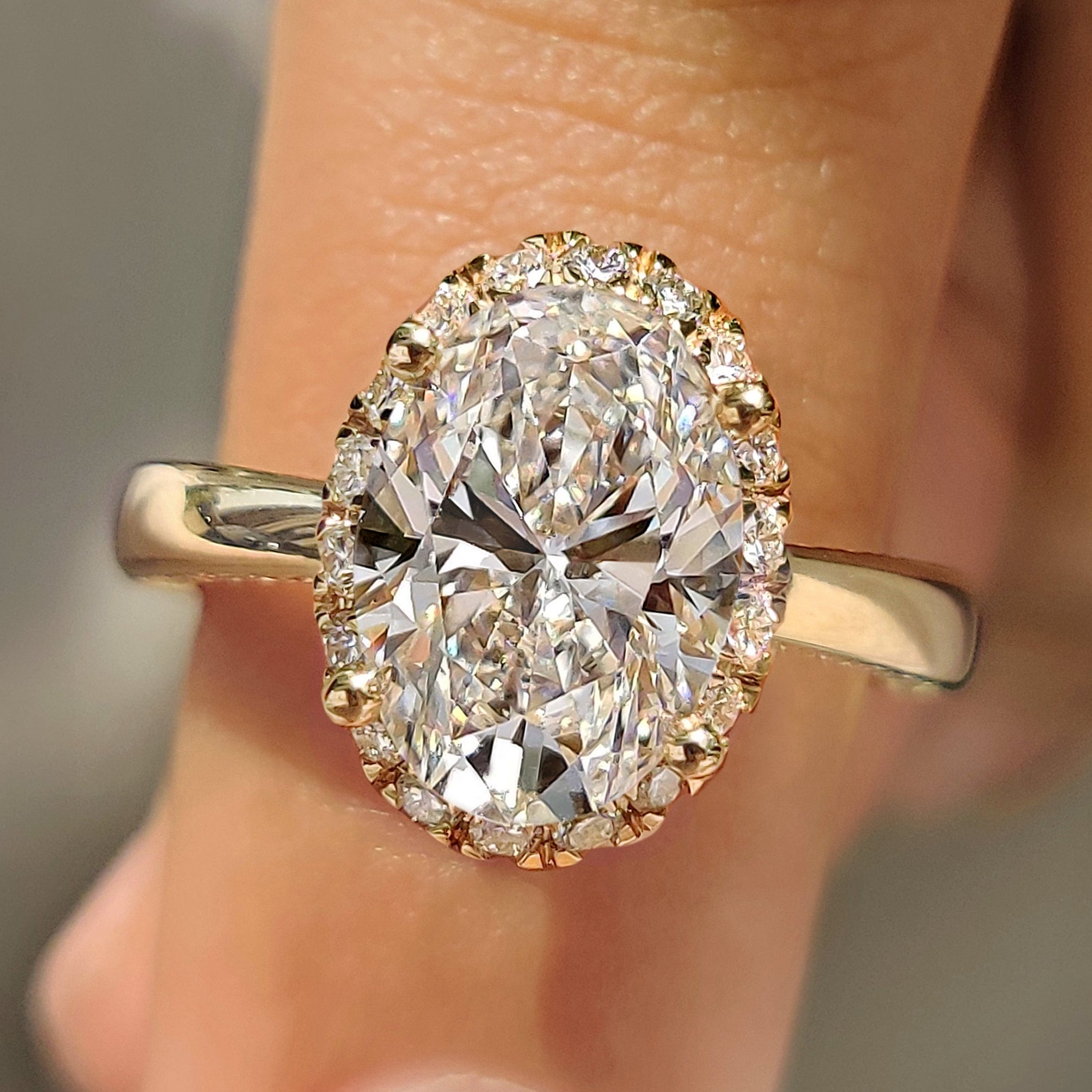
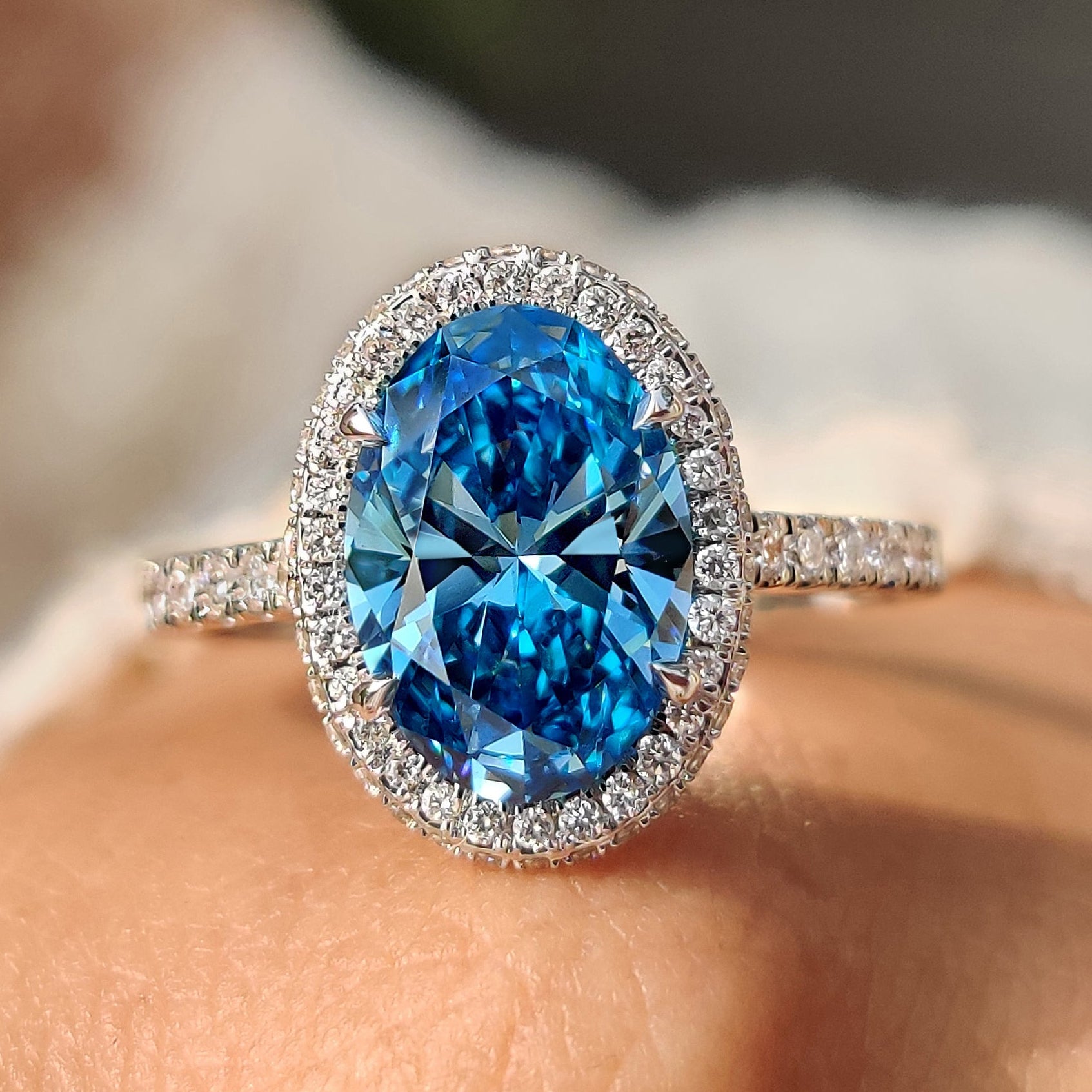
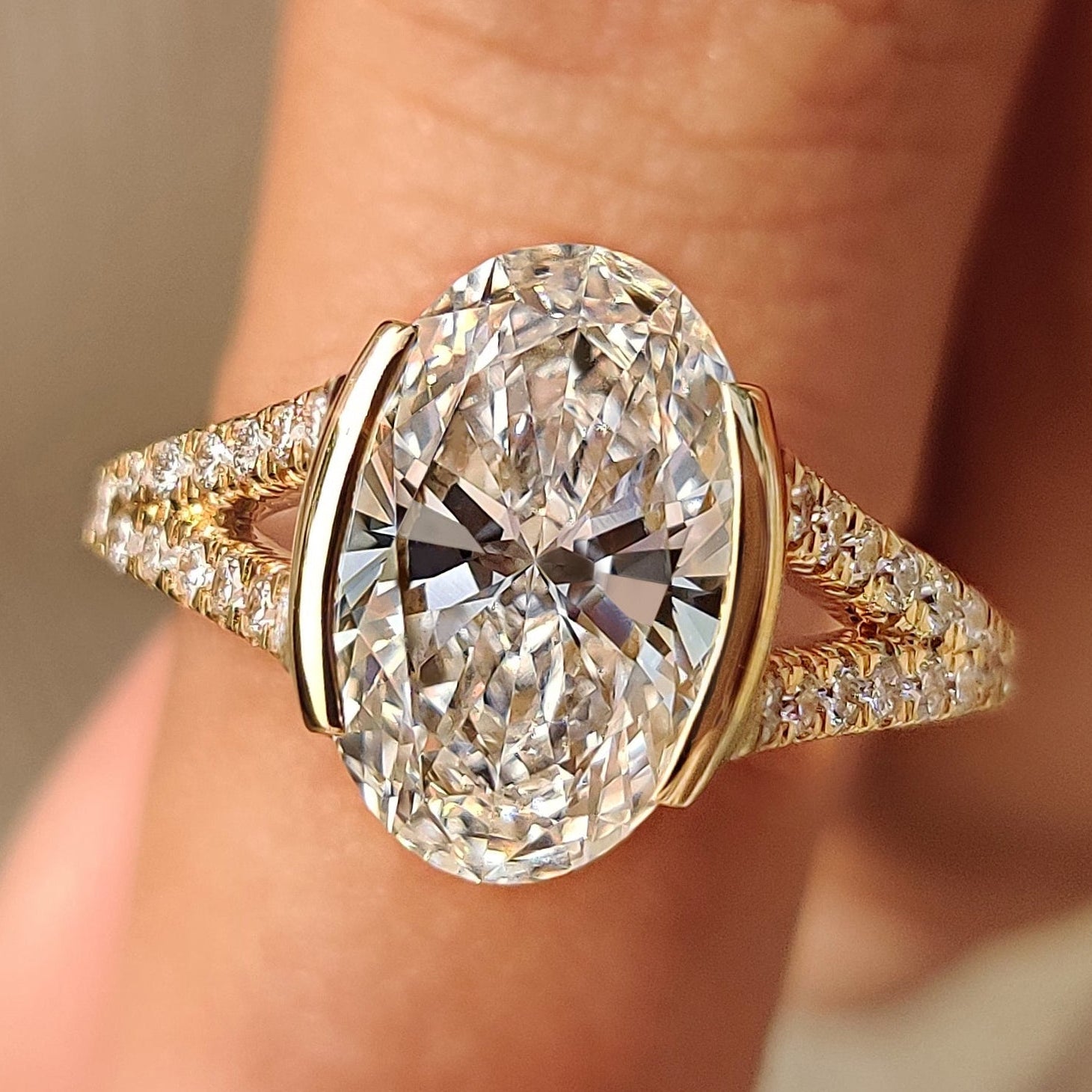
Oval Diamond Shape & Proportions
Not all oval diamonds look the same. The overall appearance of an oval stone is heavily influenced by its length-to-width ratio, which describes how long the diamond looks compared to how wide it is.
- 1.30 – 1.35 ratio: Classic oval shape with balanced proportions
- 1.40 – 1.50 ratio: More elongated, slimmer appearance
- Below 1.30: Slightly rounder oval
- Above 1.50: Very long and narrow look
Choosing the right ratio is a matter of personal style. Some prefer a soft, rounded outline, while others love the dramatic elegance of a longer stone. This proportion also affects how large the diamond appears when viewed from the top, often called its face-up size.
Symmetry is equally important. A well-cut oval should have smooth curves and evenly rounded ends, not a lopsided or uneven outline.

Sparkle & Light Performance
Oval diamonds are part of the brilliant cut family, meaning they are designed to maximize sparkle. Their facets reflect light to create three main effects:
- Brilliance - White light reflections
- Fire - Flashes of rainbow color
- Scintillation - Sparkle when the diamond moves
While oval diamonds are highly brilliant, their elongated shape can cause light to distribute differently compared to round diamonds. This sometimes creates slightly darker areas across the center of the stone. One of the most well-known features of oval diamonds is the bow-tie effect, a shadow that can appear across the middle when light isn’t evenly reflected.
A well-cut oval will still display strong light return and lively sparkle. Viewing diamonds in motion (videos or in-store lighting) is the best way to judge real beauty beyond grading reports.

The Bow-Tie Effect Explained
One of the most talked-about features of oval diamonds is the bow-tie effect. This refers to a dark, bow-tie-shaped shadow that can appear across the center of the diamond when light doesn’t reflect evenly.
Why does the bow-tie effect happen?
Oval diamonds have an elongated shape, which makes it harder for light to bounce uniformly across the stone. When certain facets don’t return light properly, darker areas form in the middle.

Is the bow-tie bad?
Not always. Nearly all oval diamonds show some bow-tie, but the key is intensity:
- Mild bow-tie: Adds contrast and can make sparkle look dynamic
- Strong bow-tie: Looks like a dark patch and reduces brilliance
How to choose an oval cut diamond with minimal bow-tie
- View the diamond in video, not just photos
- Look for even brightness across the stone
- Avoid stones with a dark, obvious stripe through the center
Understanding this is a major step in learning how to choose an oval cut diamond that looks lively instead of dull.
Oval Diamond vs Other Cuts
Oval or Another Cut? Here’s the Difference
| CUT | Look & Shape | Sparkle | Best For |
|---|---|---|---|
| Oval | Elongated, elegant | High brilliance | Bigger look, slim fingers |
| Round | Perfect circle | Maximum sparkle | Classic, timeless style |
| Cushion | Soft square, rounded | Romantic glow | Vintage lovers |
| Princess | Sharp square | Bright & fiery | Modern bold style |
| Emerald | Long rectangle | Sleek flashes | Elegant, minimal look |
| Pear | Teardrop shape | Brilliant sparkle | Unique, slimming effect |
| Marquise | Long pointed oval | Bright sparkle | Maximum finger coverage |
| Asscher | Square step-cut | Hall-of-mirrors shine | Art Deco elegance |
| Heart | Heart silhouette | Lively brilliance | Romantic statement rings |
Oval Cut Diamond Quality Factors (The 4 Cs + Shape Tips)
When buying an oval diamond, the traditional 4 Cs still matter, but shape-specific details are just as important. Ovals are brilliant-cut stones, meaning they’re designed for sparkle, but their elongated shape introduces a few unique things to watch for.
Cut
Cut is the most important factor for sparkle. Unlike round diamonds, oval cuts don’t receive an official cut grade, so visual performance matters more than the certificate alone.
Look closely at:
- Symmetry - Both sides of the oval should mirror each other evenly
- Brightness - Light should reflect evenly across the surface, not just in certain areas
- Minimal bow-tie effect - A slight shadow is normal, but it shouldn’t be dark or distracting
Avoid stones that appear overly dark in the center or have uneven light return, as this reduces brilliance.
Pro Tip: A length-to-width ratio between 1.30-1.45 usually creates a pleasing, well-balanced oval shape (though personal preference plays a role).
Color
Oval diamonds tend to show slightly more color than round brilliants because of their larger open facets.
- G-H color: Excellent balance of brightness and value, appears white in most settings
-
I-J color: A smart choice for yellow or rose gold, where warmth blends beautifully
If you prefer a very icy white look in platinum or white gold, consider staying in the G or higher range.

Clarity
Oval diamonds use brilliant-style faceting, which helps hide small inclusions better than step cuts. However, because the center is more open, noticeable marks can still be visible if they sit right in the middle.
- Aim for eye-clean clarity (typically VS2-SI1, depending on the specific stone)
- Avoid inclusions located directly under the table where they’re easiest to see
Always review magnified images or videos when possible.
Carat Weight
One of the biggest advantages of oval diamonds is their larger face-up appearance. Their elongated shape spreads weight across the surface, so they often look bigger than round diamonds of the same carat.
This makes oval cuts a great choice if you want maximum visual size without jumping in carat price.
Just remember: Two ovals of the same carat can look different in size depending on their proportions, so always compare measurements, not just weight.
Best Settings for Oval Cut Diamonds
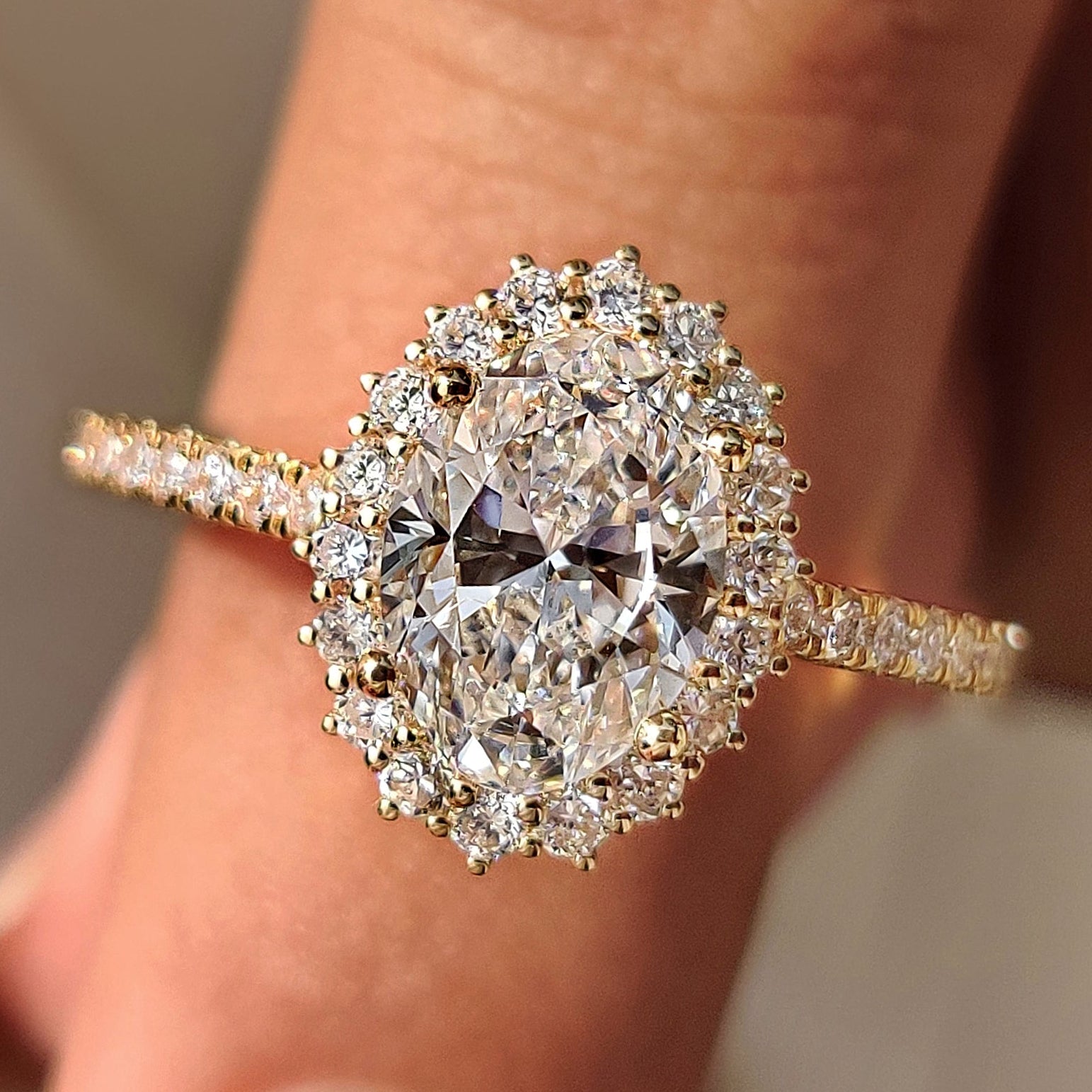
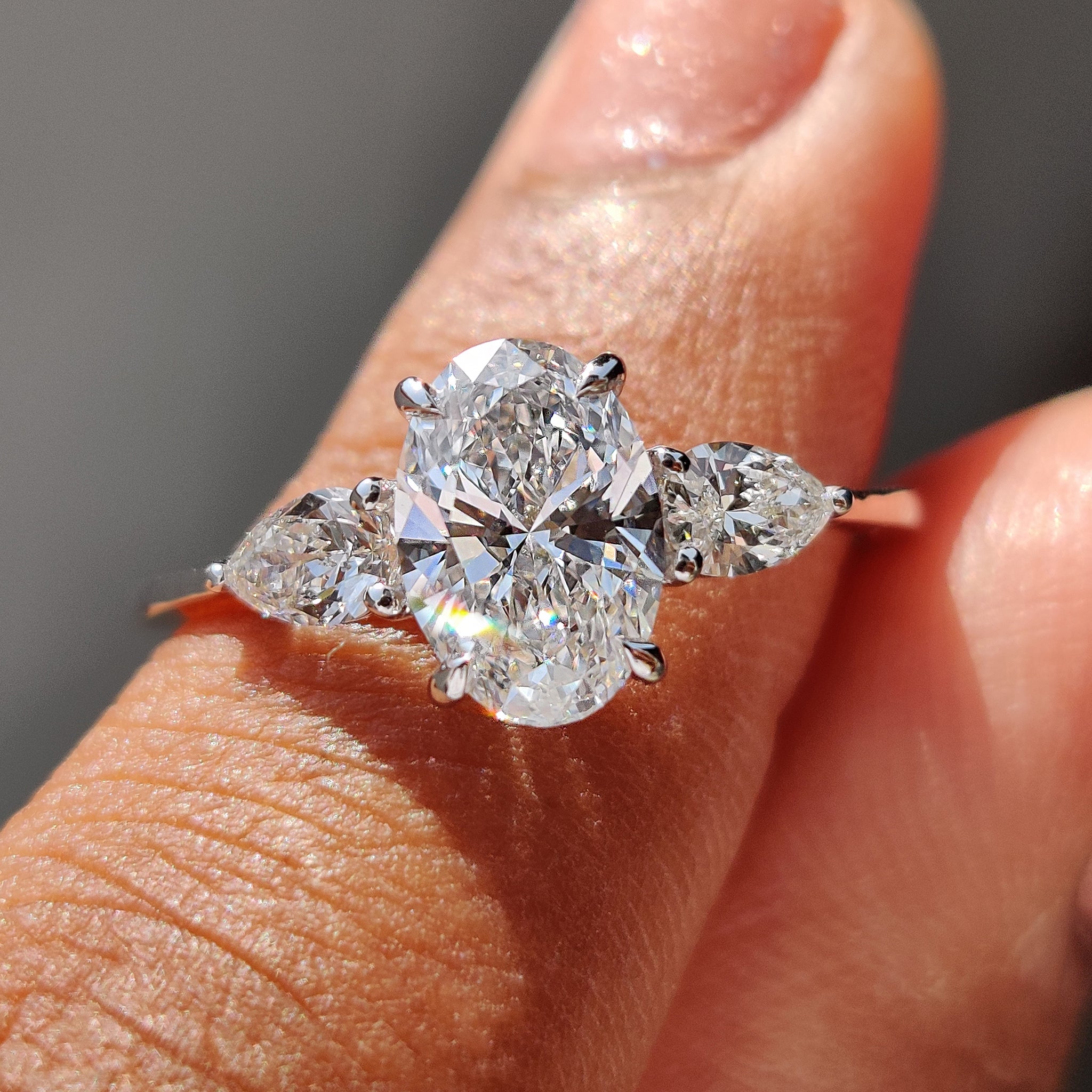
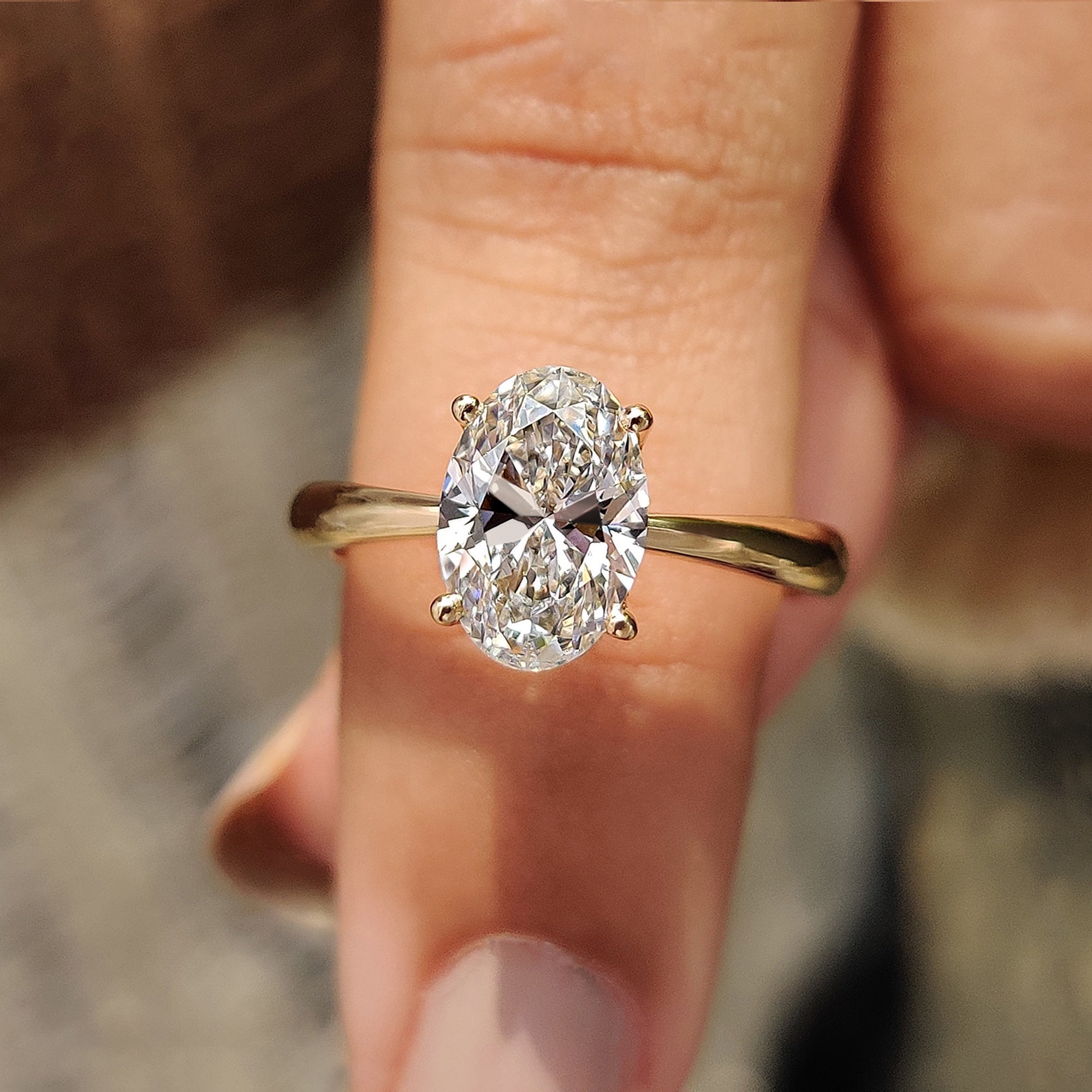
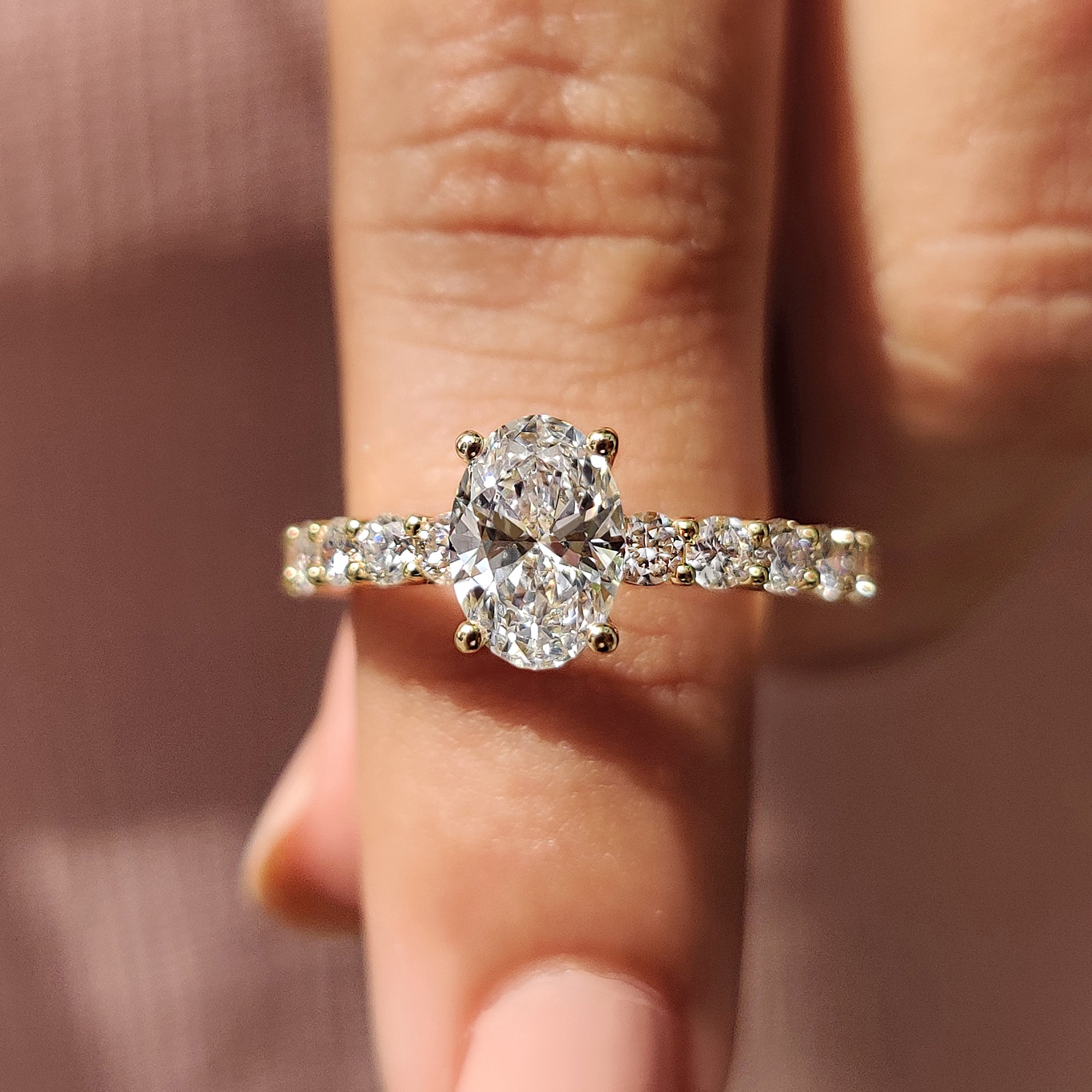
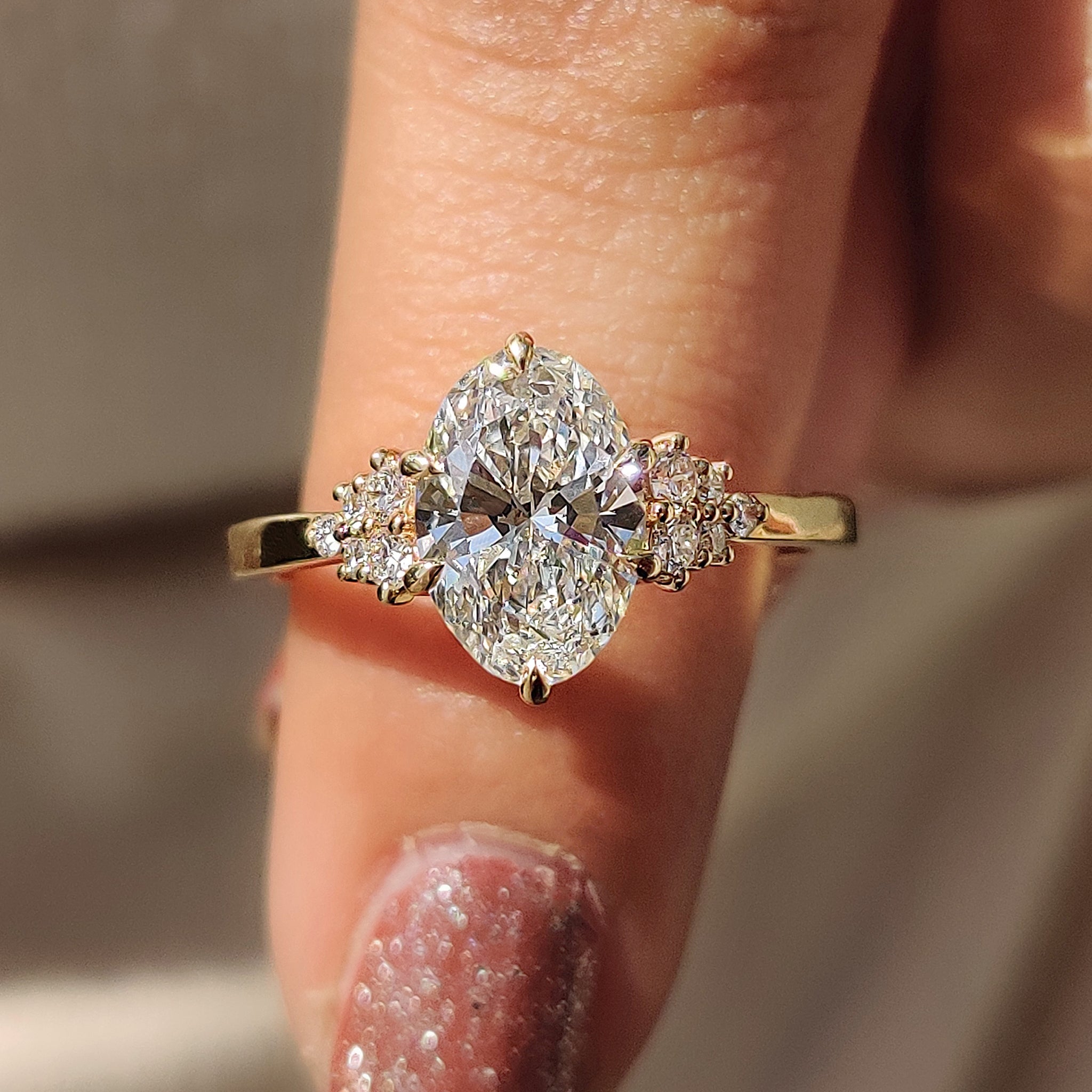
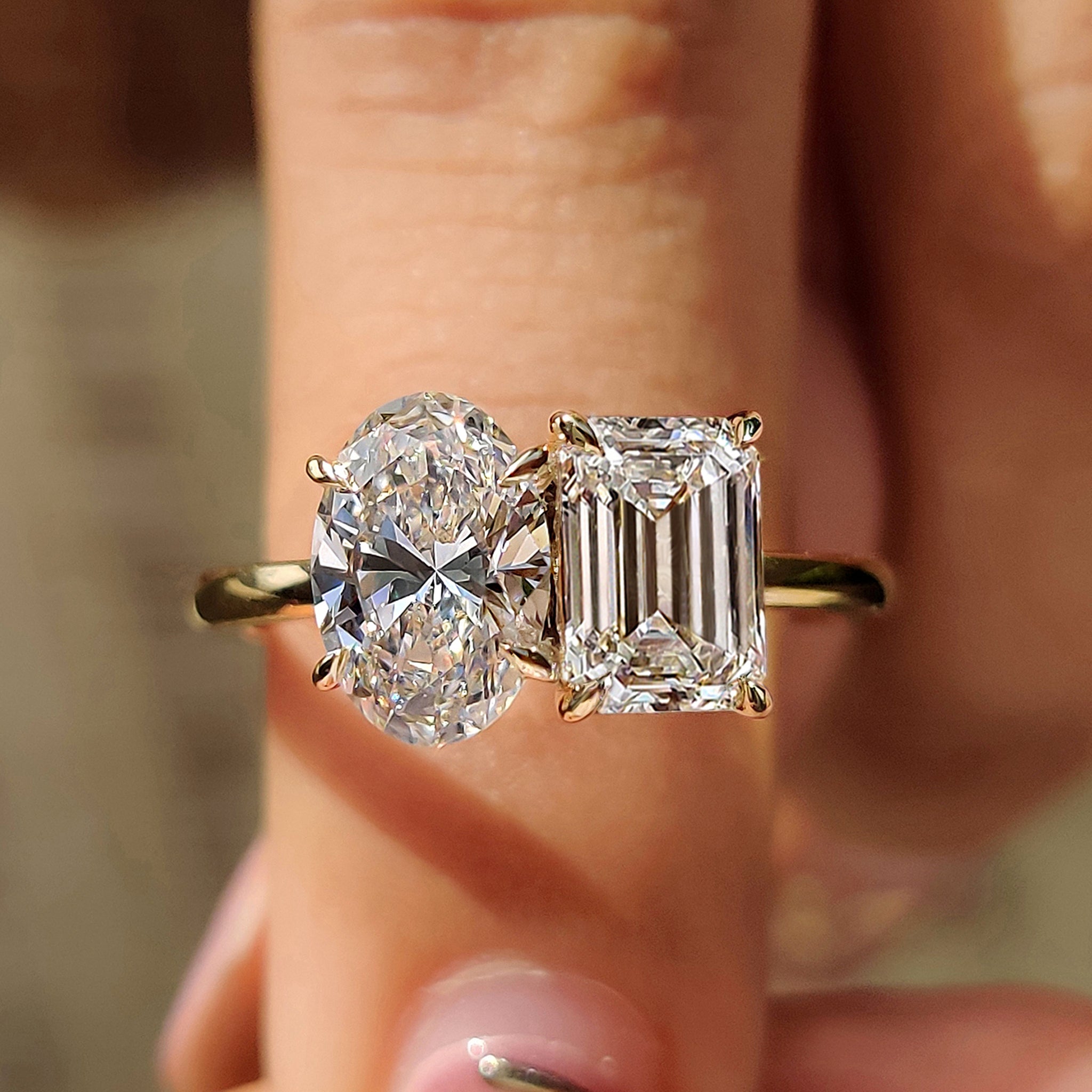
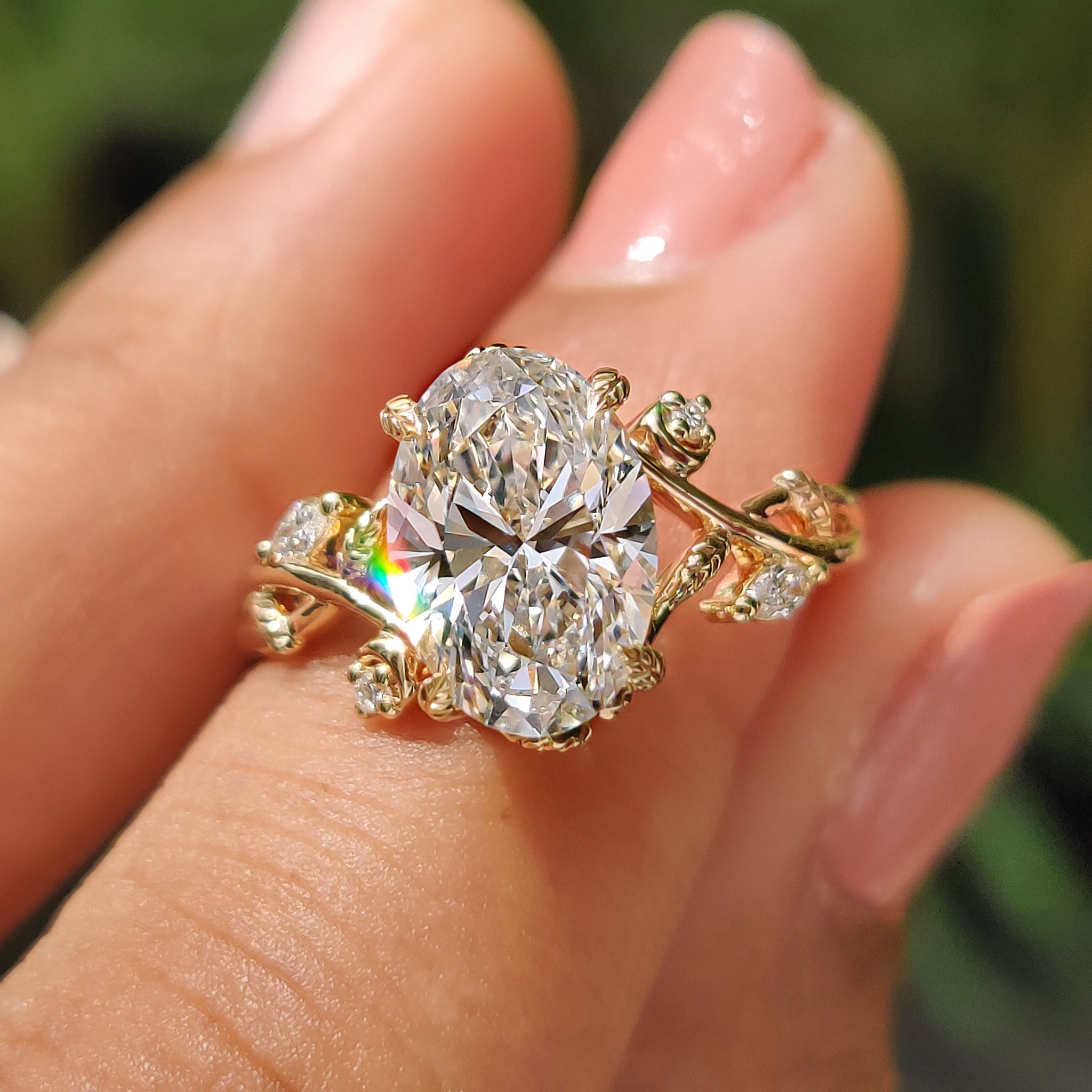
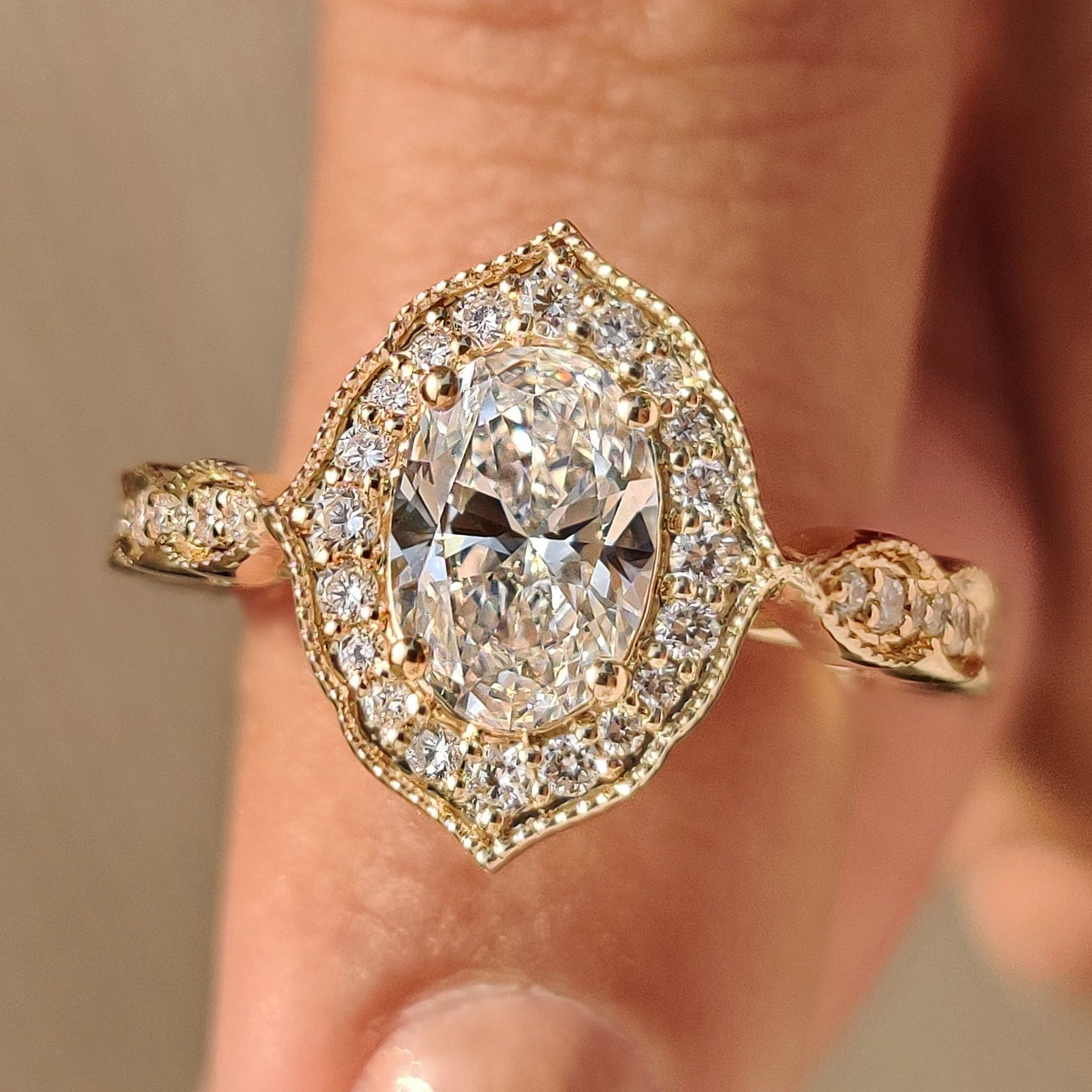
Choosing the right setting enhances both sparkle and security. Some styles are especially flattering for oval shapes.
Solitaire Settings
A simple solitaire lets the oval shine on its own. It highlights the elongated shape and makes the diamond look even larger.
Halo Settings
A halo of smaller diamonds surrounds the center stone, increasing sparkle and making the ring appear more luxurious. It can also reduce the visibility of a bow-tie effect.
Hidden Halo
A modern twist where small diamonds sit beneath the center stone, adding sparkle from the side view.
Three-Stone Settings
Side stones (like pear or tapered baguettes) frame the oval and add symbolism and extra brilliance.
East-West Settings
The oval is set horizontally instead of vertically. This trendy style feels bold and contemporary.
These are considered the best settings for oval cut diamonds because they enhance brilliance, protect the stone, and highlight its elegant shape.
How to Choose an Oval Cut Diamond (Step-by-Step Guide)

Choosing the perfect oval diamond isn’t just about size – it’s about sparkle, shape, and overall balance. Here’s a practical guide for buyers:
1. Decide on Length-to-Width Ratio
- Classic oval: 1.30–1.35
- Elongated oval: 1.40–1.50
- Pick based on finger shape and personal style
2. Check Bow-Tie Visibility
- Lightly visible bow-tie is okay; strong dark shadow is not
- Videos or in-person inspection help gauge this
3. Prioritize Cut Quality Over Carat
- A well-cut, smaller diamond often sparkles more than a larger, poorly cut one
- Look for symmetry, proportion, and facet alignment
4. Choose Color Based on Metal Type
- White gold/platinum: G-H colors look crisp and bright
- Yellow or rose gold: I-J colors warm up beautifully
5. Ensure Eye-Clean Clarity
- VS2 or SI1 is usually ideal for ovals
- Avoid inclusions in the center that distract from sparkle
6. Check Certification
- Always buy from reputable labs like GIA or IGI
- Certification ensures accuracy of cut, clarity, color, and carat
Pros and Cons of Oval Cut Diamonds
Why Buyers Love Oval Diamonds (and What to Watch For)

Pros
- Looks larger than round diamonds of the same carat
- Elegant, elongated shape flatters fingers
- Excellent brilliance with proper cut
- Timeless yet modern, works in many settings
Cons
- Bow-tie effect can be noticeable in poorly cut stones
- Shows color slightly more than round diamonds
- Symmetry must be carefully evaluated
- Very long ovals can look narrow if not proportioned correctly
Choosing a well-cut oval diamond with balanced proportions and minimal bow-tie effect ensures you get the sparkle and elegance this shape is known for.
Care & Maintenance
Owning an oval cut diamond means keeping it sparkling and secure. While diamonds are very durable, proper care ensures they maintain their brilliance over time.
Cleaning Tips
- Clean regularly with warm water, mild soap, and a soft brush
- Use diamond cleaning solutions or ultrasonic cleaners for deeper sparkle
- Avoid harsh chemicals that can damage the metal or prongs
Prong & Setting Care
- Ovals have elongated shapes, so prongs at the tips need extra attention
- Check for loose or bent prongs every 6–12 months
- Professional inspection ensures the stone is secure
Storage & Handling
- Store diamonds separately in soft pouches to avoid scratching
- Remove rings during heavy work, sports, or cleaning
Proper care preserves the diamond’s brilliance, durability, and value for decades.
Frequently Asked Questions
1. Do oval cut diamonds sparkle as much as round diamonds?
Yes, oval cut diamonds can be very brilliant because they use a similar faceting style to round brilliants. While rounds often have slightly stronger light return, a well-cut oval still delivers excellent sparkle, fire, and scintillation.
2. Why do oval diamonds have a bow-tie effect?
The bow-tie effect appears when light doesn’t reflect evenly across the elongated shape. This creates a shadow across the center of the diamond. It’s common in oval cuts, but the visibility varies depending on cut quality.
3. How can I tell if the bow-tie in an oval diamond is too dark?
A bow-tie is too strong if it looks like a solid dark patch that doesn’t change in different lighting. Viewing the diamond in motion or in video helps you see whether the center stays lively or looks dull.
4. Do oval diamonds look bigger than other shapes of the same carat?
Yes. Oval diamonds have a larger face-up surface area than round diamonds of the same weight, making them appear bigger. Their elongated shape also creates the illusion of longer fingers.
5. Are oval cut diamonds more affordable than round brilliants?
Typically, yes. Oval diamonds often cost less per carat than round diamonds because less rough material is lost during cutting and demand is slightly lower than for rounds.
6. What setting makes an oval diamond appear larger?
Solitaire settings highlight the full shape, while halo settings add surrounding sparkle that increases visual size. Thin bands and hidden halos can also enhance the diamond’s presence.
7. Which clarity grade is best for an oval cut diamond?
A clarity grade in the VS2-SI1 range is usually a great balance. Because of their brilliant faceting, oval diamonds can hide small inclusions well, as long as they aren’t visible to the naked eye.
8. Do oval diamonds show more color than round diamonds?
Yes, slightly. Their elongated shape can make warmth more noticeable, especially near the tips. Choosing a G-H color grade keeps the diamond looking bright in white metals.
9. Is an oval diamond a good choice for an engagement ring?
Absolutely. Oval diamonds are durable, timeless, and flattering on the hand. Their elegant shape and strong sparkle make them one of the most popular modern engagement ring choices.
10. How do oval diamonds compare to cushion or pear shapes?
Oval diamonds are more elongated than cushions and don’t have the pointed tip of pear shapes. They offer a balance of brilliance, elegance, and durability, making them versatile and easy to wear.
11. Can an oval diamond look too narrow or too wide?
Yes. A very high ratio can make the stone look thin, while a low ratio can appear too round. Choosing balanced proportions ensures the diamond looks elegant rather than stretched or stubby.
12. Should I prioritize cut quality over carat weight in an oval diamond?
Definitely. A smaller, well-cut oval will sparkle more and look more beautiful than a larger stone with poor proportions or a strong bow-tie effect.
Final Buying Advice
To conclude, here’s a quick recap and final guidance for buyers:
- Focus on cut first: Brilliance is everything; carat size is secondary.
- Check the bow-tie effect: Mild is okay, strong can reduce sparkle.
- Consider proportion and ratio: Length-to-width ratio affects elegance and finger appearance.
- Choose the right setting: Halo or solitaire can enhance beauty and protect the stone.
- Prioritize certification: Only buy GIA or IGI-certified diamonds for peace of mind.
An oval cut diamond engagement ring combines elegance, sparkle, and versatility. With the right selection, it will remain timeless, flattering, and dazzling for decades.


