

Diamonds come in many shapes, but only a few add instant character without stealing the spotlight. The half moon cut diamond does exactly that. It curves gracefully, reflects light in a soft and balanced way, and frames a center stone like a piece of fine architecture.
If you love design details, symmetry, and rings that feel custom instead of common, this guide will help you understand everything about the half-moon diamond – from shape and sparkle to settings, quality tips, and buying advice.
Let’s get into it.
Half Moon Cut Diamond
A half-moon cut diamond looks exactly like its name suggests - one half of a circle or oval. It features:

- One straight edge
- One smooth curved edge
- A gently rounded silhouette that resembles a crescent
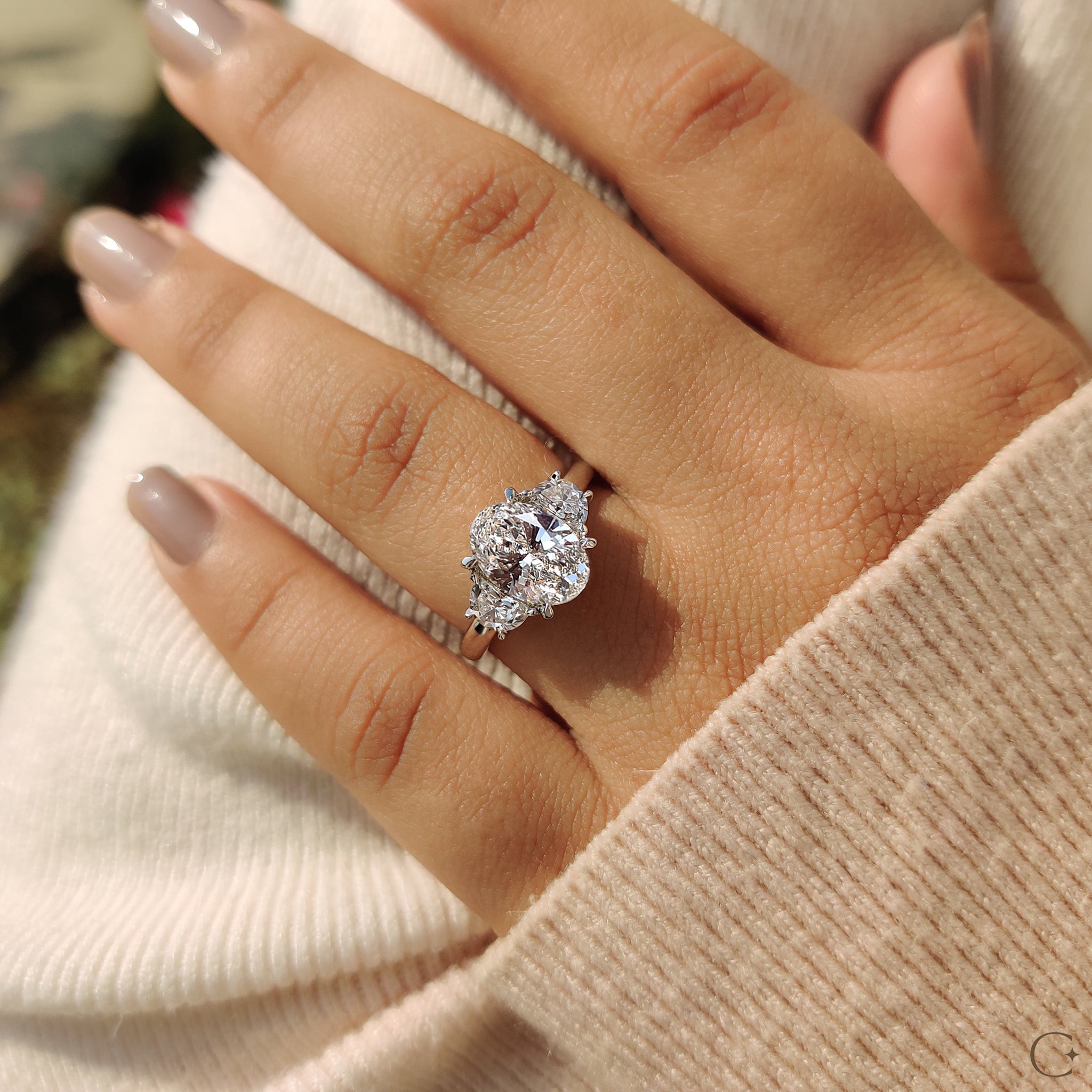
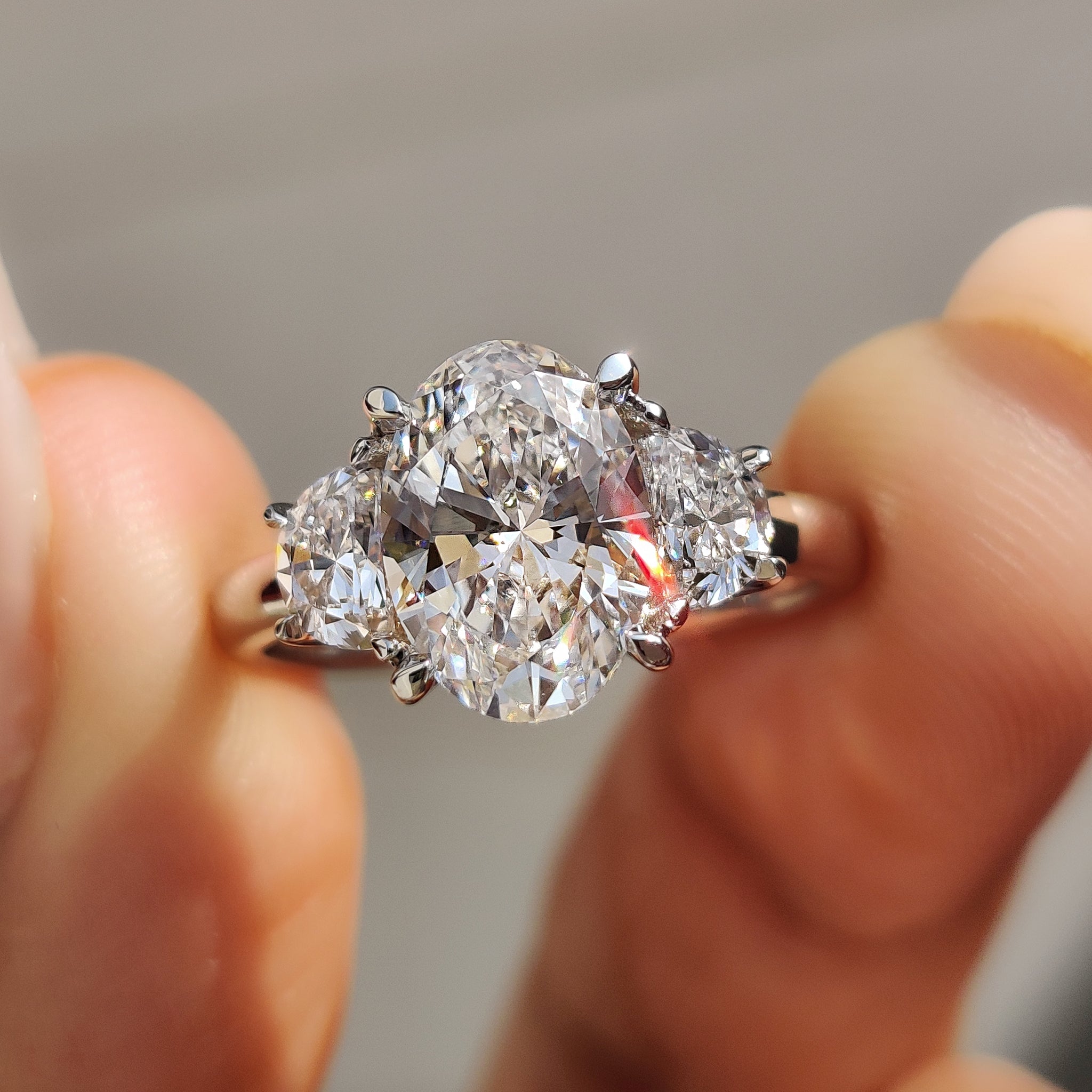
Cutters usually fashion half-moon diamonds as side stones, not center stones. Jewelers place them next to a larger diamond to enhance its shape and add balance.
You’ll often see half-moon diamonds beside:
- Oval diamonds
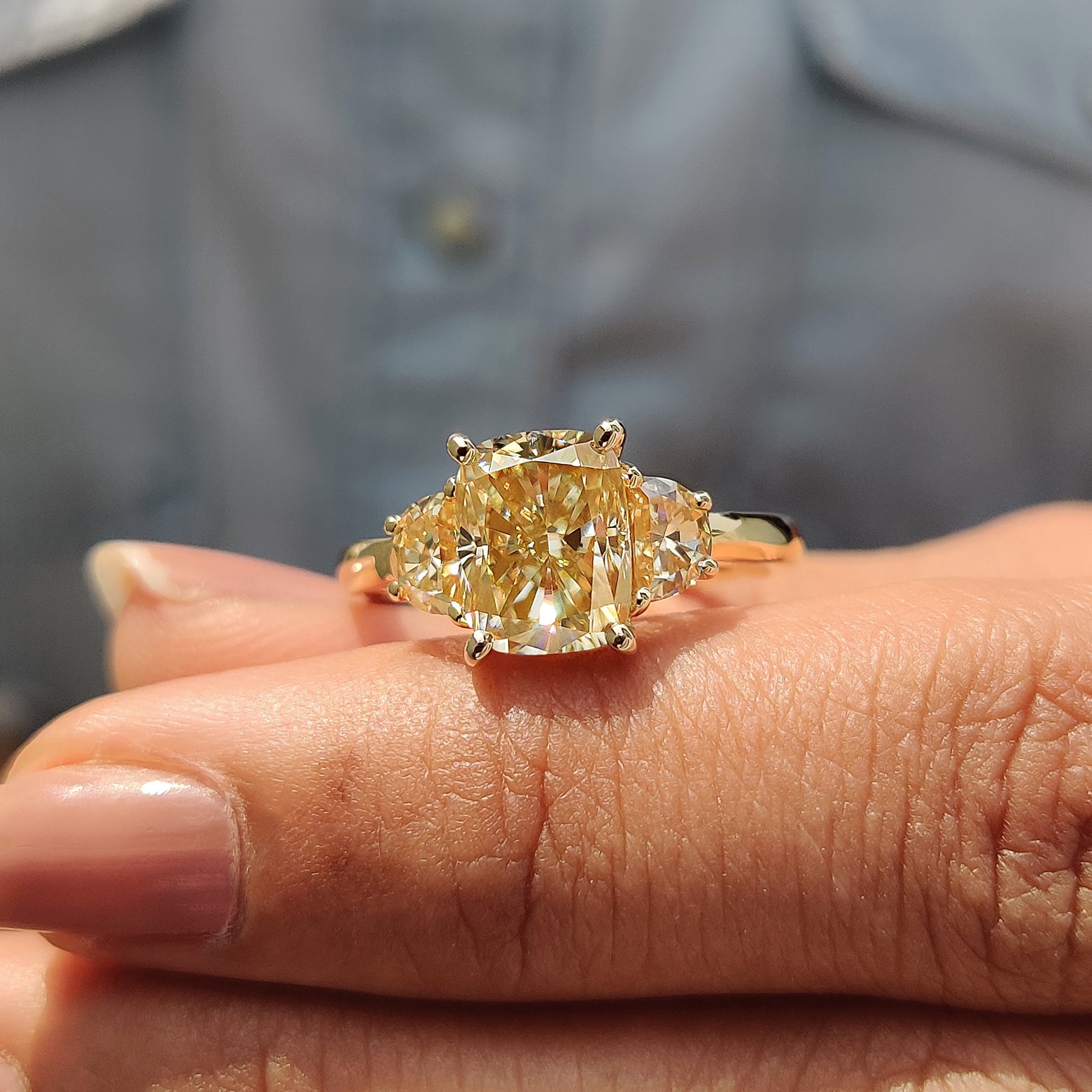
- Cushion cuts
- Emerald cuts
- Radiant cuts
- Asscher cuts
The shape adds width, symmetry, and elegance without overwhelming the main stone.
The History Behind Half Moon Diamonds

Designers began using half-moon diamonds more often during the rise of vintage-inspired engagement rings. Art Deco jewelry, in particular, embraced geometric balance and curved accents. The half-moon shape fit that design language perfectly.
Modern designers continue to use half-moons because they:
- Soften sharp center stone shapes
- Add a custom, high-end feel
- Create smooth visual flow across the ring
Today, you’ll spot half moon side stones in many luxury engagement rings, especially those that highlight step-cut or elongated diamonds.
How is a Half Moon Diamond Cut?

Cutting a half moon diamond requires precision and skill. Unlike traditional diamond cuts, where symmetry is often uniform, the half moon cut demands exact angles to maximize sparkle while maintaining its semi-circular shape.
Cutting Process:
- Planning the Rough Diamond: Jewelers first analyze the rough stone to determine the optimal shape and weight.
- Shaping: The diamond is cut into a semi-circle, paying attention to symmetry and edges.
- Polishing: Each facet is polished to enhance light reflection.
- Quality Check: Experts ensure the diamond sits perfectly when paired with a center stone.
Because of its precise cutting process, half moon diamonds are rarer than standard side stones, making them highly sought-after for fine jewelry.
Faceting Style and Sparkle
Most half-moon diamonds use brilliant-style facets. These facets increase light return and give the stones lively sparkle, especially when they sit next to a step-cut center diamond like an emerald or Asscher.
However, some half-moons feature step-cut faceting. These stones create a hall-of-mirrors effect that matches step-cut center stones beautifully.
Sparkle Expectations
Half-moon diamonds usually appear smaller than center stones, so their sparkle acts as an accent rather than the main attraction. They:
- Add flashes of light along the sides
- Increase perceived ring width
- Enhance overall brilliance when paired well
They don’t compete - they complement.
Popular Settings for Half Moon Diamonds
Half-moon diamonds appear in a range of engagement ring styles, especially in designs that focus on balance, symmetry, and graceful flow. Their curved shape allows jewelers to create rings that feel refined rather than flashy.
Three-Stone Rings
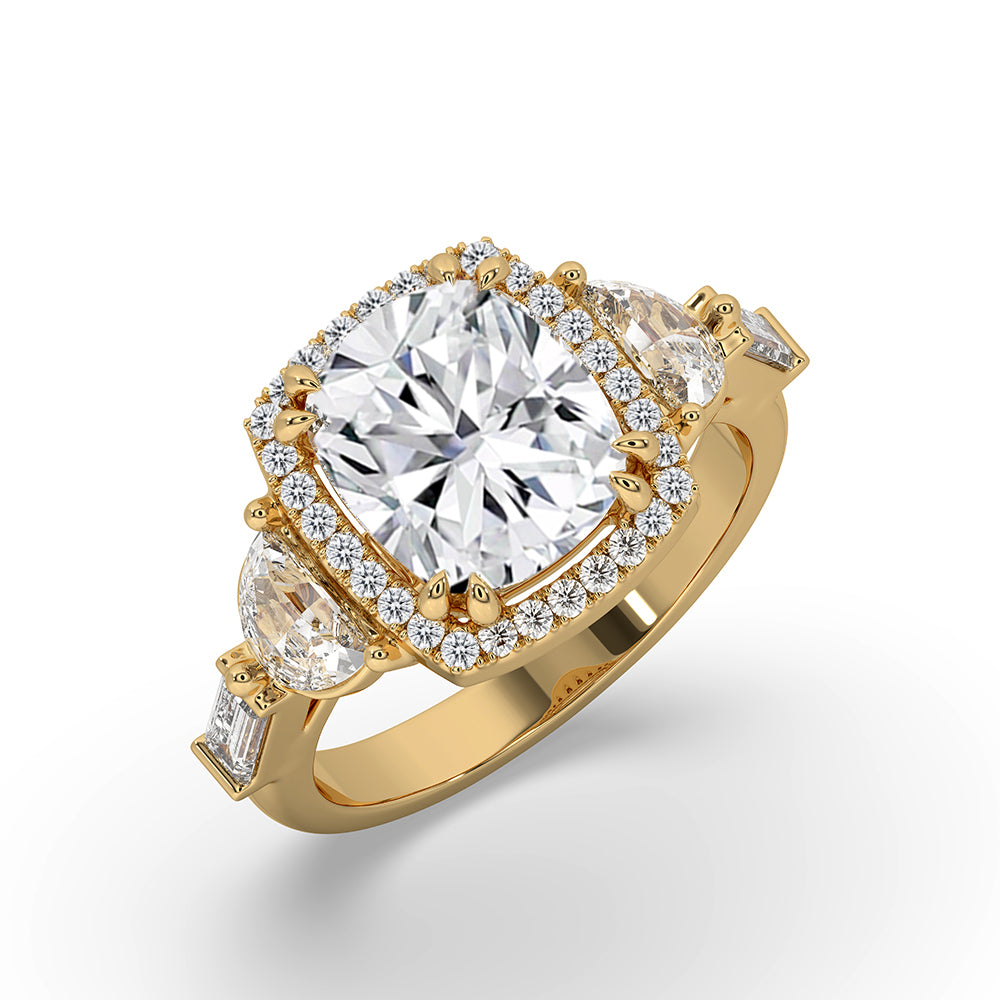
This remains the most popular setting. The half-moons sit on either side of the center diamond, symbolizing past, present, and future. Their curved edges hug the center stone, making the ring look wider and more harmonious.
Tapered Side-Stone Designs
In this style, half-moon diamonds transition into smaller round or pavé diamonds along the band. The eye naturally flows from the center stone outward, creating a smooth visual taper. This setting adds finger coverage without overwhelming the design.
Hidden Side Accents
Some designers place small half-moons beneath the center stone. This creates surprise sparkle from the side view while keeping the top profile clean. It works beautifully in cathedral settings where the gallery allows more visibility.
Open Gallery Settings
An open gallery allows light to enter from multiple angles. Half-moon side stones in this design appear brighter and more defined. The curved stones also look more sculptural when viewed from the side.
Halo Variations
Jewelers sometimes use half-moon shapes within halo designs to soften sharp center stone outlines. Instead of a fully round halo, curved sections on the sides create a more fluid silhouette. This approach works well with radiant, emerald, and cushion cuts.
Split Shank Designs
Half-moon diamonds can sit where the band splits near the center stone. This creates a dramatic yet balanced look, as the curved stones visually connect the divided band to the main diamond.
Bezel-Accented Three-Stone Styles
For a modern touch, some rings partially bezel-set the half-moon diamonds while keeping the center stone in prongs. The metal outline emphasizes the crescent shape and adds extra protection.
Prong Styles That Work Best
Half-moon diamonds need careful setting because of their unique outline. Proper prong placement protects delicate points while maintaining symmetry between the pair.
V-Prongs
V-prongs protect the pointed tips where half-moons remain most vulnerable. They reduce the risk of chipping and help anchor the stones securely.
Claw Prongs
Claw prongs create a delicate, high-end appearance. They allow more light to enter the diamond while keeping the setting refined and minimal.

Shared Prongs
Shared prongs hold both the center stone and half-moons in a continuous flow. This technique reduces visible metal and enhances the seamless transition between stones.
Double Prongs
Some designers use double prongs on the outer curved edge. This adds vintage character while improving stability, especially for larger half-moon diamonds.
Tab Prongs
Tab prongs sit flatter and cover slightly more surface area. They offer extra security without making the setting look heavy.
Bezel or Half-Bezel Edges
In modern designs, jewelers may partially wrap metal around the straight edge of the half-moon. This protects the stone and highlights its crescent silhouette.
Half-Moon Cut vs. Other Shapes
| Feature | Half-Moon | Trillion | Baguette | Pear | Tapered Baguette | Bullet |
|---|---|---|---|---|---|---|
| Overall Shape | Curved crescent | Triangle | Long rectangle | Teardrop | Narrowing rectangle | Tapered shield/triangle |
| Design Feel | Soft, flowing | Sharp, bold | Sleek, structured | Elegant, dramatic | Architectural, vintage | Strong, directional |
| Edge Style | One straight, one curved | Three sharp sides | Straight edges | One rounded, one pointed | Straight, tapered | Angled, pointed |
| Sparkle Style | Balanced accent sparkle | Bright, lively | Subtle step-cut flashes | Brilliant with contrast | Subtle mirror-like shine | Moderate brilliance |
| Visual Effect on Ring | Adds smooth width | Adds sharp contrast | Extends length | Adds length & movement | Creates structured frame | Draws eye inward |
| Best With Center Stones | Oval, Cushion, Emerald, Radiant | Round, Princess, Radiant | Emerald, Asscher, Radiant | Round, Oval, Cushion | Emerald, Asscher | Princess, Radiant |
| Symmetry in Design | Highly symmetrical | Symmetrical but angular | Very linear symmetry | Directional (less symmetrical) | Strong linear symmetry | Directional symmetry |
| Style Personality | Refined, balanced | Modern, edgy | Vintage, Art Deco | Romantic, expressive | Classic, geometric | Bold, dramatic |
| Finger Coverage | Increases width | Adds width with angles | Adds length | Adds length | Adds length | Adds width with structure |
| Design Role | Frames and softens | Adds drama | Adds structure | Adds elegance & movement | Frames with precision | Adds strong lines |
| Best For Buyers Who Want | Harmony and flow | Bold contrast | Clean geometry | Elongated elegance | Vintage structure | Sharp, modern accents |
Pros and Cons of Half Moon Diamonds

Pros:
- Unique, semi-circular design
- Enhances center stones without overpowering
- Versatile for various jewelry styles
- Cost-effective sparkle
Cons:
- Rare as standalone center stones
- Requires precise cutting and setting
- Slightly limited availability
How to Choose the Perfect Half Moon Diamond
Selecting the right half moon diamond requires considering several factors, similar to choosing a center stone:
1. Carat Weight
Half moon diamonds are usually smaller than center stones, ranging from 0.1 to 0.5 carats each. Choose a weight that complements your main stone without overpowering it.
2. Clarity
Because half moon diamonds are smaller, inclusions are less noticeable than in larger stones. VS1-SI1 clarity grades usually offer excellent value and eye-clean appearance.

3. Color
Half moon diamonds are often placed next to colorless center stones. Matching their color grade (ideally D-F for colorless or G-H for near colorless) ensures a harmonious look.
4. Cut Quality
Ensure the cut is precise, with even symmetry and polished facets. A well-cut half moon diamond enhances brilliance and complements the main diamond beautifully.
5. Setting Style
Half moon diamonds can be set in bezel, prong, or channel settings. Discuss with your jeweler which setting showcases the side stones best.
Final Thoughts
Half-moon cut diamonds don’t shout for attention. They whisper elegance.
They frame the center stone, add graceful curves, and bring a designer finish to engagement rings. When matched well and set with care, they elevate a ring from beautiful to unforgettable.
If you want a ring that feels refined, balanced, and thoughtfully designed, half-moon diamonds deserve a close look.
Sometimes the supporting characters make the whole story shine.
Make Your Half Moon Diamond Truly Yours
Let the soft curves of a half moon cut diamond shine in a bespoke setting crafted around your vision. Distinctive beauty, perfectly refined.


